
Recursos
Exploren una amplia gama de recursos valiosos en GCED para profundizar su comprensión y promover su búsqueda, incidencia, enseñanza y aprendizaje.
518 resultados encontrados
 Enseigner Témoigner Año de publicación: 2024 Autor corporativo: Ligue de l'enseignement, Fédération de Paris & Ibuka France En 1994, environ 1 million de Tutsi ont été tués au Rwanda. Le génocide perpétré contre les Tutsi au Rwanda constitue l’une des principales tueries du XXème siècle. Elle a été rendue possible par l’action d’extrémistes qui ont, pendant des années, attisé la haine anti-tutsi au sein de la population rwandaise à coup de préjugés, de fausses informations, d’accusations en miroir, de stratégie de manipulation et de conditionnement des esprits à la peur, à la haine et à la violence meurtrière.Avec l’inscription récente de son enseignement dans les programmes scolaires, de plus en plus d’enseignants travaillent avec leurs élèves sur cet événement majeur de l’histoire du XXème siècle. Parallèlement, des rescapés ressentent le besoin de témoigner pour partager leur histoire avec la jeune génération et prévenir ainsi les mécanismes qui ont rendu ce drame possible. Dans ce contexte, l’association Ibuka France et la Ligue de l’enseignement engagent une action commune pour proposer un accompagnement dans l’organisation et la gestion pédagogique d’une rencontre avec un témoin-rescapé en classe. Cet accompagnement vise à créer un cadre à la fois utile et sécurisant pour l’ensemble des acteurs engagés et impactés par le témoignage en classe. In 1994, around 1 million Tutsis were killed in Rwanda. The genocide perpetrated against the Tutsis in Rwanda is one of the major killings of the twentieth century. It was made possible by the actions of extremists who, for years, stirred up anti-Tutsi hatred among the Rwandan population by means of prejudice, false informations, mirror-image accusations, a strategy of manipulation and the conditioning of minds to fear, hatred and murderous violence.With the recent inclusion of the subject in school curricula, more and more teachers are working with their pupils on this major event in the history of the 20th century. At the same time, survivors are feeling the need to share their stories with the younger generation and prevent the mechanisms that made this tragedy possible. Against this backdrop, Ibuka France and the Ligue de l'enseignement have joined forces to offer support in organising and managing a meeting with a survivor-witness in the classroom. The aim of this support is to create a framework that is both useful and reassuring for all those involved and affected by the testimonial in the classroom.
 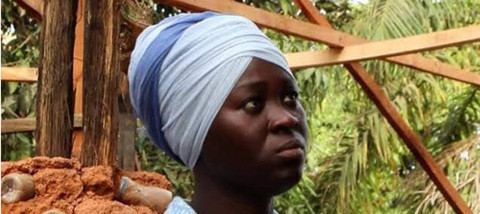 《专题报道》互联网把人口贩运受害者“救出火坑” ——一位幸存者的讲述 Año de publicación: 2022 Autor corporativo: 联合国 本专题报道中,一位曾经被贩卖的冈比亚女士讲述了自己被贩卖以及获救的经历,揭露人口贩卖问题的普遍性与严重性,并谈及互联网如何可能帮助受害者摆脱人口贩运的厄境。
 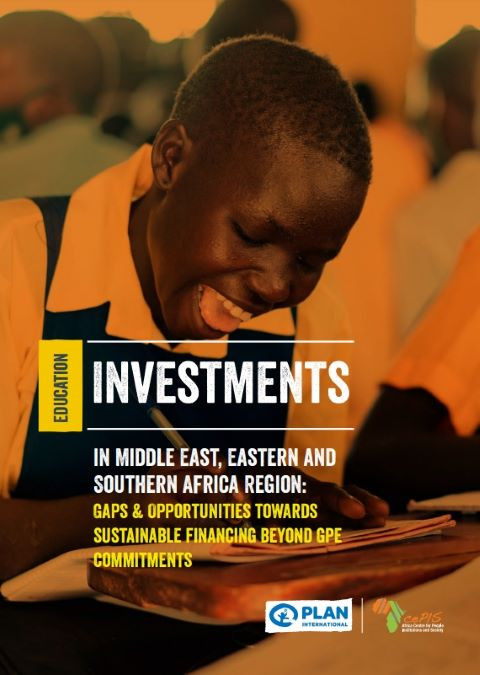 Education Investments in Middle East, Eastern and Southern Africa: Gaps & Opportunities Towards Sustainable Financing Beyond GPE Commitments Año de publicación: 2022 Autor corporativo: Plan International To achieve the goals of the global and continental agendas of repositioning access, equity, quality education and skills development as key drivers of inclusive growth and sustainable development, African governments must provide a level of predictable and sustainable investment in education. With these strategic investments, African countries can change the status quo, accelerate the pace of catching up with the developed countries and be able to compete in an increasingly technology and knowledge-based world where skills have become the “global currency of the 21st century”. Plan International in Middle East, Eastern and Southern Africa commissioned a study to assess the extent to which the Education Sector budget is adequate, gender-responsive and inclusive and to analyse education budget trends between 2019 and 2021. The focus was to generate concrete evidence regarding trends in education sector budget allocations and expenditure. Furthermore, due to the recent pandemic, the study aimed to compare current and previous allocations to detect trends/patterns in allocations and any reallocations due to COVID-19. Specifically, the study sought to: Analyse allocations (and expenditure) to the education sector with a particular focus on initiatives aimed at supporting the provision of gender-responsive and disability-inclusive education in line with the country policies; Assess the efficiency of resource allocation and use against planned expenditure; and Recommend effective strategies for CSOs and citizens to advocate for education budget increase to or above 20% of the national budget and 6% of GDP. The study focused on 10 countries in the region – Kenya, Uganda, Zambia, Malawi, Zimbabwe, South Sudan, Tanzania, Egypt, Somalia and Rwanda. With a multi-pronged research process of budget tracking and analysis, policy analysis, political economy analysis and varied data collection methods – the research findings and recommendations are ready for wider dissemination and use.
 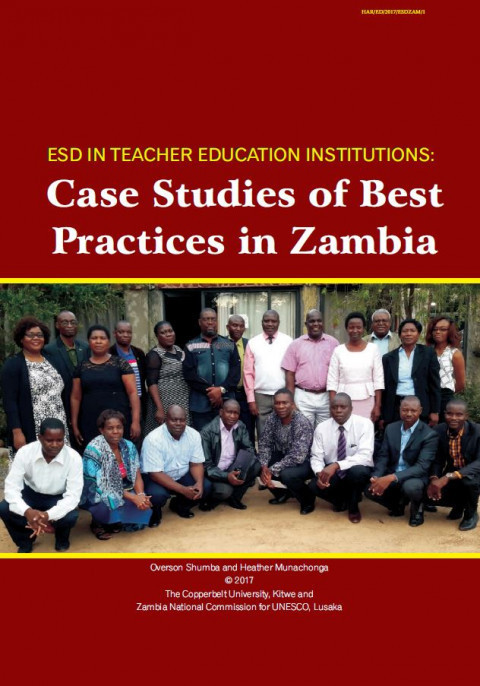 ESD in Teacher Education Institutions: Case Studies of Best Practices in Zambia Año de publicación: 2017 Autor: Overson Shumba | Heather Munachonga Autor corporativo: Zambia National Commission for UNESCO | Copperbelt University This book is a compilation of case studies on best practices in education for sustainable development in teacher education institutions in Zambia. It contributes to the dissemination of the best practices among the institutions and the wider society. It adds to examples of practices that are relevant to the UNESCO Global Action Programme on Education for Sustainable Development (GAP). The project was coordinated by Professor Overson Shumba at the Copperbelt university in Kitwe and Heather Munachonga, Programme Officer at the Zambia National Commission for UNESCO in Lusaka. The book was made possible with funding and support from UNESCO, Paris, the Ministry of General Education, the Copperbelt University, and the Zambia National Commission for UNESCO. All the institutions were supported by the teacher education institutions and their partners. The book illustrates some of the actions undertaken consistent with pursuit of the education SDG4 target 7. It is expected that this book will lead teacher educators and teachers to come up with further innovations and to integrate them in their professional work. Whole institution actions are encouraged so that best practices as found in this book can permeate and transform all aspects of the institution: the curriculum, teaching, assessment, research, extra-curricular activities, and operations, and must involve everyone, students, workers, lecturers, and the surrounding community.
  SDG 4 Data Digest 2018: Data to Nurture Learning Año de publicación: 2018 Autor corporativo: UNESCO Institute for Statistics (UIS) The world is facing a crisis of learning, with many children leaving school without the basic skills they need for a prosperous and productive adult life. Two-thirds of the estimated 617 million children and adolescents who cannot read a simple sentence or manage a basic mathematics calculation are in the classroom. Too many are waiting for a quality education that never comes.As the 2018 SDG 4 Data Digest shows, it is not enough to hope that they will stay in school and somehow acquire skills in reading and mathematics. It is critical to monitor those skills as children progress through school. That requires comparable data, over time, to ensure that children – and the education systems that serve them – are on track.Given the critical importance of learning for the achievement of all the Sustainable Development Goals (SDGs), from poverty reduction to peaceful societies, this year’s edition of the SDG 4 Data Digest is dedicated to the theme of learning outcomes. It showcases the most comprehensive and up-to-date compilation of work to inform the learning indicators of SDG 4.The Digest discusses learning evidence on early child development, mathematics and reading skills among school-aged children, and digital and work-related skills among youth and adults. It highlights the conceptual frameworks and tools developed by leading authors and institutions to understand, measure, monitor and support learning for all. It also considers the implications of reporting for SDG 4. ЦУР 4 Дайджест данных 2018: данные для обучения Año de publicación: 2018 Autor corporativo: UNESCO Institute for Statistics (UIS) Мир сталкивается с кризисом обучения, когда многие дети покидают школу без базовых навыков, необходимых для процветающей и продуктивной взрослой жизни. Две трети из примерно 617 миллионов детей и подростков, посещающих школу, не могут прочитать простое предложение или произвести элементарные математические вычисления. При этом качественное образование для очень многих продолжает оставаться недоступным.Как показывает Дайджест данных ЦУР 4 2018 года, недостаточно просто надеяться, что они, оставаясь в школе, каким-то образом приобретут навыки чтения и математики. Очень важно следить за развитием этих навыков по мере того, как дети учатся в школе. Сопоставление данных с течением времени является необходимым фактором, гарантирующим, что дети и системы образования, которые их обслуживают, находятся на правильном пути.Учитывая исключительную важность обучения для достижения всех Целей в области устойчивого развития (ЦУР), от сокращения бедности до мирных обществ, выпуск Дайджеста данных ЦУР 4 в этом году посвящен теме результатов обучения. Он демонстрирует наиболее полную и актуальную подборку работ для информирования об учебных показателях ЦУР 4.В Дайджесте обсуждаются фактические данные о раннем развитии детей, математике и навыках чтения среди детей школьного возраста, а также трудовые навыки и навыки работы с цифровыми технологиями среди молодежи и взрослых. В нем освещаются концептуальные основы и инструменты, разработанные ведущими авторами и учреждениями для понимания, измерения, мониторинга и поддержки обучения для всех. В нем также рассматриваются результаты отчетности для ЦУР 4.
  Botswana National Implementation Plan for Sustainable Development Goal (SDG) 4 - Education 2030 Año de publicación: 2018 Autor corporativo: Botswana National Commission for UNESCO The Sustainable Development Goal (SDG) 4 is an ambitious and specific goal to drive the education development agenda from 2016 – 2030 and a means through which all the seventeen (17) SDGs will be achieved. The SDGs aim among others, to end poverty, hunger and inequality, take action on climate change and the environment, improve access to health and education, and build strong institutions and partnerships.To ensure adequate attention to the different thematic areas of education, SDG 4 has been broken down into seven targets and three means of implementation. The targets and the means of implementation are crafted in such a way that all the critical areas of education, both emerging and the unfinished Education for All (EFA) business could be addressed in some way through the global education agenda.This publication presents Botswana’s National Strategy for the Implementation of SDG 4 – Education 2030, which was developed with guidance from the Incheon Declaration on Education 2030. The Incheon Declaration on Education 2030 is a guide to Member States on the implementation of SDG 4. It provides an outline on how to translate the agenda into national priorities and further proposes some strategies and thematic indicators for measuring success on the different SDG 4 targets.
  Education à la citoyenneté en RDCONGO : Quelles strategies et pour quelle éducation à la démocratie en R.D.C? Año de publicación: 2008 Autor: Abbé Louis Mpala Cette brochure se veut une introduction générale à toutes les brochures qui seront consacrées à chaque type d'éducation proposé. Ce projet ne peut être réalisé que si Dieu le permet et si je trouve un mécène.Cet écrit peut servir d'un instrument de travail à toute personne soucieuse de voir notre pays avoir des fils dont le cour est circoncis. Comme tout travail humain, ma brochure a des limites. A vous de la parfaire. Destiné à être exposé aux journées scientifiques organisées par l'Institut Supérieur Pédagogique de Lubumbashi (I.S.P.), ce texte est mis à la disposition de tout éducateur. Cet écrit a mes empreintes d'agrégé de l'Enseignement Secondaire Degré Supérieur (E.S.D.S.)pour le cours de philosophie. Voilà qui justifie mon souci de voir les objectifs éducationnels opérationnels.A vous lectrice et lecteur engagés dans un groupe d'encadrement familial, politique ,scolaire, socio-culturel etc., je confie ma brochure.
  UNESCO IICBA: strategic plan Año de publicación: 2019 Autor corporativo: UNESCO International Institute for Capacity-Building in Africa (IICBA) UNESCO IICBA’s Strategic Plan for 2018-2021 is guided by its mandate and mission to strengthen the capacity of Member States in Africa in teacher policy and development. This work is vital to realizing its vision of an integrated, prosperous and peaceful Africa where everyone has access to qualified, motivated and professionally supported teachers. This plan is supported by a vision for Strategic Partnerships, because UNESCO IICBA recognizes their value in promoting regional and national cooperation in teacher-related issues, and in fostering dialogue on teachers and education. Strategic partnerships have three objectives:Successfully implement UNESCO IICBA’s Strategic Plan 2018-2021 Ensure the efficiency and effectiveness of resource mobilizationStrengthen advocacy, cooperation and coordination mechanisms The Strategic Plan is also supported by a Communication Strategy that covers all of UNESCO IICBA’s programme areas and will support collaboration, coordination and institutional operations. The strategy aims to contribute to effective communication that will:Help to fulfill UNESCO IICBA’s strategic goals and objectivesAmplify the visibility of UNESCO IICBA to its stakeholdersInform partners and donors on implementation progress, and demonstrate UNESCO IICBA’s accountabilityEnsure people understand what UNESCO IICBA represents and doesImprove teachers’ professional image and raise awareness to address teachers’ issues in AfricaKeep UNESCO IICBA team members proud, motivated, innovative and accountable in their tasks
 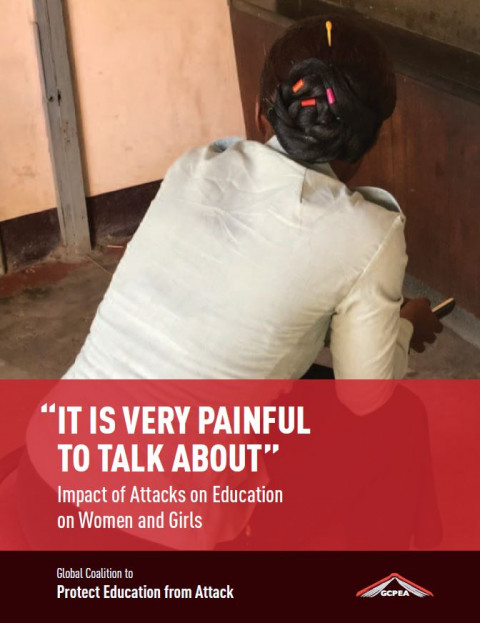 "It is Very Painful to Talk About”: The Impact of Attacks on Education on Women and Girls Año de publicación: 2019 Autor: Holly Cartner Autor corporativo: Global Coalition to Protect Education from Attack (GCPEA) This report presents the key findings of GCPEA’s multi-country study on the impact of attacks on education on women and girls.10 GCPEA’s research focuses on the types and causes of abuse most typically committed against female students in the context of attacks on education, and the long-term consequences that female students may face as a result of such attacks.11 GCPEA initiated this study to contribute to a better understanding of the implications for girls and women when education is attacked and to inform our advocacy for better strategies to protect girls and women, prevent attacks and abuse, and diminish harmful consequences against them.This report relies on previous GCPEA research, including Education Under Attack 2018 and 2014, and updates, and the organization’s field research in Nigeria and the Democratic Republic of Congo, which focused specifically on the experiences of women and girls when education is attacked. In addition, the report draws from interviews with numerous country and regional experts and an extensive review of secondary data sources, including reports by United Nations (UN) agencies, development and humanitarian non-governmental organizations (NGOs), human rights organizations, government bodies, and think tanks, including numerous contributions from GCPEA’s member organizations.