
Recursos
Exploren una amplia gama de recursos valiosos en GCED para profundizar su comprensión y promover su búsqueda, incidencia, enseñanza y aprendizaje.
2,668 resultados encontrados
 서울 세계시민교육 이행현황 및 향후 추진 과제 연구 Año de publicación: 2021 Autor: 김동택 | 서용덕 | 고선규 | 김지영 | 임재민 | 장경원 | 홍윤빈 Autor corporativo: 서울특별시교육청 교육연구정보원 이 연구는 서울시 교육청이 추진하고 있는 세계시민교육 이행 현황을 객관지표와 주관지표를 통해 분석하고 이를 바탕으로 향후 추진되어야 할 정책 과제들(협업체계, 교육 내실화, 내용·동력·변인, 데이터 축적 및 활동 플랫폼 구축 등)을 연구하는 데 목적이 있다. 이를 위하여 2015년부 터 시작되어 현재까지 진행된 세계시민교육의 성과를 확인하기 위해 객관 지표와 주관지표를 점검하였으며, 여기서 나타난 결과들을 바탕으로 앞으 로의 정책 방향을 설정하기 위해 정책 제안을 시도하였다. 서울특별시교육청교육연구정보원이(가) 창작한 서교연 2020-33 위탁연구(서울 세계시민교육 이행현황 및 향후 추진 과제 연구) 최종보고서 저작물은 "공공누리 제4유형(출처표시-상업적 이용금지-변경금지)" 조건에 따라 이용 할 수 있습니다.
  UN Youth 2030 전략과 한국 청년 Año de publicación: 2020 Autor: 임유진 | 김선기 | 정보영 | 정준영 | 진형익 Autor corporativo: 유네스코한국위원회 유네스코한국위원회가 2018년 유엔이 발표한 'Youth 2030 전략'을 바탕으로 청년 연구자들과 함께 한국사회의 청년 활동과 청년 정책, 청년 참여 등을 점검한 연구보고서이다.
 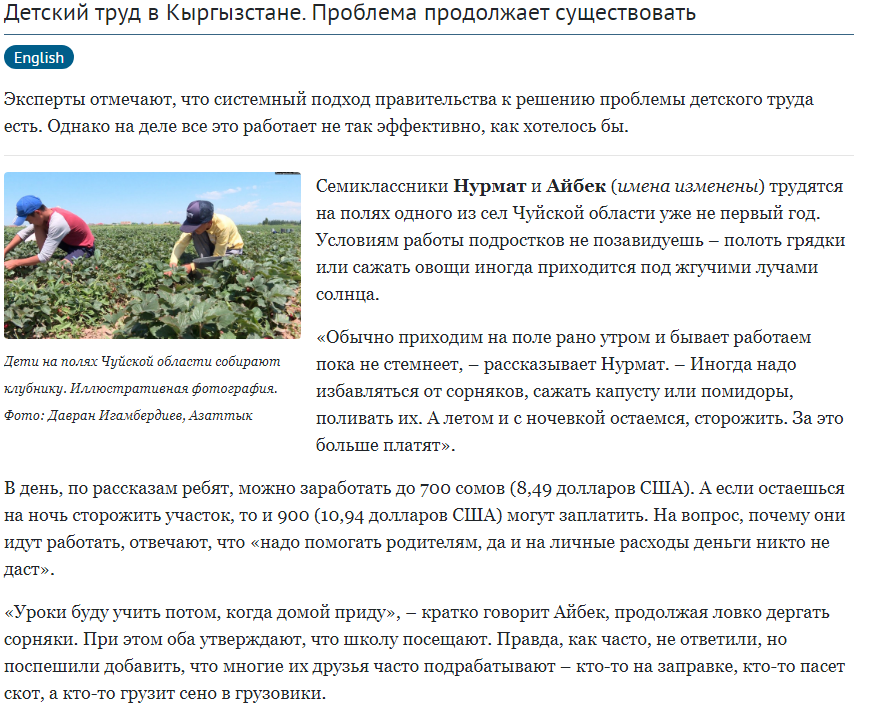 Child Labour in Kyrgyzstan: A Persisting Problem Año de publicación: 2022 Autor corporativo: Central Asian Bureau for Analytical Reporting (CABAR) Experts note that in the presence of a systematic approach of the Kyrgyz Government to solve the problem of child labor, a number of challenges remain in practice. This article examines some of the reasons for the involvement of children in the labor market, including economic instability, mass migration of the population, rising poverty levels, the influence of local customs and traditions. The article also provides an overview of relevant statistical data and some national initiatives aimed at eliminating child labor. Детский труд в Кыргызстане: Проблема продолжает существовать Año de publicación: 2022 Autor corporativo: Central Asian Bureau for Analytical Reporting (CABAR) Эксперты отмечают, что при наличии системного подхода правительства Кыргызстана к решению проблемы детского труда на практике сохраняется ряд вызовов. Данная статья рассматривает некоторые причины вовлечения детей в рынок труда, среди которых экономическая нестабильность, массовая миграция населения, рост уровня бедности, влияние местных обычаев и традиций. В статье также приведен обзор релевантных статистических данных и некоторых национальных инициатив, направленных на искоренение детского труда.
  Escuchando tu Naturaleza Año de publicación: 2021 Autor: Tatiana Núñez Suárez Autor corporativo: Fondo Acción En el marco del proyecto "somos tesoro" que busca reducir el trabajo infantil en zonas mineras de Colombia nace "escuchando tu naturaleza" que busca fortalecer los entornos comunitarios a partir del uso creativo del tiempo libre de niños, niñas y adolescentes (NNA). Buscando que sus espacios sean protectores,que promuevan los derechos de la infancia y contribuyan con la prevención del trabajo infantil minero. Se capacitó un grupo de veinte representantes de cinco organizciones no gubernamentales locales, funcionarios públicos y profesores que trabajaban con NNA en herramientas de desarrollo personal como yoga, meditación y atención plena para estimular la creatividad, la conciencia y la toma de decisiones. Se beneficiaron 275 NNA entre los 6 y los 17 años.
  وعي المرأة السعودية بحقوق العاملة المنزلية Año de publicación: 2016 Autor: Haya Saleh Saud Al Harbi Autor corporativo: King Saud University تهدف الدراسة على التعرف على مدى وعي المرأة السعودية بحقوق العاملة المنزلية المادية والنفسية والحية والاجتماعية. توصلت الدراسة الى اتفاق بأن العاملة يجب أن تحصل على غرفة مناسبة للإقامة وعلى المأكل الصحي، ومعاملتها بالطريقة الصحيحة. الدراسة تعطى فكرة واضحة لمدى فهم المرأة السعودية لاحتياجات العاملة المنزلية. The Saudi Woman Awareness about the Rights of the Housemaid Año de publicación: 2016 Autor: Haya Saleh Saud Al Harbi Autor corporativo: King Saud University The study aims to identify the extent of Saudi women's awareness of the physical, psychological, live and social rights of the domestic worker. The study reached an agreement that the worker should get a suitable room for accommodation and a healthy food, and treat her in the right way. The study gives a clear idea of the extent to which Saudi women understand the needs of the domestic worker.
  Chouette, pas chouette: Livret pédagogique; Activités d’éducation aux médias et à l'information sur le thème de l’égalité filles-garçons Año de publicación: 2021 Autor corporativo: Centre pour l’éducation aux médias et à l’information (CLEMI) Chouette, pas chouette ! une série de 16 programmes courts animés pour sensibiliser les 4-6 ans aux stéréotypes sexistes avec intelligence et humour a été réalisée avec l’appui de l’expertise pédagogique du CLEMI. C’est aussi un univers peuplé de personnages attachants, décliné en un livret pédagogique pour permettre aux professeurs des écoles de développer leurs actions en éducation aux médias et à l'information sur le thème de l’égalité filles/garçons, de la maternelle à la 6e.
  ‘공존과 상생’의 2021 평화·세계시민교육 기본계획 Año de publicación: 2021 Autor corporativo: 서울특별시교육청 본 자료는 서울특별시교육청의 2021 평화·세계시민교육 기본계획안으로, 서울 관내 초·중·고등학교를 대상으로 세계시민교육 현황을 조사 및 분석하고 2021학년도 세계시민교육의 향후 과제 및 세부추진계획을 제시하였다.
  지속가능발전교육 지도자료: 중학교 1~3학년용 Año de publicación: 2020 Autor: 박성은 | 박에스더 | 승현아 | 은정매 | 이수종 | 전명재 | 정은경 Autor corporativo: 서울특별시교육청 본 자료는 중학생의 지속가능발전과 생태환경에 대한 인식을 제고하기 위해 학교 생태전환교육에 활용할 수 있다.