
Recursos
Exploren una amplia gama de recursos valiosos en GCED para profundizar su comprensión y promover su búsqueda, incidencia, enseñanza y aprendizaje.
2,668 resultados encontrados
 Developing Global Guidance for Child Rights Impact Assessments in Relation to the Digital Environment: Summary of Initial Project Findings Año de publicación: 2024 Autor corporativo: United Nations Development Programme (UNDP) | German Institute of Development and Sustainability (IDOS) The age of technology and the Internet have brought tremendous benefits, including for children. However, the spread of digital technologies also comes with a broad spectrum of risks and harms to which children can be particularly vulnerable. Under the UN Guiding Principles on Business and Human Rights and the Children’s Rights and Business Principles, businesses have a responsibility to identify, assess, and address relevant human rights risks, including risks to children’s rights. With respect to the digital environment, a rapidly evolving landscape and the emergence of new technologies has changed the nature and severity of actual and potential child rights risks relating to business activities. In response, UNICEF has initiated a project to assess the current child rights impact assessment (CRIA) landscape in relation to digital business activities and develop new guidance to support robust implementation going forward. A summary of initial project findings is now available here. Further project outputs including the updated guidance (currently under development) are anticipated in late 2024.
  Global Kids Online: Comparative Report Año de publicación: 2019 Autor: Sonia Livingstone | Daniel Kardefelt-Winther | Marium Saeed Autor corporativo: UNICEF Innocenti The internet is often celebrated for its ability to aid children’s development. But it is simultaneously criticized for reducing children’s quality of life and exposing them to unknown and unprecedented dangers. There is considerable debate about when or how children’s rights – including the rights to expression, to privacy, to information, to play and to protection from harm, as set out in the United Nations Convention on the Rights of the Child – may be realized or infringed in the digital age.With more children around the world going online every day, it is more important than ever to clarify how the internet can advance children’s opportunities in life while safeguarding them from harm or abuse. This requires evidence, from children themselves, that represents the diversity of children’s experiences at the national and global levels. By talking to children, we are better able to understand not only the barriers they face in accessing the internet, but also the opportunities they enjoy and the skills and competences they acquire by engaging in these activities.This allows us to enquire about children’s exposure to online risks and possible harms, and about the role of their parents as mediators and sources of support. In bringing children’s own voices and experiences to the centre of policy development, legislative reform and programme and service delivery, we hope the decisions made in these spheres will serve children’s best interests.
 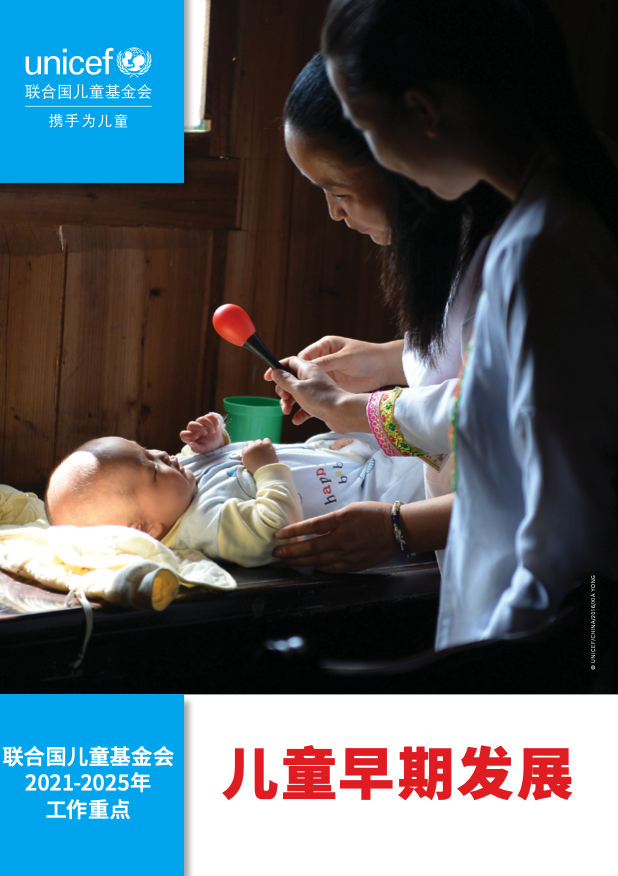 儿童早期发展 Año de publicación: 2023 Autor: 联合国儿童基金会驻华办事处 从胚胎到三岁这段时期的发展将为儿童一生的健康和学习奠定基础,其重要性不言而喻。在生命的最初几年,大脑发育迅速,每秒钟形成100多万个新的神经元连结。婴儿期内,大脑体积翻倍并不断增长,到三岁时达到成人期的80%左右,到五岁时达到成人的90%,发育几近充分。在儿童生命早期提供优质支持,是一种高效且具有成本效益的措施。儿童早期发展会带来长期收益,不仅能够减少暴力、抑郁和社会阻抑的发生,而且可以改善成年后的健康和学习状况,提高劳动生产力。在中国,近1700万五岁以下儿童无法充分发挥自身潜能,面临早期发展迟缓和残障的风险。弱势群体中的儿童所能获得的照护和卫生保健服务相对有限,获得早期学习、社会福利和保护服务的机会也相对较少,从而可能面临着更大的风险。联合国儿童基金会正携手合作伙伴,致力于加大对儿童早期发展的投入,帮助父母了解儿童早期发展的重要性,并鼓励政府和雇主制定支持儿童早期发展的政策。相关证据显示,当家庭成为支持儿童早期发展的主力时,幼儿获得的益处最多。联合国儿童基金会倡导制定相应政策和项目,增强父母作为主要照护人的能力,促进孩子在0-3岁阶段的健康发展。
 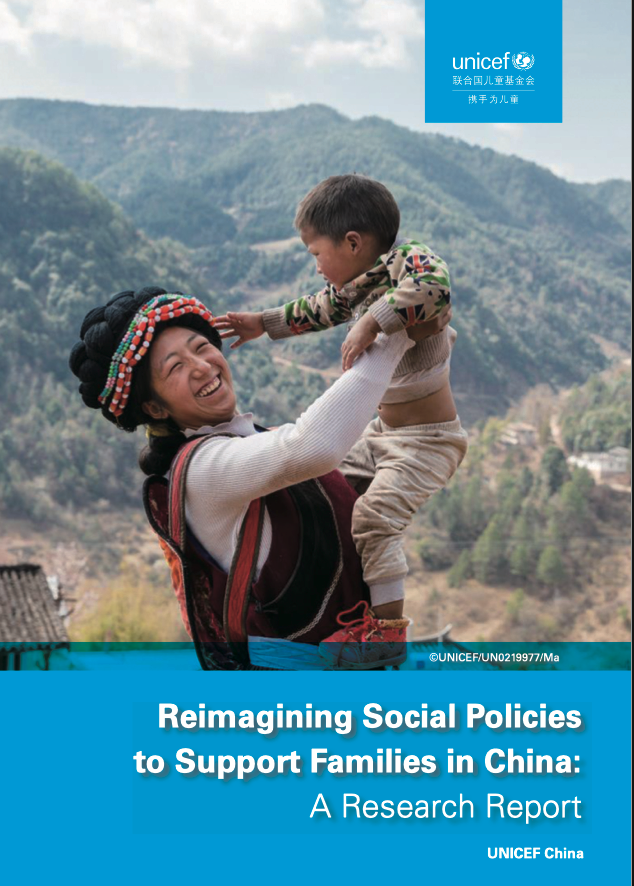 Reimagining Social Policies to Support Families in China: A Research Report Año de publicación: 2023 Autor corporativo: 联合国儿童基金会驻华办事处 There have been significant changes in the population and society in China over recent decades. The birth rate has declined, and the population has aged. The average family size shrank from 3.1 people in 2010 to 2.8 in 2022[i], and the one-child policy has been reversed. Urbanization, rural-urban migration and the growth of the informal sector have changed how people live and work. Gender inequality persists, with women frequently facing discrimination and barriers to employment. All these changes have implications for family policy – statutory policies and government-led programmes that aim to improve conditions for adult family members, particularly those caring for children up to the age of 18.A new report, ‘Reimaging Social Policies to Support Families in China’ by UNICEF synthesizes the context and challenges of family policies in China and reviews over 180 evaluations of family policies worldwide. The report highlights case studies of policies that could be adapted and incorporated into family policy in China, and it identifies implications for designing and implementing innovative policy. 探讨适合中国的家庭友好社会政策: 研究报告 Año de publicación: 2023 Autor corporativo: 联合国儿童基金会驻华办事处 近几十年来,中国的人口规模和结构以及社会发生了重大变化:出生率下降,人口老龄化;平均家庭户规模由2010年的一户3.1人降至2022年的一户2.8人[i];独生子女政策于2015年被取消,“三孩政策”从2021年开始实施;城镇化、农村人口向城镇地区迁移和灵活就业人员的增加改变了人们的生活和工作方式;与此同时,性别不平等现象依然存在,女性经常面临就业歧视和阻碍。上述一系列变化都影响着家庭政策——旨在支持父母等家庭成员养育儿童(18岁以下)、改善养育条件的相关法定政策及政府主导的项目。 联合国儿童基金会发布的新报告——《探讨适合中国的家庭友好社会政策》总结了中国家庭政策的背景概况和面临的挑战,并梳理了全球180多篇评估家庭政策有效性的研究。该报告重点介绍了可供中国参考借鉴的政策案例,并提出设计和实施创新政策的建议。
 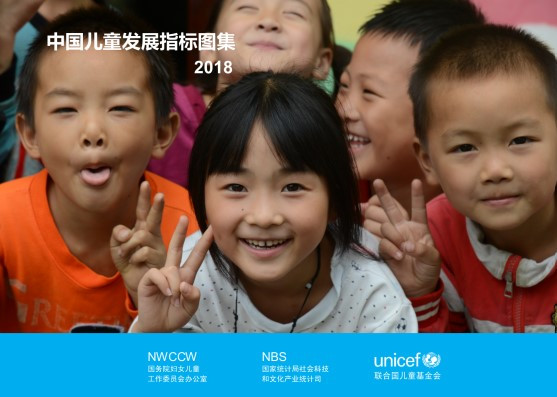 An Atlas of Social Indicators of Children in China 2018 Año de publicación: 2018 Autor corporativo: United Nations Children's Fund (UNICEF) | National Working Committee on Children and Women (NWCCW) | National Bureau of Statistics (NBS). Department of Social, Science, Technology and Cultural Statistics By bringing together the latest authoritative, official data on the main indicators of child survival, development and protection and presenting them in a visual manner, the Atlas has faithfully reflected the achievements, as well as issues and challenges in realizing children’s rights in China. 中国儿童发展指标图集 2018 Año de publicación: 2018 Autor corporativo: United Nations Children's Fund (UNICEF) | National Bureau of Statistics (NBS). Department of Social, Science, Technology and Cultural Statistics | National Working Committee on Children and Women (NWCCW) 本图集汇集了有关中国儿童生存、发展、保护状况的主要指标和最新权威数据信息,以可视化图表的形式,集中展现了中国儿童发展取得的成就,客观反映了中国实现儿童权利所面临的问题和挑战。
 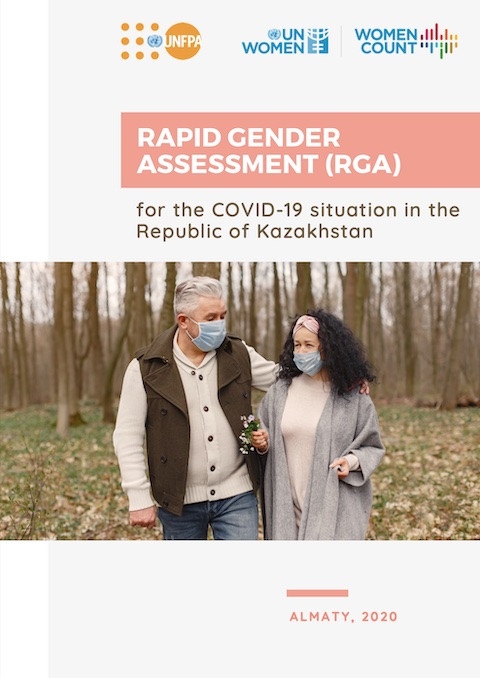 Rapid Gender Assessment: For the COVID-19 Situation in the Republic of Kazakhstan Año de publicación: 2020 Autor corporativo: The Center for Social and Political Studies "Strategy" | United Nations Population Fund (UNFPA) | United Nations Entity for Gender Equality and the Empowerment of Women (UN Women) The Rapid Gender Assessment on COVID-19 in the Republic of Kazakhstan was prepared by the CFSPI "Strategy" for UN Women and the UN Population Fund. It provides important information about gender roles and responsibilities, opportunities and vulnerabilities that have emerged in society in light of the COVID-19 outbreak. Быстрая гендерная оценка (бго): В отношении COVID-19 в республике Казахстан Año de publicación: 2020 Autor: The Center for Social and Political Studies "Strategy" Autor corporativo: The Center for Social and Political Studies "Strategy" | United Nations Population Fund (UNFPA) | United Nations Entity for Gender Equality and the Empowerment of Women (UN Women) Быстрая Гендерная Оценка в отношении COVID-19 в Республике Казахстан подготовлена ОФ ЦСПИ «Стратегия» для Структуры «ООН- женщины» и Фонда ООН в области народонаселения. Он предоставляет важную информацию о гендерных ролях и обязанностях, возможностях и уязвимостях, которые появились в обществе в свете вспышки COVID-19.
  Handbook on Gender Mainstreaming for Gender Equality Results Año de publicación: 2022 Autor corporativo: United Nations Entity for Gender Equality and the Empowerment of Women (UN Women) This handbook identifies the key concepts, principles, and approaches underlying gender mainstreaming. It outlines opportunities to apply gender analyses across different contexts and manage for gender equality results. It also illustrates how to identify opportunities for organizational change, enhance financing for gender equality, and strengthen monitoring and evaluation for the oversight of the results of gender mainstreaming.While the Handbook is focused specifically on the more traditional areas of development policy and practice, the discussions, findings, and recommendations are equally applicable in the context of humanitarian responses and programmes in conflict and peace-building contexts.