
Recursos
Exploren una amplia gama de recursos valiosos en GCED para profundizar su comprensión y promover su búsqueda, incidencia, enseñanza y aprendizaje.
2,162 resultados encontrados
 세계시민 양성을 위한 교육과정 모형 개발 연구: 2015 개정교육과정 성취기준 분석을 중심으로 Año de publicación: 2017 Autor: 강혜영 | 장준호 | 하은나 | 양은주 | 임윤정 | 최은정 | 최윤경 | 하승관 | 홍근태 Autor corporativo: 인천교육과학연구원 교육정책연구소 세계시민교육에 대한 중요성이 점차 강조되고 있음에도 현재 단위학교 현장에서는 세계시민교육의 개념과 관점이 혼재되어 있고 이를 교육과정 속에서 운영하는 사례도 부족한 실정이다. 이에 세계시민교육에 대한 방향을 제시하고 교육 현장에 보편적 가치를 반영하면서도 국가와 지역의 특수성을 기반으로 하는 경험중심의 세계시민교육이 뿌리 내릴 수 있도록 다양한 연구와 함께 시도교육청 차원의 노력이 시도되고 있다.인천광역시 교육청 역시 이러한 노력의 일환으로 다양한 연구를 수행하였고 본 연구는 학교가 교육과정 내에서 세계시민을 양성할 수 있는 교육과정 모형으로서 국가수준 교육과정에 해당하는 2015 개정교육과정의 성취기준 분석과 수업설계방법에 대한 제안을 목적으로 하고 있다.
  General Framework of Curriculum Standards: National Education and Social Studies Año de publicación: 2014 Autor: Khalid Abdaslam Autor corporativo: United Arab Emirates. Ministry of Education The file is a reference document for the general framework of curriculum standards in national education and social studies in the United Arab Emirates. The file outlines study plans for social studies subjects, learning outcomes, performance standards, and general guidelines for planning. The file ends with a set of lesson design templates. الإطار العام لمعايير المناهج: التربية الوطنية والدراسات الاجتماعية Año de publicación: 2014 Autor: Khalid Abdaslam Autor corporativo: United Arab Emirates. Ministry of Education يعتبر الملف وثيقة مرجعية للإطار العام لمعايير المناهج في التربية الوطنية والدراسات الاجتماعية بدولة الامارات العربية المتحدة. يوضح الملف الخطط الدراسية لمواد الدراسات الاجتماعية ونواتج التعلم ومعايير الأداء وموجهات عامة للتخطيط. وينتهي الملف بمجموعة من نماذج تصميم الدروس.
  The Course: Citizenship Education Año de publicación: 2021 Autor: Bader Abdul Qadir Autor corporativo: University of Jordan This file is a blueprint for the Citizenship education course at the University of Jordan. The course outline shows the course objectives, plan, and topics covered. At the end of the chart is a list of references. مقرر التربية الوطنية Año de publicación: 2021 Autor: Bader Abdul Qadir Autor corporativo: University of Jordan الملف هو مخطط لمقرر "التربية الوطنية" بالجامعة الأردنية. يوضح مخطط المقرر أهداف المقرر والخطة والمواضيع التي يغطيها. ويوجد في نهاية المخطط قائمة من المراجع.
  Educating for global citizenship: an ETFO curriculum development inquiry initiative Año de publicación: 2010 Autor: Alice Assor-Chandler | Mali Bickley | Jim Carleton | Antonino Giambrone | Janice Gregg | Jennifer Hunter | Laura Inglis | Leigh-Anne Ingram | Angela MacDonald | Miyuki (Erica) Moizumi | Carol Peterson | Carrie Schoemer | Nadya Weber | Tonia Wojciechowski Autor corporativo: Elementary Teachers’ Federation of Ontario (ETFO) Attention to educating for citizenship continues to expand and deepen worldwide. Many countries now include citizenship education as an important feature of their official curriculum, albeit in variant forms. Numerous research studies, policy reforms, and curriculum initiatives have been undertaken, as teachers, policy makers and researchers attempt to understand the intricate processes by which young people learn about democratic citizenship, and where and how citizenship education should be located and represented in school curricula.Educating for global citizenship has been a critical dimension of these discussions and investigations. Recent shifts in the speed and global reach of information and communication technologies, an increasingly interdependent global economy, challenges in human rights and social justice, and the impact of international tragedies and emergencies have, for example, created tensions and conditions that require more integrated, worldwide responses. Not surprisingly, understandings of global citizenship are being explored with increased intensity and, as might be expected, there has been a corresponding – and growing - interest among educators in various parts of the world to strengthen the global dimension of citizenship education in school curricula at all levels.In Canada, there has been increasing attention to what it means to educate for the global citizenship and provincial curriculum policy developments in recent years. A host of useful ideas in the form of new resource materials and websites to inform and guide teachers’ work have also emerged. The Canadian International Development Agency’s (CIDA) in the global classroom initiative, Classroom Connections’ Cultivating Peace in the 21st Century and Taking Action, Larsen’s ACT! Active Citizens Today: Global Citizenship for Local Schools, and UNICEF Canada’s Global Schoolhouse are a few examples of the many resources that have recently been developed. Despite this growing interest, there has been less attention devoted to examining practices of global citizenship education within Canadian classrooms, leaving a limited understanding of how it is applied in schools.A wide range of perspectives and practices has emerged, reflecting a considerable growth of interest in this dimension of education. In an effort to clarify the multiple dimensions of global citizenship education, below are two “working” frameworks that provide an overview of core learning goals and key teaching and learning practices associated with global citizenship education from the literature. They reveal both complexity and multidimensionality and provide a lens to analyse and reflect upon the breadth and depth of what it means to educate for global dimension of citizenship.
  디지털 리터러시 교육 1부: 정보를 읽는 능력을 키워라! #1 Año de publicación: 2020 Autor corporativo: 한국교육방송공사 급변하는 매체환경, 범람하는 가짜뉴스 속에서 진짜 정보와 가짜 정보를 구분하는 능력인 디지털리터러시가 중요하게 여겨지고 있는 상황. 우리 학생들이 미래를 바꿀 수 있는 역량을 갖도록 하기 위해 시대의 흐름에 맞는 교육의 변화 또한 필요하다. 이번 <미래교육 플러스>에서는 변화한 흐름에 맞는 디지털리터러시 교육에 대해서 논의 한다. 디지털 리터러시 교육 1부 ‘정보를 읽는 능력을 키워라!’에서는 디지털 리터러시의 중요성과 디지털 리터러시 교육의 현주소를 점검해 본다.
 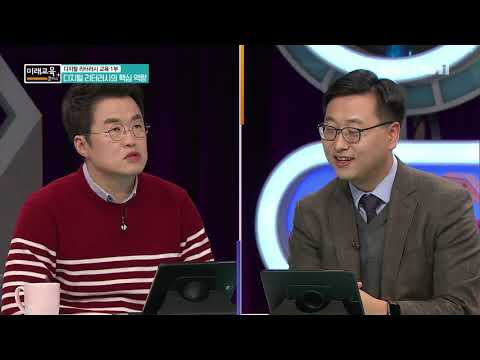 디지털 리터러시 교육 1부: 정보를 읽는 능력을 키워라! #2 Año de publicación: 2020 Autor corporativo: 한국교육방송공사 급변하는 매체환경, 범람하는 가짜뉴스 속에서 진짜 정보와 가짜 정보를 구분하는 능력인 디지털리터러시가 중요하게 여겨지고 있는 상황. 우리 학생들이 미래를 바꿀 수 있는 역량을 갖도록 하기 위해 시대의 흐름에 맞는 교육의 변화 또한 필요하다. 이번 <미래교육 플러스>에서는 변화한 흐름에 맞는 디지털리터러시 교육에 대해서 논의 한다. 디지털 리터러시 교육 1부 ‘정보를 읽는 능력을 키워라!’에서는 디지털 리터러시의 중요성과 디지털 리터러시 교육의 현주소를 점검해 본다.
 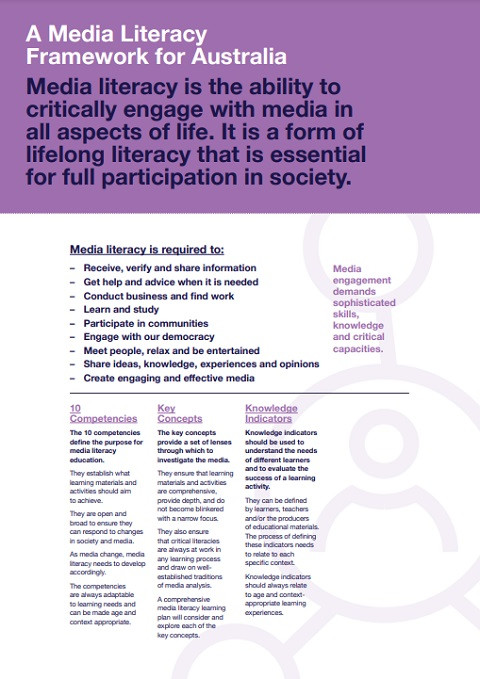 A Media Literacy Framework for Australia Año de publicación: 2020 Autor corporativo: Australian Media Literacy Alliance (AMLA) AMLA define media literacy as the ability to critically engage with media in all aspects of life.Media literacy complements Digital Literacy and Digital Safety – and all three are required to thrive in a digital world. Digital literacy focuses on the skills and knowledge required to access and use digital technologies. Digital Safety focuses on issues like online hate and abuse, bullying, the protection of personal information and online scams.Media Literacy encourages people to ask critical questions about the media and media technologies using a set of six key concepts. For any example of media (an advertisement, a news story, a film or television program, a YouTube video, video game or a social media post), we can ask the following questions:Institutions: who made this media and why did they make it?Audiences: who was this media made for and how are they likely to respond to it?Representations: how are people, places or ideas portrayed in this media, and what are the impacts of this?Technologies: what technology was used to produce, access and circulate this media? Does the technology gather personal data from users?Languages: how does this media communicate using image, sounds and written text?Relationships: what kind of relationships are being developed through the distribution and use of this media?These questions will have very different answers and follow-on questions depending on the media example, but the process of asking and answering these questions leads to critical understandings, and forms the basis for more successful media experiences. These questions can be asked during the process of consuming, sharing or creating media. They can be integrated as part of any Digital Literacy and Digital Safety learning program.
  세계시민을 위한 미디어정보리터러시 교안 개발 연구 Año de publicación: 2022 Autor: 김아미 | 김영은 | 박다혜 | 박유신 | 고기식 | 김현정 Autor corporativo: 유네스코한국위원회 어린이·청소년은 디지털 공간에서 세계시민이자 디지털 시민으로 성장하고 있다. 그러나 지금까지 어린이·청소년과 디지털 미디어를 논할 때에는 어린이·청소년을 미디어로부터 보호하거나 과의존을 방지하는 교육을 강조하거나 디지털 공간에서의 에티켓 교육 등에 치우친 경향이 있다. 하지만 어린이·청소년은 이미 디지털 공간의 중요한 구성원이자 성인과 미디어를 함께 경험해 나가는 주체이므로, 어린이·청소년이 디지털 세상에서 누려야 하는 권리는 무엇인지, 그리고 그러한 권리를 어떻게 지킬 것인지에 대한 보다 활발한 논의가 필요하다.어린이·청소년의 경험과 요구를 이해하고 학습자와 교육자가 함께 만들어가는 미디어정보리터러시 교육이야말로 지금 디지털 시민이자 세계시민으로 성장하는 어린이·청소년에게 필수적인 역량을 함양시킬 수 있는 교육일 것이다.이에 본 연구는 어린이·청소년이 경험하는 여러 미디어 관련 이슈에 대한 이해를 바탕으로 하여, 세계시민을 위한 미디어정보리터러시 교육안을 개발하는 것을 목적으로 한다. 특히 유엔아동권리협약 제12조에서 강조하고 있는 어린이·청소년의 참여권을 지원하기 위하여, 당사자의 목소리를 듣고 이를 반영하는 어린이·청소년 참여형 연구(participatory research)를 계획하였다.