
Recursos
Exploren una amplia gama de recursos valiosos en GCED para profundizar su comprensión y promover su búsqueda, incidencia, enseñanza y aprendizaje.
1,726 resultados encontrados
 Guidance on Integrating the Environment and Climate Change in Processes for United Nations Sustainable Development Cooperation Frameworks Año de publicación: 2021 Autor: Henrieta Martonakova Autor corporativo: Issue-based Coalition on Environment and Climate Change The guidance, which benefits from the diverse expertise of the 18 member organizations of the Coalition, looks at mainstreaming environmental and climate change considerations into the different stages of preparing the UNSDCF: The roadmap for a new cooperation frameworkThe common country analysisThe cooperation framework designThe cooperation framework implementationCooperation framework monitoring and evaluation The guidance looks deeper into mainstreaming the environment and climate change into a series of development priorities: human rights, including children’s rights and the rights of women; economic and trade development, including innovations, SMEs and decent work; food security and agriculture; infrastructure and sustainable use of resources, including energy, water and waste management; quality education; good health; good governance; and disaster reduction and conflict prevention.
  Educación Integral de la Sexualidad: Conceptos, Enfoques y Competencias Año de publicación: 2014 Autor corporativo: UNESCO Santiago El objetivo de este documento es comprender que la sexualidad es parte integral de la vida de las personas (en sus diferentes etapas o edades, y en toda su diversidad), y que contribuye al desarrollo de su identidad y por lo tanto, a su desarrollo social. Se trata de capacidades más que de contenidos, las que deben desarrollarse en forma interdisciplinaria y de manera progresiva para que las personas actúen de forma responsable respecto a ellas mismas y con los demás. El documento explica que la educación de la sexualidad está íntimamente relacionada con la comprensión, la reflexión y el discernimiento, y fortalece las bases para el aprendizaje a lo largo de la vida, preparando a los jóvenes para la vida adulta. Es así que el enfoque se centra en alcanzar un desarrollo y bienestar humano sostenible.
 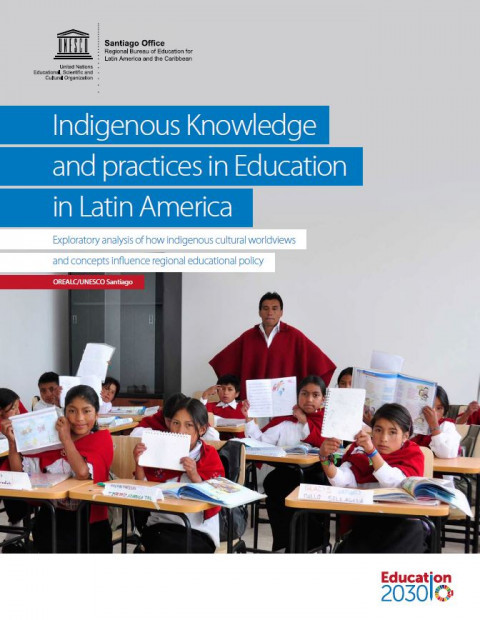 Indigenous Knowledge and practices in Education in Latin America: Exploratory Analysis of How Indigenous Cultural Worldviews and Concepts Influence Regional Educational Policy Año de publicación: 2017 Autor corporativo: UNESCO Santiago This study presents a preliminary exploration of the approaches, processes and tools through which indigenous worldviews and concepts of knowledge and well-being can and have influenced education policies in Latin America. First, it addresses the principal theoretical approaches used in the area of indigenous knowledge and education policies, taking into account the persistence of an “epistemic otherness” and the need for a dialogue between the predominant approaches. Second, it addresses the normative framework and intercultural educational policies, emphasizing how and to what extent the countries in the region take indigenous knowledge into consideration and include it in their education policies and practices. Third, it presents a number of “relevant practices” in terms of dialogue with indigenous knowledge in education policies, taking into account the factors that favour the relevance of education to indigenous views and cultural practices, facilitating their replicability and sustainability. Furthermore, these practices respond to key criteria like recognizing learners as ‘carriers’ and producers of culture, valuing the use of schools as centres of social and cultural activities and favouring the inclusive learning of indigenous and non-indigenous students. Finally, the study unveils challenges for the advancement of the dialogue between indigenous knowledge and education policies, at the same time proposing key concepts to be approached in depth. Conocimiento Indígena y Políticas Educativas en América Latina: Análisis exploratorio de cómo las cosmovisiones y conceptos culturales indígenas de conocimiento inciden, y pueden incidir, en la política educativa en la región Año de publicación: 2017 Autor corporativo: UNESCO Santiago El presente estudio explora la idea de una ‘alternativa epistémica’, construyendo desde el conocimiento y los valores que sustentan las prácticas sociales y educacionales indígenas de la región. En particular, explora cómo estos valores y formas de conocimiento han sido adoptados en las políticas educacionales de tres países de la región andina: Bolivia, Ecuador y Perú, que hace poco atravesaron reformas políticas y constitucionales con el fin de reconocer la composición de sus poblaciones multiculturales, multiétnicas y multilingüísticas. Esta publicación es una invitación a considerar el conocimiento indígena como una fuente legítima de inspiración para las políticas educacionales que puedan contribuir al bienestar de todos y a la sostenibilidad del planeta.
  Artificial intelligence in education: challenges and opportunities for sustainable development Año de publicación: 2019 Autor: Pedró, Francesc | Subosa, Miguel | Rivas, Axel | Valverde, Paula Artificial Intelligence is a booming technological domain capable of altering every aspect of our social interactions. Ineducation, AI has begun producing new teaching and learning solutions that are now undergoing testing in differentcontexts. This working paper, written for education policymakers, anticipates the extent to which AI affects the education sector to allow for informed and appropriate policy responses. This paper gathers examples of the introduction of AI in education worldwide, particularly in developing countries, discussions in the context of the 2019 Mobile Learning Week and beyond, as part of the multiple ways to accomplish Sustainable Development Goal 4, which strives for equitable, quality education for all. First, this paper analyses how AI can be used to improve learning outcomes, presenting examples of how AI technology can help education systems use data to improve educational equity and quality in the developing world. Next, thepaper explores the different means by which governments and educational institutions are rethinking and reworking educational programmes to prepare learners for the increasing presence of AI in all aspects of human activity. Thepaper then addresses the challenges and policy implications that should be part of the global and local conversations regarding the possibilities and risks of introducing AI in education and preparing students for an AI-powered context. Finally, this paper reflects on future directions for AI in education, ending with an open invitation to create new discussions around the uses, possibilities and risks of AI in education for sustainable development. Integral Education of Sexuality: Concepts, Approaches and Competencies Año de publicación: 2014 Autor corporativo: UNESCO Santiago The objective of this document is to understand that sexuality is an integral part of people's lives (in their different stages or ages, and in all their diversity), and that it contributes to the development of their identity and, therefore, to their development Social. It is about capacities rather than content, which must be developed in an interdisciplinary way and progressively so that people act responsibly towards themselves and with others. The document explains that the education of sexuality is closely related to understanding, reflection and discernment, and strengthens the bases for lifelong learning, preparing young people for adult life. Thus, the focus is on achieving sustainable human development and well-being.
 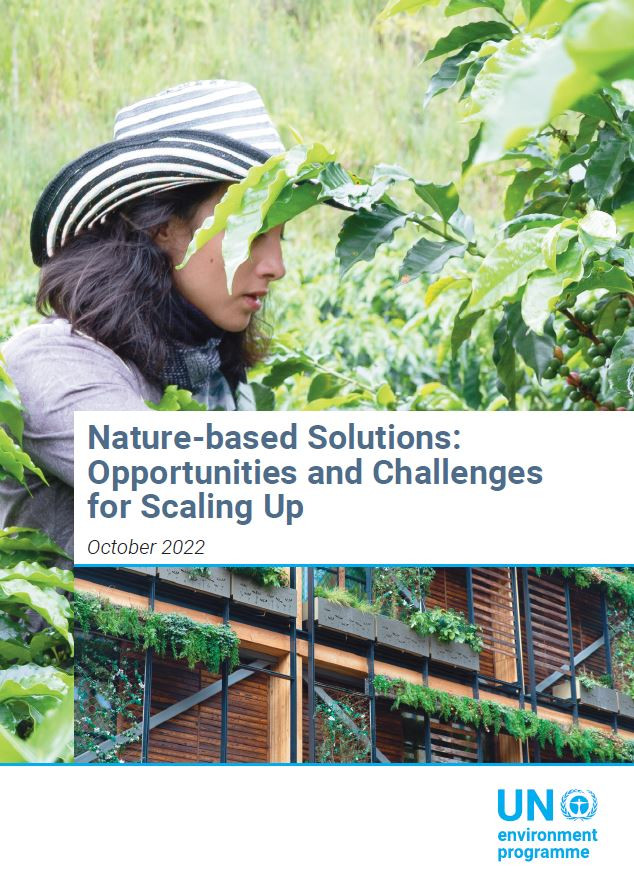 Nature-based Solutions: Opportunities and Challenges for Scaling Up Año de publicación: 2022 Autor: Charlotte Hicks | Carolina Chambi | Hemant Tripathi | Katie Dawkins | Tania Salvaterra | Kollie Tokpah | Valerie Kapos | Hashim Zaman Autor corporativo: United Nations Environment Programme (UNEP) Nature-based Solutions (NbS) are important for the global sustainable development agenda because they offer the potential to address, in an effective way, diverse challenges such as climate change, food and water insecurity, disaster impacts, and threats to human health and wellbeing, while reducing environmental degradation and biodiversity loss. Some of the challenges addressed by NbS, including biodiversity loss and climate action, cannot be fully tackled without this contribution. This does not mean that other actions, such as rapid decarbonization of our economies, are not also essential. This report: Outlines recent developments on NbS, with a focus on global, regional and national commitments, and key issues and concerns Builds on the new multilaterally agreed definition of NbS – agreed by the UN Environment Assembly in March 2022 – to set out key elements in the concept, provides examples of NbS, and discusses related approaches Provides recommendations for actions by governments, civil society and the private sector to substantially scale up the use of NbSThe report aims to inform NbS-related initiatives and discussions on NbS at global, regional, and national levels, with a focus on how NbS can be scaled up to more effectively address social, economic, and environmental challenges.
  Reviewing the Korean Sustainable Development Strategy and Policy in Response to COVID-19 Año de publicación: 2021 Autor: Soeun Ahn | Dokyun Kim | Hongrim Lee | Yoonseon Park | Jaehyuk Lee | Jungseok Lee | Hanwoom Hong | Woohyun Jung | Baeseok Jeon | Garim Jeon Autor corporativo: Korea Environment Institute (KEI) Through the ‘Sustainable Development Goals (SDGs)’, the United Nations (UN) has established tasks, including 17 policy goals and 169 targets, that civilization must resolve by 2030. It is recommended that each country build its own implementation mechanism, which sets its own policy goals and targets, tailored to its respective national context. South Korea established the ‘National Sustainable Development Goals (K-SDGs)’ in 2018, consisting of 17 policy goals and 122 targets. In 2020, the country prepared the Fourth Basic Plan for Sustainable Development (2021-2040). The K-SDGs were revised and supplemented in consideration of recent changes in conditions.This study aims to develop a national K-SDGs strategy by examining factors that threaten sustainable development, with a focus on the COVID-19 pandemic. 코로나19 대응 환경부문 국가 지속가능발전 전략개발 Año de publicación: 2021 Autor: 안소은 | 김도균 | 이홍림 | 박윤선 | 이재혁 | 이정석 | 홍한움 | 정우현 | 전배석 | 전가림 Autor corporativo: 한국환경연구원 본 보고서는 2021년 한국환경연구원(KEI)이 기획과제로 수행한 ‘포스트 코로나19 사회의 지속가능발전을 위한 환경정책 연구’의 지속가능 전략연구본부 세부과제 연구내용을 담고 있으며 세부과제 연구내용은 크게 ‘코로나19의 국가 지속가능발전목표(K-SDGs) 영향평가를 토대로 한 정책제언과 전략개발 (제1부)’과 ‘언택트 시대 시민참여를 통한 마을 지속가능발전 실천과제 도출과 시민참여 개선방향 제시 (제2부)’로 구분하였다. 종합결론에서는 제1부와 제2부의 연구결과를 종합하고 K-SDGs를 연결고리로 삼아 전문가 설문 조사 분석결과와 마을 지속가능발전 실천과제를 비교·해석하고 시사점을 도출하였다. * 본 저작물은 한국환경연구원에서 '2021'년에 작성하여 공공누리 제'4'유형으로 개방한 ‘코로나19 대응 환경부문 국가 지속가능발전 전략개발(작성자: 안소은 외)’를 이용하였으며 해당 저작물은 한국환경연구원 홈페이지(http://www.kei.re.kr)’에서 무료로 다운받으실 수 있습니다.
 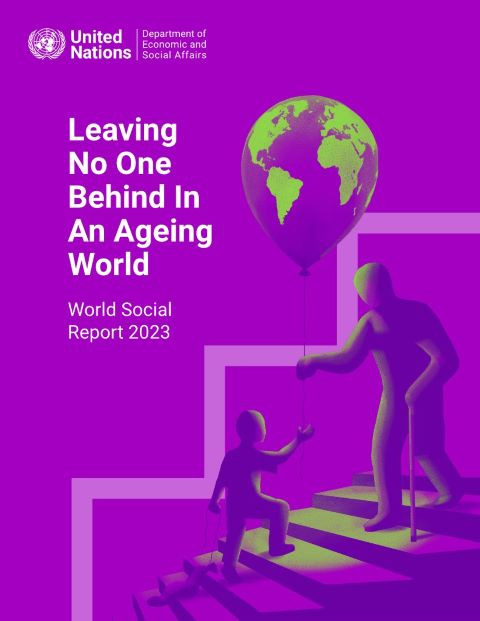 World Social Report 2023 : Leaving No One Behind in an Ageing World Año de publicación: 2023 Autor corporativo: UN. Department of Economic and Social Affairs (UN. DESA) Population ageing is a defining global trend of our time. People are living longer, and more are older than ever before. Spectacular improvements in health and survival and reductions in fertility have driven this momentous shift, which has begun or is expected to begin soon in all countries and areas. This change brings both challenges and opportunities as countries strive to achieve the Sustainable Development Goals (SDGs). In 2022, the world marked the twentieth anniversary of the adoption of the Madrid International Plan of Action on Ageing. To commemorate this landmark, the World Social Report 2023 explores the economic and social implications of the ageing of the human population. It builds on the Plan of Action’s framework for national policies to create equitable, inclusive societies for people of all ages, providing recommendations to put the rights and well-being of older persons at the centre, across the life course. Population ageing is an inevitable result of the demographic transition towards longer lives and smaller families. While the shift towards older populations is largely irreversible, collective actions and policy decisions shape its path and consequences. Postponing critical measures that allow societies to benefit from and adapt to population ageing would impose high social, economic, fiscal and health-related costs, for both current and future generations. By contrast, with appropriate foresight and planning, Governments can manage the challenges from population ageing while enhancing opportunities for all people to thrive and ensuring that no one is left behind. As elaborated in this report, population ageing needs to be widely understood as more than just a set of discrete concerns mainly for one group of people who have advanced beyond a given age. Ageing touches all parts of economies and societies, from health care and education to employment and taxation. Each stage of life can contribute to or detract from well-being at older ages.