
Recursos
Exploren una amplia gama de recursos valiosos en GCED para profundizar su comprensión y promover su búsqueda, incidencia, enseñanza y aprendizaje.
2,668 resultados encontrados
 Les juifs dans les manuels scolaires d'Histoire en France This book examines the dissonance between national memory and history concerning French Jewry. From the third Republic to the present, the analysis of textbooks reveals what representations the French educational system has disseminated across the nation and how these images persist or fade through time.
  Analysing the dominant discourses on the Holocaust in grade 9 South African history textbooks The Holocaust has become a focal point in many History classrooms in recent years as a direct result of linking the teaching of the Holocaust with Human Rights Education. Whilst there may be many studies on the Holocaust as a historical event, this study has analysed how the Holocaust has been embedded as a narrative in the Grade 9 GET South African History textbooks and which dominant discourses emerge from this. This research is phenomenological in nature and was situated within an interpretivist paradigm. I employed Narrative Inquiry and Fairclough's three dimensions of discourse as the analysis methodologies. The analysis was completed through an instrument in which the various aspects that aid in the construction of a narrative were interrogated. The study concluded that the Holocaust has a deeply-rooted link to education and the History curriculum in South Africa, as there has been a shift in ideological thinking emanating from western consciousness and finding a place in African consciousness due to the former's prevalence globally. The focus of the narrative of the Holocaust ‒as seen in the four selected Grade 9 GET History textbooks which constituted the sample for this study ‒ has shifted from a purely historical perspective to a perspective which is more social in nature. (By the author) National Socialism and the Holocaust in West German school books The author differentiates five phases of representation of the Holocaust in West German history books and lessons. Attempts to deal with the subject in a serious and comprehensive way in some post-war school textbooks were repressed in the 1950s. The students' movement, intensive research work and increased political attention on right-wing tendencies brought a change in the 1960s. New didactic methods such as source work and regional historical approaches were adopted, intended to give pupils greater insight into the individual areas of dictatorship and enable them to form their own opinion of the activities at that time. In the meantime, National Socialism is usually the area of German 20th century history dealt with in the most detail. The increasing distance in time to the period in question, the dissolution of the Socialist bloc, reunification and the multicultural nature of school classes have produced new teaching conditions, which on the one hand create a greater distance from the subject but on the other hand call for comparison of genocide, war and exile in the present time or from the history of other peoples. (By the author) Switzerland and the Holocaust: teaching contested history This study is about a history textbook which introduces the new transnational master‐narrative of Holocaust memory into the classrooms of the German‐speaking part of Switzerland. The script of the book entails a replacement of the formerly dominant view of Switzerland as a neutral nation resisting evil in favour of an image that aligns Switzerland with other nations that accept the Holocaust as part of their national history, and combine their efforts to prevent such crimes in the future. However, this process cannot be seen as hegemonic or total since it is fragmented at various levels. On the level of state power, there is no uniform vision of the nation’s history. Therefore, the book needed to accommodate its critics to a certain extent. Furthermore, there are institutional rules of history education that restrict a direct transmission of knowledge and promote teaching youths to develop their own views. And then there are the teachers, who have their part in shaping history. (By the publisher) Naming and misnaming the nation. Ambivalence and national belonging in German textbook representations of the Holocaust At a time when the power of schools and both state and federal education authorities to guide young people’s sense of belonging is being challenged by multilingualism, by the claims of supra- and subnational regions and minorities, by memories of national catastrophes and crimes, and by out-of-school educational media, this collection of essays provides an apposite exploration of the ways in which shared narratives continue to be transmitted and learned. Its authors, whose work emerged from a series of conferences organized by the French National Institute for Pedagogical Research in Lyon, Barcelona and Paris in 2010, demonstrate not only ways in which multiple disciplines (including history, literature, social and language studies) address young people’s sense of attachment, but also how challenges to educational policy are reflected in school textbooks and curricula in Algeria, Bulgaria, Catalonia, France, Galicia, Germany, Quebec, Senegal and the USA. These studies about the role of education in relation to largely tenacious but shifting national identities should appeal to specialists of education, nationalism studies, history and political science. (By the author) A ‘Curtain of Ignorance’: An Analysis of Holocaust Portrayal in Textbooks from 1943 through 1959 If textbooks are supposed to be an honest and impartial portrayal of historical events, they should remain the same over time. However, when examining one event across different editions of the same textbook, it becomes apparent that this is not the case. This study seeks to examine how the beginnings of the Cold War may have influenced how the Holocaust was discussed during the 1940s and 1950s. Results indicate that as Germany transformed from an enemy to be defeated into an ally needed to stop the advance of Communism, discussion of the Holocaust became more muted. While the beginnings of the Cold War may not be the only factor in this phenomenon, the results of this study indicate a methodological process in which textbooks could be used to create critical and historical thinking in today's classroom. (By the author) Die Darstellung des Faschismus und Nationalsozialismus in deutschen, österreichischen und italienischen Schulbüchern Textbooks are often held to be official representations of history. Contrary to many other products of historical culture, they are subject to state control and approval. Yet, especially against this background, the question remains which historical theories and which history didactical concepts are being offered for students’ processing of this period in secondary school level I. How are the dictatorships evaluated and which possibilities are the students offered to deal with the didactically prepared material? Recent Italian, Austrian, and German history textbooks are analysed to see how Italian Fascism and German National Socialism are narratively conceptualized and to what extent students are offered the chance to make an independent evaluation of this recent history. The study tries above all to build a bridge to the contemporary debate about competences in the didactics of history and civics, related to the domain-specific competences students should acquire during their time in school. This is particularly interesting with respect to the two dictatorships, as it comes to determine to what extent the processing of the two dictatorships, in the sense of the acquisition of a reflective and (self-)reflexive historical consciousness, something which today is considered by the majority to be the goal of history education, is at the centre for these three democracies (By the publisher) Global school partnerships programme impact evaluation report Año de publicación: 2011 Autor: Juliet Sizmur | Bernadetta Brzyska | Louise Cooper | Jo Morrison | Kathryn Wilkinson | David Kerr Autor corporativo: National Foundation for Educational Research The overarching aim of this evaluation is to assess the impact of DFID‟s Global School Partnerships (GSP) programme on levels of global awareness and attitudes to global issues in pupils attending GSP schools in the UK.This main aim can be broken down into four subsidiary aims, namely:1. to measure levels of global awareness and attitudes to global issues amongst pupils taking part in GSP programme activities2. to compare awareness levels and attitudes among pupils in GSP schools with those of pupils in non-GSP schools3. to evaluate whether the impact of GSP on global awareness and attitudes to global issues differs depending on pupils‟ ages and educational stages (e.g. at primary versus secondary level)4. to assess whether levels of awareness and attitudes amongst participating pupils change as the GSP programme becomes more embedded in schools (i.e. whether, over time, the programme has a positive, neutral or negative impact on pupil levels of development awareness). Programme mondial de partenariats scolaires et Rapport d'évaluation d'impact Año de publicación: 2011 Autor: Juliet Sizmur | Bernadetta Brzyska | Louise Cooper | Jo Morrison | Kathryn Wilkinson | David Kerr Autor corporativo: National Foundation for Educational Research L'objectif principal de cette évaluation est d'évaluer l'impact de partenariats scolaires internationaux(PSI) et le programme de DFID sur les niveaux de prise de conscience globale et attitudes aux enjeux mondiaux chez les élèves fréquentant les écoles PSI au Royaume-Uni. Cet objectif principal peut être décomposé en quatre objectifs subsidiaires, à savoir: 1. pour mesurer les niveaux de prise de conscience globale et attitudes à l'égard des enjeux mondiaux entre les élèves qui participent aux activités du programme PSI 2. pour comparer les niveaux de sensibilisation et les attitudes des élèves dans les écoles du PSI avec ceux des élèves des écoles non-PSI 3. afin d'évaluer si l'impact du PSI sur la sensibilisation et les attitudes envers les problèmes mondiaux global diffère selon les élèves «âges et niveaux d'enseignement (par exemple, au primaire ou au secondaire) 4. d'évaluer si les niveaux de sensibilisation et attitudes parmi les élèves participants changent à mesure que le programme PSI devient plus intégré dans les écoles (à savoir si, au fil du temps, le programme a un impact positif, neutre ou négatif sur le niveau des élèves de sensibilisation au développement).
 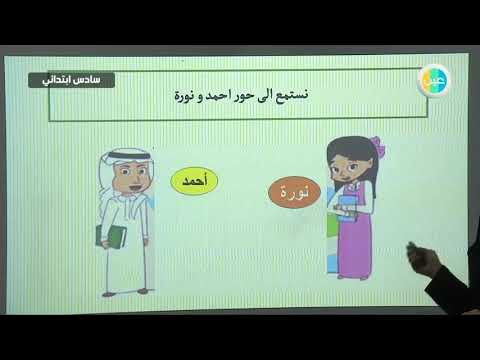 iEN Social Studies and Citizenship Lessons: Personality Enhancement Program - Sixth Primary Año de publicación: 2020 Autor: Fawzia Alghamdi Autor corporativo: iEN National Education Portal The teacher explains a sixth grade lesson on character development and enhancement. The lesson for students of the Kingdom of Saudi Arabia in a social studies course. With the Coronavirus pandemic, lessons explaining across platforms have emerged.