
Recursos
Exploren una amplia gama de recursos valiosos en GCED para profundizar su comprensión y promover su búsqueda, incidencia, enseñanza y aprendizaje.
3,454 resultados encontrados
 Educação 2030 Declaração de Incheon Rumo a uma educação de qualidade inclusiva e equitativa e à educação ao longo da vida para todos Año de publicación: 2016 Autor corporativo: UNESCO | United Nations Development Programme (UNDP) | UN. Office of the United Nations High Commissioner for Refugees (UNHCR) | United Nations Children's Fund (UNICEF) | United Nations Entity for Gender Equality and the Empowerment of Women (UN Women) | United Nations Population Fund (UNFPA) This framework — painstakingly drafted over many months with input from governments, international agencies, civil society and experts — provides guidance for implementing the education commitments made in the 2030 Agenda for Sustainable Development at a national, regional and global level. In particular: it aims at mobilizing all countries and partners around Sustainable Education Goal 4 and its targets; it proposes ways of implementing, coordinating, financing and monitoring the new commitments; and it proposes indicative strategies which countries may wish to draw upon in developing their plans, taking into account different national realities, capacities and levels of development and respecting national policies and priorities.
  Survey on Privacy in Media and Information Literacy with Youth Perspectives Año de publicación: 2017 Autor: Sherri Hope Culver | Alton Grizzle Autor corporativo: UNESCO Media and information literate individuals are more empowered to make informed decisions about their privacy online and offline, among other things. Accordingly, governments and policy-makers who are committed to ensuring that the privacy of citizens is respected should also be committed to media and information literacy (MIL) for all. If they are not, then their efforts will be less sustainable. Equally, private and public enterprises that genuinely want to respect the privacy of citizens should purposefully contribute to MIL awareness among users qua citizens. Two research surveys are referenced in this report. The first investigated youth attitudes towards MIL and social and democratic discourses. One of the seven themes addressed in the context of social and democratic discourses was privacy. The research was carried out by UNESCO. The second survey studied privacy in MIL courses globally and was conducted for UNESCO by the UNESCO-UNAOC University Network on Media and Information Literacy and Intercultural dialogue (MILID Network), and members of the Global Alliance for Partnerships in Media and Information Literacy (GAPMIL). The report responds to UNESCO’s efforts to stimulate global research into privacy in MIL. Ultimately, this report aims to provide conceptual, development and policy recommendations to foster privacy in MIL, while enabling the critical engagement of people, including young women and men, in an environment conducive to sustainable development and to freedom of expression online and offline. It seeks to provide clarity on the complex issue of how MIL and privacy intersect.
  The rapprochement of cultures: roadmap Año de publicación: 2016 Autor corporativo: UNESCO Today, the sheer compression of the world is bringing people and their cultures into the same space with intense speed, rendering new levels and forms of human interaction and interdependence. Population growth and migration are increasing in scale and complexity, and technology and media are bringing people together in ways never before thought possible. As a result, new creative expressions, innovation and immense opportunities have been generated and developed. While these phenomena have brought people together across geographic spaces, it has concurrently exposed a widening moral gap in our societies and the extent to which our societies are ill-equipped to effectively manage and overcome the challenges that continue to arise. Often in parallel with developmental progress, retrogressive patterns have emerged that present persistent threats to peace-building and social cohesion. Recurrent cycles of deadlock and conflict undermine governance and legislation at international, national and local levels preventing long-term peace and development.The litany of polarization within our societies often defined along the lines of ‘identity’ – religious, cultural, ethnic, or otherwise – are increasingly manifested in prejudice, intolerance, racism, xenophobia, discrimination, radicalization and extreme violence. The challenges are often multidimensional and interrelated, and their impacts cross conventional borders, thus revealing a pervading vulnerability at global level and the accompanying need for a global response. From a policy and governance perspective, this has rendered new levels of complexity in addressing challenges. It has also reinforced the need for a more inclusive and participatory notion of development, including integrated approaches that tackle the issues at hand as well as their foundations.The Decade has come into being in an era marked by increased divisiveness, and learning to live together in the 21st century presents a new frontier for managing cultural diversity. Respect for the inherent dignity of all persons underpins the values of the Decade and is one of the core pillars of the UN system, to ensure that all people have equal rights and opportunities to shape their future. These principles are reflected in the values of many cultures around the world. Intercultural dialogue denotes an open process of exchange and respect between individuals and groups of different cultures, points of view and aspirations. In such a way, the respect for and exercise and enjoyment of human rights and fundamental freedoms are not only key inroads to dialogue, but they are integral to its process. Ultimately they are crucial to sustaining the rapprochement of cultures as the central aspiration of the Decade. Le rapprochement des cultures; feuille de route Año de publicación: 2016 Autor corporativo: Organisation des Nations Unies pour l'éducation, la science et la culture (UNESCO) Today, the sheer compression of the world is bringing people and their cultures into the same space with intense speed, rendering new levels and forms of human interaction and interdependence. Population growth and migration are increasing in scale and complexity, and technology and media are bringing people together in ways never before thought possible. As a result, new creative expressions, innovation and immense opportunities have been generated and developed. While these phenomena have brought people together across geographic spaces, it has concurrently exposed a widening moral gap in our societies and the extent to which our societies are ill-equipped to effectively manage and overcome the challenges that continue to arise. Often in parallel with developmental progress, retrogressive patterns have emerged that present persistent threats to peace-building and social cohesion. Recurrent cycles of deadlock and conflict undermine governance and legislation at international, national and local levels preventing long-term peace and development. The litany of polarization within our societies often defined along the lines of ‘identity’ – religious, cultural, ethnic, or otherwise – are increasingly manifested in prejudice, intolerance, racism, xenophobia, discrimination, radicalization and extreme violence. The challenges are often multidimensional and interrelated, and their impacts cross conventional borders, thus revealing a pervading vulnerability at global level and the accompanying need for a global response. From a policy and governance perspective, this has rendered new levels of complexity in addressing challenges. It has also reinforced the need for a more inclusive and participatory notion of development, including integrated approaches that tackle the issues at hand as well as their foundations. The Decade has come into being in an era marked by increased divisiveness, and learning to live together in the 21st century presents a new frontier for managing cultural diversity. Respect for the inherent dignity of all persons underpins the values of the Decade and is one of the core pillars of the UN system, to ensure that all people have equal rights and opportunities to shape their future. These principles are reflected in the values of many cultures around the world. Intercultural dialogue denotes an open process of exchange and respect between individuals and groups of different cultures, points of view and aspirations. In such a way, the respect for and exercise and enjoyment of human rights and fundamental freedoms are not only key inroads to dialogue, but they are integral to its process. Ultimately they are crucial to sustaining the rapprochement of cultures as the central aspiration of the Decade. El acercamiento de las culturas; Hoja de ruta Año de publicación: 2016 Autor corporativo: Organización de las Naciones Unidas para la Educación, la Ciencia y la Cultura (UNESCO) Today, the sheer compression of the world is bringing people and their cultures into the same space with intense speed, rendering new levels and forms of human interaction and interdependence. Population growth and migration are increasing in scale and complexity, and technology and media are bringing people together in ways never before thought possible. As a result, new creative expressions, innovation and immense opportunities have been generated and developed. While these phenomena have brought people together across geographic spaces, it has concurrently exposed a widening moral gap in our societies and the extent to which our societies are ill-equipped to effectively manage and overcome the challenges that continue to arise. Often in parallel with developmental progress, retrogressive patterns have emerged that present persistent threats to peace-building and social cohesion. Recurrent cycles of deadlock and conflict undermine governance and legislation at international, national and local levels preventing long-term peace and development. The litany of polarization within our societies often defined along the lines of ‘identity’ – religious, cultural, ethnic, or otherwise – are increasingly manifested in prejudice, intolerance, racism, xenophobia, discrimination, radicalization and extreme violence. The challenges are often multidimensional and interrelated, and their impacts cross conventional borders, thus revealing a pervading vulnerability at global level and the accompanying need for a global response. From a policy and governance perspective, this has rendered new levels of complexity in addressing challenges. It has also reinforced the need for a more inclusive and participatory notion of development, including integrated approaches that tackle the issues at hand as well as their foundations. The Decade has come into being in an era marked by increased divisiveness, and learning to live together in the 21st century presents a new frontier for managing cultural diversity. Respect for the inherent dignity of all persons underpins the values of the Decade and is one of the core pillars of the UN system, to ensure that all people have equal rights and opportunities to shape their future. These principles are reflected in the values of many cultures around the world. Intercultural dialogue denotes an open process of exchange and respect between individuals and groups of different cultures, points of view and aspirations. In such a way, the respect for and exercise and enjoyment of human rights and fundamental freedoms are not only key inroads to dialogue, but they are integral to its process. Ultimately they are crucial to sustaining the rapprochement of cultures as the central aspiration of the Decade. UNESCO's global/regional coordination of and support for the implementation of SDG 4-Education 2030 Año de publicación: 2017 Autor corporativo: UNESCO Pursuant to 200 EX/7, the Director-General submits to the Executive Board the report on UNESCO’s contribution to the coordination of and support for SDG 4 – Education 2030.The financial and administrative implications of this document have been covered in document 38 C/5.Action expected of the Executive Board: Proposed decision in paragraph 18. UNESCO's global/regional coordination of and support for the implementation of SDG 4-Education 2030 Año de publicación: 2017 Autor corporativo: Organisation des Nations Unies pour l'éducation, la science et la culture (UNESCO) Pursuant to 200 EX/7, the Director-General submits to the Executive Board the report on UNESCO’s contribution to the coordination of and support for SDG 4 – Education 2030.The financial and administrative implications of this document have been covered in document 38 C/5.Action expected of the Executive Board: Proposed decision in paragraph 18. UNESCO's global/regional coordination of and support for the implementation of SDG 4-Education 2030 Año de publicación: 2017 Autor corporativo: 유네스코 Pursuant to 200 EX/7, the Director-General submits to the Executive Board the report on UNESCO’s contribution to the coordination of and support for SDG 4 – Education 2030.The financial and administrative implications of this document have been covered in document 38 C/5.Action expected of the Executive Board: Proposed decision in paragraph 18.
 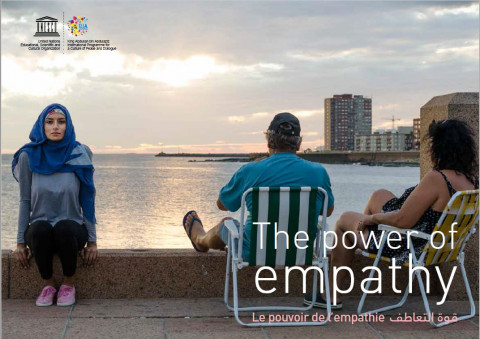 The Power of Empathy Año de publicación: 2017 Autor corporativo: UNESCO This photobook is a tribute to the power of empathy and solidarity felt and expressed by young people. Its photographs and stories were selected from the response to the global youth contest “If I were…”, launched by UNESCO on social media in Arabic, English, French and Spanish in early 2017. UNESCO received some 837 submissions, from 117 countries, covering a wide variety of issues and experiences.Despite the gravity of the themes addressed in these beautiful pictures, hope emerges from the testaments of the young photographers which demonstrate not only a sensitivity to the situations of “others”, but, moreover, a resolve to help people recover and protect their rights and dignity. Le Pouvoir de l'empathie Año de publicación: 2017 Autor corporativo: Organisation des Nations Unies pour l'éducation, la science et la culture (UNESCO) This photobook is a tribute to the power of empathy and solidarity felt and expressed by young people. Its photographs and stories were selected from the response to the global youth contest “If I were…”, launched by UNESCO on social media in Arabic, English, French and Spanish in early 2017. UNESCO received some 837 submissions, from 117 countries, covering a wide variety of issues and experiences.Despite the gravity of the themes addressed in these beautiful pictures, hope emerges from the testaments of the young photographers which demonstrate not only a sensitivity to the situations of “others”, but, moreover, a resolve to help people recover and protect their rights and dignity. Cet ouvrage de photos rend hommage au pouvoir de l’empathie et aux sentiments de solidarité ressentis et exprimés par des jeunes. Les photographies et les textes qu’il contient ont été sélectionnés dans le cadre du concours mondial de la jeunesse « Et si j’étais… », lancé sur les réseaux sociaux de l’UNESCO en anglais, en arabe, en espagnol et en français, début 2017. L’UNESCO a reçu 837 candidatures de 117 pays, couvrant un large champ de questions et d’expériences. Malgré la gravité des thèmes abordés par chacune de ces superbes images, l’espoir se fait jour à mesure que les témoignages des jeunes photographes révèlent non seulement leur sensibilité à l’égard de la situation d’autrui, mais surtout une volonté d’aider les autres à recouvrer et à protéger leurs droits, leur dignité et la justice