
Recursos
Exploren una amplia gama de recursos valiosos en GCED para profundizar su comprensión y promover su búsqueda, incidencia, enseñanza y aprendizaje.
2,161 resultados encontrados
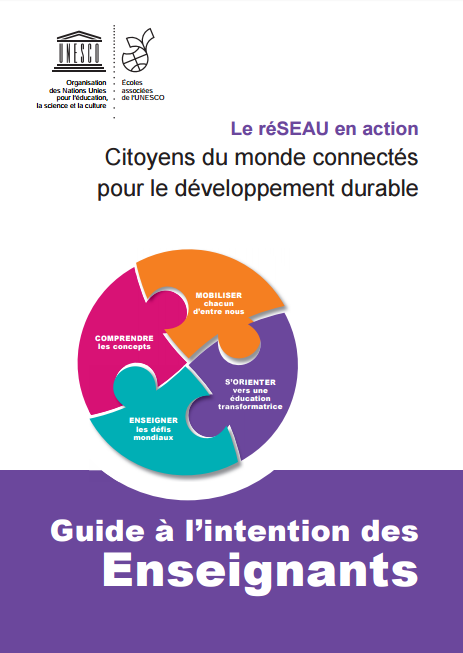 Le réSEAU en action: Citoyens du monde connectés pour le développement durable: guide à l'intention des enseignants Año de publicación: 2017 Autor corporativo: UNESCO Le guide à l’intention des enseignants : donne aux élèves une idée de ce que signifie pour eux « devenir des citoyens du monde » ainsi que des suggestions pour contribuer au développement durable ; propose des idées d’activités en classe pour aider les élèves du secondaire à développer des connaissances, des compétences, des valeurs, des attitudes et des comportements en faveur de l’ECM et de l’EDD ; présente une sélection d’activités sur l’ECM et l’EDD mises en œuvre par les écoles du réSEAU du monde entier.
  Global guidance on addressing school related gender based violence Año de publicación: 2016 Autor corporativo: UNESCO | United Nations Entity for Gender Equality and the Empowerment of Women (UN Women) More than 246 million children are subjected to gender-based violence in or around schools every year. This is a violation of their human rights, and a form of gender-discrimination that has far-reaching physical, psychological and educational consequences. Ending schoolrelated gender-based violence (SRGBV) is a priority for countries wishing to achieve ambitious global goals on inclusive and quality education for all and gender equality.WHAT IS THE AIM OF THIS GUIDANCE? This guidance aims to provide a comprehensive, one-stop resource on school-related gender-based violence (SRGBV), including clear, knowledge-based operational guidance, diverse case studies drawn from examples of promising practice and recommended tools for the education sector and its partners working to eliminate gender-based violence. It distils programme knowledge based on existing global literature, promising practices, expert recommendations and practitioner consensus.WHO IS THIS GUIDANCE FOR? The primary audience for this global guidance is the national education sector, including government policy-makers, education ministries, school administrators, educators and other school staff. The guidance may also have wider interest for other national and international stakeholders that are interested in addressing SRGBV, including NGOs, bilateral and multilateral agencies, teachers’ trade unions and policy-makers in other domestic sectors. The guidance is intended primarily for use in low- and middle-income settings, but is based on norms and principles that are universally applicable.WHAT IS COVERED IN THIS GUIDANCE? Promising practice case studies and recommended tools are embedded throughout the relevant sub-sections of the guidance. These provide readers with illustrative examples of implementation in real-life contexts and can serve as resources that have been successfully used – and can be adapted – for application in different contexts.This guidance complements other existing tools and materials for specific bilateral, multilateral and NGO audiences on violence against women and girls, and violence in schools. An expanded online version, which will be regularly updated, is available at www.endvawnow.org Lutte contre la violence de genre en milieu scolaire: orientations mondiales: Año de publicación: 2016 Autor corporativo: UNESCO | United Nations Entity for Gender Equality and the Empowerment of Women (UN Women) More than 246 million children are subjected to gender-based violence in or around schools every year. This is a violation of their human rights, and a form of gender-discrimination that has far-reaching physical, psychological and educational consequences. Ending schoolrelated gender-based violence (SRGBV) is a priority for countries wishing to achieve ambitious global goals on inclusive and quality education for all and gender equality.WHAT IS THE AIM OF THIS GUIDANCE? This guidance aims to provide a comprehensive, one-stop resource on school-related gender-based violence (SRGBV), including clear, knowledge-based operational guidance, diverse case studies drawn from examples of promising practice and recommended tools for the education sector and its partners working to eliminate gender-based violence. It distils programme knowledge based on existing global literature, promising practices, expert recommendations and practitioner consensus.WHO IS THIS GUIDANCE FOR? The primary audience for this global guidance is the national education sector, including government policy-makers, education ministries, school administrators, educators and other school staff. The guidance may also have wider interest for other national and international stakeholders that are interested in addressing SRGBV, including NGOs, bilateral and multilateral agencies, teachers’ trade unions and policy-makers in other domestic sectors. The guidance is intended primarily for use in low- and middle-income settings, but is based on norms and principles that are universally applicable.WHAT IS COVERED IN THIS GUIDANCE? Promising practice case studies and recommended tools are embedded throughout the relevant sub-sections of the guidance. These provide readers with illustrative examples of implementation in real-life contexts and can serve as resources that have been successfully used – and can be adapted – for application in different contexts.This guidance complements other existing tools and materials for specific bilateral, multilateral and NGO audiences on violence against women and girls, and violence in schools. An expanded online version, which will be regularly updated, is available at www.endvawnow.org
  Mainstreaming SDG4-Education 2030 in sector-wide policy and planning: technical guidelines for UNESCO field offices Año de publicación: 2016 Autor corporativo: UNESCO The main responsibility for implementing the SDG4-Education 2030 Agenda lies with governments, with UNESCO and partners providing support through coordinated policy advice, technical assistance, capacity development and monitoring of progress at global, regional and national levels. By their position, UNESCO field offices have a key role to play in providing such support at country level and therefore require adequate technical capacity to fulfil their mission.These guidelines aim at providing a basic resource to field offices for ensuring adequate technical support to national authorities in this process. In doing so, it takes into account different profiles of country needs and capacities, thus avoiding a one-size-fits-all approach. Countries may have different levels of awareness of, or political commitment to, Sustainable Development Goal 4 (SDG4). In all cases, UNESCO is expected to ensure that all the relevant information about SDG4-Education 2030 is properly disseminated and that national authorities and stakeholders are reminded of its importance. To assist field offices in this task UNESCO has developed and made available a number of resources and support materials, notably the Unpacking SDG4-Education 2030 Guide, parts of which are excerpted here, and will continue coordination efforts in this respect.Inevitably, field staff will have to adapt the guidelines provided here to the reality of the country they are serving. That is why this document is full of resources and pointers that can be combined and tailored to fit the particular context of each country. At the same time, field staff are invited to require additional technical guidance from the corresponding regional bureaus, which can rely on the backstopping of Headquarters services and support from the specialized institutes.These guidelines represent a first attempt to provide specific directions and resources to allow field offices to technically support Member States. After a first evaluation, in which all field staff are invited to participate, the guidelines will be improved so as to make them even more suitable and useful. They will also be supplemented with other material to ensure that UNESCO plays its role as the leading United Nations agency in the field.
 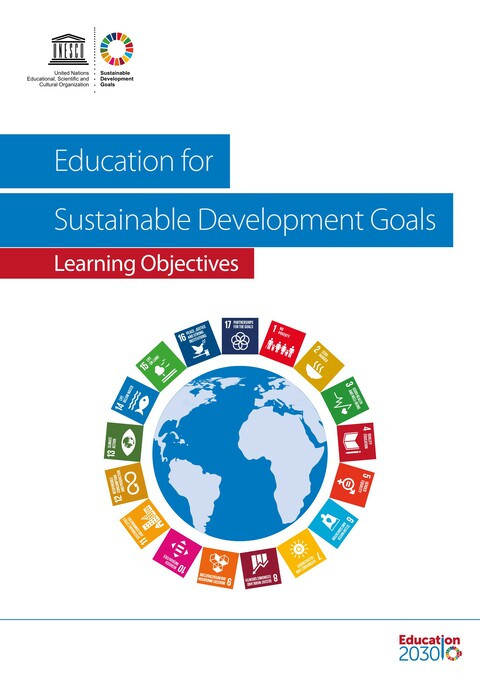 التعليم من أجل تحقيق أهداف التنمية المستدامة: أهداف التعلم Año de publicación: 2017 Autor corporativo: UNESCO تروج اليونسكو التعليم من أجل التنمية المستدامة منذ عام .١٩٩٢ وتولت اليونسكو قيادة عقد الأمم المتحدة للتعليم من أجل التنمية المستدامة بين عامي ٢٠٠٥ و٠١٤٢ وتقود حاليا الجهود الرامية إلى متابعة هذا العقد من خلال برنامج العمل العالمي للتعليم من أجل التنمية المستدامة. وثمة زخم لم يسبق له مثيل في مجال التعليم من أجل التنمية المستدامة. إن معالجة القضايا العالمية، كتغير المناخ مثلا، تتطلب تغيير أنماط عيشنا على نحو عاجل وإحداث تغيير جذري في طريقة تفكيرنا وتصرفنا. ولإحداث هذا التغيير، لا بد من توافر مهارات وقيم ومواقف جديدة تفضي إلى مجتمعات تنعم بقدر أكبر من الاستدامة. ويتعين على نظم التعليم تلبية هذه المتطلبات الملحة من خلال تحديد أهداف تعلم ومضامين تعليمية مجدية. وتطبيق أساليب تربوية هدفها تمكين الدارسين، وحث المؤسسات التعليمية على إدراج مبادئ الاستدامة في هياكلها الإدارية. وتتجلى هذه الرؤية التي تبرز أهمية اعتماد الحلول التعليمية المناسبة في جدول الأعمال الجديد للتنمية المستدامة لعام ٢٠٢٠ الذي يخصص للتعليم هدفا صريحا ومنفصلا يتمثل في الهدف ٤ من أهداف التنمية المستدامة، كما يتضمن العديد من الغايات والمؤشرات المتصلة بالتعليم التي تندرج في إطار أهداف التنمية المستدامة الأخرى. ويمثل التعليم هدفا في حد ذاته ووسيلة لبلوغ سائر أهداف التنمية المستدامة الأخرى. ولا يشكل التعليم جزءا لا يتجزأ من عملية التنمية المستدامة فحسب، بل هو أيضا عامل رئيسي يساعد على تحقيق التنمية المستدامة. وعليه، يمثل التعليم استراتيجية بالغة الأهمية لتحقيق سائر أهداف التنمية المستدامة. ويرمي هذا المنشور إلى توفير دليل يسترشد به المهنيون العاملون في حقل التعليم بشأن الاستعانة بالتعليم من أجل التنمية المستدامة لبلوغ مستويات التعلم الضرورية لتحقيق أهداف التنمية المستدامة، أي أنه يسعى للإسهام في بلوغ هذه الأهداف. ويحدد هذا الدليل عددا من أهداف التعلم الإرشادية ويقترح عددا من الموضوعات وأنشطة التعلم الخاصة بكل واحد من أهداف التنمية المستدامة، كما يعرض طائفة من أساليب التنفيذ على شتى المستويات، بدءأ بتصميم المساقات الدراسية ووصولا إلى رسم الاستراتيجيات الوطنية. ولا يسعى هذا الدليل لأن يكون ملزما بأي شكل كان، وإنما يرمي إلى توفير التوجيهات والاقتراحات التي يمكن للمربين الانتقاء منها وتكييفها لتلائم سياقات التعلم الفعلية السائدة لديهم. 教育促进实现可持续发展目标: 学习目标 Año de publicación: 2017 Autor corporativo: UNESCO 自1992年起,教科文组织一直致力于促进可持续发展教育(ESD)。教科文组织引领了联合国可持续发展教育十年(2005‒2014年),目前本组织正大力倡导其后续工作“全球可持续发展教育行动计划”(GAP)。 可持续发展教育的势头从未如此强劲。气候变化等全球问题迫切要求我们转变生活、思维和行动的方式。要实现这种改变,我们需要新的技术、价值观和态度,增加社会的可持续性。 面对这种迫切的需求,教育系统必须厘清相关的学习目标和学习内容,引进能增强学习者能力的教学法,敦促各教育机构在其管理结构中纳入可持续性原则。 新的《2030年可持续发展议程》清楚体现对适当教育重要性的认识。教育被单独作为一个明确的目标——可持续发展目标4。其他可持续发展目标(SDG)中也涵盖了多个与教育有关的具体目标和指标。 教育不仅本身是我们孜孜以求的目标,还是实现所有其他可持续发展目标的手段。它既是可持续发展的内在组成部分,也是推动实现可持续发展的关键因素。因此,教育是实现可持续发展目标的一项关键战略。 本出版物旨在为教育专家们提供一部指南,以便他们在学习过程中利用可持续发展教育促进实现可持续发展目标,从而为实现可持续发展目标作出贡献。对于每项可持续发展目标,这部指南都标明了指示性学习目标,并提出了拟议的专题和学习活动。指南中还介绍了从课程设计到国家战略等不同层级的实施方法。 这部指南不是为了作出任何硬性规定,而是要提供指导和建议,以便教育者根据具体的学习环境作出选择和调整。
  Orientaciones Técnicas Internacionales sobre Educación en Sexualidad: un enfoque basado en evidencia orientado a escuelas, docentes y educadores de la salud Año de publicación: 2009 Autor corporativo: UNESCO El presente documento Orientaciones Técnicas Internacionales, basado en un riguroso análisis de la evidencia existente sobre programas de educación en sexualidad, está orientado a profesionales y a personas responsables de la toma de decisiones de los sectores salud y educación. Este documento (Volumen 1) se centra en aquellos elementos que justifican la educación en sexualidad y ofrece sólidas recomendaciones técnicas sobre las características que todo programa efectivo debe tener. El documento acompañante (Volumen 2) cubre los temas y objetivos de aprendizaje que se deben abordar en los diferentes tramos etarios en un programa básico de educación en sexualidad destinado a niños, niñas y jóvenes entre las edades de 5 a 18 y más años e incluye una bibliografía de referencias. El documento Orientaciones Técnicas Internacionales es relevante no sólo para los países más afectados por el VIH y el SIDA, sino también para los que exhiben una epidemia de baja prevalencia y alta concentración. Principes directeurs internationaux sur l'éducation sexuelle: une approche factuelle à l'intention des établissements scolaires, des enseignants et des professionnels de l'éducation à la santé Año de publicación: 2009 Autor corporativo: UNESCO S’appuyant sur un examen rigoureux et actuel des donnees de programmes d’education sexuelle, ces Principes directeurs internationaux sur l’education sexuelle s’adressent aux decideurs et professionnels des secteurs de l’education et de la sante. Ils sont destines a aider les autorites en charge de ces deux secteurs et autres secteurs connexes a elaborer et mettre en oeuvre des programmes et des materiels d’education sexuelle en milieu scolaire. Le Volume I met l’accent sur le bien-fonde d’une education sexuelle et fournit des conseils techniques avises sur les caracteristiques des programmes efcaces. Il s’accompagne d’un document parallele (Volume II) qui decrit les themes a aborder et les objectifs d’apprentissage a atteindre dans le cadre d’un ‘cours de base minimum’ d’education sexuelle destine aux enfants et aux jeunes ages de 5 a 18 ans et plus, et qui contient une bibliographique de ressources utiles. Ces Principes directeurs internationaux sont d’une grande utilite non seulement pour les pays les plus affectes par le VIH et le SIDA, mais aussi pour les pays qui connaissent une prevalence faible et un contexte d’epidemie concentree.
  All human beings... a manual for human rights education Año de publicación: 1998 Autor: Kaisa Savolainen | Francine Best | Patrice Meyer-Bisch | Betty Reardon Autor corporativo: UNESCO The World Conference on Human Rights (Vienna, 1993) took the position that human rights education, training and public information were essential in order to create and promote stable and harmonious relations among different communities and to foster mutual understanding, tolerance and peace.UNESCO has prepared this Manual for Human Rights Education as a contribution to the fiftieth anniversary of the Universal Declaration of Human Rights on 10 December 1998 and to the United Nations Decade for Human Rights Education (1995–2004). While intended mainly for educators, it may also be useful to secondary-school students and in the context of non-formal education.The Manual is the result of teamwork, with participation by numerous educators and experts from various regions of the world. A preliminary version was submitted to the delegates of UNESCO Member States at the 29th session of the Organization’s General Conference and has since been tested in several schools throughout the world.The Manual is addressed to primary- and secondary-school teachers and to instructors in non-formal education for children and adults. It is a teaching aid providing both theory and practical advice. However, parts of it can be used directly, without any teacher, by young people from the age of 14 upwards.Part 1 sets out an approach to the concepts essential if human rights education is to be rigorous, have a scientific basis, expand knowledge and promote thought. This part is to be read by teachers who wish to impart human rights education. It can be understood by secondary students aged 14 and over. It incorporates the basic components of the Declaration and Integrated Framework of Action on Education for Peace, Human Rights and Democracy (1994).Part 2 is addressed to schoolteachers and those in positions of responsibility. It is essentially a tool for teaching. It opens up avenues, makes suggestions and gives advice on how all educational disciplines can embrace the objectives inherent in human rights education. Obviously all teachers are free, in the light of their own cultures and individual pedagogical choices, to invent and create approaches and situations different from those suggested here.Part 3 presents a number of pedagogical examples that have been tried out and that provide an approach for educational work concerning a specific right. The plan follows that of the Universal Declaration of Human Rights, which is quoted and referred to at length. This part may be regarded as an educational demonstration of the features of this declaration, the fiftieth anniversary of which is being celebrated by UNESCO and the United Nations in 1998.All teachers and organizers can be guided by the experiments presented here to encourage information, training and reflection. There is no need to follow any particular order. As the need arises, a particular right (such as the right to health care or the right to live in a well-balanced environment) can be introduced before or after another right, or the focus may be on a single right.The Manual does not seek to be exhaustive but rather to propose material which can be developed and supplemented in an ongoing process. It will be for educators and learners, in their own cultural contexts, to discover how human rights can acquire meaning in their daily lives. Tous les êtres humains ... un manuel pour l'éducation aux droits de l'homme Año de publicación: 1998 Autor: Kaisa Savolainen | Francine Best | Patrice Meyer-Bisch | Betty Reardon Autor corporativo: UNESCO La Conférence Mondiale sur les Droits de l'Homme (Vienne, 1993) a pris la position que l'éducation aux droits de l'homme, la formation et l'information du public sont essentiels afin de créer et de promouvoir des relations stables et harmonieuses entre les différentes communautés et de favoriser la compréhension mutuelle, la tolérance et la paix. L'UNESCO a préparé ce manuel pour l'éducation aux droits de l'homme en tant que contribution au cinquantième anniversaire de la Déclaration Universelle des Droits de l'Homme, le 10 Décembre,1998 et à la Décennie des Nations Unies pour l'Éducation aux Droits Humains (1995-2004). Bien que destiné principalement aux éducateurs, il peut également être utile pour les élèves du secondaire et dans le cadre de l'éducation non formelle. Le manuel est le résultat du travail d'équipe, avec la participation de nombreux éducateurs et experts de différentes régions du monde. Une version préliminaire a été soumis aux délégués des Etats membres de l'UNESCO à la 29e session de la Conférence générale de l'Organisation et a depuis été testé dans plusieurs écoles à travers le monde. Le manuel est adressé au primaire et les enseignants du secondaire et aux instructeurs dans l'éducation non formelle pour les enfants et les adultes. Il est un outil pédagogique fournissant à la fois la théorie et des conseils pratiques. Toutefois, certaines parties peuvent être utilisées directement, sans enseignant, par les jeunes dès l'âge de 14 vers le haut. Partie 1 énonce une approche des concepts essentiels si l'éducation aux droits de l'homme est d'être rigoureux, ont une base scientifique, développer les connaissances et promouvoir la pensée. Cette partie doit être lu par les enseignants qui souhaitent donner une éducation aux droits de l'homme. Il peut être compris par les élèves du secondaire âgés de 14 ans et plus. Il intègre les composants de base de la Déclaration et Cadre d'action intégré concernant l'éducation pour la paix, droits de l'homme et la démocratie (1994). Partie 2 est adressée aux enseignants et ceux des postes de responsabilité. Il est essentiellement un outil pour l'enseignement. Il ouvre des pistes, fait des suggestions et donne des conseils sur la façon dont toutes les disciplines d'enseignement peuvent embrasser les objectifs inhérents à l'éducation des droits de l'homme. Il est évident que tous les enseignants sont libres, à la lumière de leurs propres cultures et les choix pédagogiques individuels, d'inventer et de créer des approches et des situations différentes de celles suggérées ici. Partie 3 présente un certain nombre d'exemples pédagogiques qui ont été expérimentées et qui fournissent une approche pour le travail éducatif concernant un droit spécifique. Le plan suit celle de la Déclaration universelle des droits de l'homme, qui est cité et renvoyé à la longueur. Cette partie peut être considérée comme une démonstration éducative des caractéristiques de cette déclaration, le cinquantième anniversaire de ce qui est célébrée par l'UNESCO et l'Organisation des Nations Unies en 1998. Tous les enseignants et les organisateurs peuvent être guidés par les expériences présentées ici pour encourager l'information, la formation et de réflexion. Il n'y a pas besoin de suivre un ordre particulier. Comme le besoin, un droit particulier (tel que le droit aux soins de santé ou le droit de vivre dans un environnement bien équilibré) peut être introduit avant ou après un autre droit, ou la mise au point peut être sur une seule droite. Le manuel ne cherche pas à être exhaustive, mais plutôt de proposer du matériel qui peut être développée et complétée en un processus continu. Ce sera pour les éducateurs et les apprenants, dans leurs propres contextes culturels, de découvrir comment les droits humains peuvent acquérir un sens dans leur vie quotidienne.