
Recursos
Exploren una amplia gama de recursos valiosos en GCED para profundizar su comprensión y promover su búsqueda, incidencia, enseñanza y aprendizaje.
875 resultados encontrados
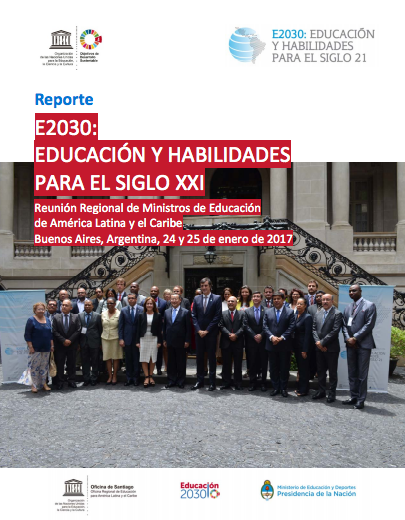 E2030: education and skills for the 21st century, report Año de publicación: 2017 Autor corporativo: UNESCO Santiago The UNESCO Regional Bureau for Education in Latin America and the Caribbean, OREALC/UNESCO Santiago, in collaboration with the Ministry of Education and Sport of the Republic of Argentina, organized the Regional Meeting of Ministers of Education of Latin America and the Caribbean – “E2030: Education and skills for the 21st century”. Ministers of Education and high-level representatives of the education sector of the Member States of LAC; bilateral, regional and multilateral organizations; United Nations agencies; representatives of civil society; stakeholders and UNESCO experts participated in the meeting, which was held on 24-25 January 2017 in Buenos Aires, Argentina. This was the first ministerial meeting to be organized within the framework of the 2030 Agenda for Sustainable Development and its 17 Sustainable Development Goals (SDGs), in particular SDG 4 – “Ensure inclusive and quality education for all and promote lifelong learning”. It provided a space for dialogue between ministers of education and other stakeholders to debate SDG 4 in the context of the 2030 SDG Agenda. Discussions and information sharing on various topics related to the SDG 4 targets, and on the coordination mechanisms and monitoring instruments conducive to the achievement of E2030 enabled LAC Member States to reach a common vision and understanding of E2030 in the region. This joint approach on E2030 for the region is laid down in the Declaration of Buenos Aires, which ministers adopted at the end of the meeting.
 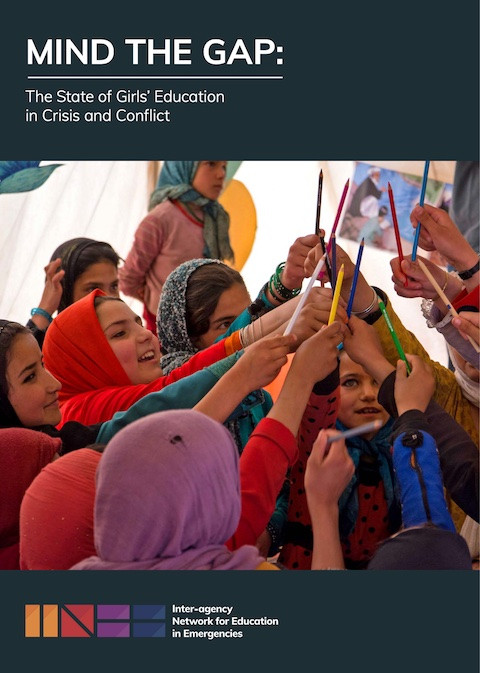 Mind the Gap: The State of Girls’ Education in Crisis and Conflict Año de publicación: 2021 Autor corporativo: Inter-agency Network for Education in Emergencies (INEE) This report summarizes progress, gaps, challenges and opportunities in improving education and training for girls and women affected by conflict and crisis. The report aims to support the Charlevoix Declaration on Quality Education’s commitment to enhance the evidence base and monitor progress toward gender-equitable education in crises. The report draws from data on 44 crisis-affected countries, from recent research, and from a set of case studies of interventions in a range of crisis-affected contexts.
 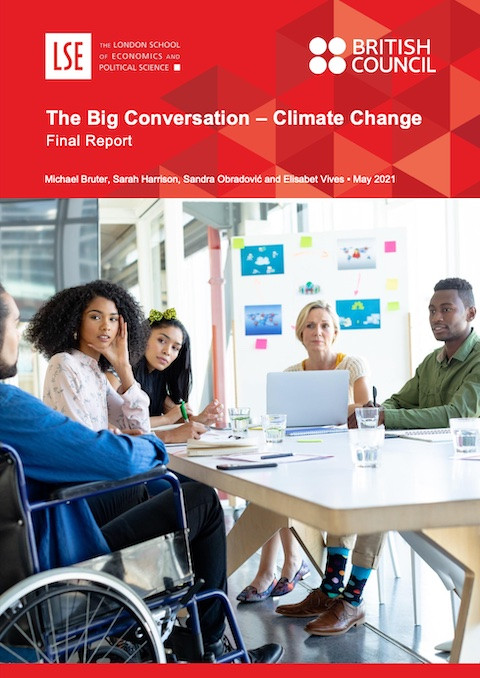 The Big Conversation: Climate Change; Final Report Año de publicación: 2021 Autor: Michael Bruter | Sarah Harrison | Sandra Obradović | Elisabet Vives Autor corporativo: British Council | London School of Economics and Political Science This research draws on experience from the field of international cultural relations as well as the latest academic research on values, behaviours and norms to understand more about how we can create the conditions for co-operation on shared global challenges.It delivers new insight on values and attitudes towards climate change among the populations of China, India, Japan and Mexico – selected to represent a diverse range of major world economies who are also important players in the global climate change debate.The research also draws on the experience of international cultural relations experts to provide new insight on how to strengthen international cooperation on climate change and the important role that cultural relations can play in supporting that.
 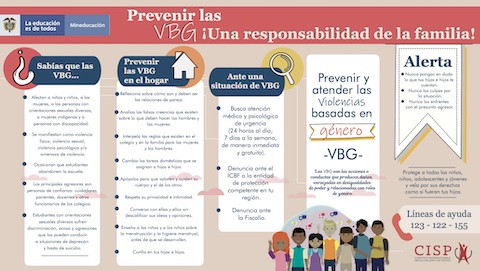 Prevenir las VBG: ¡Una responsabilidad de la familia! Autor corporativo: Ministry of National Education of Colombia Esta infografía habla de lo que sucede con las violencias basadas en género, define este tipo de violencias y explica qué hacer cuando se presentan. En este documento se pretende hacer consciente a la familia de su papel dentro de este fenómeno y el papel se juega en el mismo.
 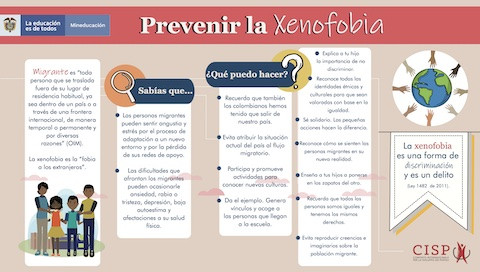 Preventing Xenophobia Autor corporativo: Ministry of National Education of Colombia With the massive reception of migrants in many Latin American countries, it is important to understand what xenophobia means and what can be done about it. This infographic proposes several ways to prevent it. Prevenir la xenofobia Autor corporativo: Ministry of National Education of Colombia Con la recepción masiva de en migrantes en muchos países de Latinoamérica, es importante comprender que significa la xenofobia y qué se puede hacer frente a ella. Esta infografía propone diversas maneras para prevenirla.
 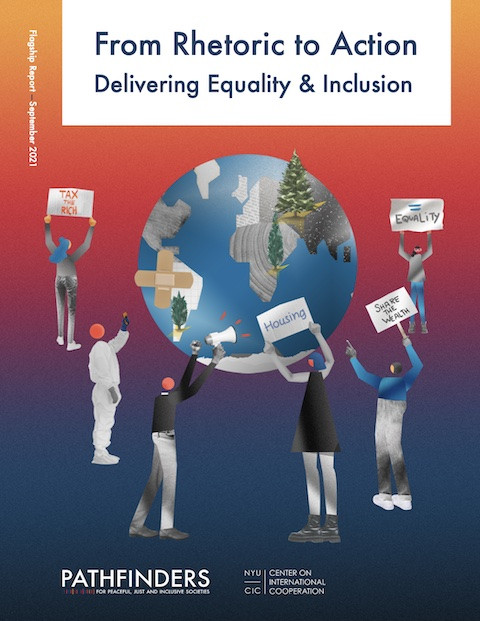 From Rhetoric to Action: Delivering Equality & Inclusion Año de publicación: 2021 Autor: Faiza Shaheen | Alexander Bossakov | Avner Cohen | Amanda Lenhardt | Nendirmwa Noel | Paula Sevilla Núñez | Paul von Chamier Autor corporativo: Pathfinders for Peaceful, Just and Inclusive Societies, NYU. Center on International Cooperation This flagship report of the Pathfinders Grand Challenge on Inequality and Exclusion is about the solutions that will deliver equality and inclusion.The report constructs a bridge between the rhetoric of “build back better” and action: a bridge between promise and progress. It underlines the need for renewed social contracts between citizens, civil society, the private sector, and governments, as well as between high and low- and middle-income countries. These social contracts must be built to serve future generations, to guard against climate breakdown and pandemics while delivering respect, opportunity, and justice for all.This report should serve as a practical handbook for policymakers and influencers; as a source of possibility for the public; and, as a call to all political leaders to act. Preventing GBV: A Family Responsibility! Autor corporativo: Ministry of National Education of Colombia This infographic explains about what happens with gender-based violence, define it and explain what to do when it occurs. This infographic is intended to make the family aware of their role within this phenomenon and what the role they play in it.
 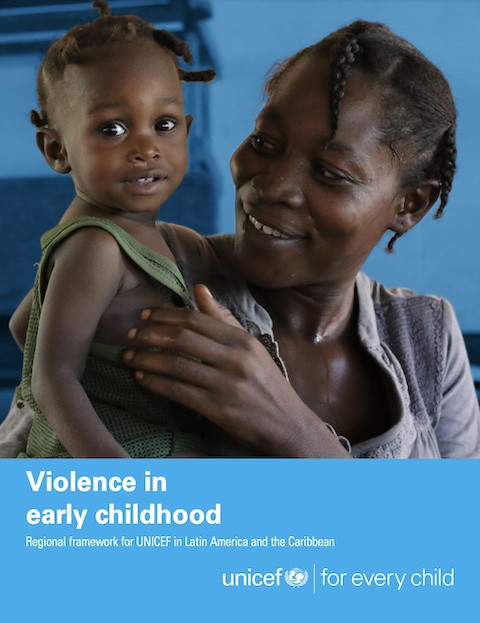 Violence in Early Childhood Año de publicación: 2017 Autor: Cecilie Modovar | Maria Elena Ubeda Autor corporativo: United Nations Children's Fund (UNICEF) It presents a comprehensive, multi-sectorial framework that aims to provide guidance to UNICEF country offices on how to improve programme interventions and synergies between programme areas in order to enhance young children’s development potential by reducing their exposure to violence. While early childhood is understood as the period from conception until age 8, the framework emphasizes the critical period from age 0-3. La violencia en la primera infancia Año de publicación: 2017 Autor: Cecilie Modovar | Maria Elena Ubeda Autor corporativo: United Nations Children's Fund (UNICEF) Se presenta un marco multisectorial integral, cuyo objetivo es orientar a las oficinas nacionales de UNICEF para mejorar las intervenciones programáticas y las sinergias entre las esferas de programa, a fin de potenciar el desarrollo de los niños pequeños reduciendo su exposición a la violencia. Aunque la primera infancia abarca el período que va desde la concepción hasta los 8 años de edad, este marco se centra en el período comprendido entre los 0 y los 3 años de edad debido a su importancia crítica.