
Recursos
Exploren una amplia gama de recursos valiosos en GCED para profundizar su comprensión y promover su búsqueda, incidencia, enseñanza y aprendizaje.
1,725 resultados encontrados
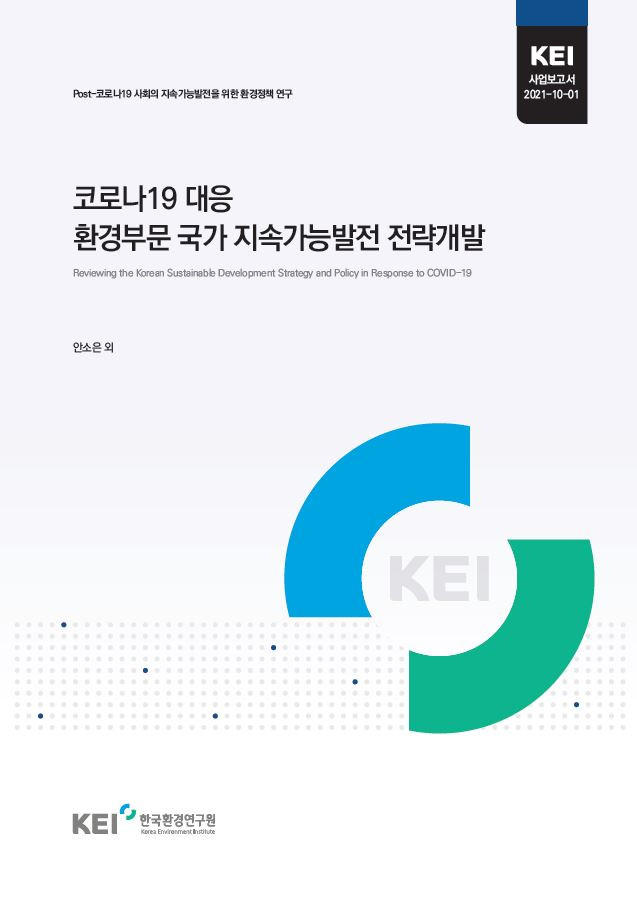 코로나19 대응 환경부문 국가 지속가능발전 전략개발 Año de publicación: 2021 Autor: 안소은 | 김도균 | 이홍림 | 박윤선 | 이재혁 | 이정석 | 홍한움 | 정우현 | 전배석 | 전가림 Autor corporativo: 한국환경연구원 본 보고서는 2021년 한국환경연구원(KEI)이 기획과제로 수행한 ‘포스트 코로나19 사회의 지속가능발전을 위한 환경정책 연구’의 지속가능 전략연구본부 세부과제 연구내용을 담고 있으며 세부과제 연구내용은 크게 ‘코로나19의 국가 지속가능발전목표(K-SDGs) 영향평가를 토대로 한 정책제언과 전략개발 (제1부)’과 ‘언택트 시대 시민참여를 통한 마을 지속가능발전 실천과제 도출과 시민참여 개선방향 제시 (제2부)’로 구분하였다. 종합결론에서는 제1부와 제2부의 연구결과를 종합하고 K-SDGs를 연결고리로 삼아 전문가 설문 조사 분석결과와 마을 지속가능발전 실천과제를 비교·해석하고 시사점을 도출하였다. * 본 저작물은 한국환경연구원에서 '2021'년에 작성하여 공공누리 제'4'유형으로 개방한 ‘코로나19 대응 환경부문 국가 지속가능발전 전략개발(작성자: 안소은 외)’를 이용하였으며 해당 저작물은 한국환경연구원 홈페이지(http://www.kei.re.kr)’에서 무료로 다운받으실 수 있습니다.
 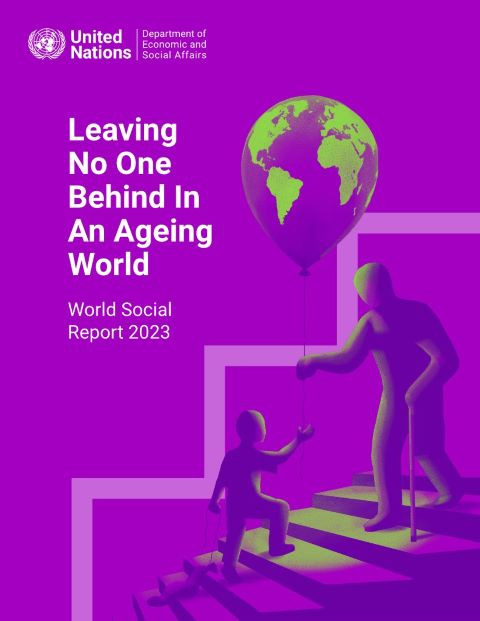 World Social Report 2023 : Leaving No One Behind in an Ageing World Año de publicación: 2023 Autor corporativo: UN. Department of Economic and Social Affairs (UN. DESA) Population ageing is a defining global trend of our time. People are living longer, and more are older than ever before. Spectacular improvements in health and survival and reductions in fertility have driven this momentous shift, which has begun or is expected to begin soon in all countries and areas. This change brings both challenges and opportunities as countries strive to achieve the Sustainable Development Goals (SDGs). In 2022, the world marked the twentieth anniversary of the adoption of the Madrid International Plan of Action on Ageing. To commemorate this landmark, the World Social Report 2023 explores the economic and social implications of the ageing of the human population. It builds on the Plan of Action’s framework for national policies to create equitable, inclusive societies for people of all ages, providing recommendations to put the rights and well-being of older persons at the centre, across the life course. Population ageing is an inevitable result of the demographic transition towards longer lives and smaller families. While the shift towards older populations is largely irreversible, collective actions and policy decisions shape its path and consequences. Postponing critical measures that allow societies to benefit from and adapt to population ageing would impose high social, economic, fiscal and health-related costs, for both current and future generations. By contrast, with appropriate foresight and planning, Governments can manage the challenges from population ageing while enhancing opportunities for all people to thrive and ensuring that no one is left behind. As elaborated in this report, population ageing needs to be widely understood as more than just a set of discrete concerns mainly for one group of people who have advanced beyond a given age. Ageing touches all parts of economies and societies, from health care and education to employment and taxation. Each stage of life can contribute to or detract from well-being at older ages.
 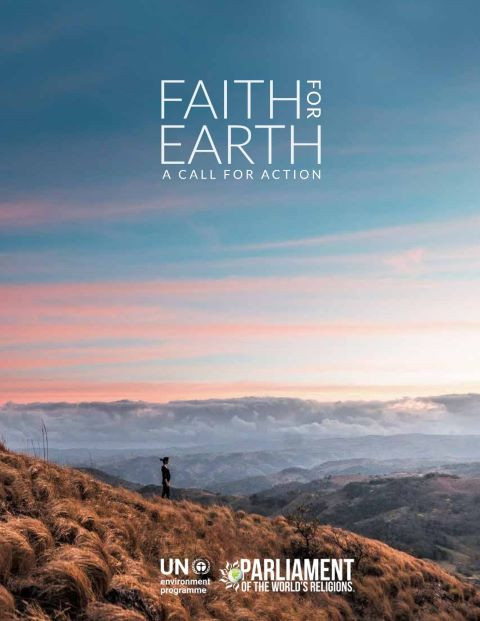 Faith for Earth : a Call for Action Año de publicación: 2020 Autor corporativo: United Nations Environment Programme (UNEP) | Inter-Agency Network on Women and Gender Equality (IANWGE) The UN Environment Programme (UNEP) and the Parliament of the World’s Religions today released a new book, "Faith for Earth — A Call for Action", which gives readers a wide-ranging look at the history and diversity of faith teachings and their advocacy for the protection of the environment. The online book and its print edition were launched on 8 October 2020 during the Faith for Nature Global Conference, (5th - 8th October) in Skálhol, Iceland. The book provides a comprehensive overview of the faith traditions and scientific findings that underpin the understandings and reflections of world religions concerning environmental sustainability. It includes clear statements from sacred scripts and faith leaders. It underlines that protecting the Earth, restoring ecosystems, preventing pollution, and leaving behind a healthy environment for the next generations is an ethical, moral and spiritual responsibility. With more than one hundred million houses of worship around the globe, adapting green building principles is a massive demonstration of commitment to sustainability.
 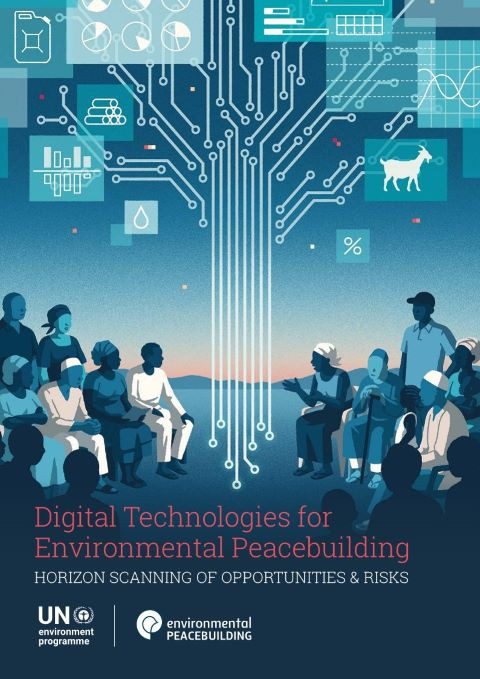 Digital Technologies for Environmental Peacebuilding : Horizon Scanning of Opportunities and Risks Año de publicación: 2024 Autor corporativo: United Nations Environment Programme (UNEP) This report specifically delves into how digital technologies can be harnessed to manage environmental and natural resource risks that contribute to insecurity and social conflict, as well as the opportunities they present for peacebuilding, cooperation, and social cohesion. It examines relevant use cases spanning the peace and security continuum and concludes with a set of important policy and governance recommendations. The report is designed to inform and contribute to significant upcoming frameworks addressing digital technologies, including the Summit of the Future and the Global Digital Compact.
  Learning to live together: education for conflict resolution, responsible citizenship, human rights and humanitarian norms Año de publicación: 2013 Autor: Margaret Sinclair Autor corporativo: Education Above All (Qatar) Education cannot offer immediate remedies to the local and global problems that we see on the news screens every day, but it can contribute to solving them over the longer term. This book examines specifically the contribution that education for learning to live together can make, even in countries where teacher training and classroom resources are limited. Many countries have diverse populations (ethnic, linguistic, religious, etc) and seek to maintain harmony among the different groups. In some countries, however, especially where economic stress or climate change have intensified arguments over resources, tensions have led to armed conflict. This brings with it all the misery of death, injury, displacement and poverty, along with disruption of education systems. In some instances education itself has been a contributory factor to the outbreak of conflict, notably through unequal education opportunities for different groups, and through biased school curricula.Civil conflict has brought untold suffering in recent years, and in a globalised world it has negative spill-over effects to neighbouring and other countries. It is vital to develop education policies and curricular reforms that can help convey values and skills for learning to live together to young people, to help lessen tensions, within and between countries.Education policy-makers can help lay the foundations for a better future by adjusting the content and process of education to reflect skills and values for human rights, humanitarian norms, peaceful resolution of conflicts, sustainable development and other issues as elements of local, national and global citizenship.Education reform is not enough, of course, to resolve the numerous problems of our times. The focus of this volume is on the contribution that can be made through aligning the content of education to the goal of learning to live together. This work will have greater impact when it takes place within education systems and policies that are consistent with human rights values and of course when other sectors besides education make their respective contributions.This book shows that transformative education for conflict resolution and peace, for local, national and global citizenship, for human rights and humanitarian values can be implemented even under difficult conditions if there is a policy commitment to do so. Authors have provided examples and lessons learned from their own experiences as eminent practitioners in the field. Learning to live together: education for conflict resolution, responsible citizenship, human rights and humanitarian norms Año de publicación: 2013 Autor: Margaret Sinclair Autor corporativo: Education Above All (Qatar) L'éducation ne peut offrir des remèdes immédiats aux problèmes locaux et mondiaux que nous voyons sur les écrans d'information tous les jours, mais elle peut contribuer à les résoudre sur le long terme. Ce livre examine spécifiquement la contribution que l'éducation peut apporter pour vivre ensemble même dans les pays où la formation des enseignants et les ressources en classe sont limitées.De nombreux pays ont des populations diverses (ethniques, linguistiques, religieuses, etc.) cherchent à maintenir l'harmonie entre les différents groupes. Dans certains pays, cependant, en particulier lorsque le stress économique ou les changements climatiques ont intensifié les arguments sur les ressources, les tensions ont conduit à des conflits armés. Cela apporte avec elle toute la misère de la mort, les blessures, le déplacement et la pauvreté, ainsi que la perturbation des systèmes éducatifs. Dans certains cas, l'éducation elle-même a été un facteur contributif à l'éclatement du conflit, notamment grâce à des possibilités d'éducation inégales pour les différents groupes, et à travers les programmes scolaires biaisés.La guerre civile a causé des souffrances indicibles au cours des dernières années, et dans un monde globalisé, il a des effets négatifs de débordement vers les pays voisins et d'autres pays. Il est essentiel d'élaborer des politiques de l'éducation et la réforme des programmes qui peuvent aider à transmettre les valeurs et les compétences pour apprendre à vivre ensemble pour les jeunes, pour aider à réduire les tensions, à l'intérieur et entre les pays.Education décideurs politiques peuvent aider à jeter les bases d'un avenir meilleur en ajustant le contenu et le processus de l'éducation afin de refléter les compétences et les valeurs des droits de l'homme, des normes humanitaires, la résolution pacifique des conflits, le développement durable et d'autres questions comme éléments de local, national et citoyenneté mondiale.Réforme de l'éducation ne suffit pas, bien sûr, de résoudre les nombreux problèmes de notre temps. L'objectif de ce volume est sur la contribution qui peut être faite par le biais d'aligner le contenu de l'éducation à l'objectif d'apprendre à vivre ensemble. Ce travail aura un plus grand impact quand il a lieu au sein des systèmes et politiques d'éducation qui sont conformes aux valeurs des droits de l'homme et bien sûr, quand d'autres secteurs en dehors de l'éducation font leurs contributions respectives.Ce livre montre que l'éducation transformatrice pour la résolution des conflits et la paix, à la citoyenneté locale, nationale et mondiale, des droits de l'homme et des valeurs humanitaires peut être appliqué même dans des conditions difficiles, s'il y a un engagement politique de le faire. Les auteurs ont fourni des exemples et les enseignements tirés de leurs propres expériences en tant que praticiens éminents dans le domaine.
 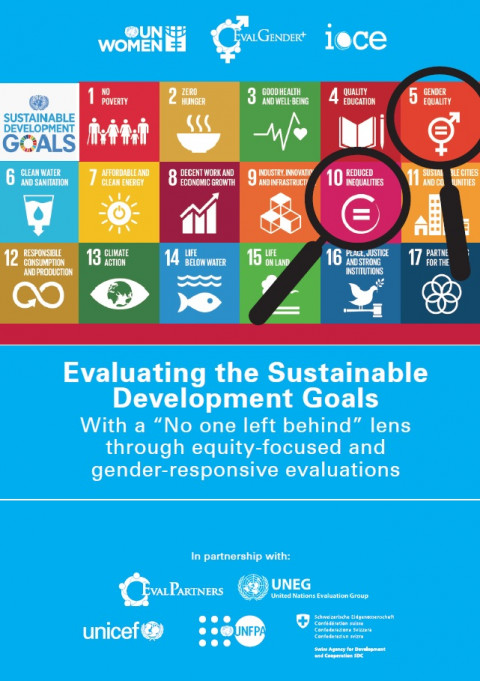 Evaluating the Sustainable Development Goals with a “No one left behind” lens through equity-focused and gender-responsive evaluation Año de publicación: 2016 Autor: Michael Bamberger | Marco Segone | Florencia Tateossian The purpose of this publication is to provide guidance on how to integrate an equity-focused and gender-responsive (EFGR) approach to national evaluation systems that should inform national Sustainable Development Goal (SDG) reviews. This guidance is intended to support national evaluation systems on how to integrate EFGR evaluations to inform the national reviews of SDGs. The guidance is expected to primarily serve national evaluation systems, the UN system, multilateral and bilateral development agencies, academic institutions, including specialized research centres and think tanks, private foundations, the private sector, and voluntary organizations of professional evaluators. Оценка Целей Устойчивого Развития на основе принципа «Развитие для всех без исключения» через призму гендерного равенства и социальной справедливости Año de publicación: 2016 Autor: Michael Bamberger | Marco Segone | Florencia Tateossian Цель данной публикации – предоставить рекомендации относительно возможных путей интеграции принципов социальной справедливости и гендерного равенства в национальные системы оценки, которые должны будут передавать информацию для страновых обзоров Целей в области устойчивого развития (ЦУР). Статистический анализ с учетом гендера и дезагрегированных показателей, хотя и имеет важное значение, должен дополняться оценками, проводимыми на основе принципов социальной справедливости и гендерного равенства, для того, чтобы развитие охватывало всех без исключения. Руководство в первую очередь предназначено для лиц, вовлеченных в национальные системы оценки; системы Организации Объединенных Наций; многосторонних и двусторонних агентств развития; академических институтов, в том числе специализированных исследовательских и аналитических центров; частных фондов; организаций частного сектора и добровольных объединений в области профессиональной оценки.
  Participatory Planning to Achieve Structural Change with Equality: Citizen Participation Strategies in Multi-scale Planning Processes Año de publicación: 2015 Autor: Alicia Williner | Andrea Sanhueza | Carlos Sandoval Autor corporativo: United Nations (UN) This manual that ILPES places at the disposal of public officials and non-governmental agents working in the community, has the purpose of sharing a brief theoretical reflection on the current socio-political context through which this manual becomes important; and a set of methodological instruments that will bring the user closer to the social practice of a citizen participation process in the construction of a public management instrument. The manual is divided into two chapters: The first conceptualizes participatory multiscale planning, while also briefly introducing three topics of great importance to be incorporated into any participatory planning process and construction of public management instruments: the perspective of gender, the use of Convention 169 and Principle 10. The second chapter systematizes a set of methodological instruments that describe the stages of a citizen participation strategy to incorporate the multiscale public management instruments. The manual closes with two annexes, the last of which incorporates a set of tools that can be used in the stages of the construction of a citizen participation strategy. La Planificación Participativa para Lograr un Cambio Estructural Con igualdad: Las Estrategias de Participación Ciudadana en los Procesos de Planificación Multiescalar Año de publicación: 2015 Autor: Alicia Williner | Andrea Sanhueza | Carlos Sandoval Autor corporativo: United Nations (UN) Este manual que ILPES coloca a disposición de funcionarios públicos y agentes no gubernamentales que trabajan en la comunidad, tiene el propósito de compartir una breve reflexión teórica sobre el contexto socio-político actual por el cual este manual cobra importancia; y un conjunto de instrumentos metodológicos que acercarán al usuario a la práctica social de un proceso de participación ciudadana en la construcción de un instrumento de gestión pública. El manual se estructura en dos capítulos: El primero de ellos conceptualiza la planificación multiescalar participativa, a la vez que realiza una breve introducción a tres temas de suma relevancia a incorporar en todo proceso de planificación participativa y construcción de instrumentos de gestión pública: la perspectiva de género, el uso del Convenio 169 y del Principio 10. El segundo capítulo sistematiza un conjunto de instrumentos metodológicos que describen las etapas de una estrategia de participación ciudadana para incorporar a los instrumentos de gestión pública multiescalar. El manual cierra con dos anexos, el último de los cuales incorpora un conjunto de herramientas que podrán ser utilizadas en las etapas de la construcción de una estrategia de participación ciudadana.