
Recursos
Exploren una amplia gama de recursos valiosos en GCED para profundizar su comprensión y promover su búsqueda, incidencia, enseñanza y aprendizaje.
730 resultados encontrados
 Banque de fiches de tâches numériques Autor corporativo: Conseil de l'Europe Une quarantaine de fiches de tâches ancrées dans la vie réelle et de tâches réflexives sont disponibles. Les tâches proposées mettent en œuvre le cadre didactique qui promeut une approche socio-interactionnelle et étend la typologie habituelle des tâches avec des tâches ancrées dans la vie réelle.Ces tâches, réalisées sur des sites participatifs en ligne, permettent aux personnes qui les réalisent de faire l'expérience, à la fois, d'(inter)actions authentiques et de la citoyenneté numérique.A côté de ces tâches, des tâches réflexives invitent les apprenant·es à réfléchir sur les pratiques en ligne et notamment sur leurs propres usages du numérique. Elles sont à adapter en fonction des contextes d'utilisation et permettent de donner des exemples de mise en œuvre de l'approche définie dans le Cadre didactique.
  SDG Talk: Mr. Martin Nesirky Año de publicación: 2021 Autor: Martin Nesirky Autor corporativo: Sloga Platforma | Bridge 47 SDG Talk with Martin Nesirky, director of UN Information Service Vienna about Sustainable Development Goals, implication od COVID-19 pandemic on education, Global Citizenship Education and more.SDG Talks was prepared in cooperation with the UN Association for Slovenia, as part of the Bridge 47 - Building Global Citizenship project. The project is funded by the European Commission and the Ministry of Foreign Affairs of the Republic of Slovenia, and is implemented by the SLOGA Platform.Content does not reflect positions of the EU or Slovene MFA.
 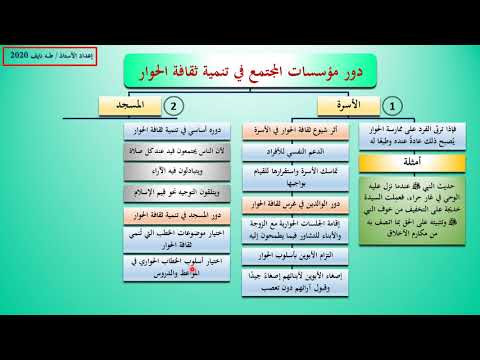 The Fifth Lesson: The Culture of Dialogue Año de publicación: 2020 Autor: Taha Nayef In this video, the teacher tries to explain to students the concept and etiquette of dialogue. The teacher reviews the roles of the family, educational institutions and other community institutions in the formation of the interlocutor. The lesson is filled with vivid examples of dialogue etiquette from everyday life. شرح الدرس الخامس: ثقافة الحوار Año de publicación: 2020 Autor: Taha Nayef يحاول المعلم في هذا الفيديو أن يشرح للطلاب مفهوم الحوار وآدابه. يقوم المعلم باستعراض أدوار الأسرة والمؤسسات التربوية وغيرها من مؤسسات المجتمع في تكوين الشخص المحاور. الدرس ملئ بالأمثلة الحية لآداب الحوار من خلال الحياة اليومية.
  Interfaith Dialogue .. Dialogue of Life and Wise People Año de publicación: 2019 Autor corporativo: RT Arabic Online Through this program, RT channel provides a seminar by hosting speakers to discuss the importance of interfaith dialogue and coexistence between all people from different religions. حوار الأديان .. حوار الحياة وحوار العقلاء Año de publicación: 2019 Autor corporativo: RT Arabic Online تقدم قناة RT من خلال هذا البرنامج ندوة من خلال استضافة المتحدثين لمناقشة أهمية الحوار بين الأديان، والتعايش بين الجميع من مختلف الأديان.
  [Video] Whole School Approach to Global Citizenship Año de publicación: 2011 Autor corporativo: Education Scotland Global citizenship brings together education for citizenship, international education and sustainable development education and recognises the common outcomes and principles of these three areas. All curriculum areas can contribute to developing the skills, attributes and knowledge that will create active global citizens.
  Happy Schools Art E-Exhibition Año de publicación: 2016 Autor corporativo: UNESCO Bangkok Happy Schools Art E-Exhibition What does a Happy School look like to you? A happy learner is more likely to be a thriving one – better able to solve problems and apply critical thinking skills, more self-confident and likelier to form and foster positive relationships with others. Happy learners require Happy Schools, those that ensure the holistic development and well-being of students and the wider school community. In today’s rapidly changing world, we are faced with increasing mobility, life stress, competition, information overload, inequalities and environmental concerns. As these symptoms of ‘unhappiness’ begin to emerge, the Happy Schools Project calls for the need for education systems to reposition the school as more than a service for educational instruction, but rather, an environment which allows for social and emotional growth and development for learners to contribute to a more peaceful, just and equitable world. As part of UNESCO Bangkok’s Happy Schools Project, the Happy Schools team hosted an art contest in early 2016 in an effort to capture actions, moments and ideas that are promoting happiness in schools. All residents of the Asia-Pacific region were invited to submit images of any kind (photos, drawings, cartoons, paintings, graphics, and posters) along with a caption/description that captures the concept of Happy Schools. Thirty winners were selected from the pool of entries for the Happy Schools Art Exhibition and Report Launch (of the Happy Schools: A Framework for Learner Well-being in the Asia-Pacific report. The artwork will be on display for the Happy Schools Art Exhibition from 25 March to 3 April, 2016 at The Commons in Bangkok, Thailand, and available to view here as an e-exhibition. Écoles Heureux Art E-Exhibition Año de publicación: 2016 Autor corporativo: UNESCO Bangkok Heureux Écoles d'art E-Exposition, qu'est-ce qu'une école heureux ressemble pour vous? Un apprenant heureux est plus susceptible d'être une entreprise florissante un - mieux à même de résoudre les problèmes et appliquer la pensée critique, plus confiant et plus susceptibles de former et de favoriser des relations positives avec les autres. Apprenants Heureux exigent l’écoles Heureux, ceux qui assurent le développement holistique et le bien-être des élèves et la communauté scolaire. Dans le monde en évolution rapide d'aujourd'hui, nous sommes confrontés à la mobilité croissante, le stress de la vie, la concurrence, la surcharge d'information, les inégalités et les préoccupations environnementales. Comme ces symptômes de «malheur» commencent à émerger, le projet Bonne écoles appelle à la nécessité pour les systèmes éducatifs pour repositionner l'école comme plus qu'un service pour l'enseignement de l'éducation, mais plutôt, un environnement qui favorise la croissance et le développement social et affectif pour apprenants de contribuer à un monde plus pacifique, juste et équitable. Dans le cadre du projet Écoles heureux de l'UNESCO à Bangkok, l'équipe Ecoles Heureux a organisé un concours d'art au début de 2016 dans le but de capturer des actions, des moments et des idées qui font la promotion du bonheur dans les écoles. Tous les résidents de la région Asie-Pacifique ont été invités à soumettre des images de toute nature (photos, dessins, bandes dessinées, peintures, graphiques et affiches) avec une légende / description qui capture le concept des écoles Heureux. Trente gagnants ont été sélectionnés à partir du pool d'entrées pour les écoles Bonne Exposition Art et Rapport de lancement (des écoles Heureux:. Un cadre pour l'apprenant le bien-être dans le rapport Asie-Pacifique, l'œuvre sera exposée pour l'Exposition Heureux Ecoles d'Art du 25 Mars au 3 Avril, 2016 au The Commons à Bangkok, en Thaïlande et à la disposition de la considérer comme un e-exposition)
 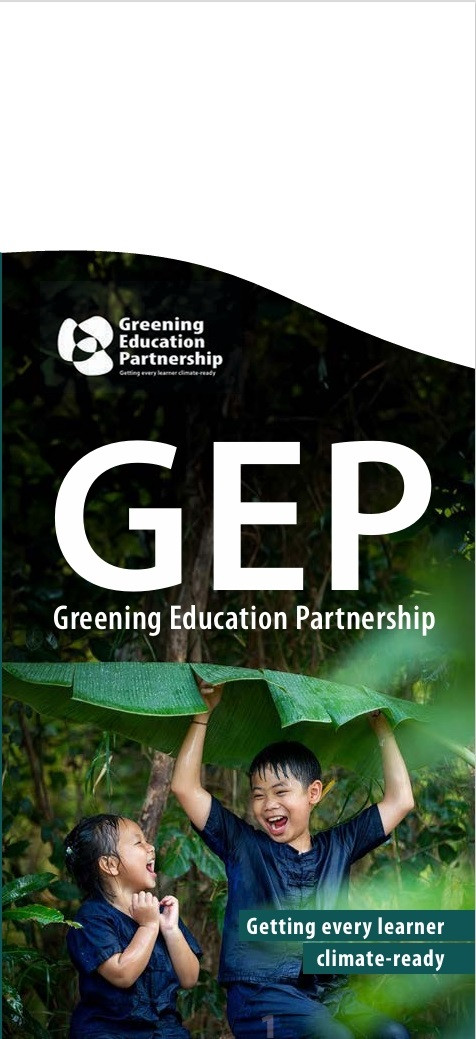 Greening Education Partnership: Getting Every Learner Climate-Ready Año de publicación: 2024 Autor corporativo: UNESCO Bangkok The UN Secretary-General calls the climate crisis ‘a battle for our lives’, as we still struggle to transform our societies to reach the 1.5°C-degree path recommended by the Paris Agreement. Rapid and radical transformation at all levels and in many aspects of our life is required, with education as a central and powerful means to support the adaptation and strengthening of the resilience of learners and societies. It is also important to ensure that education systems become more resilient to climate change to create safe and climate-proof schools. Building off of the knowledge and practice accumulated in Education for Sustainable Development (ESD), a new Greening Education Partnership aims to deliver strong, coordinated and comprehensive action which will prepare every learner to acquire the knowledge, skills, values, and attitudes to tackle climate change and to promote sustainable development.