
Recursos
Exploren una amplia gama de recursos valiosos en GCED para profundizar su comprensión y promover su búsqueda, incidencia, enseñanza y aprendizaje.
3,777 resultados encontrados
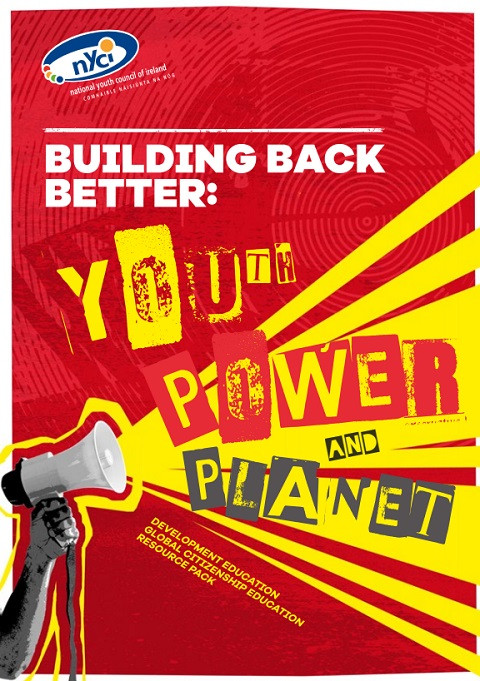 Building Back Better: Youth, Power and Planet Año de publicación: 2020 Autor: Valerie Duffy | Leo Gilmartin | Eva Janssens | Dermot O’Brien Autor corporativo: National Youth Council of Ireland (NYCI) Building Back Better: Youth, Power and Planet is about power. The understanding of power in youth work is vitally important for the development of young people as they navigate through their lives and society.The aim of this resource is to support young people and youth workers in understanding power, seeing power, claiming power, and activating power. It includes a wealth of background information on concepts around power and terminology, as well as a guide on ‘How to Use this Resource’, activities, stimulus sheets. This toolkit explores the issue of power and helps you make links to the Sustainable Development Goals.It is designed for global educators, youth workers, development education practitioners, trainers, climate activists, changemakers of all shapes and sizes but in particular those working with the current generation of young people.Building Back Better contains 4 main sections:Section 1. Defining PowerSection 2. Seeing PowerSection 3. Claiming PowerSection 4. Activating PowerIt also contains:an introduction to power in theory and in practice 10 activities with interactive exercisesaction power templates for planningstriking visuals, case studies on human development for adapting This was resource was created by the NYCI Youth 2030 programme.
  Belonging to the Homeland and Its Impact on Protecting Young People from Delinquency Año de publicación: 2018 Autor: Alla Aldeen Mohammed Autor corporativo: Imam Mohammad Ibn Saud Islamic University The file is a paper on belonging to the homeland and its impact on protecting young people from delinquency. This paper was presented at the conference entitled "The Role of Saudi Universities and Its Impact on Protecting Young People from Groups, Parties and Deviance". الانــتماء إلى الــوطن وأثــره في حمايــة الــشباب مــن الانحراف Año de publicación: 2018 Autor: Alla Aldeen Mohammed Autor corporativo: Imam Mohammad Ibn Saud Islamic University الملف عبارة عن ورقة عن الانــتماء إلى الــوطن وأثــره في حمايــة الــشباب مــن الانحراف. تم عرض هذه الورقة في المؤتمر المعنون ب "دور الجامعات السعودية وأثرها في حماية الشباب من الجماعات والأحزاب والانحراف.
  The Role of Kuwaiti Satellite Channels in Promotion of Citizenship among Kuwaiti Youth Año de publicación: 2012 Autor: Hassan Al Gharbi Autor corporativo: Middle East University The focus of the problem that the research dealt with was on the following question: Have public and private Kuwaiti satellite channels contributed to enhancing the concept of citizenship among young Kuwaitis? The researcher adopted a definition of the concept of citizenship among the multiple definitions of this concept, which was tainted by some uncertainty and disagreement. Citizenship in this study "is the awareness of belonging to a geographical area of a specific political and social goals and shared one common culture and political system." دور الفضائيات الكويتية الرسمية و الخاصة في تعزيز المواطنة لدى الشباب الكويتي Año de publicación: 2012 Autor: Hassan Al Gharbi Autor corporativo: Middle East University تركزت المشكلة التي تناولها البحث على التساؤل التالي: هل ساهمت القنوات الفضائية الكويتية العامة والخاصة في تعزيز مفهوم المواطنة بين الشباب الكويتي؟ واعتمدت الباحثة تعريفاً لمفهوم المواطنة من بين التعاريف المتعددة لهذا المفهوم ، والذي شابه بعض عدم اليقين والاختلاف. المواطنة في هذه الدراسة "هي الوعي بالانتماء إلى منطقة جغرافية لأهداف سياسية واجتماعية محددة ومشتركة في ثقافة ونظام سياسي واحد".
  Jeunesse et citoyenneté : une culture à réinventer: 23 recommandations pour redynamiser la culture citoyenne (Rapport d'information; No.648, 2021-2022) Año de publicación: 2022 Autor: Stéphane Piednoir | Henri Cabanel Autor corporativo: Sénat français Des sujets proches des préoccupations de la mission d’information ont été inscrits à l’agenda d’autres institutions et structures du Sénat pendant cette mission d’information qui s’est déroulée du 1er décembre 2021 au 7 juin 2022. Cette convergence souligne l’importance de ces questions et l’urgence de mesures destinées à réparer le lien entre les citoyens et les institutions et, à travers l’éducation citoyenne de la jeunesse, à renforcer la cohésion nationale et à préparer l’avenir de notre démocratie. Au terme de ses travaux, la mission formule vingt-trois recommandations pour mieux éduquer et former à la citoyenneté, pour encourager une citoyenneté active par l’engagement, et pour repenser les pratiques démocratiques afin de rapprocher les citoyens – et plus particulièrement les jeunes – des institutions. Elle considère que ces questions doivent, à l’approche de la nouvelle législature, constituer une priorité pour les pouvoirs publics.
  Learning to live together Año de publicación: 2014 Autor corporativo: UNESCO Bangkok The importance of LTLT has increased in recent years. Indeed, relevant competencies appear to be gaining focus in international frameworks and educational initiatives across countries. This is all the more necessary as Voogt and Roblin (2012) argue, given the demands of our increasingly knowledge-based society in which “ideas and knowledge function as commodities” (p. 299 –300) and to which effective social and emotional skills are critical. It is perhaps all the more critical given the multivariate global challenges in the 21st Century and the need for unified global commitment to effectively combat these challenges. In this context, the significance of LTLT is reflected in both the rise of and growing interest in Global Citizenship Education (GCE), Education for Sustainable Development (ESD), Education for International Understanding (EIU) as well as peace and human rights education. The UN Secretary-General’s Global Education First Initiative, which lists ‘Fostering Global Citizenship’ as one of its three global priorities, also implicitly recognizes the significance of LTLT as a precursor to the building of a more peaceful society, one in which discrimination is intolerable and common challenges such as climate change and abject poverty are tackled together.Yet despite the significance of LTLT in the 21st Century, and despite numerous international initiatives to foster LTLT competencies, there is a large gap of evidence identifying how this supposition is translated into effective policy and curricula, and eventually into the reality of schools, teachers and learners. This report is a response to this gap, and attempts to understand how ten selected countries in the Asia-Pacific region – Afghanistan, Australia, Indonesia, Malaysia, Myanmar, Nepal, The Philippines, Republic of Korea, Sri Lanka and Thailand – have reflected and integrated LTLT into their education policies and initiatives. This variety of countries aims to reflect their diverse experiences in terms of reflecting LTLT through their education systems. By exploring a number of areas, namely policy, curricula, teachers and assessment, this study aims to identify what has so far been achieved in education systems of the Asia-Pacific region in the area of LTLT.This report is therefore targeted predominantly at education policy makers, researchers, academics as well as education practitioners of the Asia-Pacific region. Given its connection to Global Citizenship Education and other relevant international initiatives around sustainability and peace education, this report is also relevant to UNESCO’s partner organizations and the broader educational development community.This report will first present the research framework for the study, before exploring the social and economic contexts in the ten selected countries and wider regional factors in the Asia-Pacific in relation to global challenges in Chapter Two. Chapter Three will then examine national policy frameworks, including the vision of those policies in defining LTLT in education. Chapter Four focuses on the national curriculum in selected countries and the extent to which they incorporate learning objectives, subjects, and extra-curricular activities reflecting the concept of LTLT and related skills and competencies. In Chapter Five, teaching practices are examined, including the role of teachers and teacher education, as well as teaching methods and application of media and information literacy (MIL) in the classroom. Chapter Six then looks at assessment, and how far countries have attempted to develop assessment frameworks that measure the skills and competencies related to LTLT. Finally, Chapter Seven provides reflections and conclusions based on the main findings of the study, while also identifying trends across policy domains, shortcomings and some policy considerations.
  Learning to live together: have we failed? A summary of the ideas and contributions arising from the forty-sixth session of UNESCO's International Conference on Education, Geneva, 5-8 September 2001 Año de publicación: 2003 Autor corporativo: UNESCO International Bureau of Education (IBE) | UNESCO Brasilia The present book is based mainly on the work of the forty-sixth session of the International Conference on Education (ICE), organized by UNESCO’s International Bureau of Education (IBE) and held in Geneva from 5 to 8 September 2001. The theme of the conference was ‘Education for All for Learning to Live Together: Contents and Learning Strategies - Problems and Solutions’. Unless stated otherwise, the numerous quotations chosen to illustrate the points made in this book are from ICE documents and contributions. The Conclusions and Proposals for Action adopted by the 2001 ICE are provided in Chapter V.The ICE is the only regularly occurring event during which Ministers of Education from all over the world can meet. It therefore serves as a unique and highly appreciated international forum for high-level dialogue on educational issues and their policy implications.The 2001 ICE brought together over 600 participants from 127 countries, including in particular 80 Ministers and 10 Vice-Ministers of Education, as well as representatives of intergovernmental and non-governmental organizations. The themes of the 2001 ICE were, and still are, very relevant all over the world: those in charge of education have become well aware of the necessity and complexity of living together, as well as of the role and limits of education in this respect.The ICE was inspired by abundant literature dealing with the principle issues that participants debated, including: Preparatory reports; National reports presented by the Member States; Examples of initiatives and good practice (including those presented at the conference as video case studies); Messages from Ministers of Education attending the Conference; And contributions from the numerous researchers, experts, educationists and decision makers at all levels of education who also participated in the Netforum between April and August 2001. More information and opinions on the vast issue of Education for All for Learning to Live Together were added during the Conference itself, in the form of keynote addresses, presentations and debates during the two plenary sessions, six thematic workshops and the special session devoted to partnerships with civil society.The present book draws on this wealth of experience, research, opinions, ideas and visions of the future. It seeks to contribute to bringing the debate on Education for All for Learning to Live Together closer to actors of the global educational community. By setting out ins concise way the key issues and proposed actions, and illustrating them with concrete examples, numerous quotations and a number of questions, this book is intended particularly for teacher trainers, teachers themselves and their professional organizations, as well as for all actors in civil society who endeavour to improve the quality of education, to encourage dialogue and to foster in this way the capacity for living together.Neither a ‘conference report’ nor a scientific or academic work, this book is intended to be a sort of ‘gallery of photographs’ of the forty-sixth session of the ICE – its atmosphere of dialogue, the themes of its debates, and the first-hand descriptions and experiences exchanged. Far from prescribing norms or standards, it intends to share information, ideas and practices, rather like the ICE itself, in a spirit of exchange and dialogue. Learning to live together: have we failed? A summary of the ideas and contributions arising from the forty-sixth session of UNESCO's International Conference on Education, Geneva, 5-8 September 2001 Año de publicación: 2003 Autor corporativo: UNESCO International Bureau of Education (IBE) | UNESCO Brasilia Le présent ouvrage repose principalement sur les travaux de la quarante-sixième session de la Conférence Internationale sur l'Éducation (CIE), organisée par le Bureau International d'Éducation (BIE) de l'UNESCO et tenue à Genève du 5 au 8 Septembre 2001. Le thème de la conférence était ‘L'éducation pour tous pour apprendre à vivre ensemble: contenus et stratégies d'apprentissage - problèmes et solutions’. Sauf indication contraire, les nombreuses citations choisies pour illustrer les points soulevés dans ce livre sont des documents de l'CIE et les contributions. Les Conclusions et Propositions d'Action adoptées par la CIE de 2001 sont présentés au Chapitre V.L'CIE est l'événement qui se produit seulement régulièrement au cours de laquelle les ministres de l'éducation de partout dans le monde peuvent se rencontrer. Il sert donc comme un forum international unique et très apprécié pour le dialogue de haut niveau sur les questions d'éducation et de leurs implications politiques.La CIE de 2001 a réuni plus de 600 participants de 127 pays, y compris en particulier 80 inistres et 10 Vice-Ministres de l'Éducation, ainsi que des représentants d'organisations intergouvernementales et non gouvernementales. Les thèmes de la CIE 2001 étaient, et sont encore, très pertinent partout dans le monde: les responsables de l'éducation ont pris conscience de la nécessité et de la complexité de vivre ensemble, ainsi que du rôle et des limites de l'éducation à cet égard .L'CIE a été inspiré par une abondante littérature portant sur les principaux points de débat, y compris:Rapports Préparatoires;Les rapports nationaux présentés par les États membres;Exemples d'initiatives et bonnes pratiques (y compris celles qui sont présentées à la conférence que des études de cas vidéo);Messages des Ministres de l'Éducation présents à la Conférence;Et les contributions des nombreux chercheurs, des experts, des éducateurs et des décideurs à tous les niveaux de l'éducation qui a également participé à l'Netforum entre Avril et Août de 2001. Plus d'informations et d'opinions sur la grande question de l'éducation pour tous pour apprendre à vivre ensemble ont été ajoutés au cours de la Conférence elle-même, sous la forme de discours d'ouverture, des présentations et des débats au cours des deux sessions plénières, six ateliers thématiques et la session extraordinaire consacrée aux partenariats avec la société civile.Le présent ouvrage se fonde sur cette richesse de l'expérience, de la recherche, des opinions, des idées et des visions de l'avenir. Elle vise à contribuer à ramener le débat sur l'éducation pour tous pour apprendre à vivre ensemble plus près des acteurs de la communauté éducative mondiale. En énonçant ins de manière concise les questions clés et les actions proposées, et en les illustrant par des exemples concrets, de nombreuses citations et un certain nombre de questions, ce livre est particulièrement destiné aux formateurs d'enseignants, les enseignants eux-mêmes et leurs organisations professionnelles, ainsi que pour tous les acteurs dans la société civile qui s'efforcent d'améliorer la qualité de l'éducation, d'encourager le dialogue et de favoriser ainsi la capacité de vivre ensemble.Ni un ‘rapport de la conférence’, ni une œuvre scientifique ou universitaire, ce livre est destiné à être une sorte de «galerie de photos» de la quarante-sixième session de la CIE - son atmosphère de dialogue, les thèmes de ses débats, et la descriptions et les expériences de première main échangées. Loin de prescrire des normes ou des normes, elle a l'intention de partager des informations, des idées et des pratiques, un peu comme l'CIE lui-même, dans un esprit d'échange et de dialogue. Education for citizenship and democracy in a globalized world: a comparative perspective Año de publicación: 2005 Autor corporativo: Inter-American Development Bank The present document, Education for Citizenship and Democracy in a Globalized World: A Comparative Perspective, was developed in response to a request from the members of the Regional Policy Dialogue/Education Network. The studies in this document were presented and discussed during the VII Regional Policy Dialogue meeting held in January 2005 at the Inter-American Development Bank ’s headquarters in Washington, D.C. Within the general context of recent economic and political developments in Latin America and the Caribbean, experts regard free market and democracy as the fundamental economic and political paradigm leading to modernization and development in the global market. There is a concern in a number of democratic nation-states about levels of political engagement, particularly among the youths. This is cited as a reason for strengthening citizenship education.The studies presented in this document discuss Education for Citizenship and Democracy and the role of schools as systematic providers of the civic knowledge and the participatory practices that are the foundation of democracy. Among all of the institutions that facilitate the acquisition and development of skills for democratic participation, the school is the one that provide students with the competencies to effectively participate as citizens in a democracy. There has been an increasing interest in citizenship education both in the national and international contexts. At the national level, the aim is to pursue commitment and political participation, particularly from youth. In the international sphere, the objective is to find answers to the challenges such as immigration, global communications and trade across international borders and to a new level of awareness and appreciation for human rights. By providing a comprehensive overview of progress made by industrialized countries in the field of citizenship education, this study intents to share lessons learnt and effective practices which may be applied in the context of Latin America and the Caribbean. In addition, this study includes three experiences from Latin American countries (Chile, Colombia and Mexico) that were presented during the VII Regional Policy Dialogue. The three experiences show a practical and positive approach to the feasibility of introducing citizenship education in the schools of the Region. The cases present examples of reforms that evolved from the traditional civic education into an engaging education for citizenship and democracy. The Inter American Development Banks trusts that this publication will contribute to the discussions among member countries and create alternatives for the strengthening of democracy in the Region through education and citizenship.