
Recursos
Exploren una amplia gama de recursos valiosos en GCED para profundizar su comprensión y promover su búsqueda, incidencia, enseñanza y aprendizaje.
2,668 resultados encontrados
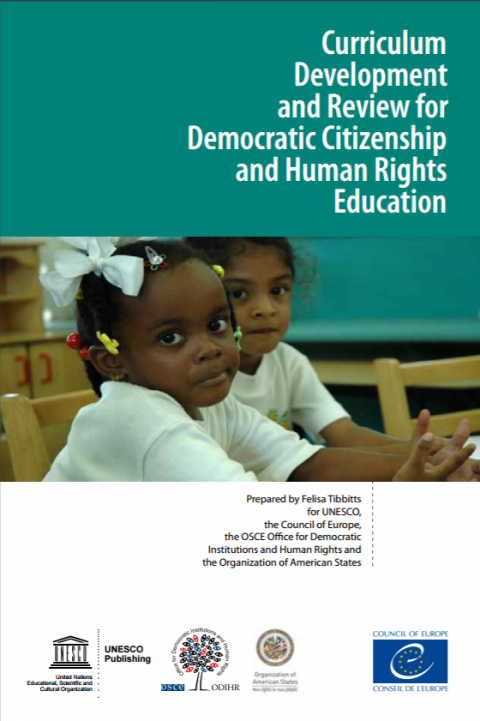 Élaboration et révision des programmes d'enseignement pour l'éducation à la citoyenneté démocratique et aux droits de l'homme Año de publicación: 2016 Autor corporativo: Organisation des Nations Unies pour l'éducation, la science et la culture (UNESCO) | Conseil de l'Europe | Organization of American States (OAS) | OSCE. Office for Democratic Institutions and Human Rights (ODIHR) Education for democratic citizenship and human rights education are vital for peaceful, sustainable and inclusive societies based on respect for the human rights of every person. Effective teaching and learning processes require well-trained teachers, positive learning environments and high-quality learning materials. This is underpinned by education policy, including curriculum development and review, which is the main focus of this book. The strengthening of education policies in the fields of education for democratic citizenship and human rights lies at the very heart of the efforts of the Council of Europe, the United Nations Educational, Scientific and Cultural Organization, the Office for Democratic Institutions and Human Rights of the Organization for Security and Co-operation in Europe, and the Organization of American States. These organisations have jointly produced this publication in order to support states’ commitment to fostering citizenship and human rights education and improving access to quality education for all. Разработка и пересмотр учебных программ по воспитанию демократической гражданственности и образованию в области прав человека Año de publicación: 2016 Autor corporativo: Организация Объединенных Наций по вопросам образования, науки и культуры (UNESCO) | Council of Europe | Organization of American States (OAS) | OSCE. Office for Democratic Institutions and Human Rights (ODIHR) Education for democratic citizenship and human rights education are vital for peaceful, sustainable and inclusive societies based on respect for the human rights of every person. Effective teaching and learning processes require well-trained teachers, positive learning environments and high-quality learning materials. This is underpinned by education policy, including curriculum development and review, which is the main focus of this book. The strengthening of education policies in the fields of education for democratic citizenship and human rights lies at the very heart of the efforts of the Council of Europe, the United Nations Educational, Scientific and Cultural Organization, the Office for Democratic Institutions and Human Rights of the Organization for Security and Co-operation in Europe, and the Organization of American States. These organisations have jointly produced this publication in order to support states’ commitment to fostering citizenship and human rights education and improving access to quality education for all.
  Rapport de synthèse sur l'application par les États membres de la Recommandation de 1974 sur l'éducation pour la compréhension, la coopération et la paix internationales et l'éducation relative aux droits de l'homme et aux libertés fondamentales Año de publicación: 2013 Autor corporativo: Organisation des Nations Unies pour l'éducation, la science et la culture (UNESCO) Background: In accordance with 34 C/Resolution 87, 177 EX/Decision 35 (I) and 184 EX/Decision 20, the Executive Board has monitored the implementation of the 1974 Recommendation concerning Education for International Understanding, Cooperation and Peace and Education relating to Human Rights and Fundamental Freedoms. Pursuant to 192 EX/Decision 20 (III), the Director-General hereby submits the consolidated report on the implementation by Member States of the Recommendation.Purpose: This document reports on the results of the Fifth Consultation on the Implementation of the Recommendation concerning Education for International Understanding, Cooperation and Peace and Education relating to Human Rights and Fundamental Freedoms (covering the period 2009-2012). The analysis was prepared on the basis of 55 national reports from Member States received by the Secretariat. Informe de síntesis sobre la aplicación por los Estados Miembros de la Recomendación de 1974 sobre la Educación para la Comprensión, la Cooperación y la Paz Internacionales y la Educación relativa a los Derechos Humanos y las Libertades Fundamentales Año de publicación: 2013 Autor corporativo: Organización de las Naciones Unidas para la Educación, la Ciencia y la Cultura (UNESCO) Background: In accordance with 34 C/Resolution 87, 177 EX/Decision 35 (I) and 184 EX/Decision 20, the Executive Board has monitored the implementation of the 1974 Recommendation concerning Education for International Understanding, Cooperation and Peace and Education relating to Human Rights and Fundamental Freedoms. Pursuant to 192 EX/Decision 20 (III), the Director-General hereby submits the consolidated report on the implementation by Member States of the Recommendation.Purpose: This document reports on the results of the Fifth Consultation on the Implementation of the Recommendation concerning Education for International Understanding, Cooperation and Peace and Education relating to Human Rights and Fundamental Freedoms (covering the period 2009-2012). The analysis was prepared on the basis of 55 national reports from Member States received by the Secretariat. Сводный доклад о выполнении Рекомендации 1974 г. о воспитании в духе международного взаимопонимания, сотрудничества и мира и о воспитании в духе уважения прав человека и основных свобод Año de publicación: 2013 Autor corporativo: Организация Объединенных Наций по вопросам образования, науки и культуры (UNESCO) Background: In accordance with 34 C/Resolution 87, 177 EX/Decision 35 (I) and 184 EX/Decision 20, the Executive Board has monitored the implementation of the 1974 Recommendation concerning Education for International Understanding, Cooperation and Peace and Education relating to Human Rights and Fundamental Freedoms. Pursuant to 192 EX/Decision 20 (III), the Director-General hereby submits the consolidated report on the implementation by Member States of the Recommendation.Purpose: This document reports on the results of the Fifth Consultation on the Implementation of the Recommendation concerning Education for International Understanding, Cooperation and Peace and Education relating to Human Rights and Fundamental Freedoms (covering the period 2009-2012). The analysis was prepared on the basis of 55 national reports from Member States received by the Secretariat. التقرير الجامع عن تنفيذ توصية عام ١٩٧٤ بشأن التربية من أجل التفاهم والتعاون والسلام على الصعيد الدولي والتربية في مجال حقوق الإنسان وحرياته الأساسية Año de publicación: 2013 Autor corporativo: منظمة الأمم المتحدة للتربية والعلم والثقافة (UNESCO) Background: In accordance with 34 C/Resolution 87, 177 EX/Decision 35 (I) and 184 EX/Decision 20, the Executive Board has monitored the implementation of the 1974 Recommendation concerning Education for International Understanding, Cooperation and Peace and Education relating to Human Rights and Fundamental Freedoms. Pursuant to 192 EX/Decision 20 (III), the Director-General hereby submits the consolidated report on the implementation by Member States of the Recommendation.Purpose: This document reports on the results of the Fifth Consultation on the Implementation of the Recommendation concerning Education for International Understanding, Cooperation and Peace and Education relating to Human Rights and Fundamental Freedoms (covering the period 2009-2012). The analysis was prepared on the basis of 55 national reports from Member States received by the Secretariat. 关于1974年《关于促进国际了解、合作与和平的教育以及关于人权与基本自由的教育的建议书》执行情况的综合报告 Año de publicación: 2013 Autor corporativo: 联合国教科文组织 (UNESCO) Background: In accordance with 34 C/Resolution 87, 177 EX/Decision 35 (I) and 184 EX/Decision 20, the Executive Board has monitored the implementation of the 1974 Recommendation concerning Education for International Understanding, Cooperation and Peace and Education relating to Human Rights and Fundamental Freedoms. Pursuant to 192 EX/Decision 20 (III), the Director-General hereby submits the consolidated report on the implementation by Member States of the Recommendation.Purpose: This document reports on the results of the Fifth Consultation on the Implementation of the Recommendation concerning Education for International Understanding, Cooperation and Peace and Education relating to Human Rights and Fundamental Freedoms (covering the period 2009-2012). The analysis was prepared on the basis of 55 national reports from Member States received by the Secretariat.
  Review of the Evidence on Sexuality Education: Report to Inform the Update of the UNESCO International Technical Guidance on Sexuality Education Año de publicación: 2018 Autor: Paul Montgomery | Wendy Knerr Autor corporativo: UNESCO UNESCO published the International Technical Guidance on Sexuality Education (ITGSE): An evidence-informed approach for schools, teachers and health educators, in 2009. It put forward the rationale for sexuality education, technical advice on characteristics of effective programmes, and topics and learning objectives to be covered in a ‘basic minimum package’ of sexuality education for children and young people aged 5–18+. Since the publication, UNESCO, several UNAIDS cosponsors and other international partners have advocated for ‘comprehensive sexuality education’ (CSE) for all adolescents and youth, and as an essential component of quality education.With the passage of time and the expanded understanding of the role of CSE, UNESCO sought to review the ITGSE with the aim of updating its content to reflect the evidence and lessons learned from implementing sexuality education programmes since 2009. UNESCO sought the technical services of a consultant team to conduct an evidence review to inform the update.This review would involve research on new evidence and good practice in sexuality education including evidence on the effectiveness of CSE and lessons documented through the implementation of sexuality education programmes to highlight benchmarks of quality CSE content and modalities of delivery. The research was also intended to make recommendations as to the: adequacy of existing content; presence of any gaps in this content; and evidence-based recommendations on how such content gaps can be addressed in the updated ITGSE.
 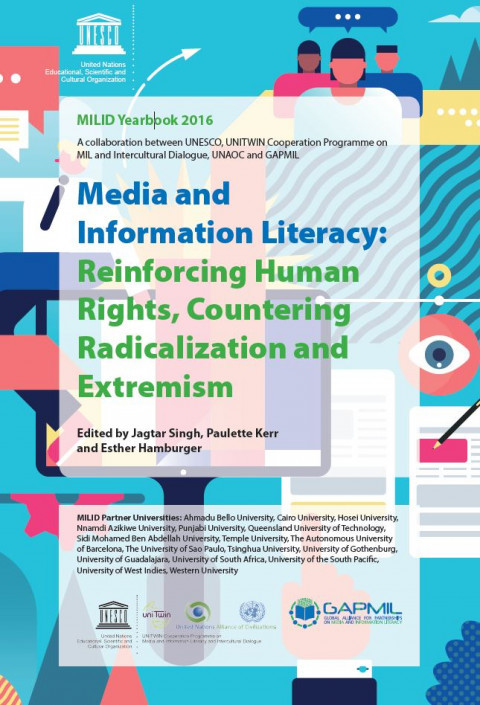 Media and Information Literacy: Reinforcing Human Rights, Countering Radicalization and Extremism (The MILID Yearbook, 2016) Año de publicación: 2016 Autor: Jagtar Singh | Paulette Kerr | Esther Hamburger Autor corporativo: UNESCO | Alliance of Civilizations Media and Information Literacy (MIL) is a strong tool, cutting across educational, cultural and social contexts. It can help overcome disinformation, stereotypes and intolerance conveyed through some media and in online spaces. Here, stimulating critical empathy is one of the vital components and there are many stakeholders that have a role to play in this dimension of MIL.This year’s edition is focused on a highly relevant theme of “Media and Information Literacy: Reinforcing Human Rights, Countering Radicalization and Extremism”. It is a relevant reference point to initiate discussion and offer perspectives to stakeholders seeking to apply MIL as a tool to counter violent extremism. There is evident need for evidence-based research, assessment and evaluation that can provide insight into the impact of media and information literacy on societies. UNESCO trusts that this publication will contribute to ongoing scholarship and debate on these key topics.For media and other information providers to serve their purpose, we need critical minds in the public, which means to develop MIL programmes at the national, regional and international levels.
  UNESCO: Promise of Gender Equality; Key Actions of 2018 and 2019 Año de publicación: 2020 Autor corporativo: UNESCO This is the first UNESCO Annual Report on Gender Equality that highlights the key initiatives implemented in 2018-2019. The advancement of gender equality through education, the sciences, culture, information and communication, at the heart of UNESCO’s mandate, aims to equip both women and men to address the challenges of sustainable development in a fast-changing world.