
Recursos
Exploren una amplia gama de recursos valiosos en GCED para profundizar su comprensión y promover su búsqueda, incidencia, enseñanza y aprendizaje.
2,162 resultados encontrados
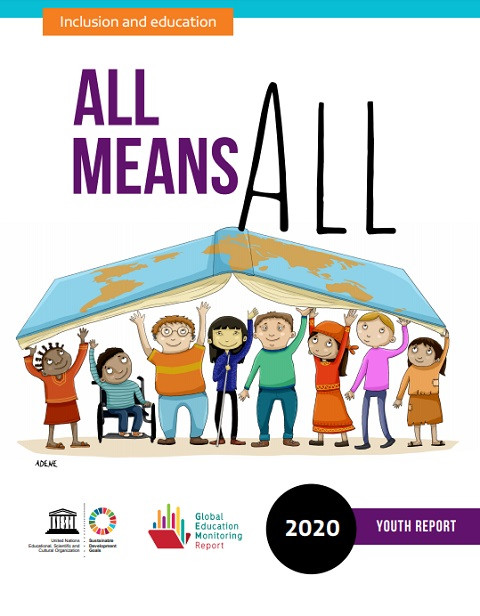 Youth Report 2020: Inclusion and Education; All Means All Año de publicación: 2020 Autor corporativo: UNESCO | Global Education Monitoring Report Team This Youth Report is designed to help you learn about the social, economic and cultural factors that cause vulnerable children, youth and adults to be discriminated against and marginalized in education. It tells the stories of the people who fight to ensure that everyone is included in education, and of those who fought to uphold their own right to education. It brings to life the recommendations of the 2020 Global Education Monitoring Report: Inclusion and education: All means all and calls on youth and teachers to share and discuss the stories and messages, to use them in campaigns and as a teaching tool in class. An open letter to education ministers is included calling, for education systems to be built back more inclusive after the school closures during Covid-19.
  미디어․정보 리터러시 갖춘 시민 되기: 비판적으로 사고하고 현명하게 클릭하기! Año de publicación: 2022 Autor: Alton Grizzle | Carolyn Wilson | Ramon Tuazon | C.K. Cheung | Jesus Lau | Rachel Fischer | Dorothy Gordon | Kwame Akyempong | Jagtar Singh | Paul R. Carr | Kristine Stewart | Samy Tayie | Olunifesi Suraj | Maarit Jaakkola | Gina Thésée | Curmira Gulston Autor corporativo: 유네스코 현명한 클릭으로 우리 사회를 개선할 수 있을까? 도서관을 비롯한 아카이브, 박물관, 미디어와 디지털 통신 회사 같은 콘텐츠 제공자는 모든 이를 포용하고 지속 가능한 개발을 이루어내려는 역할을 지니고 있다. 하지만 콘텐츠 제공자가 그와 같은 이상에 근거해서만 움직이는 것은 아니기 때문에 서비스 사용자들은 어려움을 겪게 된다. 모든 콘텐츠 제공자는 평생학습의 기회를 열어 주기도 하지만 동시에 잘못된 정보나 허위정보, 혐오 표현, 온라인 프라이버시 침해 등과 같은 과제도 안겨 준다. 미디어·정보 리터러시란 사람들이 취할 수 있는 혜택은 최대로 얻고, 입을 수 있는 피해는 최소화할 수 있도록 하는 일련의 역량을 의미한다. 미디어·정보 리터러시는 커뮤니케이션 콘텐츠와 해당 콘텐츠를 제공하는 기관 및 디지털 기술을 비판적이고 효과적으로 이용할 수 있는 역량이다. 이는 나이, 배경과 관계없이 모든 시민이 필수적으로 갖추어야 하는 능력이다. 이 선구적인 커리큘럼은 미디어·정보 리터러시 역량의 종합적인 프레임워크를 제공하며, 교육자와 학습자가 활용할 수 있는 체계적인 교육적 방안을 제안한다. 또한 다양한 모듈을 제시하여 오늘날의 커뮤니케이션 생태계를 이해하는 데 필수적인 역량 범위를 상세하게 다루고 있다. 이 자료에서는 미디어·정보 리터러시를 지금 우리 사회에서 새롭게 부상하고 있는 문제들, 즉 인공지능을 비롯해 디지털 시민 교육, 지속가능 발전 교육, 문화 리터러시 및 허위정보와 잘못된 정보의 급증 등과 연계하여 다루고 있다. 본 커리큘럼을 효과적으로 활용한다면 누구나 미디어·정보 리터러시를 갖춘 시민은 물론, 미디어·정보 리터러시 동료 교육자도 될 수 있을 것이다.
 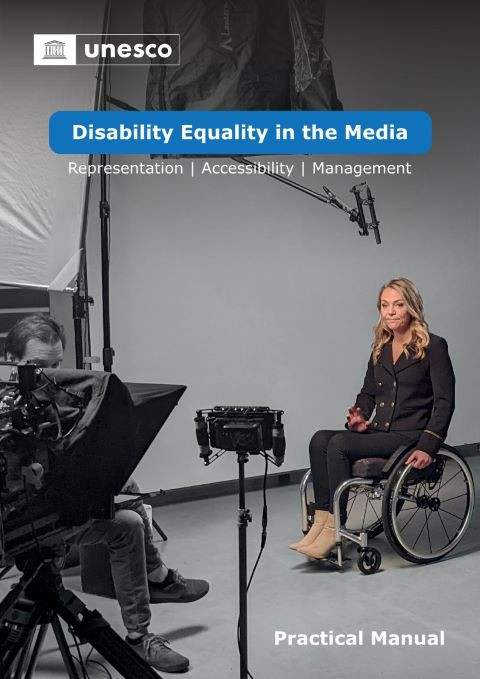 Disability Equality in the Media: Representation, Accessibility, Management; Practical Manual Año de publicación: 2025 Autor corporativo: UNESCO Promoting Disability Equality in the Media Despite all the positive changes happening in newsrooms and leadership roles, diversity in the media remains a challenge.When certain groups are left out, the media fails to present all angles of a story, missing diverse perspectives and innovative ideas. Consequently, audiences do not receive the full picture, and promises of fair and accurate representation often fall short, affecting our perceptions of each other in society. It is the case of persons with disabilities, who make up 16 percent of the global population but remain one of the most marginalized groups. Media coverage frequently overlooks them, and when their stories are told, they are often framed through stereotypes. This not only creates barriers but also denies them their rights. To address this, media organizations should enhance editorial policies and representation, improve employment conditions, and foster a more inclusive environment for professionals with disabilities.The Practical Manual and Master Class provide hands-on advice to editorial teams on how to ensure fair and unbiased coverage of disability. For content producers, it details how to make media content and services accessible. To managers and decision makers, the material inspires change, demonstrating how disability equality can contribute to media industry growth and create new revenue streams.This work contributes to the implementation of the United Nations Convention on the Rights of Persons with Disabilities (2006) and promotes freedom of expression, media development, and access to information for the meaningful participation of persons with disabilities in public debate.
 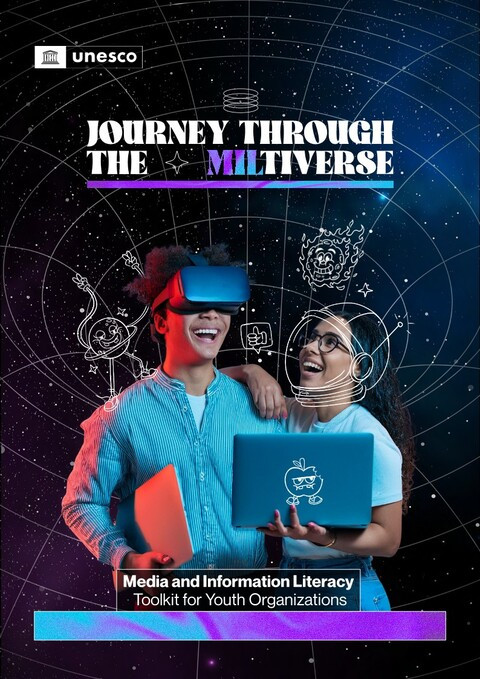 Journey through the MILtiverse: Media and Information Literacy Toolkit for Youth Organizations Año de publicación: 2024 Autor: Sandra Acero Pulgarin | Natalia González-Gil | Alejandro Santamaría Virviescas Autor corporativo: UNESCO Empowering Youth Organizations with and for Media and Information LiteracyIn an era where digital interactions dominate, young people must be equipped with more than just basic digital literacy skills. Media and Information Literacy (MIL) has become an essential competency, enabling them to critically navigate the overwhelming ow of information in our fast-paced and complex information ecosystem. \With the Internet user base getting younger every day — data shows that one in three internet users is a child — countries worldwide are increasingly working on integrating MIL into their education systems. Despite these advancements, many young people still grapple with challenges such as disinformation, hate speech, and other harmful online content. Additionally, new technologies continue to emerge, creating challenges with unknown impacts. For example, 80% of young people aged 10 to 24 use AI multiple times a day for education, entertainment, and other purposes. Global youth organizations are at the forefront of UNESCO’s eorts to promote MIL among young people through informal education. This toolkit serves as a primary resource to help these organizations incorporate MIL into their strategies, policies, and operations, aiming to make MIL a lasting component of their practices and peer-to-peer educational programs. Join us on this journey through the MILtiverse and empower the next generation by making MIL a fundamental life competence for their futures.
  Countering Holocaust Denial and Distortion through Education: A Guide for Teachers Año de publicación: 2025 Autor corporativo: UNESCO Antisemitic hate speech, disinformation, and conspiracy theories thrive during crises, making it vital for teachers to address these issues in school curricula. Social media has significantly amplified the spread of such harmful content, including Holocaust denial and distortion. These falsehoods, rooted in antisemitic prejudice and conspiratorial thinking, threaten our shared historical memory and promote hatred. To effectively combat these issues, it is essential to have a comprehensive understanding of the Holocaust —how and why the genocide of the Jewish people occurred. This knowledge helps us recognize the causes and risk factors, contributing to the prevention of future atrocity crimes and the fight against antisemitism. In the digital age, it is also imperative to be able to decipher the manipulation of history, and the misrepresentation of the past.The guide provides teachers with the necessary tools and guidance to prevent the spread of Holocaust denial and distortion. It equips teachers with knowledge, teaching principles, and strategies to foster digital literacy, historical understanding, and critical thinking in learners. Aimed primarily at history and social sciences teachers, it outlines key concepts, teaching methods, and approaches to counter Holocaust denial and distortion.
  Countering Holocaust Denial and Distortion through Education: Lesson Activities for Secondary Education Año de publicación: 2025 Autor corporativo: UNESCO Adaptable lessons to foster critical thinking, empathy and tolerance Holocaust denial rejects historical facts outright, while distortion manipulates the narrative. Both phenomena undermine historical truth, fuel antisemitism, and attack democratic values. By addressing these issues, this set of lesson activities for secondary education seeks to build students’ resilience against falsehoods through fostering critical thinking, empathy, and global citizenship. It was developed by UNESCO and funded by the European Commission to equip educators with tools to confront the dangerous spread of Holocaust denial and distortion. With 12 engaging lessons, students aged 14 to 18 will explore the historical facts of the Holocaust while learning to critically evaluate misinformation in today’s digital world. From analyzing survivor testimonies to deconstructing harmful memes and conspiracy theories, this resource features 12 adaptable lessons that focus on historical literacy, media analysis, and social-emotional competencies. Topics range from identifying denial and distortion, evaluating media and online sources, analyzing primary evidence like survivor testimonies, and understanding the misuse of Holocaust history in memes and conspiracy theories. Activities are scaffolded with questions, examples, and practical exercises to encourage analytical skills and promote meaningful classroom discussions. The lessons also include suggestions for incorporating primary sources, visiting memorial sites, and addressing broader issues of genocide and hate. In doing so, the guide aims to not only preserve Holocaust memory but also strengthen the values of truth, empathy, and tolerance in younger generations.
  Covering Hate Speech: A Guide for Journalists Año de publicación: 2025 Autor: Cherian George Autor corporativo: UNESCO This guide is the first in a series of guides for journalists prepared jointly by the UNESCO Communication and Information and Education Sectors on covering hate speech and its different manifestations.This guide explains what may count as hate speech, the harms it may cause, the way it works, and how media gatekeepers and other actors can address it. Many debates around hate speech are about law and regulation. Understanding the law, especially international law, can help journalists when reporting incidents where speakers are accused of hate speech. It can also help them analyse whether existing laws, as written and as applied, comply with international human rights approaches for striking the right balance between freedom of expression and the right to dignity, equality and non-discrimination.
  Как писать о языке ненависти: руководство для журналистов Año de publicación: 2025 Autor: Cherian George Autor corporativo: UNESCO Настоящее руководство — первое из серии, подготовленной совместно Секторами коммуникации и информации и образования ЮНЕСКО, и посвящено освещению журналистами языка ненависти и его различных проявлений.В настоящем руководстве рассматриваются определения языка ненависти, вред, который он может причинять, механизмы его распространения, а также способы, с помощью которых представители СМИ и другие заинтересованные стороны могут ему противодействовать. Вокруг языка ненависти нередко возникают правовые споры. Знание законодательства, особенно международного, помогает журналистам освещать случаи, когда кого-либо обвиняют в использовании языка ненависти, а также анализировать, соответствуют ли действующие нормы — как в теории, так и на практике — международным стандартам прав человека, где необходимо находить баланс между свободой выражения и правами на достоинство, равенство и недопущение дискриминации.
  Strategies to Counter Antisemitism: A Handbook for Educators Año de publicación: 2025 Autor corporativo: UNESCO Education is the first line of defence against hate and prejudice. By targeting the root causes of hate ideologies, deconstructing the stereotypes that underlie them from an early age, and promoting inclusive models, education is the keystone of a holistic approach to combating discrimination. Tackling antisemitism through education requires tailored content that addresses its complex, shifting and multilayered forms, both past and present.Acknowledging the topic’s complexity and the paucity of resources available to education stakeholders, this concise guide developed by UNESCO and funded by the European Commission aims to provide a roadmap for policymakers, curriculum developers and educators on current approaches and initiatives. It presents ten educational practices, each grounded in academic literature and illustrated by a promising educational initiative that operationalizes core pedagogical principles. The handbook is built around the three core learning domains which inform UNESCO’s approach to Global Citizenship Education: cognitive, socio-emotional, and behavioural learning.Conceived as an accessible operational guide for practitioners, this resource sets out to start a larger conversation about the needs of educators for tackling contemporary forms of antisemitism. It aims to encourage investments in high-quality empirical research that can pave the way for a better approach to combat antisemitism.
  Mainstreaming the General History of Africa into Education Systems: The Curriculum Pathway Año de publicación: 2025 Autor corporativo: UNESCO Education about the history of Africa in formal, non-formal and informal learning settings continues to be dominated by Eurocentric perspectives, which has led to imbalanced representation of Africa’s history and preconceptions.This publication is a tool to support countries in challenging the skewed perspectives on how African history is taught and how Africa is perceived. It aims to bring to the foreground Africa’s history, cultures and heritage through the curriculum to strengthen knowledge, skills, values and attitudes that contribute towards addressing long-standing hegemonic, colonial thinking and connected racial bias, while forging a united, prosperous and peaceful Africa and world.Stemming from the decolonial vision and content of the volumes of the General History of Africa, the publication proposes guiding principles and approaches for designing and implementing the General History of Africa into the curriculum. It puts forth curriculum outlines for basic and secondary education to offer renewed and broader perspectives on the history of Africa and its diasporas, and their contributions to humanity.The curriculum outlines are structured around nine thematic Learning Units, arranged chronologically from the origins of humanity and civilizations to Africa’s most recent history.