
Recursos
Exploren una amplia gama de recursos valiosos en GCED para profundizar su comprensión y promover su búsqueda, incidencia, enseñanza y aprendizaje.
2,161 resultados encontrados
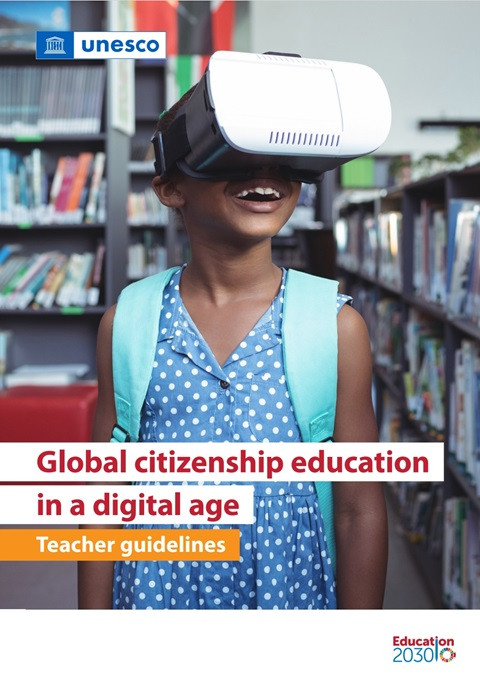 Global Citizenship Education in a Digital Age: Teacher Guidelines Año de publicación: 2024 Autor corporativo: UNESCO This book is an essential resource for teachers seeking to understand the critical role that digital citizenship education plays in promoting a more informed, engaged, and responsible global citizenry. While digital technologies have opened up new opportunities for life-long learning, they have also given rise to emerging concerns, notably in relation to the rise of disinformation and hate speech online. Aimed at building the capacities of teachers to prepare learners to act ethically and responsibly in physical and digital environments, these guidelines stress the importance of considering how Global Citizenship Education (GCED) and related knowledge, values, skills and attitudes can be fostered for teaching, learning and engaging for a more sustainable, inclusive, just and peaceful world.
 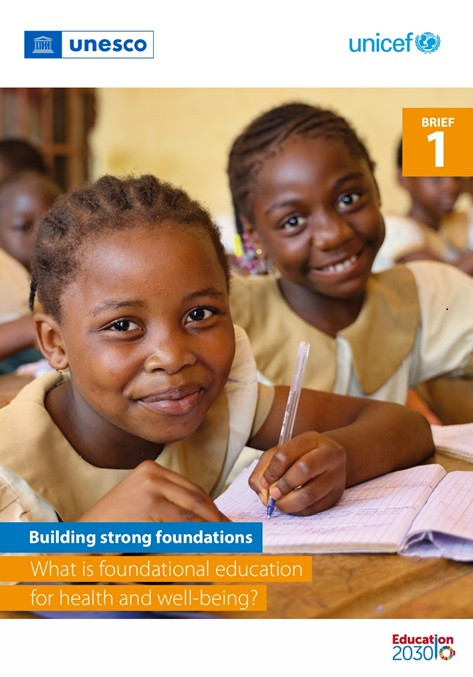 Building Strong Foundations: What is Foundational Education for Health and Well-being? (Brief 1) Año de publicación: 2024 Autor corporativo: UNESCO | United Nations Children's Fund (UNICEF) In a rapidly changing world, establishing strong foundations for children is vital for their well-being and resilience. Quality education is central to this endeavour and is the key to lifelong health and success. Recognizing that children thrive in the classroom when they are in good health, it is crucial to learn about health and well-being early on in primary schools. The Building strong foundations briefs, developed jointly by UNESCO and UNICEF, provide evidence-based guidance to support primary school-aged children to thrive through foundational education for health and well-being. Drawing from extensive research and consultations with leading experts from various fields and across the world, these briefs serve as a roadmap for education stakeholders to equip learners with the requisite knowledge and skills to navigate their current and future health and well-being needs. This document is the first of four briefs. It provides an overview of the essential role that primary schools play in enhancing health and well-being. The document outlines what foundational refers to, why it is important for health and education, and how it contributes to paving the way for healthier, inclusive and thriving societies. The brief shares compelling evidence and case studies to distill six essential elements for an effective whole-school approach to health and well-being.
  Green School Quality Standard: Greening Every Learning Environment Año de publicación: 2024 Autor corporativo: UNESCO Climate change threatens our planet and future. Schools and other learning institutions are central places for accelerating climate action among learners and local communities. By empowering teachers and students to understand climate change in their own context contribute to making societies more sustainable and climate resilient. This publication provides for the first time ever a quality standard for greening schools and other learning environments. It outlines four core areas for integrating sustainability principles and climate action: 1) school governance, 2) facilities and operation, 3) teaching and learning, and 4) community engagement. Through the Greening Education Partnership, this standard establishes a common language for all stakeholders to jointly reach the global target of greening at least 50% of schools in all countries by 2030. Policy-makers and ministries in charge of education accreditation schemes, as well as educators, learners and communities are encouraged to use the green school quality standard and join the climate-ready school movement to ensure that every learner is equipped to address climate challenges.
 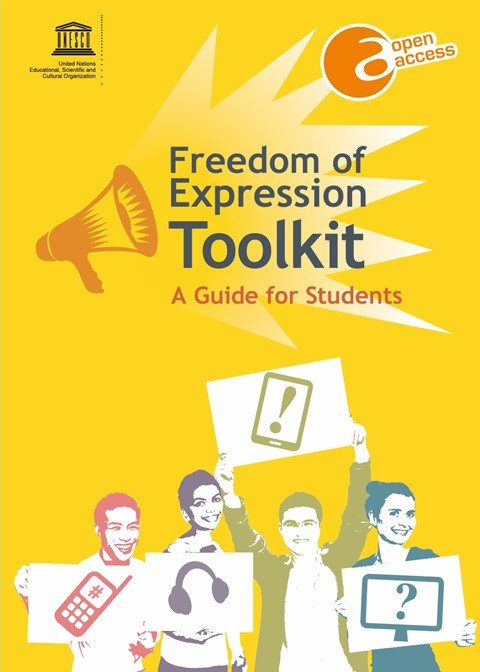 Freedom of Expression Toolkit: A Guide for Students Año de publicación: 2013 Autor corporativo: UNESCO Everyone should have all the necessary tools and mechanism to allow the free flow of information. Much has been written about freedom of expression, indeed it is one of the most debated concepts and issues of our times. However, few such publications are written with youth as the main target readers, especially for young women and men still in high schools and pre-university level. This Toolkit is one such tool targeted at high schools and pre-university students. Young women and men must be empowered and literate in the issues and concepts of freedom of expression in order to become a discerning citizen in a democracy.
  教育信息化政策和总体规划论纲 Año de publicación: 2022 Autor: Fengchun Miao | Juan Enrique Hinostroza | Molly Lee | Shafika Isaacs | Dominic Orr | Fabio Senne | Ana-Laura Martinez | Ki-Sang Song | Alexander Uvarov | Wayne Holmes | Benjamin Vergel de Dios Autor corporativo: UNESCO 几十年来,全球各国都在尝试利用信息与通信技术(Information and Communication Technologies,ICTs)促进教育发展。这些由公共 机构推动并涉及商业技术公司的行动计划却产生了诸如数字不平等 进一步加剧以及高质量数字学习机会不均衡等矛盾。新冠疫情危机 加剧了这一趋势:在2020年新冠疫情危机最严峻的时期,全球至少 三分之一的学生无法获得远程教育。本出版物旨在引导政策制定者在采用技术时提供人 权保障;将包容、公平和性别平等视为解决方案的 核心;将技术创新视为共同利益。 基于以上原则, 本出版物采用以人为本的视角, 审视从低带宽技术到人工智能和互联网3.0或“元宇宙”等新兴技术的潜能。本出版物倡导国家政策应保护教师和学生的数字健康, 减少和中和数字碳排放足迹,并避免“技术解决方案主义”。本出版物提出了一个教育信息化政策规划框架以及 迭接式政策规划路线图,以引导对各地教育系统的数字化准备状态 的评估、对学习者和教师的需求分析,进而规划有充足的配套资源 支持的国家教育信息化方案。随后,本出版物还深入剖析了在教育 的不同领域实施教育信息化的国家总体规划的典型范例。 Normes de qualité des écoles vertes: pour des cadres d’apprentissage verts Año de publicación: 2024 Autor corporativo: UNESCO Le changement climatique menace notre planète et notre avenir. Les écoles et autres institutions d'apprentissage sont des lieux centraux pour accélérer l'action climatique parmi les apprenants et les communautés locales. En donnant aux enseignants et aux élèves les moyens de comprendre le changement climatique dans leur propre contexte, ils contribuent à rendre les sociétés plus durables et plus résilientes face au climat. Cette publication fournit pour la première fois une norme de qualité pour la « vérdisation » des écoles et autres environnements d'apprentissage. Elle présente quatre domaines clés pour intégrer les principes de durabilité et l'action climatique : 1) la gouvernance scolaire, 2) les infrastructures et l'exploitation, 3) l'enseignement et l'apprentissage, et 4) l'engagement communautaire. Grâce au Partenariat pour une éducation verte, cette norme établit un langage commun pour tous les acteurs afin d'atteindre ensemble l'objectif mondial de verdir au moins 50 % des écoles dans tous les pays d'ici 2030. Les décideurs politiques et les ministères responsables des schémas d'accréditation éducatifs, ainsi que les éducateurs, les apprenants et les communautés, sont encouragés à utiliser la norme de qualité des écoles vertes et à rejoindre le mouvement des écoles prêtes pour le climat, afin de garantir que chaque apprenant soit équipé pour relever les défis climatiques.
  الإرشادات التوجيهية لتخضير مناهج التعليم والتعلّم من أجل العمل المناخيّ Año de publicación: 2024 Autor corporativo: UNESCO This Guidance responds to the calls from young people for a holistic approach to climate change and sustainability in the curriculum. It outlines a common language on how quality climate change and sustainability can be reflected in the curriculum by setting expected learning outcomes per age group (from 5-year olds and up to 18+ age group, including a lifelong learning approach).This is crucial for accelerating country-level action and ensuring joint monitoring of progress. The objective is to have 90 per cent of all countries include climate change in their curricula by 2030, as established by the Greening Education Partnership.This Guidance aims to support countries, schools or individual practitioners in reassessing their ongoing practices to adopt a more action-oriented, holistic, scientifically accurate, justice-driven and lifelong learning approach to climate change.
  Greening Curriculum Guidance: Teaching and Learning for Climate Action Año de publicación: 2024 Autor corporativo: UNESCO This Guidance responds to the calls from young people for a holistic approach to climate change and sustainability in the curriculum. It outlines a common language on how quality climate change and sustainability can be reflected in the curriculum by setting expected learning outcomes per age group (from 5-year olds and up to 18+ age group, including a lifelong learning approach).This is crucial for accelerating country-level action and ensuring joint monitoring of progress. The objective is to have 90 per cent of all countries include climate change in their curricula by 2030, as established by the Greening Education Partnership.This Guidance aims to support countries, schools or individual practitioners in reassessing their ongoing practices to adopt a more action-oriented, holistic, scientifically accurate, justice-driven and lifelong learning approach to climate change.
  Guía para hacer verdes los currículos: enseñanza y aprendizaje para la acción climática Año de publicación: 2025 Autor corporativo: UNESCO Hacer verdes los currículos con el fin de preparar a todos los estudiantes para el cambio climático. La educación es una herramienta poderosa para transformar el mundo e impulsar la acción contra el cambio climático a largo plazo.Esta guía responde a los llamados de las juventudes en favor de un enfoque holístico del cambio climático y la sostenibilidad en los planes de estudio. Define un lenguaje en común sobre cómo debe reflejarse con calidad el cambio climático y la sostenibilidad en los planes de estudio, mediante el establecimiento de los resultados de aprendizaje esperados por grupo etario (grupos de 5 años hasta mayores de 18 años, incluyendo un enfoque de aprendizaje a lo largo de toda la vida).Esto es crucial para acelerar la acción a nivel de los países y garantizar el seguimiento conjunto de los progresos. La meta es lograr que el 90 por ciento de todos los países incluyan el cambio climático en sus planes de estudio para el año 2030, según lo establecido por la Alianza para una Educación Verde.Esta guía tiene el propósito de apoyar a países, escuelas y profesionales en la revisión de las prácticas que tienen en marcha para adoptar un enfoque del cambio climático más orientado a la acción, holístico, científicamente preciso, impulsado por la justicia y con una perspectiva de aprendizaje a lo largo de toda la vida.
  Kit de herramientas global sobre IA y el estado de derecho para el poder judicial Año de publicación: 2023 Autor: Miriam Stankovich | Ivana Feldfeber | Yasmín Quiroga | Marianela Ciolfi Felice | Vukosi Marivate Autor corporativo: UNESCO ¿Qué es la Inteligencia artificial (IA)? ¿Cómo funciona? Y lo que es más importante, ¿cómo se abre camino en el contexto judicial? Tecnologías como la IA han existido durante décadas, pero solo recientemente han comenzado a usarse en una variedad de entornos de justicia y aplicación de la ley. Si bien la IA tiene un inmenso potencial para el sistema de justicia, ya que ayuda a los jueces a tomar mejores decisiones, mejora la eficiencia, aumenta el acceso y ayuda a detectar y prevenir el delito, también existen algunas cuestiones importantes que las partes interesadas en la justicia deben tener en cuenta mientras se preparan para un futuro en el que la IA se utiliza cada vez más en los sistemas de justicia. En 2022, la UNESCO lanzó dos evaluaciones de necesidades. En primer lugar, a través de la Encuesta de evaluación de necesidades de inteligencia artificial de la UNESCO en África, el 90 % de los 32 países encuestados solicitaron apoyo para el desarrollo de capacidades para el poder judicial en materia de IA. Al mismo tiempo, una segunda encuesta mundialde actores judiciales en 100 países subrayó la necesidad de comprender mejor el uso de la IA en la administración de justicia y sus repercusiones jurídicas más amplias en las sociedades. El “Kit de herramientas mundial sobre la IA y el Estado de derecho” para el Poder Judicial responde a estas necesidades y proporciona a los actores judiciales (jueces, fiscales, fiscales estatales, abogados públicos, universidades de derecho e instituciones de formación judicial) el conocimiento y las herramientas necesarias para comprender los beneficios y riesgos de la IA en su trabajo. El kit de herramientas ayudará a los actores judiciales a mitigar los posibles riesgos de la IA para los derechos humanos al brindar orientación sobre las leyes, principios, normas y jurisprudencia internacional de derechos humanos relevantes que sustentan el uso ético de la IA.