
Recursos
Exploren una amplia gama de recursos valiosos en GCED para profundizar su comprensión y promover su búsqueda, incidencia, enseñanza y aprendizaje.
2,781 resultados encontrados
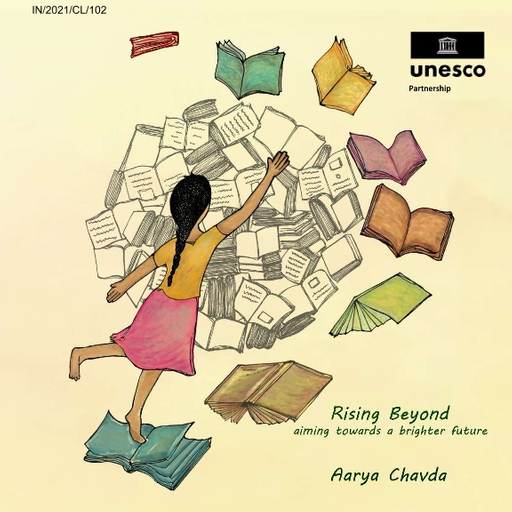 Rising Beyond: Aiming towards a Brighter Future Año de publicación: 2021 Autor: Aarya Chavda As children, how do we truly define a better understanding towards the right to choose, right to dream and right to self-express? This book emphasizes on the true meaning that there is no duty more important than ensuring that children’s rights are respected.
  Report on the Right to Education in Human Mobility in Central America, the Dominican Republic and Mexico: Towards Inclusive, Equitable, Quality Education With Lifelong Learning Opportunities Año de publicación: 2024 Autor corporativo: UNESCO San José | Central American Educational and Cultural Coordination | Central American Integration System Although human mobility is not a new phenomenon, data indicate that the number of people in this situation has reached its highest point since records began and there are no signs that the trend will decrease in the coming years. This scenario threatens to become a structural situation, strongly impacting the right to education and educational systems. Therefore, it is imperative that States and other key actors make a deep commitment to guarantee the fundamental right to education of people in situations of mobility through urgent measures, in line with the provisions of Sustainable Development Goal (SDG) 4 of the United Nations 2030 Agenda. For this reason, the preparation of this Report on the right to education of people in situations of mobility in Belize, Costa Rica, El Salvador, Guatemala, Honduras, Mexico, Nicaragua, Panama and the Dominican Republic has been undertaken. The Report is an effort by UNESCO and the Central American Educational and Cultural Coordination (CECC/SICA) in collaboration with UNHCR, IOM, UNICEF, the Norwegian Refugee Council and RET International, and with the technical support of the SES Foundation and the UNESCO Chair for the Development of International Education at George Washington University (United States). Informe sobre el derecho a la educación en la movilidad humana en América Central, República Dominicana y México: Hacia una educación inclusiva, equitativa, de calidad y con oportunidades de aprendizaje permanente Año de publicación: 2024 Autor corporativo: UNESCO San José | Central American Educational and Cultural Coordination | Central American Integration System Si bien la movilidad humana no es un fenómeno nuevo, los datos indican que la cantidad de personas en esta situación ha alcanzado su punto más alto desde que se tiene registro y no hay indicios de que la tendencia vaya disminuyendo en los próximos años. Este escenario amenaza con volverse una situación estructural, impactando fuertemente en el derecho a la educación y los sistemas educativos. Por ello, es perentorio el compromiso profundo de los Estados y otros actores clave para garantizar el derecho fundamental a la educación de las personas en situación de movilidad a través de medidas urgentes, en sintonía con lo estipulado en el Objetivo de Desarrollo Sostenible (ODS) 4 de la Agenda 2030 de las Naciones Unidas. Por ello se ha emprendido la elaboración del presente Informe sobre el derecho a la educación de las personas en situación de movilidad en Belice, Costa Rica, El Salvador, Guatemala, Honduras, México, Nicaragua, Panamá y República Dominicana. El Informe constituye un esfuerzo de la UNESCO y la Coordinación Educativa y Cultural Centroamericana (CECC/SICA) en colaboración con ACNUR, OIM, UNICEF, el Consejo Noruego para Refugiados y RET International, y con el apoyo técnico de la Fundación SES y la Cátedra UNESCO para el Desarrollo de la Educación Internacional en la Universidad George Washington (Estados Unidos)
  Educational Route: Lessons Learned Año de publicación: 2024 Autor corporativo: Save the Children This report, prepared by Save the Children in partnership with HIAS and funded by ECHO, sets out the main lessons learned from the Educational Route project, which has had areas of intervention in Mexico, Panama, Costa Rica, Guatemala, Honduras and El Salvador. The objective of the project has been to contribute to reducing barriers to access to education for children, adolescents and families on the move along the Central American migratory routes. Within the framework of the project, a methodological package has been created containing an evaluation tool “HALDO on the move” (Holistic Assessment of Learning and Development Outcomes) that allows different humanitarian actors to quickly assess the educational level of children and adolescents and record their data on a platform in order to offer an emergency education response adapted to real learning needs, as well as achieve greater coordination to promote educational continuity along the route. Ruta educativa: Lecciones aprendidas Año de publicación: 2024 Autor corporativo: Save the Children El presente informe, elaborado por Save the Children en alianza con HIAS y financiado por ECHO, expone las principales lecciones aprendidas del proyecto Ruta Educativa, que ha tenido como zonas de intervención México, Panamá, Costa Rica, Guatemala, Honduras y El Salvador. El objetivo del proyecto ha sido contribuir a reducir las barreras de acceso a la educación de niños, niñas, adolescentes y familias en movimiento en las rutas migratorias centroamericanas, y en el marco del mismo se ha creado un paquete metodológico que contiene una herramienta de evaluación “HALDO on the move” (Holistic Assessment of Learning and Development Outcomes) que permite a los diferentes actores humanitarios evaluar rápidamente el nivel educativo de los niños, niñas y adolescentes y registrar sus datos en una plataforma con el fin de ofrecer una respuesta de educación en emergencias adaptada a las necesidades de aprendizaje reales, así como lograr una mayor coordinación para promover la continuidad educativa a lo largo de la ruta.
 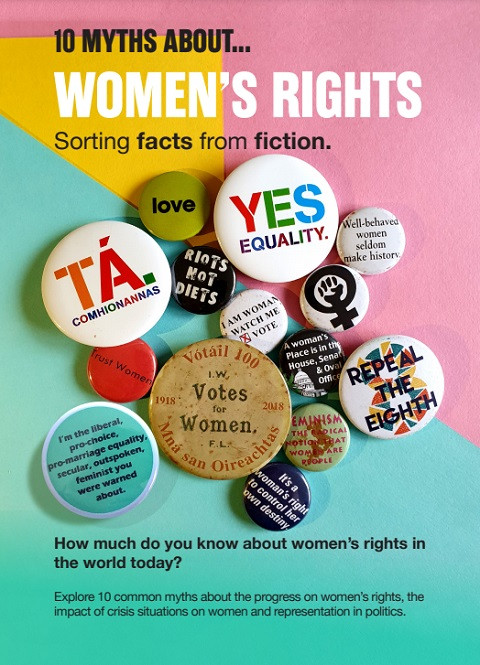 10 Myths About Women’s Rights: Sorting Facts From Fiction Año de publicación: 2020 Autor: Toni Pyke | Colm Regan Autor corporativo: DevelopmentEducation.ie Gender-based inequality is one of the most enduring and deep-seated discriminations. It affects all regions, classes and sectors. In most countries, it is maintained and defended in most of the same ways. One key component of that maintenance is a set of myths that are repeated time and time again.This pocket-size booklet includes:Why thinking about women’s rights matters10 short myths about progress on equality, who benefits from feminism, the realities of women’s health and the impact of COVID-19.Links to the Sustainable Development GoalsReferences per each myth following a fact or fiction approach and an explainerThe 10 Myths About…. series looks to sort facts from fiction on key global development, human rights and justice issues.Download 10 Myths About Women’s Rights PDFTest your knowledge and take the 10 Myths About Women’s Rights quiz or share with your group / class / friends For the latest fact checks and factsheets more on the fact checking project and development ideas, issues and debates, visit our What The Fact? project.
  Gender-Based Hate Crime Año de publicación: 2021 Autor corporativo: Organization for Security and Co-operation in Europe (OSCE) Gender-based hate crimes are a consequence of gender inequalities and disproportionately affect women, as well as anyone perceived as not complying with prevailing gender norms. Gender-based hate crimes often seek to intimidate and suppress ways of life or expressions of identity that are perceived as not complying with traditional gender norms. They have a significant, long-lasting impact on the victims, and undermine security and social cohesion by perpetuating gender inequalities. The existence of such crimes also underscores wider trends of intolerance towards other groups. Everyone has a role to play in countering this and all forms of intolerance.
  International Symposium on Cultivating Wisdom, Harvesting Peace: Educating for a Culture of Peace through Values, Virtues, and Spirituality of Diverse Cultures, Faiths, and Civilizations; Symposium Recommendations Año de publicación: 2005 Autor corporativo: Griffith University. Multi-Faith Centre On the 10-13th August 2005, over 120 delegates from 25 countries gathered at the International Symposium to share their inspirational insights and experiences on the theme of “Cultivating Wisdom, Harvesting Peace.” The Symposium was organized and hosted by the Multi-Faith Centre of Griffith University, Brisbane, Australia with the support of Pure Land Learning College, UNESCO and various UNESCO National Commissions, centres or offices, and numerous faith, interfaith, educational and civil society organizations and institutions. Reflecting a diversity of cultures, faiths and spirituality traditions, the delegates presented rich and empowering stories as well as critical analyses of how communities, institutions, civil society organizations, and international or global agencies have organized educational projects and programs to address the root causes of violence and conflicts and build a culture of peace at all levels of life. Over four intensive days of inter-faith and intra-faith dialogue, the Symposium participants engaged with humility and passion in sharing their wisdoms on ways to promote mutual understanding, solidarity, and cooperation across cultures and national boundaries. While recognizing that differences between faiths and cultures need to be understood, the dialogue also clearly showed that all faiths, cultures, and civilizations have, at their core, key values, virtues, and ethical principles that inspire and sustain peaceful relationships, communities and societies.The Symposium also highlighted the urgent need for exemplars and possibilities for transforming principles, values and visions into personal and social actions and practices in all the multiple dimensions of a culture of peace. In this first decade of the 21st century, it is clear that there are still many formidable challenges of building peace posed by prevailing realities of conflicts and violence in local, national, international and global contexts. The Symposium on “Cultivating Wisdom, Harvesting Peace” was therefore a most timely and relevant event, not only for promoting the urgent dialogue needed, but also most importantly in proposing constructive policies for educational transformation worldwide. This Summary of the Symposium Recommendations will hopefully be a very helpful document for the implementation of effective and creative strategies and practices of educating for wisdom towards a culture of peace. It is offered to government leaders, policy makers, educators, and leaders and members of diverse faith and interfaith institutions and communities in all societies and regions, in the hope that we will join our minds, hearts and spirit in solidarity to build a “one world” of peace, compassion, justice, love and diverse shared values for the well being of a common humanity and earth community Colloque international sur la culture de la sagesse, la récolte de la paix: l'éducation pour une culture de la paix à travers les valeurs, les vertus, et la spiritualité de diverses cultures, religions et civilisations; recommandations du symposium Año de publicación: 2005 Autor corporativo: Griffith University. Multi-Faith Centre Au 10-13 Août 2005, plus de 120 délégués de 25 pays se sont réunis lors du symposium international de partager leurs idées et expériences d'inspiration sur le thème «Cultiver la Sagesse, la récolte de la paix.» Le colloque a été organisé et accueilli par la Foi multi Centre de l'Université Griffith, Brisbane, Australie avec le soutien de la Terre pure College Learning, l'UNESCO et diverses commissions nationales pour l'UNESCO, des centres ou des bureaux, et de nombreux foi, interreligieux, les organisations et les institutions éducatives et la société civile. Reflétant la diversité des cultures, des religions et des traditions de spiritualité, les délégués ont présenté des histoires riches et l'autonomisation ainsi que des analyses critiques de la façon dont les collectivités, les institutions, les organisations de la société civile et des organismes internationaux ou mondiaux ont organisé des projets et des programmes éducatifs pour faire face aux causes profondes de la la violence et les conflits et construire une culture de paix à tous les niveaux de la vie. Plus de quatre jours intensifs de interconfessionnel et le dialogue intra-religieux, les participants au symposium engagés avec humilité et passion à partager leurs sagesses sur les moyens de promouvoir la compréhension mutuelle, la solidarité et la coopération entre les cultures et les frontières nationales. Tout en reconnaissant que les différences entre les religions et les cultures doivent être compris, le dialogue a également montré clairement que toutes les religions, les cultures et les civilisations ont, à leur base, les valeurs clés, les vertus et les principes éthiques qui inspirent et maintenir des relations pacifiques, les communautés et les sociétés . Le Symposium a également souligné le besoin urgent d'exemplaires et les possibilités de transformer les principes, les valeurs et les visions en actions et les pratiques personnelles et sociales dans tous les multiples dimensions d'une culture de la paix. Dans cette première décennie du 21e siècle, il est clair qu'il ya encore de nombreux défis formidables de consolidation de la paix que posent les réalités prévalant des conflits et de la violence dans des contextes locaux, nationaux, internationaux et mondiaux. Le Symposium sur "Sagesse Cultivant, récolte la paix» était donc un événement le plus opportun et pertinent, non seulement pour promouvoir le dialogue urgent besoin, mais aussi le plus important de proposer des politiques constructives pour la transformation de l'éducation dans le monde entier. Ce résumé des recommandations du Symposium, nous l'espérons être un document très utile pour la mise en œuvre des stratégies et des pratiques de l'éducation pour la sagesse vers une culture de la paix efficaces et créatives. Il est offert aux chefs de gouvernement, les décideurs, les éducateurs et les dirigeants et les membres des institutions et des communautés religieuses et interconfessionnelles diverses dans toutes les sociétés et les régions, dans l'espoir que nous nous joindrons nos esprits, les cœurs et l'esprit de solidarité pour construire un "one monde "de la paix, la compassion, la justice, l'amour et les valeurs partagées diverses pour le bien-être d'une communauté de l'humanité et de la terre commune.
 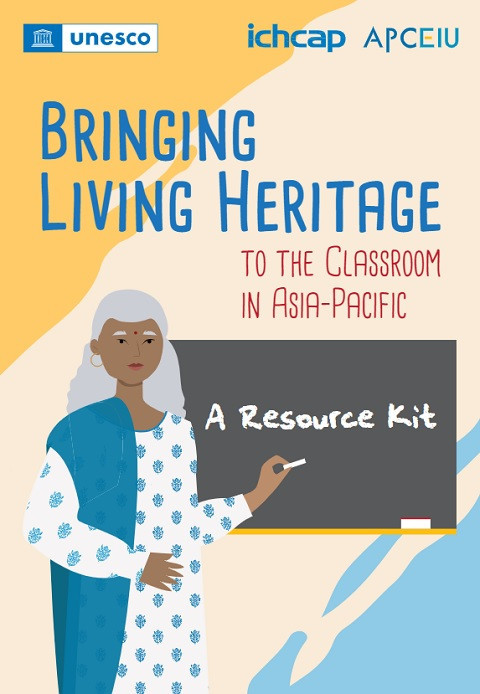 Bringing Living Heritage to the Classroom in Asia-Pacific: A Resource Kit Año de publicación: 2022 Autor corporativo: UNESCO Bangkok | APCEIU | International Information and Networking Centre for Intangible Cultural Heritage in the Asia-Pacific Region (ICHCAP) Integrating living heritage in school teaching and learning can enhance education quality, enliven the experiences of students and teachers, and contribute to keeping this heritage alive for current and future generations. In addition, as the ongoing COVID-19 pandemic has also demonstrated, living heritage can play an important role in ensuring the well-being and resilience of communities. UNESCO encourages countries to safeguard living heritage through formal and non-formal education. From the end of 2019 to early 2022, UNESCO has been working with partners to implement a pilot project “Teaching and Learning with Living Heritage in Schools” in six countries in Asia and the Pacific - including Cambodia, Kazakhstan, Kyrgyzstan, Nepal, Republic of Korea and Thailand. Over 1900 students from 21 schools had the opportunity to participate in these innovative classes. Throughout the process, 86 teachers, with more than two thirds being women, have developed and tested 101 lesson plans and activities. This Resource Kit provides step-by-step guidance and key resources on why and how to integrate living heritage in lessons and extracurricular activities in schools. Whoever you are – policy-maker, school director, teacher, student, parent, heritage practitioner – you have a vital role to play in this process.