
Recursos
Exploren una amplia gama de recursos valiosos en GCED para profundizar su comprensión y promover su búsqueda, incidencia, enseñanza y aprendizaje.
3,453 resultados encontrados
 Концептуальное осмысление и определение перспектив развития образования: Февраль 2020года Año de publicación: 2020 Autor corporativo: Организация Объединенных Наций по вопросам образования, науки и культуры (UNESCO) Представленное ниже заявление является итоговым документом первого заседания Международной комиссии по перспективам развития образования, состоявшегося 28-29 января 2020 года в Париже. Ко-миссия была создана решением ЮНЕСКО с задачей проанализировать перспективы развития образо-вания до 2050 года и в последующий период с целью подготовки к публикации в 2021 году доклада, в котором будет по-новому осмыслено то, каким образом знания, обучение и образование могли бы со-действовать использованию возможностей и решению сложных проблем, причем не только прогнози-руемых, но и уже существующих. رؤية مستقبل التعليم وتأطيره: فبراير 2020 Año de publicación: 2020 Autor corporativo: منظمة الأمم المتحدة للتربية والعلم والثقافة (UNESCO) نورد فيما أييت البيان الصادر عن االجتماع األول للجنة الدولية ملستقبل الرتبية و التعليم الذي قد ُ ع يف ابريس يف ُ ُون الفرتة من 28 إىل 29 َكان لثَّ ِان ٱ ُ ر ِ اي َ ن َ / ي 2020 .وذلك يف إطار عمل اللجنة املكلفة من قبل اليونسكو للنظر ً وأييت هذا البيان متهيدا إلصدار تقرير اللجنة يف عام 2021 إلعادة التفكري يف املستقبل إىل عام 2050 وما بعده، يف كيف ميكن للمعرفة والتعلم والتعليم مواجهة التحدايت والفرص، سواء تلك املتوقعة للمستقبل أو تلك املوجودة 展望并构筑教育的未来: 2020年2月 Año de publicación: 2020 Autor corporativo: 联合国教科文组织 (UNESCO) 以下是关于教育的未来国际委员会第一次会议(2020年1月28–29日,巴黎)成果的声明。该委员会由教科文组织创设,其任务是展望2050年及以后,在2021年发布一份报告,重新思考知识、学习和教育可如何应对挑战、把握机遇,包括未来可预见的以及当前存在的挑战和机遇。
  COVID-19 Crisis and Curriculum: Sustaining Quality Outcomes in the Context of Remote Learning (Issue Note no. 4.2 – April 2020) Año de publicación: 2020 Autor corporativo: UNESCO The COVID-19 pandemic has changed the lives of large numbers of learners, teachers and parents around the world, with millions now teaching and learning from home. While this is first and foremost a health crisis, it will likely have significant long-term effects on education, including on curriculum and learning. The situation, however, could become an opportunity to rethink curriculum, teaching-learning-assessment processes and the development of learners’ competencies with a view to strengthening their learning skills and sustaining their motivation.This crisis will likely provide an opportunity for schools to strengthen their ties with families, and for teachers to communicate and cooperate better with parents in the interest of learners. In the same vein, the crisis means teachers and parents may become more involved in decisions regarding curriculum appropriateness. This can support the development of a learner-centred, participative and inclusive learning paradigm that takes into account the interests of learners, as well as their environments and aspirations. Crisis y currículo durante el COVID-19: mantención de los resultados de calidad en el contexto del aprendizaje remoto (Nota temática No. 4.2 – Abril 2020) Año de publicación: 2020 Autor corporativo: Organización de las Naciones Unidas para la Educación, la Ciencia y la Cultura (UNESCO) La pandemia del COVID-19 ha cambiado la vida de una gran cantidad de estudiantes, docentes, padres y madres a lo largo del mundo y millones actualmente enseñan y aprenden desde sus hogares. Aunque se trata principalmente de una crisis sanitaria, es probable que tenga importantes secuelas a largo plazo en la educación, incluso en el currículo y el aprendizaje. No obstante, la situación puede transformarse en una oportunidad para reexaminar el currículo, los procesos de evaluación de la enseñanza y del aprendizaje y el desarrollo de las competencias de las y los estudiantes, en vista de fortalecer sus habilidades de aprendizaje y mantener su motivación.Es probable que la crisis ofrezca una oportunidad para que las escuelas fortalezcan sus vínculos con las familias y para que las y los docentes se comuniquen y cooperen mejor con los padres y las madres en beneficio de las y los estudiantes. En la misma línea, la crisis significa que docentes, madres y padres podrían participar más en las decisiones respecto de la idoneidad del currículo. Esto puede servir como apoyo al paradigma de aprendizaje inclusivo, participativo y centrado en la y el estudiante, que considera tanto los intereses de las y los estudiantes como sus entornos y aspiraciones.
 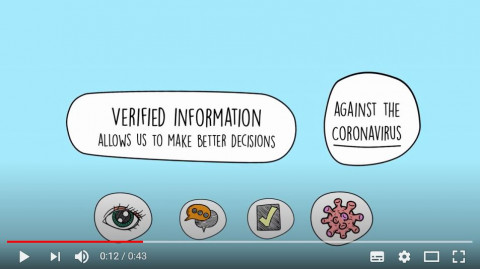 How to Stop Misinformation in Times of Coronavirus? Año de publicación: 2020 Autor corporativo: United Nations Development Programme (UNDP) | UNESCO Learn how to identify unverified content you receive on your cell phone and avoid spreading information on social media that has not been checked by credible sources. Caring for reliable information is everyone's responsibility, and helps us make better decisions.Learn more about this campaign by UNESCO and UNDP at:https://en.unesco.org/news/disinformation-silent-weapon-times-pandemic
 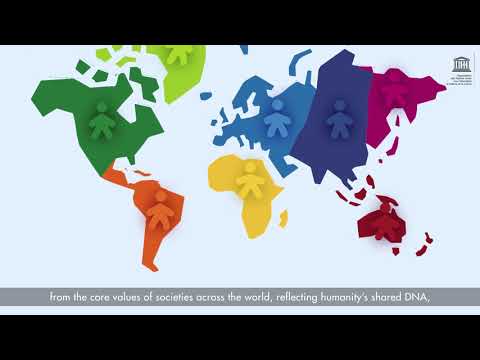 Éducation à la citoyenneté mondiale: Pour une approche locale Año de publicación: 2018 Autor corporativo: Organisation des Nations Unies pour l'éducation, la science et la culture (UNESCO) Les sociétés à travers le monde ont longtemps vécu selon les principes de la solidarité, le dialogue et le respect de la diversité. Le programme d’éducation à la citoyenneté mondiale (ECM) de l’UNESCO est inspiré de ces savoirs, en inculquant aux apprenants les compétences, les valeurs et les attitudes pour vivre ensemble et construire un monde plus durable et pacifique. L’ECM n’est pas un nouveau concept, mais une aspiration de longue date à travers les continents.
 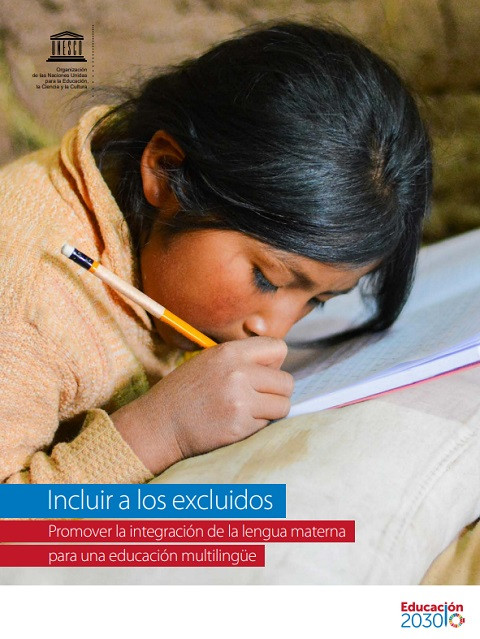 Including the Excluded: Promoting the Integration of the Mother Tongue for a Multilingual Education Año de publicación: 2020 Autor corporativo: UNESCO This publication presents the advantages of including the mother tongue and promoting multilingual education, as well as guidelines for achieving it. Incluir a los excluidos: Promover la integración de la lengua materna para una educación multilingüe Año de publicación: 2020 Autor corporativo: Organización de las Naciones Unidas para la Educación, la Ciencia y la Cultura (UNESCO) Esta publicación presenta las ventajas de incluir la lengua materna y promover una educación multilingue, así como orientaciones para lograrlo.
 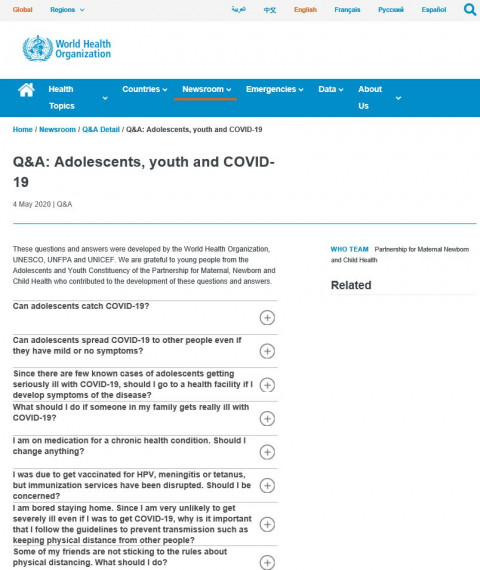 Q&A: Adolescents, Youth and COVID-19 Año de publicación: 2020 Autor corporativo: World Health Organization (WHO) | UNESCO | United Nations Population Fund (UNFPA) | United Nations Children's Fund (UNICEF) As part of UNESCO’s work in promoting better health and well-being for all children and young people, it has contributed to the development of a practical guide in a ‘questions and answers’ (Q&A) format on children and adolescents and COVID-19. This work was led by the World Health Organization, in collaboration with the Adolescents and Youth Constituency of the Partnership for Maternal, Newborn and Child Health, UNESCO, UNFPA, and UNICEF.The Q&A provide children and adolescents with accurate, non-judgmental information and advice around COVID-19, including how to help stop the spread of the virus, what to do if they develop symptoms of the disease, and how to best manage their health and well-being during the confinement period and after. It considers children and young people as critical actors in the response to COVID-19, not as passive beneficiaries.