
Recursos
Exploren una amplia gama de recursos valiosos en GCED para profundizar su comprensión y promover su búsqueda, incidencia, enseñanza y aprendizaje.
3,446 resultados encontrados
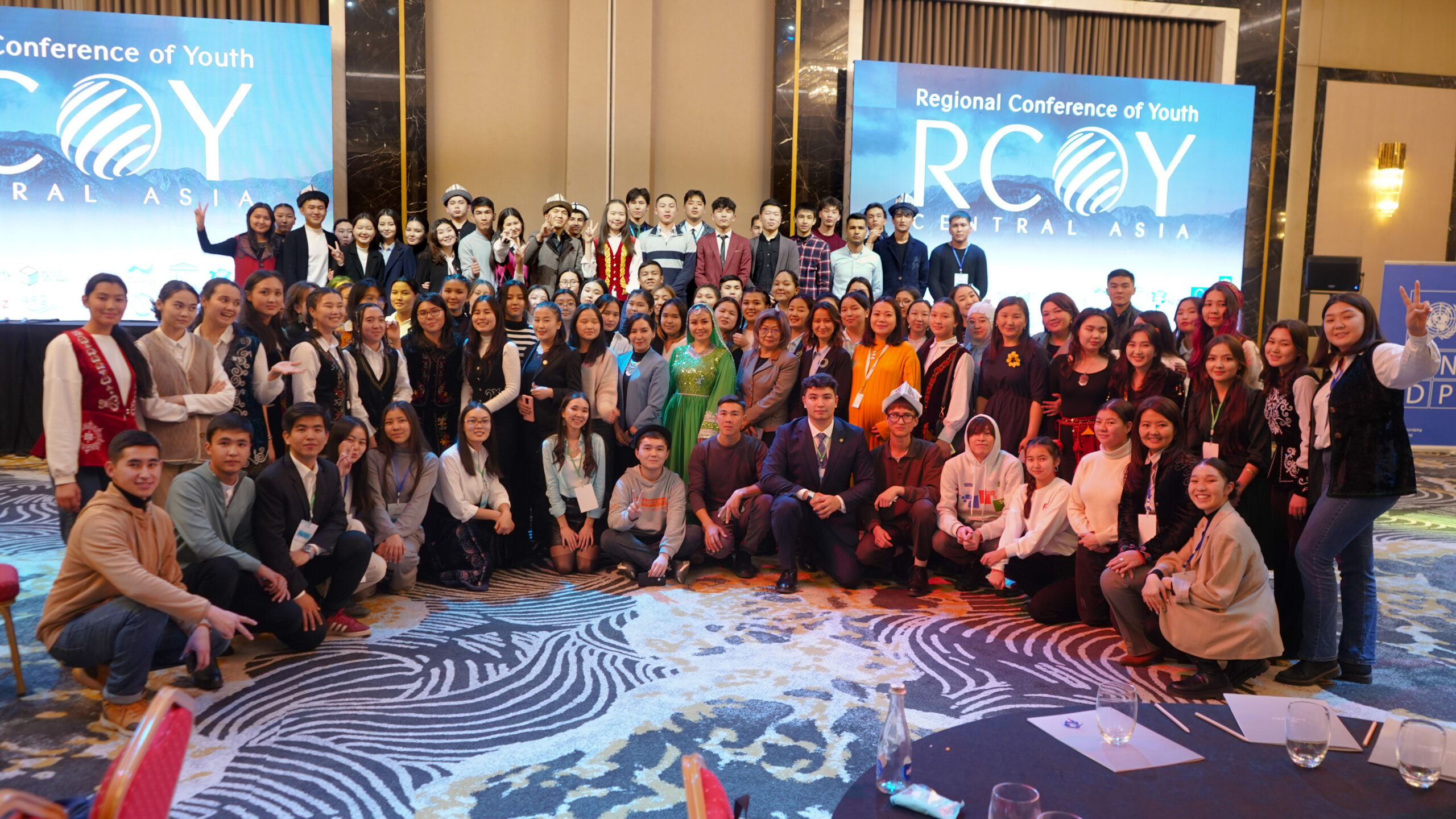 Вовлечение молодежи в климатические вопросы в Казахстане и Таджикистане: иллюзия или реальность? Año de publicación: 2024 Autor: Anisa Abibulloyeva | Mukhtar Amanbayuly Autor corporativo: Central Asian Bureau for Analytical Reporting (CABAR) Государственные органы стран Центральной Азии и международные организации, которые занимаются проблемами окружающей среды, особенно изменения климата, недостаточно учитывают мнения молодых экологов, считают молодые эксперты из Таджикистана и Казахстана Аниса Абибуллоева и Мухтар Аманбайулы.
  Case Studies in Action: Youth Empowerment for a Peaceful Caribbean Año de publicación: 2024 Autor: Gizem Kilinç Autor corporativo: UNESCO Kingston This compilation, titled “Case Studies in Action: Youth Empowerment for a Peaceful Caribbean” presents fourteen concise case studies highlighting (sub-)regional, national, and local initiatives that contribute to the operationalisation of the Youth, Peace, and Security (YPS) agenda. It features a combination of initiatives led by government, regional organisations, the United Nations, youth organisations, civil society, and multi-stakeholder groups across the Dutch and English-speaking Caribbean. The primary objective of this overview is to enrich the knowledge base on meaningful youth engagement in peace and security issues within the region, shedding light on successful approaches, obstacles encountered, and lessons learned. Organised into five sections aligned with the pillars of the YPS agenda—prevention, protection, disengagement and reintegration, partnership, and participation—the case studies are accompanied by an introduction and a summary of recommendations.
  An Unimagined Community? Examining Narratives of the Holocaust in Lithuanian Textbooks 2011 marked 20 years since the collapse of the Soviet Union. This represented a change not just in the content of education or ideologies, but in the relationships between individuals, institutions and systems. During this time, the post-Soviet Republic of Lithuania not only had to reimagine its national identity in a local context, but it also had to reimagine itself as a community within the political, economic, and historical imaginations of the North Atlantic Treaty Organization (NATO) and the European Union (EU). Therefore, in Lithuania, as in many other post-Soviet countries, debates over which events should or should not be included as part of the national identity, and thus represented in the school curriculum, are more than just discussions about educational content; they are debates over the moral legitimacy of certain narratives and the ability of sovereign states to define them. (By the publisher) Textbooks and the Holocaust in Independent Ukraine: An Uneasy Past The article examines how Ukrainian history textbooks dealt with the Holocaust between independence and 2006. The analysis reveals two major, conflicting narratives about the Holocaust, though both externalize and relativize the Holocaust. As a template for understanding genocide, the Holocaust was applied to the Soviet-imposed 1932-33 famine in Ukraine, the Holodomor. The emphasis placed on the famine in both narratives partially obscures the Holocaust and in propagating the Judeo-Bolshevik myth, turns Jews into leading perpetrators of the Holodomor. In the Ukrainian case, the complex relationship among history, historical culture, and contemporary politics is compounded by the familiar tension between national history and the international reality of the Holocaust. The historical Sovietization of Holocaust victims was attacked by historians in the Ukrainian diaspora who resented the accusations that Ukrainians were collaborators and fascists. They sought to replace the Soviet historical narrative with one that made Ukrainians the central victims, not perpetrators. Ukraine's own nationalization of the Holocaust functioned in much the same way as the Sovietization of the Holocaust. Nationalization, obfuscation, and an implicit competition among victim narratives all contribute to the relatively complicated place of the Holocaust in Ukrainian historical narratives. (By the author)
  Reaching the Youth: countering the Terrorist Narrative Año de publicación: 2012 Autor: Thomas Koruth Samuel This monograph studies the issue of the dynamics of youth and terrorism, paying close attention to the methods used by terrorists to entice the youth, the message or the narrative of the terrorists, and the possible counter-narrative that could be subsequently developed. Reaching the Youth: countering the Terrorist Narrative Año de publicación: 2012 Autor: Thomas Koruth Samuel Cette monographie étudie la dynamique entre la jeunesse et le terrorisme en accordant une attention particulière aux méthodes utilisées par les terroristes pour attirer les jeunes, leurs messages ou discours, et le contre-récit éventuel qui pourrait être développé par la suite.
  Social Media to P/CVE: Toolkit for Practitioners Año de publicación: 2017 Autor corporativo: Search for Common Ground This Toolkit has been created on the basis of the key findings obtained in the framework of the Search for Common Ground (Search) “Social Media for De-Radicalization in Kyrgyzstan: A Model for Central Asia’s” pilot project funded by the Bureau of Counterterrorism, US Department of State. The project is based on two parts: a participatory approach, focused on UN Resolution 2250, and a professional approach aimed at creating and conducting social media campaigns in Kyrgyzstan.Extremist and terrorist groups use the Internet to radicalize and recruit young people through social media and instant messaging applications. Therefore, it is important to create new methods to combat online extremist propaganda, focusing not only on measures such as blocking and filtering content, or counter-narratives which are very popular and come naturally in response to radicalization and violent extremism, but also offering a positive alternative to extremist propaganda, while challenging their ideology and messages. Социальные медиа для профилактики/предотвращения насильственного экстремизма: практическое руководство Año de publicación: 2017 Autor corporativo: Search for Common Ground Данный инструментарий был создан на основе ключевых результатов, полученных в рамках пилотного проекта «Поиск социальных сетей (Кыргызстан: модель для Центральной Азии)« Поиск в социальных сетях для Кыргызстана: модель для Центральной Азии », финансируемого Бюро по борьбе с терроризмом, Госдеп США. Проект основан на двух частях: совместный подход, ориентированный на Резолюцию ООН 2250, и профессиональный подход, направленный на создание и проведение кампаний в социальных сетях в Кыргызстане.Экстремистские и террористические группы используют Интернет для радикализации и вербовки молодых людей через социальные сети и приложения для обмена мгновенными сообщениями. Поэтому важно создать новые методы для борьбы с экстремистской пропагандой в Интернете, сосредоточив внимание не только на таких мерах, как блокировка и фильтрация контента, либо контррассказах, которые очень популярны и появляются естественным образом в ответ на радикализацию и насильственный экстремизм, но также предлагая Позитивная альтернатива экстремистской пропаганде, бросая вызов их идеологии и сообщениям.
 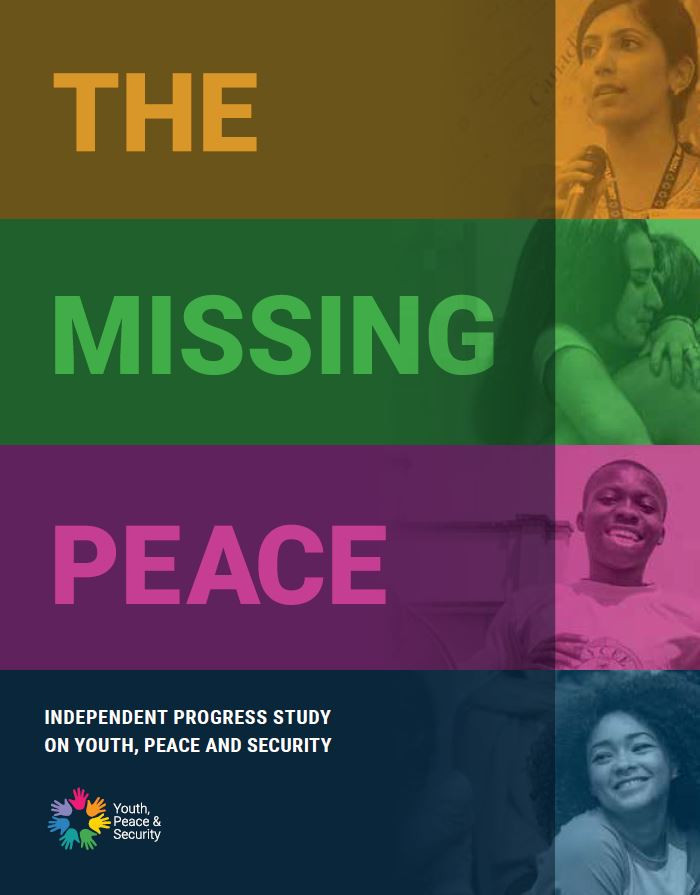 The Missing Peace: Independent Progress Study on Youth, Peace and Security Año de publicación: 2018 Autor corporativo: United Nations Population Fund (UNFPA) | UN. Peacebuilding Support Office (UN. PBSO) The process of how this study was undertaken is just as important as the outcomes it produced. The study used an inclusive and participatory research approach by undertaking regional, subregional and national consultations with young people across the globe; conducting and receiving country case studies; commissioning focus-group discussions with “hard to reach” youth; and drawing on a survey-based mapping of the work done by youth-led peacebuilding organizations. Particular effort was made to reach out beyond easily accessible and elite youth, to young people who would not ordinarily have a say in these sorts of global policy processes. Given the challenge of young people’s increasing distrust in their governments and the multilateral system, it was essential to work with credible civil society organizations with strong trust-based relationships with youth on the ground. السلام المفقود: دراسة مرحلية مستقلة حول الشباب والسلام والأمن Año de publicación: 2018 Autor corporativo: United Nations Population Fund (UNFPA) | UN. Peacebuilding Support Office (UN. PBSO) استعانت الدراسة بمنهجٍ بحثيّ شامل وتشارُكي من خلال إجراء استشارات إقليمية وشبه إقليمية ووطنية مع مجموعات من الشباب حول العالم؛ وإجراء وتلقي دراسات حالة قطُرية؛ والتكليف بعقد مناقشات جماعية مركّزة مع الشباب الذين "يصعب الوصول إليهم"؛ والاستفادة من وضع خريطة تستند إلى دراسات استقصائية في العمل الذي أجرته منظمات بناء السلام التي يقودها الشباب. وقد بُذل جهد خاص لكي تشمل الدراسة ما يتجاوز الشباب الذين يسهل الوصول إليهم والشباب النخبة، لتصل إلى الشباب الذين لا تسنح لهم الفرصة عادةً للإدلاء بآرائهم حول هذا النوع من عمليات السياسة العامة العالمية. ونظراً لما يمثّله تفاقم عدم ثقة الشباب بحكوماتهم وبالأنظمة المتعددة الأطراف من تحدٍّ، فقد كان من الضروري العمل مع منظمات المجتمع المدني ذات المصداقية التي تتمتّع بعلاقات متينة قائمة على الثقة مع الشباب على أرض الواقع.