
Recursos
Exploren una amplia gama de recursos valiosos en GCED para profundizar su comprensión y promover su búsqueda, incidencia, enseñanza y aprendizaje.
2,660 resultados encontrados
 La estrategia y plan de acción de las Naciones Unidas para la lucha contra el discurso de odio Año de publicación: 2019 Autor corporativo: United Nations (UN) En respuesta a la alarmante tendencia del aumento del discurso del odio por todo el mundo, el Secretario General, António Guterres, presentó la Estrategia y Plan de Acción de las Naciones Unidas para la lucha contra el Discurso de Odio, el 18 de junio de 2019.Con el objetivo de mejorar la respuesta de la ONU ante el fenómeno del discurso de odio, esta estrategia es el resultado de la estrecha colaboración entre 16 entidades dentro del Grupo de Trabajo de la ONU para la lucha contra el Discurso de Odio y está coordinada por la Asesora Especial de las Naciones Unidas para la Prevención del Genocidio.La Estrategia se compromete firmemente a intensificar la acción coordinada para hacer frente al discurso del odio, tanto a escala mundial como nacional. Стратегия и план действий Организации Объединенных Наций по борьбе с языком ненависти Año de publicación: 2019 Autor corporativo: United Nations (UN) В ответ на тревожные тенденции роста ксенофобии, расизма и нетерпимости, воинствующего женоненавистничества, антисемитизма и ненависти в отношении мусульман во всем мире Генеральный секретарь Организации Объединенных Наций Антониу Гутерриш 18 июня 2019 года объявил о начале реализации Стратегии и плана действий Организации Объединенных Наций по борьбе с языком ненависти. Эта первая инициатива в рамках всей системы Организации Объединенных Наций, направленная на борьбу с языком ненависти, представляет собой дорожную карту того, как Организация может поддерживать и дополнять усилия государств. В стратегии подчеркивается необходимость комплексного противодействия ненависти при соблюдении свободы мнений и их выражения, а также сотрудничества с соответствующими заинтересованными сторонами, включая организации гражданского общества, средства массовой информации, технологические компании и платформы социальных сетей.
  School, Identity and Discrimination Año de publicación: 2011 Autor: Néstor López Autor corporativo: UNESCO IIEP Office for Latin America and the Caribbean Education, identity and school is just one more link, within the many wills that work for full equality of opportunities. As in other publications of the Institute, the wealth of perspectives is added, which give shape to sometimes pressing realities with a demand for urgent action. The publication is a new opportunity for the voices of different interlocutors to give an account, in their countries and contexts, both of the construction of identity processes, and of their recognition and respect. This also implies raising the obstacles, the contributions and the advances, to face the challenges still pending. In each work presented here, the authors-whose participation and effort we deeply appreciate-offer sharp insights on various tasks and contexts. We wish, to conclude, that this text also contributes to the reflection on the possible courses that have been adopted or that require a deepening of the educational policies, specifically in the agendas related to the themes of this publication. Escuela, identidad y discriminación Año de publicación: 2011 Autor: Néstor López Autor corporativo: UNESCO IIEP Oficina para América Latina y el Caribe Educación, identidad y escuela es solo un eslabón más, dentro de las muchas voluntades que trabajan por la plena igualdad de oportunidades. Como en otras publicaciones del Instituto, se suma la riqueza de perspectivas, que dan forma a realidades en ocasiones acuciantes con demanda de urgente acción. La publicación supone una nueva oportunidad para que las voces de distintos interlocutores den cuenta, en sus países y contextos, tanto de la construcción de procesos identitarios, como de su reconocimiento y respeto. Ello implica también plantear los obstáculos, los aportes y los avances, para afrontar los desafíos aún pendientes. En cada trabajo que aquí se presenta, los autores –cuya participación y esfuerzo agradecemos profundamente– ofrecen agudas miradas sobre diversos quehaceres y contextos. Deseamos, para concluir, que este texto también contribuya a la reflexión sobre los posibles rumbos que se han adoptado o que requieren profundización en las políticas educativas, específicamente en las agendas vinculadas con las temáticas de esta publicación. استراتيجية الأمم المتحدة وخطة عملها بشأن خطاب الكراهية Año de publicación: 2019 Autor corporativo: United Nations (UN) استجابة للاتجاهات المثيرة للقلق المتمثلة في تصاعد خطاب الكراهية حول العالم، أطلق الأمين العام للأمم المتحدة أنطونيو غوتيريش استراتيجية وخطة عمل الأمم المتحدة بشأن خطاب الكراهية في 18 حزيران/يونيو 2019.تسعى هذه الاستراتيجية إلى تعزيز استجابة الأمم المتحدة للظاهرة العالمية لخطاب الكراهية، وهي نتيجة للتعاون الوثيق بين 16 كيانًا في إطار فريق الأمم المتحدة العامل المعني بخطاب الكراهية وينسقها المستشار الخاص للأمم المتحدة المعني بمنع الإبادة الجماعية.تلتزم الاستراتيجية التزامًا راسخًا بتكثيف العمل المنسق للتصدي لخطاب الكراهية، على المستويين العالمي والوطني. 联合国关于仇恨言论的战略和行动计划 Año de publicación: 2019 Autor corporativo: United Nations (UN) 为应对世界各地仇恨言论上升的惊人趋势,秘书长安东尼奥·古特雷斯于2019年6月18日发布了《联合国关于仇恨言论的战略和行动计划》。该战略旨在帮助联合国加强应对全球仇恨言论现象,是联合国仇恨言论工作组下的16个实体密切协作的成果,由联合国防止灭绝种族罪行特别顾问协调。该战略坚定地承诺在全球和国家层面加强协调行动,以应对仇恨言论。
  Curriculum globALE: Рамка компетенций преподавателей для взрослых Año de publicación: 2021 Autor corporativo: DVV International | German Institute for Adult Education, Leibniz Centre for Lifelong Learning | International Council for Adult Education | UNESCO Institute for Lifelong Learning (UIL) В этой публикации представлена Curriculum globALE, базовая система компетенций для подготовки педагогов для взрослых во всем мире. Предлагая модульную структуру, основанную на компетенциях, и междисциплинарный подход, Curriculum globALE уникален своей целью сделать обучение и образование взрослых (ALE) профессиональным в международном масштабе с помощью компетенций, которые помогают преподавателям для взрослых работать в любой образовательной среде, поле или форма. Он стремится обеспечить, чтобы знания, компетенции, навыки и отношение педагогов соответствовали профессиональному стандарту. Curriculum globALE подходит для различных контекстов, а его характер и структура позволяют включать его в различные национальные системы образования. Учебный план globALE направлен на: повышать профессионализацию ООВ путем предоставления общей справочной системы для программ обучения взрослых и предлагаемого стандарта компетенций для преподавателей для взрослых оказывать поддержку провайдерам ООВ в разработке и реализации программ «обучения инструкторов» способствовать обмену знаниями и взаимопониманию между педагогами для взрослых во всем мире.
  Teachers’ Toolkit: UNESCO Schools Network in Canada Año de publicación: 2020 Autor corporativo: Canadian Commission for UNESCO This toolkit draws on a variety of resources to give educators a range of activities and best practices for students of all ages. Students will learn about human rights and global citizenship, sustainable development, climate action and reconciliation with Indigenous peoples.
 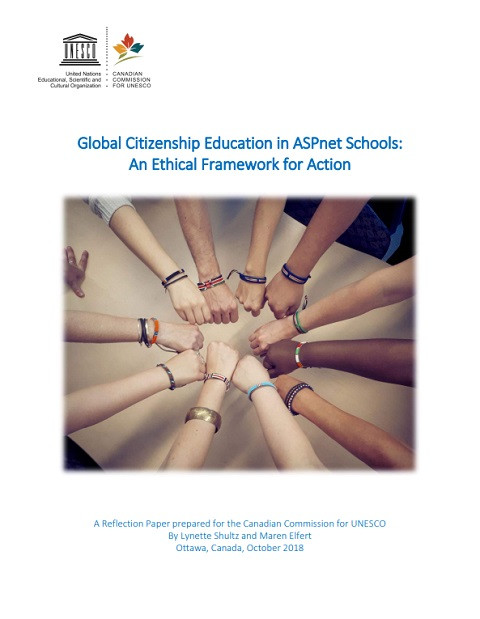 Global Citizenship Education in ASPnet Schools: An Ethical Framework for Action Año de publicación: 2018 Autor: Lynette Shultz | Maren Elfert Autor corporativo: Canadian Commission for UNESCO This report proposes global citizenship not so much as a curriculum subject or a pedagogical approach, but as an ethical position, a worldview that emphasizes human rights and earth rights, the interconnectedness of all human beings with each other, the animals and the planet, and an awareness of our global responsibilities in the face of the key challenges that we are facing today on our planet.This document is structured into three sections: It starts by introducing the UNESCO Associated Schools Network and the UNESCO perspective on global citizenship. In the second section, it shows the framework to implement GCED in schools, which will serve as the foundation for a whole school approach to the integration of a GCED perspective in curricula, lesson plans and broader school and community activities. It also gives some selected resources and examples in section three.
 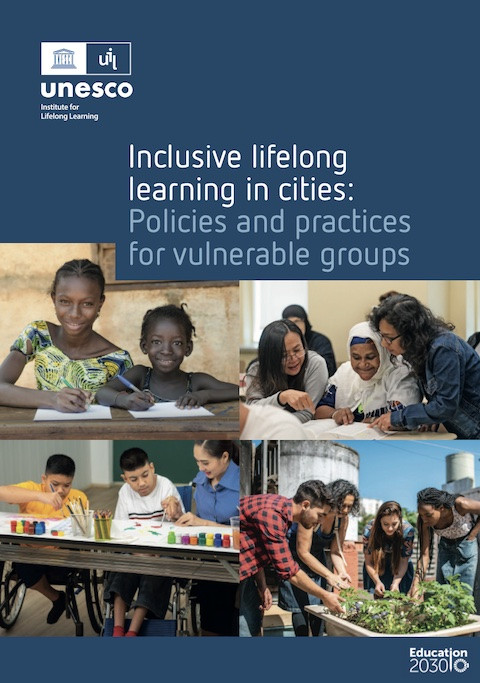 Inclusive Lifelong Learning in Cities: Policies and Practices for Vulnerable Groups Año de publicación: 2021 Autor corporativo: UNESCO Institute for Lifelong Learning (UIL) This publication features chapters on learning cities’ endeavours to promote inclusive lifelong learning for vulnerable groups. It is based on research papers prepared for the fourth International Conference on Learning Cities, which took place in 2019 in Medellín, Colombia, under the theme ‘Inclusion – A principle for lifelong learning and sustainable cities’ and hence marks a transition between the learning city conferences of 2019 and 2021.