
Recursos
Exploren una amplia gama de recursos valiosos en GCED para profundizar su comprensión y promover su búsqueda, incidencia, enseñanza y aprendizaje.
1,725 resultados encontrados
 التحليل جغرافي سياسي لمحددات تمكين المرأة في العراق Año de publicación: 2020 Autor: Zainab Ali Mazloum, Lateef Kamel Kelaiwy يعد تمكين المرأة من الموضوعات الحديثة التي اهتمت بها الجغرافيا السياسية لاسيما بعد تبن الامم المتحدة في ثمانينيات القرن العشرين لاستراتيجية تمكين المرأة على خلفية التمييز القائم ضدهن على اساس النوع وحرمانهن من تكافؤ الفرص مقارنة بالذكور في ميادين التعلم والعمل فضلا عن رسم سياسة الدولة ، على ان التمكين السياسي للمرأة يرتكز على متغيرين اساسيين :اولهما ازالة المحددات التشريعية والادارية والاجتماعية التي تعيق المشاركة السياسية للمرأة وثانيهما ايجاد التدابير والاجراءات السياسية التي تدعم مشاركة المرأة وزيادة فاعليتها عبر تطوير قدراتها ، ناهيك عن توظيف تلك القدرات في الاطار المؤسسي للوحدات السياسية ، لذا تحرص الدول بمختلف مستوياتها وتوجهاتها ومنها العراق على ازالة فوارق النوع الاجتماعي وتمكين المرأة من خلال تحقيق التنمية الشاملة عامة والتنمية السياسية خاصة لكونها تحاكي التمكين السياسي ، بيد ان العراق قد تلكا كثيرا في هذا المجال بفعل كثرة التحولات السياسية والحروب التي طالت الدولة فضلا عن التحديات الكبيرة التي واجهت وما زالت تواجه صانع القرار السياسي العراقي بأبعادها المختلفة السياسية والامنية والاقتصادية والاجتماعية ، وعليه جاء هذا البحث ليتعرض الى المرتكزات السياسية والقانونية لتمكين المرأة في العراق علاوة على التطرق لمظاهر التمكين السياسي للمرأة فيه فضلا عن عرض ابرز محدداته في الدولة وتقديم الحلول الناجعة لها.
  Espace presse de la FIDH Autor corporativo: Fédération internationale pour les droits humains (FIDH) Cet espace presse est un lieu où sont recensés tous les communiqués de presse produits par la FIDH. Si vous cherchez à être informé de l'avancée des droits humains dans le monde vous y retrouverez tous les derniers documents de recherche et de plaidoyer de la fondation This press room is a place where you can find all the press releases produced by FIDH. If you're looking to keep abreast of human rights developments around the world, you'll find all the latest FIDH research and advocacy documents here.
  Asia and the Pacific SDG Progress Report 2025: Engaging Communities to Close the Evidence Gap Año de publicación: 2025 Autor corporativo: UN. Economic and Social Commission for Asia and the Pacific (UN. ESCAP) The SDG progress report 2025 presents the latest data and insights on progress toward the Sustainable Development Goals (SDGs) in the Asia-Pacific region. While celebrating regional achievements, it also highlights persistent challenges—such as climate change, natural disasters, and critical data gaps—that risk leaving marginalized communities behind. By showcasing innovative community-level partnerships, the report explores how local efforts can help bridge the evidence gap, ensuring that progress toward the SDGs is inclusive and leaves no one behind.
  Catalysing Change for Sustainable Peace: KAICIID's Transformative Dialogue Approach Autor corporativo: International Dialogue Centre (KAICIID) What is transformative about KAICIID's interreligious and intercultural dialogue approach? Since its establishment, the Centre has worked with the understanding that for dialogue to be truly transformative, it must be continuous, responsive, synergetic, and inclusive of all voices, secular and religious. KAICIID achieves this through sustained engagement with, individual, community, national, regional and international stakeholders. The Centre utilises a synergy of convening, capacity development and mainstreaming of dialogue into the policies and practices of relevant institutions. KAICIID brings diverse stakeholders and partners to the dialogue; empowers and catalyses them through information and expertise exchange, resources and support; supporting changemakers in promoting and incorporating dialogue into the policy and practices of institutions and bodies. The Centre's transformative dialogue approach creates a multiplying effect that leads to an enabling environment for dialogue to take place, fostering social cohesion and sustainable peace.
  Declaration on a Culture of Peace Año de publicación: 1999 Autor corporativo: United Nations (UN) Solemnly proclaims the present Declaration on a Culture of Peace to the end that Governments, international organizations and civil society may be guided in their activity by its provisions to promote and strengthen a culture of peace in the new millennium.
 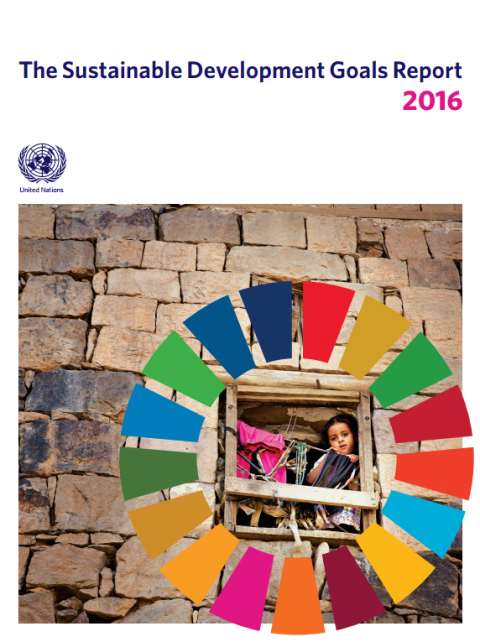 The Sustainable development goals report 2016 Año de publicación: 2016 Autor corporativo: United Nations (UN) This inaugural report on the global Sustainable Development Goals (SDGs) is a first accounting of where the world stands at the start of our collective journey to 2030. The report analyses selected indicators from the global indicator framework for which data are available as examples to highlight some critical gaps and challenges. The list of SDG indicators agreed upon by the UN Statistical Commission in March 2016 will be subject to refinements and improvements as methods and data availability improve. Every journey has a beginning and an end. Plotting that journey and establishing key milestones along the way requires accessible, timely and reliable disaggregated data. The data requirements for the global indicators are almost as unprecedented as the SDGs themselves and constitute a tremendous challenge to all countries. Nevertheless, fulfilling these requirements through building national statistical capacity is an essential step in establishing where we are now, charting a way forward and bringing our collective vision closer to reality
  Transforming our world: the 2030 Agenda for Sustainable Development Año de publicación: 2015 Autor corporativo: United Nations (UN) This Agenda is a plan of action for people, planet and prosperity. It also seeks to strengthen universal peace in larger freedom. We recognize that eradicating poverty in all its forms and dimensions, including extreme poverty, is the greatest global challenge and an indispensable requirement for sustainable development. All countries and all stakeholders, acting in collaborative partnership, will implement this plan. We are resolved to free the human race from the tyranny of poverty and want and to heal and secure our planet. We are determined to take the bold and transformative steps which are urgently needed to shift the world on to a sustainable and resilient path. As we embark on this collective journey, we pledge that no one will be left behind.The 17 Sustainable Development Goals and 169 targets which we are announcing today demonstrate the scale and ambition of this new universal Agenda. They seek to build on the Millennium Development Goals and complete what they did not achieve. They seek to realize the human rights of all and to achieve gender equality and the empowerment of all women and girls. They are integrated and indivisible and balance the three dimensions of sustainable development: the economic, social and environmental. The Goals and targets will stimulate action over the next 15 years in areas of critical importance for humanity and the planet.
 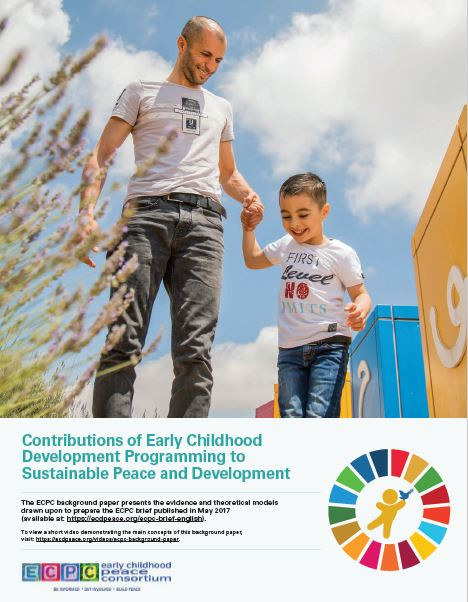 Contributions of Early Childhood Development Programming to Sustainable Peace and Development Año de publicación: 2018 Autor: Chelsea K. Donaldson | Friedrich W. Affolter | Liliana Angelica Ponguta | Rima Salah | Pia R. Britto | James Leckman | Paul Connolly | Siobhan Fitzpatrick | Pauline Walmsley By intervening early and engaging with children’s families, ECD services offer a unique opportunity to make a cost-effective and sustainable impact on interrupting cycles of poverty and violence. Given that efforts towards sustainable peace must encompass all sectors and address all societal levels, there is a crucial need for implementing “multi-level ECD services” that center on the whole child and engage his or her surrounding ecological context. These comprehensive ECD services can not only improve child development outcomes, but also strengthen competencies in caregivers, address stressors and conflict drivers in the community and build institutional capacities to reduce structural violence. The purpose of this background paper is to merge insights from both micro and macro-level perspectives to demonstrate how ECD services can be leveraged to sustainable peace and development. While peacebuilding experts have traditionally focused on macro-level strategies such as government reform or economic rehabilitation interventions, ECD practitioners have focused primarily on micro-level interventions of individual children and families without much exploration of how ECD services can be leveraged to mitigate risks of conflict and transform relationships across communities and regions.
 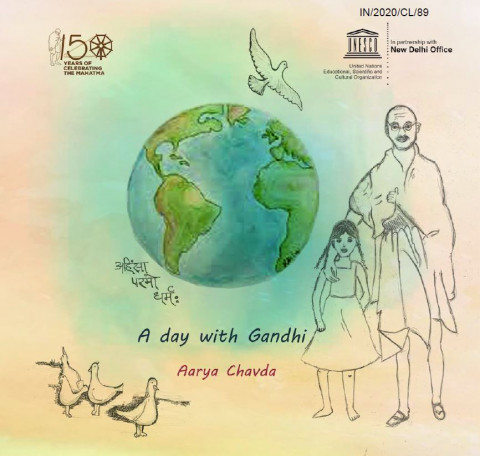 A Day with Gandhi Año de publicación: 2020 Autor: Aarya Chavda At an age of 10, author and illustrator of her 2 books, Aarya Chavda extends her support by donating her art proceeds to fundraise for the welfare of underpriviledge Cancer patients.Through her campaign on 'Preservation of Cultural Heritage', She also demonstrates her commitment and contributes in spreading awareness through her programs at government and private institutions.In this series of narrative illustrations, she pays her tributes to commemorate 150th birth anniversary of Gandhi. This shows her inclination to portray ideologies of 'The Mahatma' on the pursuit of liberation and tranquility. Nuestra diversidad creativa: informe de la comisión mundial de cultura y desarrollo, versión resumida Año de publicación: 1996 Autor corporativo: World Commission on Culture and Development This report is designed to address a diversified audience across the world that ranges from community activists, field workers, artists and scholars to government officials and politicians. We want it to inform the world’s opinion leaders and to guide its policy-makers. We want it to capture the attention of the world’s intellectual and artistic communities, as well as the general public. We aim to have shown them how culture shapes all our thinking, imagining and behaviour. It is the transmission of behaviour as well as a dynamic source for change, creativity, freedom and the awakening of innovative opportunities. For groups and societies, culture is energy, inspiration and empowerment, as well as the knowledge and acknowledgment of diversity: if cultural diversity is ‘behind us, around us and before us”, as Claude L&i-Strauss put it, we must learn how to let it lead not to the clash of cultures, but to their fruitful coexistence and to intercultural harmony. Just as in the tasks of building peace and consolidating democratic values, an indivisible set of goals, so too economic and political rights cannot be realized separately from social and cultural rights. The challenge to humanity is to adopt new ways of thinking, new ways of acting, new ways of organizing itself in society, in short, new ways of living. The challenge is also to promote different paths of development, informed by a recognition of how cultural factors shape the way in which societies conceive their own futures and choose the means to attain these futures. I have for some time been concerned with the “culture of peace”. There is now considerable evidence that neglect of human development has been one of the principal causes of wars and internal armed conflicts, and that these, in turn, retard human development. With government complicity and with the intention of raising export receipts, private businesses continue to sell advanced military technology, nuclear materials and equipment for the production of bacteriological and chemical warfare. The concept of state sovereignty which still prevails today has increasingly come under scrutiny. In the area of peace-keeping, the distinction between external aggression and internal oppression is often unrealistic. The predominant threat to stability are violent conflicts within countries and not between them. There is an urgent need to strengthen international human rights law. Many of the most serious troubles come from within states – either because of ethnic strife or repressive measures by governments. Conditions that lead to tyranny and large-scale violations of human rights at home sooner or later are likely to spill over into a search for enemies abroad. The temptation of repressive states to export internal difficulties is great. Consider the Soviet Union’s invasion of Hungary and Czechoslovakia after it had used domestic oppression and the persistent refusal - for many years - of the previous South African governments to grant independence to Namibia. An ounce of prevention is better than a ton of punishment.