
Recursos
Exploren una amplia gama de recursos valiosos en GCED para profundizar su comprensión y promover su búsqueda, incidencia, enseñanza y aprendizaje.
2,772 resultados encontrados
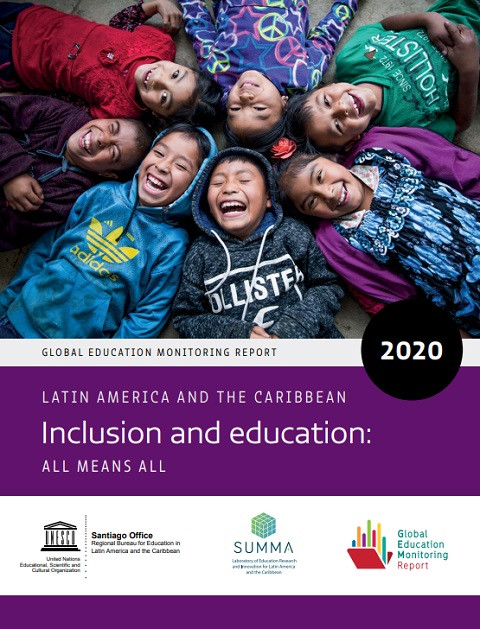 América Latina y el Caribe 2020: Inclusión y educación; Todos y todas sin excepción (Informe de seguimiento de la educación en el mundo) Año de publicación: 2020 Autor corporativo: Global Education Monitoring Report Team | UNESCO | Laboratory of Education Research and Innovation for Latin America and the Caribbean (SUMMA) América Latina y el Caribe es la región con las mayores y más tenaces desigualdades socioeconómicas del mundo. Durante decenios estas desigualdades se han reflejado en sus sistemas educativos. El presente informe examina a quiénes incluyen y a quiénes excluyen estos sistemas y llama la atención sobre las barreras que enfrentan los educandos, especialmente cuando están expuestos a múltiples desventajas. El informe también explora los nuevos retos educativos que plantea la pandemia de la Covid-19 y la necesidad de actuar sin dilación para evitar que se agraven las desigualdades. El informe, elaborado por el equipo del Informe de Seguimiento de la Educación en el Mundo (Informe GEM), en colaboración con la Oficina Regional de Educación para América Latina y el Caribe (OREALC/ UNESCO Santiago) y el Laboratorio de Investigación e Innovación en Educación para América Latina y el Caribe -SUMMA, evalúa algunas de las principales iniciativas emprendidas para mejorar la inclusión, basándose en varios estudios de casos de la región. Analiza en profundidad algunos ejemplos de los grandes desafíos que amenazan la inclusión en la educación: migración y desplazamiento en Colombia y Costa Rica; aislamiento rural en el Brasil y Suriname; discapacidad en Cuba y Nicaragua; discriminación de género en el Perú y Jamaica; orientación sexual e identidad y expresión de género en Chile y México; pobreza en la República Dominicana y Honduras; etnicidad en Bolivia y el Ecuador; y jóvenes en situación de privación de libertad en El Salvador y el Uruguay. Esta edición regional del Informe de Seguimiento de la Educación en el Mundo 2020 concluye que, si bien las leyes y políticas de América Latina y el Caribe demuestran la firme determinación de promover la inclusión, la realidad cotidiana de los alumnos y las alumnas sugiere que la aplicación práctica lleva retraso. Se formulan recomendaciones con el objeto de promover sistemas de educación más inclusivos en beneficio de todos los niños, niñas y jóvenes, sin distinción de origen, identidad o capacidad. Las recomendaciones brindan un marco sistemático que permite identificar y eliminar barreras para las poblaciones marginadas, conforme al principio de que “cada alumno es importante y todos los alumnos importan por igual”.
  Humanistic Futures of Learning: Perspectives from UNESCO Chairs and UNITWIN Networks Año de publicación: 2020 Autor corporativo: UNESCO UNESCO’s Futures of Education initiative aims to rethink education and shape the future. The initiative is catalyzing a global debate on how knowledge, education and learning need to be reimagined in a world of increasing complexity, uncertainty and precarity. This publication presents the first curated input to the Futures of Education initiative from the UNITWIN/UNESCO Chairs Programme, which now represents an extensive global network of more than 800 higher education institutions in over 115 countries. It features think pieces that highlight key dimensions to be considered in re-visioning and re-purposing education for the future of humanity and the planet. The collection of the pieces calls for greater focus on a number of critical areas such as: The role of culture in strengthening social and environmental sustainability; the values and attitudes that are needed to shape future generations; the importance of both robust public education, as well as of other learning spaces; the need to strengthen human creativity and capability in the digital era, as well as the role of higher education in generating the knowledge and driving the innovation required to transform our world. Les futurs humanistes de l’apprentissage: Perspectives des chaires UNESCO et des réseaux UNITWIN Año de publicación: 2020 Autor corporativo: UNESCO L’initiative de l’UNESCO intitulée Les futurs de l’éducation vise à repenser l’éducation et à façonner l’avenir, en lançant un débat mondial sur la manière de réinventer le savoir, l’éducation et l’apprentissage dans un monde de plus en plus complexe, incertain et précaire. Le présent volume constitue la première collection de contributions soumises à l’initiative Les Futurs de l’éducation de l’UNESCO par le Programme des chaires UNESCO/UNITWIN, un vaste réseau mondial regroupant plus de 800 établissements d’enseignement supérieur dans plus de 115 pays. Les documents de réflexion qu’il contient mettent en évidence les dimensions essentielles à prendre en compte pour ré-imaginer et redéfinir l’éducation dans l’intérêt de l’avenir de l’humanité et de la planète. Cette collection appelle à insister davantage sur un certain nombre de domaines critiques tels que le rôle de la culture dans le renforcement de la durabilité sociale et environnementale, les valeurs et les attitudes nécessaires pour préparer les générations futures, l’importance d’une éducation publique et robuste, ainsi que d’autres espaces d’apprentissage, la nécessité de renforcer la créativité et les capacités humaines à l’ère numérique, ainsi que le rôle de l’enseignement supérieur concernant la génération des savoirs et la conduite de l’innovation nécessaire pour transformer notre monde. 학습의 인본주의적 미래: 유네스코 석좌와 유니트윈의 시각에서 Año de publicación: 2020 Autor corporativo: 유네스코 유네스코의 ‘교육의 미래’(Futures of Education) 이니셔티브는 교육을 다시 생각해보고 교육의 미래를 만들어가는 것을 목표로 한다. 이 이니셔티브는 복잡성, 불확실성, 불안정성이 증가하는 세계에서 지식, 교육, 학습은 어떻게 재구상되어야 하는가라는 문제에 대한 전세계적 논의를 촉진하고 있다. 이 책은 현재 115개 이상의 국가의 800개 이상의 고등교육기관으로 구성된 광범위한 글로벌 네트워크를 대표하는 유니트윈/유네스코 석좌프로그램(UNITWIN/UNESCO Chairs Programme)이 교육의 미래 이니셔티브에 제출한 글들을 일차적으로 정리해 엮은 것이다. 이 책은 인류와 지구의 미래를 위해 교육의 비전과 목적을 재설정할 때 고려해야 할 핵심적 차원들을 조명하는 글들을 담고 있다. 이 글들은 사회적·환경적 지속가능성 강화에 있어 문화의 역할; 미래 세대 육성에 필요한 가치와 태도; 건실한 공교육 및 기타 학습공간의 중요성; 디지털 시대에 인간의 창의력과 역량을 강화할 필요성과 지식을 창출하고 세상을 변화시키는 데 필요한 혁신을 주도하는 고등교육의 역할 등 중요 영역에 더욱 초점을 맞출 것을 촉구한다.
 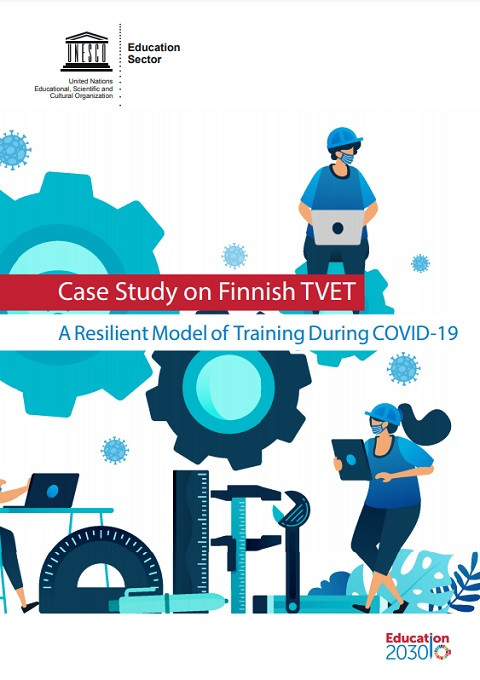 Case Study on Finnish TVET: A Resilient Model of Training During COVID-19 Año de publicación: 2021 Autor corporativo: UNESCO | Omnia Education Partnerships This case study examines how technical and vocational education and training (TVET) was organized during the state of emergency caused by the COVID-19 pandemic in Finland. The disruption accentuated the importance of flexibility within the education system to make it resilient. Finnish TVET, created as a hybrid solution combining school-based, work-based and online-based learning environments, remained responsive and functional throughout the difficult time in spring 2020.To urgently improve the resilience of education, this case study emphasizes the necessity to improve system-level flexibilities across all levels and all types of TVET, including alternative modes of delivery and hybrid learning opportunities, as the one size fits all approach increases rigidity and redundancy of education and training. Flexible measures are key to improve resilience, also beyond the COVID-19 pandemic.
 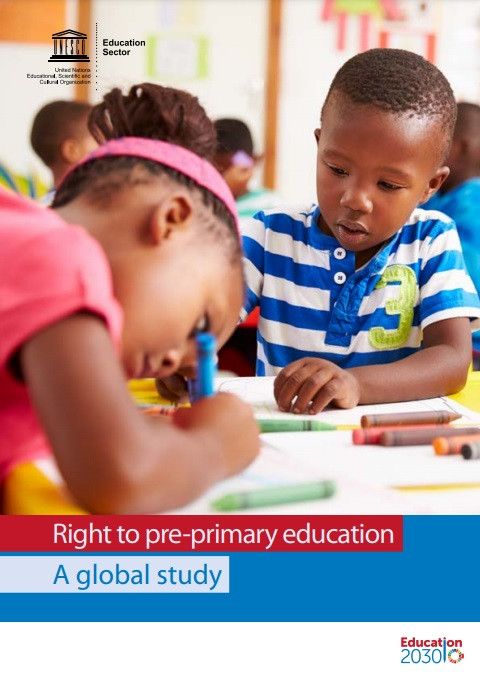 Right to Pre-Primary Education: A Global Study Año de publicación: 2021 Autor corporativo: UNESCO Early childhood care and education is increasingly recognized as an essential element in realizing a wide range of educational, social and economic rights. Children from vulnerable households and communities stand to gain most from access to quality early learning opportunities. With about 50 per cent of children globally not yet enrolled in pre-primary education, enabling their inclusion remains a central question for education policymakers, stakeholders and parents.This Study provides a global overview and an analysis of the adoption of legal provisions for free and compulsory pre-primary education at national level. By offering a rights-based perspective to the implementation of pre-primary education, it aims to complement existing literature on SDG Target 4.2, which focuses mainly on policy outcomes.The results show that pre-primary education is a well determined and defined right in too few countries. Yet, the benefit of free and compulsory education observed is that children appear to have higher rates of early childhood well-being.In light of the research conducted and its main conclusions, a set of levers to promote the inclusion of early childhood and pre-primary education as a human right within long-term education and development objectives are presented in terms of governance and financing, legal framework, societal expectations, monitoring and evaluation and early childhood development overall. Prioritizing the needs of young children and the fulfilment of their right to free and compulsory pre-primary education is a critical opportunity for governments to make positive differences in children’s lives and to achieve broader national, social and economic goals.
  لعربية للإدماج الحضري: تعزيز الإدماج الحضري من خلال المشاركة العامة، والوصول إلى المعلومات، والرياضة والتربية على المواطنة وحقوق الإنسان Año de publicación: 2020 Autor: Kareem Ibrahim | Deena Khalil | Marwa Barakat | Salwa Salman Autor corporativo: UNESCO | European Training and Research Centre for Human Rights and Democracy (Austria) | UNESCO Cairo ً ً ـا متسـارع ّ ا، حيـث باتـت تسـتضيف أكـر مـن نصـف سـكان املنطقـة. وتحولـت معظـم املـدن العربيـة ً تشـهد املـدن العربيـة توسـعا حرضي ّـات والثقافـات واألعـراق. وميكـن لهـذه التحـوالت أن تسـهم يف تحقيـق الرخـاء ِبف ّ عـل عوامـل مختلفـة إىل فضـاءات مختلطـة، تتنـوع فيهـا الهوي ًــا محــوره اإلنســان، وتطبيــق سياســات وتدابــر دامجــة مــن شــأنها توفــر الفــرص االجتامعــي بــرط اعتــا ً د مســؤويل املــدن نهجــا حقوقي املتسـاوية لجميـع السـكان. ُقـدم مجموعـة مـن األدوات والنصائـح العمليـة ليسرتشـد بهـا قـادة املـدن عـى هـذه الخلفيـة، يـأيت دليـل املـدن العربيـة لإلدمـاج الحـري لي العربيــة واملســؤولون بالحكومــات املحليــة يف مســعاهم نحــو إقامــة مــدن شــاملة ومســتدامة. ينطلــق الدليــل مــن خــرات وتجــارب املــدن ّ املنتسـبة لتحالـف املـدن العربيـة ضـد ّ العنرصيـة والتمييـز وكراهيـة األجانـب والتعصـب يف تخطيـط وتنفيـذ وتقييـم برامـج ومشـاريع تُعـزز اإلدمـاج الحـري وتتصـدى لإلقصـاء بأشـكاله كافـة. ويركّـز الدليـل عـى أربعـة موضوعـات اعتربتهـا املـدن األعضـاء يف التحالـف مـن ضمـن أولوياتهـا، وهـي: املشـاركة العامـة، والوصـول إىل املعلومـات، والرياضـة مـن أجـل إدمـاج الشـباب، والرتبيـة عـى املواطنـة وحقـوق اإلنسـان. Toolkit for Urban Inclusion in Arab Cities: Cities Promoting Inclusion Through Public Participation, Access to Information, Sport, and Citizenship and Human Rights Education Año de publicación: 2020 Autor: Kareem Ibrahim | Deena Khalil | Marwa Barakat | Salwa Salman Autor corporativo: UNESCO | European Training and Research Centre for Human Rights and Democracy (Austria) | UNESCO Cairo Arab cities are witnessing an unprecedented expansion. Home to more than half of the region’s population, Arab cities have transformed into heterogeneous spaces that host diverse identities, cultures, and ethnicities. In order for this transformation to lead to prosperity, city officials must adopt a rights-based, human-centred approach, and implement inclusive policies and measures that provide equal opportunities for all.In this context, the Toolkit for Urban Inclusion in Arab Cities provides Arab city leaders and local government officials with practical tools and advice to guide their efforts towards establishing inclusive and sustainable cities. The Toolkit is based on the real experiences and practices of cities members of the Coalition of Arab Cities against Racism, Discrimination, Xenophobia and Intolerance in planning, implementing and evaluating programs and projects that promote urban inclusion and combat exclusion in all its forms.The Toolkit focuses on four topics of high priority to the Arab Coalition member cities: public participation, access to information, sport for youth inclusion, and citizenship and human rights education. Manuel des villes arabes pour l’inclusion urbaine: Promouvoir l’inclusion urbaine par la participation publique, l’accès à l’information, le sport, et l’éducation à la citoyenneté et aux droits de l’homme Año de publicación: 2020 Autor: Kareem Ibrahim | Deena Khalil | Marwa Barakat | Salwa Salman Autor corporativo: UNESCO | European Training and Research Centre for Human Rights and Democracy (Austria) | UNESCO Cairo Les villes arabes connaissent un développement urbain accéléré qui les a amenées à réunir plus de la moitié de la population régionale. Une combinaison de nombreux facteurs a transformé la majorité des villes arabes en lieux de brassage où abondent les identités, les cultures et les ethnies variées. Ces transformations peuvent contribuer à la réalisation de la prospérité sociale, à condition que les responsables des villes adoptent un programme législatif centré sur les droits de l’homme, et qu’ils mettent en œuvre des politiques et des dispositions susceptibles de réaliser l’inclusion de manière à assurer l’égalité des chances à tous leurs habitants. Dans ce contexte, le Manuel des villes arabes pour l’inclusion urbaine propose un ensemble d’outils et de conseils pratiques susceptibles de servir de guide aux édiles des villes arabes et aux responsables des gouvernements locaux dans leur quête pour la mise en place de villes inclusives et durables. Le Manuel prend pour base les acquis et expériences de la Coalition des villes arabes contre le racisme, la discrimination, la xénophobie et l’intolérance dans la planification, la réalisation et l’évaluation de programmes et de projets pour favoriser l’inclusion sociale et pour s’opposer à l’exclusion sous toutes ses formes. Le Manuel est centré sur quatre questions désignées par les villes membres parmi leurs priorités : La Participation publique, l’Accès à l’information, le Sport pour l’inclusion des jeunes, l’Éducation à la citoyenneté et aux droits de l’homme.
  Reopening Schools in Latin America and the Caribbean: Keys, Challenges, and Dilemmas to Plan for a Safe Return to in-Person Classes Año de publicación: 2021 Autor: Alejandro Vera | Martín Scasso | Alejandro Morduchowicz | Cecilia Berlanga Alessio Robles Autor corporativo: UNESCO Santiago | Inter-American Development Bank The suspension of in-person classes as a consequence of the COVID-19 pandemic profoundly affected the education systems in Latin America and the Caribbean (LAC) and compromised the achievements reached around the goals established in the SDG4-Education 2030 Agenda. The most vulnerable people have been the most affected by this situation, which widened the preexisting gaps. The countries of the region have carried out great efforts to guarantee the continuity of learning. However, these have been limited by the challenges that this unprecedented crisis brought, aggravated by unequal conditions in access to infrastructure and other resources that affect broad sectors of the population.This report analyzes the possibilities, restrictions and needs that the countries of the region will face during the process of returning to in-person classes, considering five dimensions: (i) safe schools (school infrastructure, access to water and sanitation); (ii) human resources (principals and teachers); (iii) access to ITC and connectivity; (iv) education financing and (v) information and planning.