
Recursos
Exploren una amplia gama de recursos valiosos en GCED para profundizar su comprensión y promover su búsqueda, incidencia, enseñanza y aprendizaje.
3,438 resultados encontrados
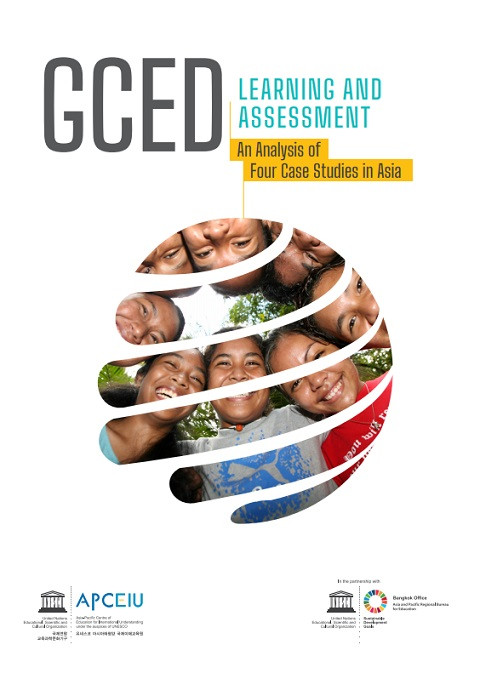 GCED Learning and Assessment: An Analysis of Four Case Studies in Asia Año de publicación: 2020 Autor corporativo: APCEIU | UNESCO Bangkok “GCED Learning and Assessment: An Analysis of Four Case Studies in Asia” is a result report of research jointly led by UNESCO Asia-Pacific Regional Bureau for Education, the Asia-Pacific Centre of Education for International Understanding (APCEIU) and the Asia-Pacific Regional GCED Network. The report encompasses four case studies of GCED Learning in the region and its assessment. Four leading researchers in the field of GCED, Satya Bushan from the National Council of Educational Research and Training (NCERT), India; Sayaka Matsukura of Ageo Oishi Junior High School, Japan; Dawon Kim from Gwangju National University of Education, Republic of Korea; and Le Anh Vinh from the Vietnam National Institute of Educational Science (VNIES), Viet Nam, contributed to this research. Through presenting and sharing the cases of India, Japan, Republic of Korea and Viet Nam, the publication is expected to shed light on the assessment on how GCED is implemented in the region and further inspire and encourage the GCED practitioners on the ground to take another step forward to reflect GCED in their respective educational systems. <List of Contents>ForewordAcknowledgementsAcronymsExecutive summaryChapter 1: IntroductionChapter 2: Schoollevel approaches at integrating GCEDChapter 3: Assessment of GCED learning Chapter 4: Reflections on GCED learning assessment Chapter 5: Conclusions and recommendations References
  International Understanding and Cooperation in Education in the Post-Corona World Año de publicación: 2020 Autor: Dongjoon Jo | Edward Vickers | Dina Kiwan | Fei Yan | Kyujoo Seol | Kyoko Nakayama Autor corporativo: APCEIU Research Report of International Understanding and Cooperation in Education in the Post-Corona World APCEIU has published a report, including research studies from 6 experts in order to figure out the role of education in promoting international understanding and cooperation in the education sector in the post-pandemic world. Through this research project, APCEIU mainly sought to answer the following questions; ▲What will be the implications of COVID-19 for international exchange and cooperation especially in education?▲What should we as educators, researchers, and practitioners do to counter the rise of populist nationalism?▲What should be the focus and direction of international cooperation in education during and after the pandemic in order to promote international understanding and GCED? This research project is expected to provide insightful views on the desirable direction for international understanding and cooperation in the education sector. Table of Contents 1. The development of UNESCO’s exchange programmes and their possible rearrangements in the post-pandemic years (Dong-Joon Jo, Professor at Department of Political Science and International Relations, Seoul National University, Korea) 2. ‘Rethinking Schooling’ once again: Post-corona challenges for education for peace and sustainability in Asia (Edward Vickers, Professor of Comparative Education at Kyushu University, Japan) 3. Race, gender, disability, and their intersections under the impact of COVID-19 (Dina Kiwan, Professor in Comparative Education, University of Birmingham, United Kingdom) 4. Competition or cooperation: Configuring ‘International’ in Chinese school textbooks (Fei Yan, Post-Doctoral Research Fellow, South China University, China) 5. The implications of democratic citizenship education and global citizenship education in South Korea for the post-corona era (Kyujoo Seol, Professor of Social Studies Education, Kyeongin National University of Education, Korea) 6. What can we learn from the pandemic of COVID-19?: An attempt to develop teaching materials for international understanding and cooperation based on Japanese educational issues (Kyoko Nakayama, Professor of Social Studies Education and Multicultural Education, Teikyo University, Japan)
 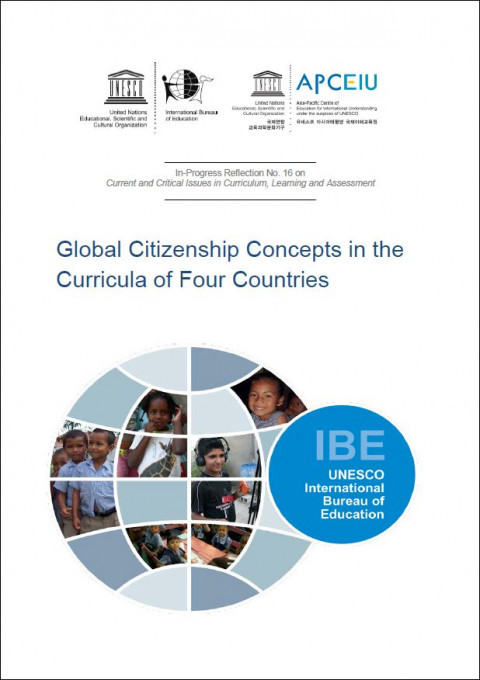 Global Citizenship Concepts in the Curricula of Four Countries Año de publicación: 2017 Autor: Natalie Browes Autor corporativo: UNESCO International Bureau of Education (IBE) | APCEIU This report details the presence of Global Citizenship Education (GCED) concepts in the education systems of four countries: Cambodia, Colombia, Mongolia and Uganda. It highlights the main findings of eight reports: four expert reports, which predominately analyse curriculum content, and four situational analysis reports, which take a broader view and detail some of the country-specific challenges and opportunities with regard to GCED. Findings reveal the presence of GCED concepts across the curricula of the four countries. In addition to cognitive content related to GCED, competency-based content is also found present within the curricula of these countries. However, the majority of this content can only be indirectly linked to GCED, and it is better interpreted as part of the more traditional civics or citizenship education approach. As such, it generally lacks a global perspective and does not engage with all key themes of GCED. Furthermore, this content is often concentrated at the lower and upper secondary levels, instead of being equally distributed across all grade levels. This is particularly true in the case of behaviour-based competencies. Findings also reveal challenges beyond the curriculum. These include lack of teacher training and lack of support to implement GCED, which are concerns expressed by stakeholders in all four countries. A lack of GCED content in textbooks and lack of supplementary materials were also found to be issues. The report concludes with recommendations regarding the effective implementation of GCED within curricula. Among others, the report suggests the transversal integration of GCED - across the curriculum at all grade levels, while at the same time, actors from all levels of the education system, ranging from central government to teachers, should be engaged to ensure the use of complementary learning materials, pedagogies and assessment techniques.
  세계시민교육 국내 이행현황 연구보고서: 유·초중등학교 교육과정을 중심으로 Año de publicación: 2018 Autor corporativo: 유네스코 아시아태평양 국제이해교육원 “세계시민교육 국내 이행현황 연구보고서 - 유·초중등학교 교육과정을 중심으로”가 발간되었다. 본 연구보고서는 세계시민교육의 실행과 성과에 대한 국가 수준의 모니터링 및 평가 연구가 희소하다는 문제의식에 기초하여 작성된 결과물이다. 특히, 국내 17개 시·도교육청 산하 유치원, 초·중·고등학교 교육과정 활동에서 세계시민의 개념이 어떻게 반영 및 실행되고 있는지를 살펴보기 위하여 탐색적 연구를 설계하고 관련 자료 조사를 실시하는데 주안점을 두었다. 또한 연구조사 결과를 토대로 동 보고서는 향후 세계시민교육이 교육현장에서 보다 명확하게 이행되고 확산될 수 있도록 하는 정책적 제언도 담고 있다.
  SDG 4.7: 세계시민교육 지표수립을 위한 기초연구 Año de publicación: 2018 Autor corporativo: 유네스코 아시아태평양 국제이해교육원 “SDG 4.7 세계시민교육 지표수립을 위한 기초연구 보고서”가 발간되었다. 본 연구보고서는 국제적으로 합의된 글로벌 지표의 부재로 현재까지 정의가 완료되지 않은 지속가능발전목표 (SDG) 4.7 지표 개발을 위한 기초 연구이다. 즉, 동 보고서는 세계시민교육 및 SDG 4.7 지표에 관한 기존의 국내·외 연구결과를 종합적으로 검토하여 글로벌 지표에 관한 주요 논의를 정리하고, 국내 지표 개발을 위한 함의를 도출하는 데에 목적을 두고 있다. 이를 위하여 유네스코 통계원 (UIS)의 최신 SDG 4.7.1 메타데이터 연구와 국내·외 연구결과에 기초하여 국내에서 활용할 수 있는 정보와 데이터를 검토하고 있다.
 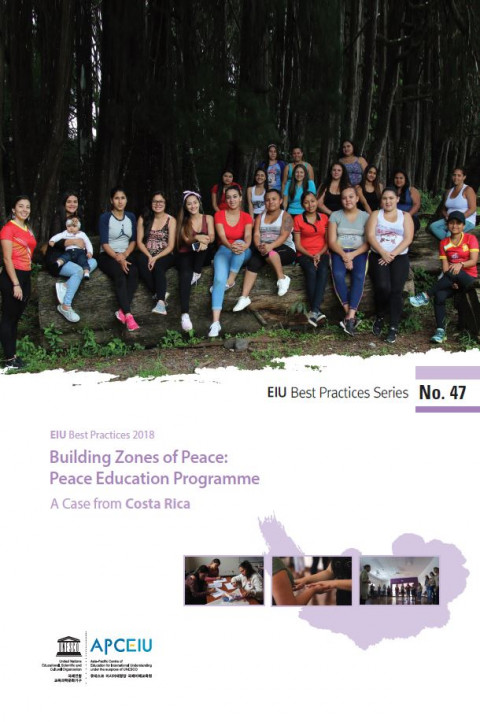 EIU Best Practices Series No. 47: Building Zones of Peace: Peace Education Programme; A Case from Costa Rica Año de publicación: 2018 Autor corporativo: APCEIU Building Zones of Peace (BZP) is a non-formal peace and global citizen education programme created to promote peace and prevent violence in vulnerable urban communities in Costa Rica. The programme aims to encourage participants to develop a critical view of their contexts and explore different ways of taking action to transform the world we live in, and by recognizing how individual and collective efforts have a positive and direct impact in our personal, family and community spheres as well as nationally and globally.In 2017, BZP was conducted to a group of secondary education students ages 13 to 17. This year (2018), participants are young women, ages 18 to 22, all of the mothers who live in extreme poverty. These women have been selected by a governmental office whose aim is to reduce poverty by empowering them. Several resources and networks of support have been created in different areas such as health, employment, childcare and education to achieve this goal. In this sense, our programme was chosen to contribute significantly in this process.
 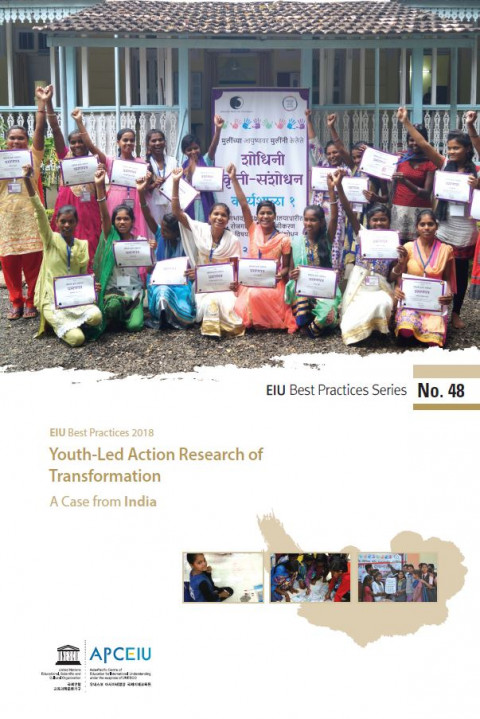 EIU Best Practices Series No. 48: Youth-Led Action Research of Transformation; A Case from India Año de publicación: 2018 Autor corporativo: APCEIU This action research project is about the education for livelihood and life skills of marginalized young girls. This project was based from my experience in the Youth-Led Action Research Project organized by ASPBAE and UNESCO Institute of Lifelong Learning (UIL), which gradually led to the conception of the present action research project for the empowerment of the marginalized rural girls suppressed by patriarchal social systems. The Shodhinis are the subjects and objects of this action research. A hundred girls from ten villages conducted action research on the topics of gender, education, livelihood and life skills to young marginalized young girls aged between 14 to 25 years old in their respective communities. The Shodhinis discovered the joys of learning as they took positive steps in discovering and empowering themselves. The research enabled them to conduct various research methods like census and in-depth surveys of their fellow girls in their villages. As part of the research process, the girls also drew up a community map to understand their village. The relevance of this project to GCED values cannot be overemphasized especially in developing the cognitive, emotional and the behavioral dimensions of the girls themselves.This project not only focuses on analyzing the findings derived from the gathered data but also on generating action based on the data. It helped improve the way Shodhinis looked at themselves, their families, and their communities, inspiring them to become agents of change in their own lives as well as those of other girls in their villages. By amplifying their voices and opinions in the decision making processes at the family and community levels – for instance, by lobbying for the construction of libraries – the Shodhinis were able to demonstrate their leadership skills in shaping the development of their villages, thereby enhancing their dignity and self-worth.
 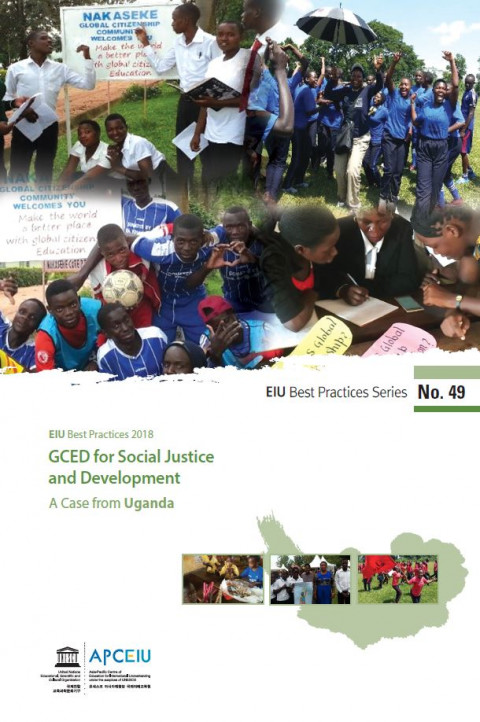 EIU Best Practices Series No. 49: GCED for Social Justice and Development; A Case from Uganda Año de publicación: 2018 Autor corporativo: APCEIU Creating a peaceful, trusting and supportive learning environment is a strong driver for a nation’s sustainable development. Any society whose citizens have no cognitive, socio-emotional and behavioral values like respect for self and humanity, is doomed for chaos. The concepts of Education for International Understanding(EIU) and Global Citizenship Education(GCED) in this programme emerge from the need for harmonious living in the society. Sustainable human and economic development is built upon the successful dissemination and implementation of EIU/GCED practices. To understand this better, let’s use the analogy of a bird that gains its momentum to fly from its feet, lungs and wings.The contributor uses this analogy to illustrate that EIU/GCED is the foundation that exerts momentum for social development.The contributor saw it necessary that for any sustainable development to flourish in Ugandan society, pragmatic values have to be perfectly blended with public awareness for they serve as the foundation of all economic, social, cultural and political efforts. The national value system should be based on a strong foundation on which all national efforts are rooted. The social aspirations of the citizens should be the ones that propel development needs and national priorities.To effect sustainable development, we need to see schools as strategic intervention points. Recent times have, however, witnessed that the level of discipline and value inculcation gradually declined to near extinction. The distortion of the social setting that inculcated the ethical values in the young generation has called for a need to remedy the gap. The EIU/GCED is strategically tailored to inculcate Table of Contents moral principles and values in the children through the direct contact and support of the teachers of Early Childhood Development (ECD), both primary and postprimary levels.The Nakaseke Core Primary Teachers’ College (PTC) is mandated to mainstream and promote the social uprightness of the community being a primary stakeholder in the integration of EIU/GCED in the Ugandan Primary Schools (PS) and Primary Teachers Education (PTE) Curriculum. Consequently, the training programmes were designed to enhance the capacity of PTC’s administrators, tutors and support staff, pre-service student teachers, district education officers and primary school teachers to inculcate the EIU/GCED moral values and principles among the learners. Students are then expected to apply EIU/GCED principles to their families and communities, and uphold the values of integrity, honesty, justice, responsibility, respect for humanity, hard work, unity and creativity.
  Reconciliation, Peace and Global Citizenship Education: Pedagogy and Practice Año de publicación: 2019 Autor corporativo: APCEIU The Asia-Pacific Centre of Education for International Understanding launched the publication entitled Reconciliation, Peace and Global Citizenship Education: Pedagogy and Practices. This book is the result of the fruitful discussions and presentations made during the 4th International Conference on Global Citizenship Education held on 3-4 September 2019 in Seoul, Republic of Korea.The intention of this publication is not only to continue and deepen the discourses made by the speakers of the Conference, but also to provide the readers with opportunity to explore how pedagogy and practices of Global Citizenship Education can contribute to building peace and reconciliation across the globe. Part. I Global Citizenship Education for peace and reconciliation: OverviewLearning to live together and a life worth livingHow GCED can contribute to peace, reconciliation and sustainable developmentTransformative pedagogy for building peacePromoting peace through mindfulness programmes in schoolsGlobal memory, global citizenship and reconciliationThe role of Media and Information Literacy Part. II Global Citizenship Education for peace and reconciliation: Putting it into practiceFacing History and Ourselves in South AfricaClassrooms in Peace in ColombiaPreparing young people to be global citizens through integrated schools in Northern Ireland Part. III Global Citizenship Education for peace and reconciliation: Supporting effective implementationPolicy development and implementationChallenges in curriculum and textbook development for low-and middle-income country
  A Study on the Status of Implementation of Global Citizenship Education in Lifelong Education in South Korea Año de publicación: 2019 Autor corporativo: APCEIU The Asia-Pacific Centre of Education for International Understanding published a report titled "A Study on the Status of Implementation of Global Citizenship Education in Lifelong Education in South Korea". In the recognition of the need for an analysis on the status of implementation for the effective and systematic implementation of Global Citizenship Education (GCED) in the Republic of Korea, APCEIU conducted a study on the status of the implementation of GCED embedded in the curriculum of primary and secondary schools in 2018. As a follow-up study, this research paper examines the practice of civic education in the field of lifelong learning for adults and the formation, status and implementation process of GCED in which it appears and explores the potential for activation.