
Recursos
Exploren una amplia gama de recursos valiosos en GCED para profundizar su comprensión y promover su búsqueda, incidencia, enseñanza y aprendizaje.
3,224 resultados encontrados
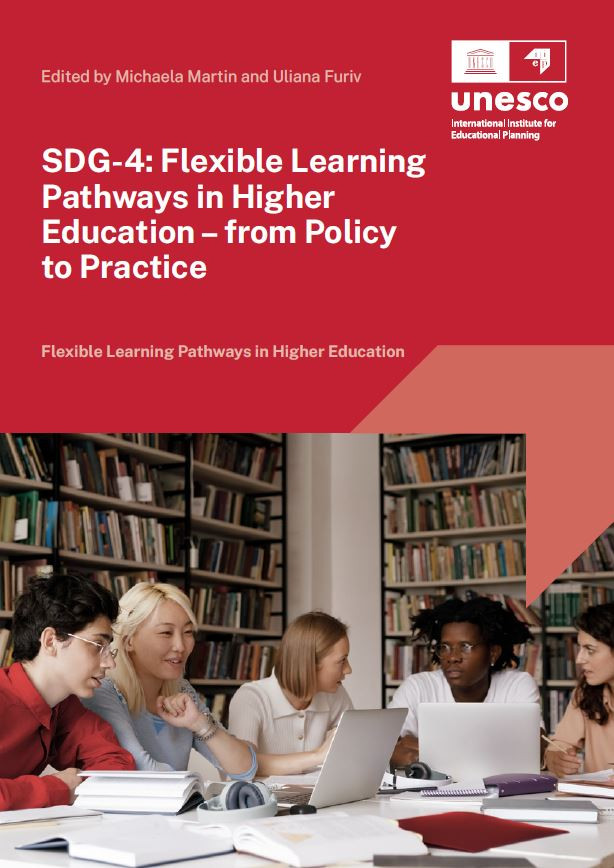 SDG-4: Flexible Learning Pathways in Higher Education – from Policy to Practice: An International Comparative Analysis Año de publicación: 2022 Autor: Michaela Martin | Uliana Furiv Autor corporativo: UNESCO International Institute for Educational Planning (IIEP) Higher education systems across the world are currently faced with a massive influx of learners with more diverse needs. They are expected to respond to this growing diversity through a more flexible learning offer and pathways that allow all learners, including those from disadvantaged groups, to access, progress through, and complete, higher education.To enhance knowledge on how to provide increased flexibility in higher education, IIEP–UNESCO undertook an international research project on SDG-4: Planning for Flexible Learning Pathways (FLPs) in Higher Education. The project included a stocktaking of policies, instruments, and practices, an international survey among UNESCO Member States, and eight in-depth country studies on Chile, Finland, India, Jamaica, Malaysia, Morocco, South Africa, and the UK.This book presents the findings from the research, including a cross-country analysis of available FLP policies and practices, and how they enhance equitable higher education systems. It also presents a series of country experiences with innovative approaches to alternative entry, flexible progression, and governance systems in support of FLPs.
  Discours de Mme Irina Bokova, Directrice générale de l'UNESCO, à l'occasion de l'ouverture de laconférenceinternationale sur l'enseignement supérieur pour le développement durable: Au-delà de l'enseignement supérieur 2014 Año de publicación: 2014 Autor corporativo: UNESCO. Director-General, 2009-2017 (Bokova, I.G.) Cette adresse a été faite par Irina Bokova, Directrice générale de l'UNESCO, à l'occasion de l'ouverture de la conférence internationale sur l'enseignement supérieur pour le développement durable: Au-delà de l'enseignement supérieur 2014. Address by Irina Bokova, Director-General of UNESCO, on the occasion of the Opening of the International Conference on Higher Education for Sustainable Development: Higher Education Beyond 2014; Nagoya University, Aichi, Japan, 9 November 2014 Año de publicación: 2014 Autor corporativo: UNESCO. Director-General, 2009-2017 (Bokova, I.G.) This address had been made by Irina Bokova, Director-General of UNESCO, on the occasion of the opening of the International Conference on Higher Education for Sustainable Development: Higher Education Beyond 2014.
 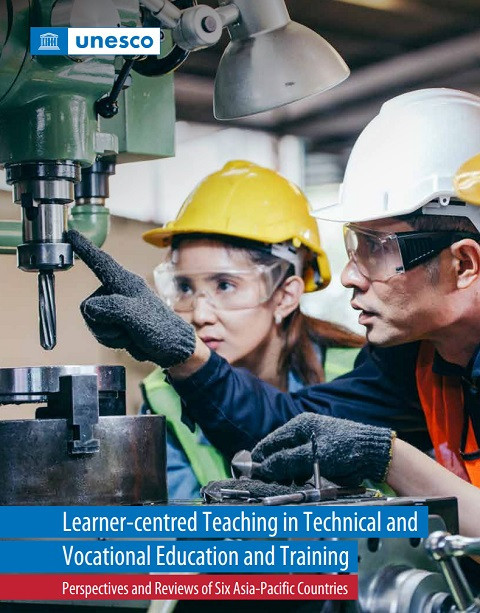 Learner-Centred Teaching in Technical and Vocational Education and Training: Perspectives and Reviews of Six Asia-Pacific Countries Año de publicación: 2023 Autor corporativo: UNESCO Bangkok Learner-centred Teaching in Technical and Vocational Education and Training: Perspectives and Reviews of Six Asia-Pacific Countries A learner-centred approach to teaching in Technical and Vocational Education and Training (TVET) is based on learner engagement, autonomy and outcome-based activities to support professional development. This report analyses the status of learner-centred TVET teaching in six selected countries across Asia and the Pacific, including China, Republic of Korea, Samoa, Sri Lanka, Thailand, and Uzbekistan. The countries were selected because of their geographic diversity, access to national experts, and potential around learner-centred TVET.The first part of the study is a review of the theoretical background on the learner-centred approach and TVET teaching with an international scope. A total of 25 indicators were used to assess three components of TVET teaching in the region. The analysis includes 17 examples corresponding to the selected indicators. The findings showcase lessons learned and recommendations for countries to self-assess their TVET teaching strategies. These examples will help to inform future projects and capacity building in each sub-region of Asia-Pacific.As a result, seven proposals are identified and discussed to promote the development of learner-centred TVET teaching in the region. These proposals include: 1) supporting national reform of the pedagogy based on the results of pilot projects; 2) increasing two-way communication between students and teachers; 3) producing learning materials adapted to learner-centred methods; 4) using technology in the learning process; 5) implementing competency-based learning to support the learner-centred pedagogy; 6) integrating transversal and core skills; and 7) developing teachers’ capacities by employing a learner-centred approach. These proposals (on reform, teaching method, use of materials, etc.) also address gender dimensions throughout the planning, implementation and review process. Conclusions from the study provide lessons learned as well as proposals for further research and implementation of learner-centred TVET teaching in Asia-Pacific.
  Учёт показателей достижения ЦУР 4: доклад о ходе достижения национальных контрольных показателей; в фокусе внимания — учителя Año de publicación: 2024 Autor corporativo: Global Education Monitoring Report Team | UNESCO Institute for Statistics (UIS) В настоящем издании представлена вторая оценка прогресса в достижении странами контрольных показателей, или национальных плановых ориентиров, установленных ими в отношении восьми показателей достижения ЦУР 4 в качестве вклада в реализацию глобальных целей. В этой оценке, охватывающей период с 2015 года, анализируется вероятность достижения каждой из стран национального контрольного показателя на 2025 год или (если контрольный показатель не был установлен) значения, которого они могли бы достичь в случае, если бы темпы их прогресса в истекший период (2000–2015 годы) были на уровне 25 % наиболее быстро прогрессирующих стран.В докладе об учете показателей достижения ЦУР 4 за 2024 год отмечено, что по большинству показателей темпы прогресса в достижении национальных целевых ориентиров отстают от плановых. Более того, по двум аспектам – гендерный дисбаланс (в пользу девочек) по показателю завершения полной средней школы и государственные расходы на образование в процентной доле от общего объема государственных расходов – в странах был зафиксирован регресс.Напротив, ускорился прогресс в достижении нового, восьмого показателя ЦУР 4 (доступ школ к интернету), который был добавлен с учетом приоритетного внимания, уделенного в ходе Саммита по трансформации образования 2022 года проблематике внедрения цифровых технологий. Треть стран установила в 2023 году национальные плановые ориентиры по этому показателю, в связи с чем в настоящем издании был впервые рассмотрен прогресс в этом вопросе.Наряду с этим относительно быстрыми темпами растет процентная доля учителей, имеющих минимально требуемый уровень квалификации. Этому показателю в настоящей публикации также было уделено повышенное внимание. В докладе представлены новые данные о национальных стратегиях в отношении минимальных уровней квалификации для доступа к учительской профессии, а также о правилах и стандартах, касающихся обязательного непрерывного повышения квалификации и обучения учителей навыкам применения новых технологий в сфере образования.
  سجّل الأداء بشأن تحقيق هدف التنمية المستدامة 4: التقرير المرحلي عن المؤشرات المرجعية الوطنية Año de publicación: 2024 Autor corporativo: Global Education Monitoring Report Team | UNESCO Institute for Statistics (UIS) يتضمن هذا التقرير نتائج عملية التقييم الثانية للتقدم المحرز على الصعيد القطري نحو تحقيق المؤشرات المرجعية، أو الأهداف الوطنية، التي حددتها البلدان المساهمة في أهداف التنمية المستدامة بهدف تحديد مساهمتها في تحقيق الأهداف العالمية في مجال التعليم. وتغطي عملية التقييم هذه الفترة منذ عام 2015، وتقيّم مدى احتمال بلوغ البلدان المؤشر المرجعي الخاص بكل بلد لعام 2025، أو القيمة التي كان باستطاعة البلدان الوصول إليها في حال واصلت وتيرة التقدم المحرز فيها خلال الفترة 2000-2015.وأظهر شكل التقييم لعام 2024 أن معظم البلدان تتقدم ببطء نحو بلوغ الأهداف الوطنية المرجوة منها. بل إن البلدان تتراجع عن تحقيق هدفين اثنين – أحدهما التفاوت بين الجنسين لمصلحة الفتيات في إتمام التعليم الثانوي الكامل، والآخر الإنفاق العام على التعليم كنسبة مئوية من الإنفاق العام الإجمالي.وعلى ذلك، سجّل البلدان تقدّمًا متسارعًا في بلوغ المؤشر المرجعي الثامن، ألا وهو الاتصال بالإنترنت في المدارس، الذي أضيف نتيجةً للأولوية التي أُعطيت للتحول الرقمي في قمة التحول في التعليم لعام 2022. وقد وضعت ثلث البلدان أهدافًا وطنية بشأن هذا المؤشر في عام ٢٠٢٣. ويجري في هذا الإصدار من التقرير تقييم التقدم في هذا المجال لأول مرة.وتستمر البلدان كذلك في تحقيق تقدّم سريع نسبيًا بالنسبة للمؤشر المتعلق بالنسبة المئوية للمعلمين الذين يستوفون الحد الأدنى من المؤهلات. وقد أولى هذا الإصدار اهتمامًا خاصًا لهذا المؤشر. ويعرض التقرير بيانات جديدة بشأن الأطر الوطنية المتعلقة بالحد الأدنى من المؤهلات المطلوبة للالتحاق بمهنة التدريس، وكذلك القواعد والمعايير الخاصة بالتطوير المهني المستمر الإلزامي للمعلمين، إضافة إلى التدريب على استخدام الوسائل التكنولوجية في مجال التعليم.
  可持续发展目标4记分卡:关于国家基准的进展报告:聚焦教师 Año de publicación: 2024 Autor corporativo: Global Education Monitoring Report Team | UNESCO Institute for Statistics (UIS) 这是第二份关于各国在实现基准或国家目标方面取得进展的评估报告,这些基准或国家目标是各国为八项可持续发展目标4指标而设定的,代表着其对全球目标的贡献。该评估涵盖了自2015年以来的时期,审查了每个国家实现其2025年基准的可能性;对于未设定此项基准的国家,则审查其是否有可能实现以历史上(2000–2015年)进展最快的25%国家的速度进步或将达到的数值。2024年可持续发展目标4记分卡表明,大多数指标的国家目标进展偏离轨道。在高中教育完成率方面男童处于不利地位的性别差距和公共教育支出占公共支出总额的比例这两项指标方面,各国甚至出现了倒退。相比之下,第八项基准指标——学校互联网连通性方面的进展较快,这项指标是在2022年教育变革峰会将数字变革作为优先事项后新增的。三分之一的国家在2023年制定了国家目标,本期报告首次审查了该指标的进展情况。另一个取得较快进展的指标,是具有最低必备资格的教师比例,这也是本期报告重点关注的指标。报告介绍了关于从事教师职业最低必备资格的国家政策、强制性持续专业培训政策,以及教师在教育技术方面培训政策的新证据。
 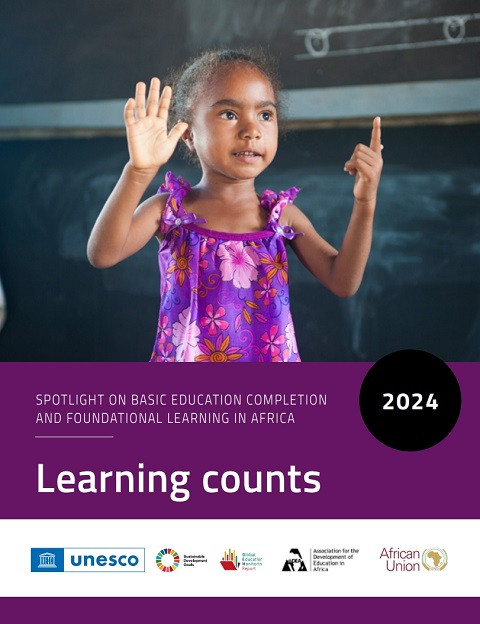 Learning Counts: Spotlight on Basic Education Completion and Foundational Learning in Africa, 2024 Año de publicación: 2024 Autor corporativo: Global Education Monitoring Report Team | Association for the Development of Education in Africa (ADEA) | African Union The African Union’s designation of 2024 as the Year of Education highlights the critical importance of education for equipping young Africans with the skills essential for their own and for the continent’s development. It is also a recognition of the multiple challenges ahead before every child can complete primary school having acquire the foundational skills that open the door for lifelong learning. Currently the out-of-school population is rising, one in five children do not complete primary school and, of those who do, only about one in five achieve minimum proficiency in reading and mathematics. African countries have set targets on primary completion and foundational learning but to effectively translate their ambitions into results, the 2024 Spotlight continental report emphasizes the importance of coherence between their curricula, textbooks, teacher guides and assessments. It evaluates the alignment of these policy documents with each other but also with a global standard of what students are expected to know and by when. It also assesses how these key documents are used in classrooms and what the implications are for children’s opportunities to learn. This report is the second in a series of three envisaged between 2022 and 2025, each covering some 12 countries of which a selection is examined in depth, in dialogue with education ministries and national stakeholders. The focus countries for this second Spotlight report cycle were Mauritania, Niger, South Africa, Uganda, and Zambia. The statistics and analysis presented in this publication aim to feed into the policy dialogue mechanism under the auspices of the African Union and its Continental Education Strategy for Africa. In particular, the Spotlight series aims to spark debate on foundational learning among African countries and encourage them to identify areas for joined action, given that they share a lot of policy challenges.
  Shared Responsibility, Global Solidarity: Responding to the Socio-Economic Impacts of COVID-19 Año de publicación: 2020 Autor corporativo: United Nations (UN) We are facing a global health crisis unlike any in the 75-year history of the United Nations — one that is killing people, spreading human suffering, and upending people’s lives. But this is much more than a health crisis. It is a human crisis. The coronavirus disease (COVID-19) is attacking societies at their core. The IMF has just reassessed the prospect for growth for 2020 and 2021, declaring that we have entered a recession – as bad as or worse than in 2009. The IMF projects recovery in 2021 only if the world succeeds in containing the virus and take the necessary economic measures.In the face of such an unprecedented situation in recent history, the creativity of the response must match the unique nature of the crisis – and the magnitude of the response must match its scale. No country will be able to exit this crisis alone.This report is a call to action, for the immediate health response required to suppress transmission of the virus to end the pandemic; and to tackle the many social and economic dimensions of this crisis. It is, above all, a call to focus on people – women, youth, low-wage workers, small and medium enterprises, the informal sector and on vulnerable groups who are already at risk.
  Statement of International Development NGOs of Korea on the Global Fight against COVID-19 Año de publicación: 2020 Autor corporativo: Korea NGO Council for Overseas Development Cooperation (KCOC) The recent outbreak of COVID-19 has become a global crisis. Since the WHO declared it as a pandemic on March 11, we’ve seen an exponential growth of the numbers of confirmed cases and deaths across the world. No one can predict a peak or duration of the crisis at this point.As the U.S. and European countries with relatively effective healthcare infrastructure are also struggling with the pandemic, the magnitude of damages on developing countries would be unimaginable. It would be extremely difficult for vulnerable states to tackle the crisis by themselves. Now is the time that we forge international solidarity and find solutions together.