
Recursos
Exploren una amplia gama de recursos valiosos en GCED para profundizar su comprensión y promover su búsqueda, incidencia, enseñanza y aprendizaje.
3,446 resultados encontrados
 [Executive Summary] The United Nations World Water Development Report 2024: Water for Prosperity and Peace Año de publicación: 2024 Autor: Richard Connor Autor corporativo: UNESCO World Water Assessment Programme (WWAP) This is the executive summary of the 2024 edition of the United Nations World Water Development Report (UN WWDR). [요약보고서] 2024년 유엔 세계물개발보고서: 번영과 평화를 위한 물 Año de publicación: 2024 Autor: Richard Connor Autor corporativo: UNESCO World Water Assessment Programme (WWAP) 누구나 안전하고 공평하게 물을 이용할 수 있도록 개발하고 관리하는 것은, 번영과 평화를 위한 초석이다. 그러나 빈곤과 불평등, 사회적 긴장과 갈등으로 인해 물 안보가 저해됨에 따라 번영과 평화가 약화되는 부작용이 초래되기도 한다. 본 보고서는 지속가능한 물 관리와 번영, 평화 간의 복잡한 상호관계에 주목하여, 어느 한 부문에서의 진보과정이 다른 부문들에게 어떻게 긍정적이고, 때로는 필수적인 영향을 미치는지에 대해 설명하고자 한다.
 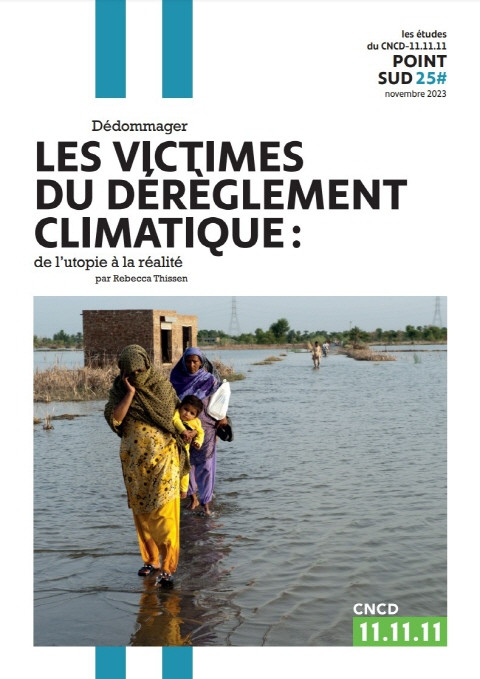 Les victimes du dérèglement climatique : de l'utopie à la réalité Año de publicación: 2023 Autor: Rebecca Thissen Autor corporativo: CND 11.11.11 «Pourquoi devrions-nous, au Pakistan, payer pour des inondations catastrophiques que nous n’avons pas causées ?» Telle était la question lancée par la ministre pakistanaise de l’Environnement en amont de la COP27, au moment où un tiers de son pays se retrouvait sous les eaux à cause de terribles inondations. Il a fallu attendre 30 ans pour que la question du dédommagement des victimes climatiques avance dans les négociations internationales : fin 2022, lors de la COP27, les Nations Unies ont décidé d’établir un fonds et des arrangements financiers spécifiques. L’étude « Pertes et préjudices, de l’utopie à la réalité » vise à donner une compréhension plus fine des pertes et préjudices, tout en les replaçant dans leur contexte historique, ce qui permet de comprendre les dynamiques en présence et l’aboutissement de la décision de la COP27. Il se veut également être une porte d’entrée quant à la réflexion sur le financement des pertes et préjudices en tant que tel, détaillant les pistes de solutions pour définir son rôle, à qui il devrait bénéficier, via quel mécanisme il devrait être acheminé et quelles sources de financement permettraient de l’alimenter. " Why should we, in Pakistan, pay for catastrophic floods that we did not cause?" That is the question posed by the Pakistani Minister of Environment ahead of the COP27, at a time when one-third of her country was submerged due to devastating floods. It took 30 years fo the issues of compensation for climate victims to progress in international negotiations: by the end of 2022, during the COP27, the United Nation decided to established a fund and specific financial arrangements. The study « Loss and Prejudices , from utopia to reality » aims at giving a more detailled comprehension of loss and prejudices, while placing them in their historical context, which helps understanding the dynamics at play and the outcome of the COP27 decision. It also aims at serving as a gateway to the consideration of financing losses and damages per se, outlining potential solutions to define its role, who should benefit from it, through which mechanism it should be channeled, and what funding sources would contribute to it.
  The Comparison of Environmental Information Disclosure System among China, Japan and the United States from the Perspective of Public Participation Año de publicación: 2018 Autor: Yu Guanghui | Yang Qiuju | Huang Peng | Liao Yaqin | Tian Qianjin This paper compares the publication of environment information in China, Japan and the U.S., and provides suggestions on promoting public participation in environmental issues in China.
  Центральная Азия: устойчивое развитие и проблемы энергетического сотрудничества Año de publicación: 2019 Autor: Salygin V.I. | Petrova R.V. | Mustafinov R.K. Непрерывное усиление антропогенной деятельности приводит к ряду экологических дисбалансов и негативно отражается на несущей емкости биосферы. Синтез теоретических наработок глобальной экологической повестки и вопросов социально-экономического развития отражается в тезисах концепции устойчивого развития. В работе проведен детальный анализ оптимальных опций снижения экологических и социальных рисков в масштабе региона через адаптацию международного опыта к сложившейся фрагментированной гидроэнергетической системе Центральной Азии.
 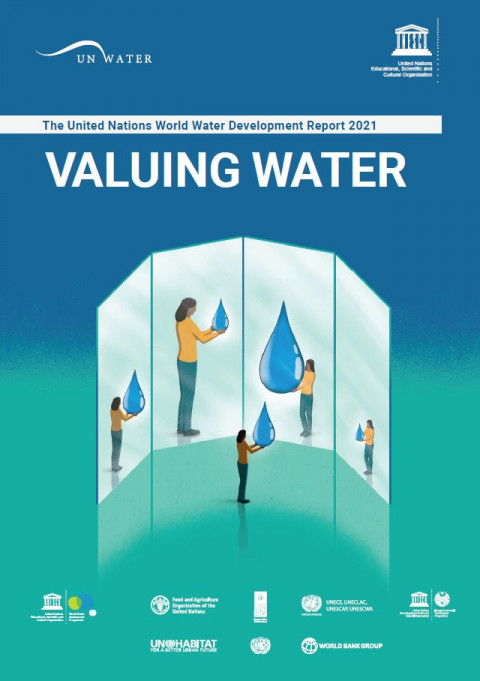 The United Nations World Water Development Report 2021: Valuing Water Año de publicación: 2021 Autor corporativo: UNESCO World Water Assessment Programme (WWAP) The 2021 edition of the United Nations World Water Development Report focuses on valuing water. There is enough water for all provided we use and manage it efficiently. But we don’t. We invest too little, and ineffectively. We use too much water, creating scarcities. Quality is suffering and so is the environment.The value we place on water varies, depending upon who is using it, and why. Value can be a guide to what our goals should be, what actions are needed, and where we should invest. Many of our problems arise because we don’t value water highly enough; all too often water is not valued at all.This report explains various approaches to valuing water for environmental considerations, water-related infrastructure, drinking water, sanitation and hygiene. It looks at valuation issues in food and agriculture, business, industry, energy and financing. And it highlights the perspectives of different value systems and cultures, and associated social and gender-based considerations.
  Inclusion of the Domains of Sustainable Development in Al Hadith Text Books in the Intermediate Stage Año de publicación: 2019 Autor: Zubaida S. Al Shamary | Talal M. Al Maaajal Autor corporativo: Sultan Qaboos University This study aims to identify the areas of sustainable development that should be included in the textbooks of Prophetic Sayings (Hadeeth) in the Kingdom of Saudi Arabia, to determine the degree of availability, and to find out if there are statistically significant differences at (α≤0.05) in the degree of availability. The descriptive analytical method was used to analyze the whole study population. Cooper coefficient of stability, frequencies, and percentages were used to analyze the results and measure the degree of availability of these fields. Chi Square equation was also used to measure the differences between the availability of fields among grades. The social field was firstly ranked with a percentage of 78.16%, and a total of 433 frequencies, while the environmental field followed it with a percentage of 6.98% and a total of 37 frequencies. The paper showed that there were statistically significant differences in the inclusion in Chi equation. تضمين مجالات التنمية المستدامة في كتب الحديث للمرحلة المتوسطة Año de publicación: 2019 Autor: Zubaida S. Al Shamary | Talal M. Al Maaajal Autor corporativo: Sultan Qaboos University هدف البحث إلى التعرف على مجالات التنمية المستدامة لتضمينها في كتب الحديث للمرحلة المتوسطة بالمملكة العربية السعودية، والكشف عن فروق دالة إحصائيا عند مستوى (0.05≥α) في درجة توفرها. واستخدمت الطريقة التحليلية الوصفية لتحليل كل العينة. واستخدمت الباحثان معامل اختبار كاي تربيع للاستقلالية لقياس الفروق بين درجة توافر المجالات بين الصفوف الدراسية، وأظهرت نتائج البحث: أن المجال الاجتماعي كان الأعلى تكراراً إذ بلغ ٤٣ بنسبة مئوية 16.78بينما يتضح أن المجال البيئي الأقل تكرارا إذ بلغ ٣٧ بنسبة مئوية 98.6 وظهر من خلال اختبار كاي للاستقلالية وجود فروق دالة احصائيا.
  SDG 4 Data Book 2019 Año de publicación: 2019 Autor corporativo: UNESCO Institute for Statistics (UIS) This publication presents the global monitoring indicators used by countries and the international development community to monitor progress towards Sustainable Development Goal 4 (SDG 4) on education. The indicators were produced by the UNESCO Institute for Statistics (UIS), based on the latest available data.The UIS is the official source of internationally-comparable education data and the custodian agency for SDG 4 data. This mandate reflects the trust of the international community in UIS data and its proven track record in methodological work and standard-setting with national statistical offices, line ministries and technical partners in every region. Recueil de données de l’ODD4 Año de publicación: 2019 Autor corporativo: UNESCO Institute for Statistics (UIS) Cette publication présente les indicateurs de suivi mondiaux utilisés par les pays et la communauté du développement international pour surveiller les progrès réalisés sur la voie de l’Objectif de développement durable 4 (ODD 4) relatif à l’éducation. Les indicateurs ont été produits par l’Institut de statistique de l’UNESCO (ISU), sur la base des dernières données disponibles.L’ISU est la source officielle de données comparables au plan international sur l’éducation et l’organisme dépositaire pour les données relatives à l’ODD 4. Ce mandat témoigne de la confiance de la communauté internationale dans les données de l’ISU et de son expérience avérée dans les travaux méthodologiques et l’élaboration de normes avec les bureaux nationaux de statistique, les ministères compétents et les partenaires techniques dans chacune des regions