
Recursos
Exploren una amplia gama de recursos valiosos en GCED para profundizar su comprensión y promover su búsqueda, incidencia, enseñanza y aprendizaje.
1,180 resultados encontrados
 The Role of the School Environment in Stimulating Students' Creativity in the Schools of Northern Palestine from the Point of View of Teachers Año de publicación: 2017 Autor: Khalid Qarwani | Husam HarzAllah Autor corporativo: World Islamic Sciences and Education University This study aims at investigating the role of the school's environment in stimulating innovation among the students of the secondary level at the north of Palestine from teachers' viewpoint. To achieve the aims of the study and to test the study hypothesis, the researcher uses the analytical descriptive methodology along with a questionnaire that was distributed to the sample of the study which consisted of (250) teachers; forming (20%) of the study population. After analysing the collected data, the study reveals the following. First, the school's environment plays a large role at the statistical level (α=0.05) in stimulating innovation among the students of that level at the defined venue in spite of the variables of the place of residency. Second, there is no role for the school's environment at the statistical level (α=0.05) in stimulating innovation among the students of that level at the defined venue from teachers' viewpoint due to variables of gender, specialization in the Bachelor's degree, experience, and social status.
 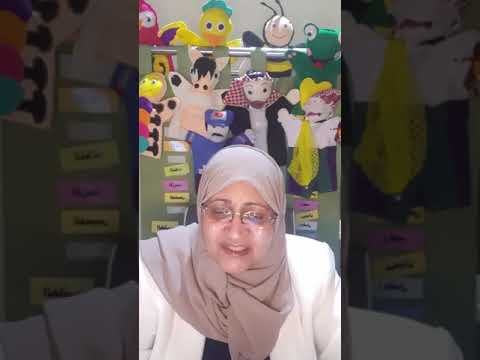 [فيديو] استراتيجية التعلم باللعب Año de publicación: 2021 Autor: Mama Fowzia تستعرض الأستاذة المختصة في التربية المبكرة استراتيجية التعلم باللعب المستخدمة في رياض الأطفال. تبدأ الأستاذة بالتعريف بالاستراتيجية. ومن ثم تعرض طرق وأساليب التعلم باللعب التي يمكن للمعلمات استخدامها. [Video] Learning by Playing Strategy Año de publicación: 2021 Autor: Mama Fowzia The teacher of early education reviews the play-learning strategy used in kindergarten. The teacher begins by introducing the strategy. Then it presents the ways and methods of learning through play that the teachers can use.
  استراتيجية التعلم باللعب Año de publicación: 2021 Autor corporativo: Korea R. Ministry of Education الملف عبارة عن شرائح باوربوينت، يتم فيها استعراض استراتيجية التعلم باللعب. تبدأ الشرائح بذكر الأسس النفسية للألعاب التعليمية والمحاكاة. وبعدها يتم تفصيل أهداف الألعاب التربوية. ويستعرض بعدها الملف مجموعة من الأنواع من الألعاب التربوية. Learning by Playing Strategy Año de publicación: 2021 Autor corporativo: Korea R. Ministry of Education The file is a PowerPoint slide, in which the strategy of learning by playing is demonstrated. The slides begin by mentioning the psychological underpinnings of educational and simulation games. Then the objectives of the educational games are detailed. The file reviews a group of types of educational games.
 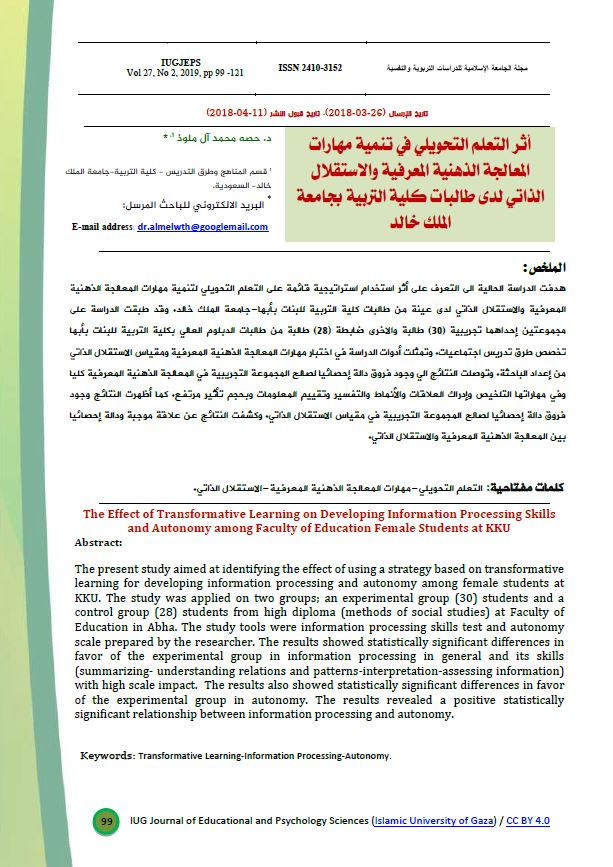 أثر التعلم التحويلي في تنمية مهارات المعالجة الذهنية المعرفية والاستقلال الذاتي لدى طالبات كلية التربية بجامعة الملك خالد Año de publicación: 2019 Autor: Hessa Muhammad Al Malaz Autor corporativo: Islamic University of Gaza هدفت الدراسة الى التعرف على أثر استخدام استراتيجية قائمة على التعلم التحويلي لتنمية مهارات المعالجة الذهنية المعرفية. استخدمت الدراسة عينة من طالبات كلية التربية للبنات بجامعة الملك خالد. كشفت الدراسة عن علاقة موجبة ودالة احصائيا بين المعالجة الذهنية المعرفية والاستقلال الذاتي. The Effect of Transformative Learning on Developing Information Processing Skills and Autonomy among Faculty of Education Female Students at KKU Año de publicación: 2019 Autor: Hessa Muhammad Al Malaz Autor corporativo: Islamic University of Gaza The study aimed to identify the effect of using a strategy based on transformational learning to develop cognitive mental processing skills. The study used a sample of students from the College of Education for Girls at King Khalid University. The study revealed a positive and statistically significant relationship between cognitive mental processing and autonomy.
 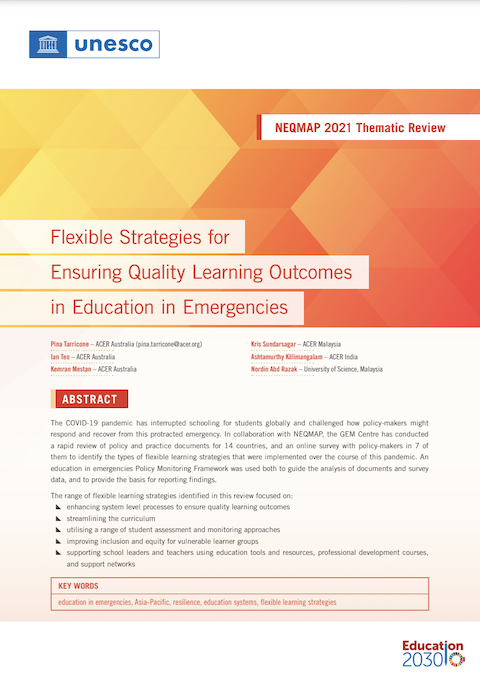 Flexible Strategies for Ensuring Quality Learning Outcomes in Education in Emergencies: NEQMAP 2021 Thematic Review Año de publicación: 2021 Autor: Pina Tarricone | Ian Teo | Kemran Mestan | Kris Sundarsagar | Ashtamurthy Killimangalam | Nordin Abd Razak Autor corporativo: UNESCO Bangkok The COVID-19 pandemic has interrupted schooling for students globally and challenged how policy-makers might respond and recover from this protracted emergency. In collaboration with NEQMAP, the GEM Centre has conducted a rapid review of policy and practice documents for 14 countries, and an online survey with policy-makers in 7 of them to identify the types of flexible learning strategies that were implemented over the course of this pandemic. An education in emergencies Policy Monitoring Framework was used both to guide the analysis of documents and survey data, and to provide the basis for reporting findings.
 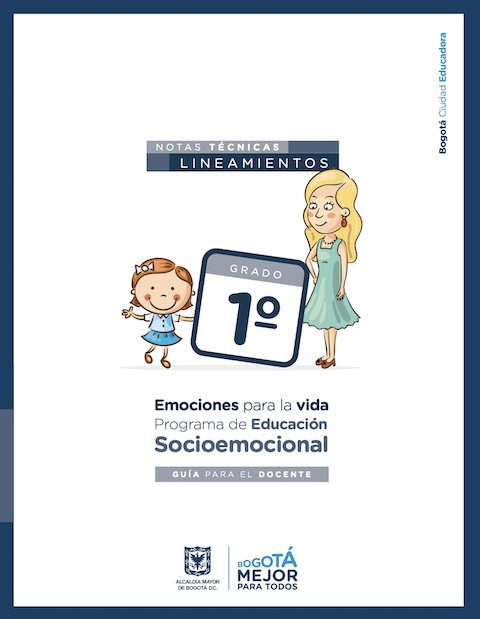 Education for Life Socio-Emotional Education Program Año de publicación: 2018 Autor: José Fernando Mejía | Gloria Inés Rodríguez | Nancy Guerra | Andrea Bustamante | Maria Paula Chaparro | Melizza Castellanos Autor corporativo: Alcaldía Mayor de Bogotá This teacher's guide is part of the Emotions for Life program, which seeks to develop social-emotional competencies by providing tools so that teachers can promote them with their students. This first grade guide offers a set of practical sessions for working in the classroom. These competencies allow children to get to know each other better, manage their emotions, relate better with others, make responsible decisions, decrease aggression, and increase satisfaction with their life. Emociones para la vida programa de educación socioemocional Año de publicación: 2018 Autor: José Fernando Mejía | Gloria Inés Rodríguez | Nancy Guerra | Andrea Bustamante | Maria Paula Chaparro | Melizza Castellanos Autor corporativo: Alcaldía Mayor de Bogotá Esta guía para el maestro hace parte del programa Emociones para la vida, que busca desarollar competencias socioemocionales brindando herramientas para que los docentes puedan promoverlas con sus estudiantes. Esta guía para primer grado ofrece un conjunto de sesiones prácticas para trabajar en el aula. Estas competencias les pemite a los niños conocerse mejor,manejar sus emociones, relacionarse mejor con los demás, tomar decisiones responsables, disminuir la agresión y aumentar la satisfacción con su vida.