
Recursos
Exploren una amplia gama de recursos valiosos en GCED para profundizar su comprensión y promover su búsqueda, incidencia, enseñanza y aprendizaje.
1,447 resultados encontrados
 Jeunesse et extrémisme violent: Atelier de réflexion du Système des Nations unies et ses partenaires au Maroc Año de publicación: 2017 Autor corporativo: UNESCO Rabat | United Nations (Morocco) Jeunesse et extrémisme violent: Atelier de réflexion du Système des Nations unies et ses partenaires au Maroc Jeunesse et extrémisme violent: Atelier de réflexion du Système des Nations unies et ses partenaires au Maroc Año de publicación: 2017 Autor corporativo: UNESCO Rabat | United Nations (Morocco) Jeunesse et extrémisme violent: Atelier de réflexion du Système des Nations unies et ses partenaires au Maroc
 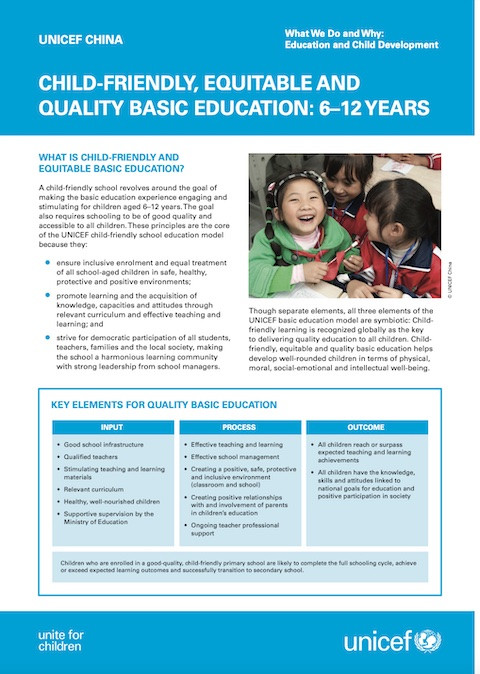 Child-Friendly, Equitable and Quality Basic Education: 6-12 Years Año de publicación: 2017 Autor corporativo: United Nations Children's Fund (UNICEF) This report introduces the ideas and specific practices of UNICEF-operated child-friendly and equitable education in China, including its inputs, processes, and results. It also describes the progress of related projects and specific programmes, such as school management standards. The report also includes future plans for related projects, particularly in the areas of global development and South-South cooperation. 爱生、公平和优质的基础教育:6 - 12岁 Año de publicación: 2017 Autor corporativo: United Nations Children's Fund (UNICEF) 该报告介绍了联合国儿童基金会在中国运营的爱生和公平教育的理念与具体做法,包括其投入、过程、成果等。也介绍了相关项目的进展与具体方案,如学校管理标准等。报告也包括了相关项目的未来计划,尤其是在全球发展和南南合作领域。
  موجز التقرير العالمي حول الإعاقة Año de publicación: 2011 Autor corporativo: World Health Organization (WHO) | World Bank قامت منظمة الصحة العالمية بالاشتراك مع البنك الدولي في إصدار هذا التقرير العالمي حول الإعاقة، من أجل عرض البيِّنات اللازمة لوضع السياسات والبرامج المبتكرة القادرة على تحسين حياة ذوي الإعاقة، وتيسير تنفيذ اتفاقية الأمم المتحدة لحقوق الأشخاص ذوي الإعاقة التي تم تفعيلها في أيار/مايو من عام 2008. ويقدم التقرير العالمي تعريفا عن الإعاقة بوصفها مصطلحاً جامعاً يضم تحت مظلته الأشكال المختلفة للاعتلال/الخلل العضوي، ومحدودية النشاط، والقيود التي تحد من المشاركة. كما أن مصطلح الإعاقة يعود إلى السمات السلبية للتفاعل بين الأفراد الذين يعانون من حالة صحية ما )مثل الشلل الدماغي، أو متلازمة داون، أو الاكتئاب(، وبين العوامل الشخصية والبيئية )مثل المواقف السلبية، وانعدام إتاحة وسائل النقل والمباني العامة، والدعم الاجتماعي المحدود).ثم يقدم اقتراحات بخطوات يمكن أن تتخذ من قبل كافة الأطراف المعنية –ومنها الحكومات، ومنظمات المجتمع المدني، ومنظمات الأشخاص ذوي الإعاقة – من أجل إيجاد بيئات ممكِّنة، وتطوير خدمات التأهيل والدعم، وضمان الحماية الاجتماعية الكافية، وإطلاق سياسات وبرامج شاملة، وتفعيل المعايير والتشريعات الجديدة والقائمة، وذلك لصالح ذوي الإعاقة والمجتمع على نطاقه الأوسع. وينبغي أن يكون ذوو الإعاقة هم المركز الذي تتمحور حوله هذه المساعي. كما يلقي الضوء على العقبات والعوائق المتباينة التي يواجهها ذوو الإعاقة - عقبات تتعلق بما يصادفونه من مواقف واتجاهات، وعقبات مادية، ومالية – وكلها عقبات يسهل التعامل معها والتصدي لها. يقدم توصيات للعمل على المستويات المحلية والوطنية والدولية، ومن ثم فهو أداة لا تقدر بثمن. Summary of the World Report on Disability Año de publicación: 2011 Autor corporativo: World Health Organization (WHO) | World Bank The World Health Organization and the World Bank jointly produced this global report on disability, in order to present the evidence needed to develop innovative policies and programs capable of improving the lives of people with disabilities, and to facilitate the implementation of the United Nations Convention on the Rights of Persons with Disabilities that was activated in May of 2008. The World Report provides a definition of disability as an umbrella term that includes under its umbrella various forms of organ impairment/dysfunction, limited activity, and participation limitations. The term disability also refers to the negative features of the interaction between individuals with a health condition (such as cerebral palsy, Down syndrome, or depression), and between personal and environmental factors (such as negative attitudes, lack of access to transportation and public buildings, and limited social support).It then presents suggestions for steps that can be taken by all concerned parties - including governments, civil society organizations, and organizations of persons with disabilities - in order to create enabling environments, develop rehabilitation and support services, ensure adequate social protection, launch comprehensive policies and programs, and activate new standards and legislation List, for the benefit of people with disabilities and society at large. People with disabilities should be the centerpiece of these endeavours. It also sheds light on the various obstacles and barriers faced by persons with disabilities - obstacles related to the attitudes and trends they encounter, and physical and financial obstacles - all of which are easy to deal with and address. It provides recommendations for action at the local, national and international levels, and is thus an invaluable tool.
 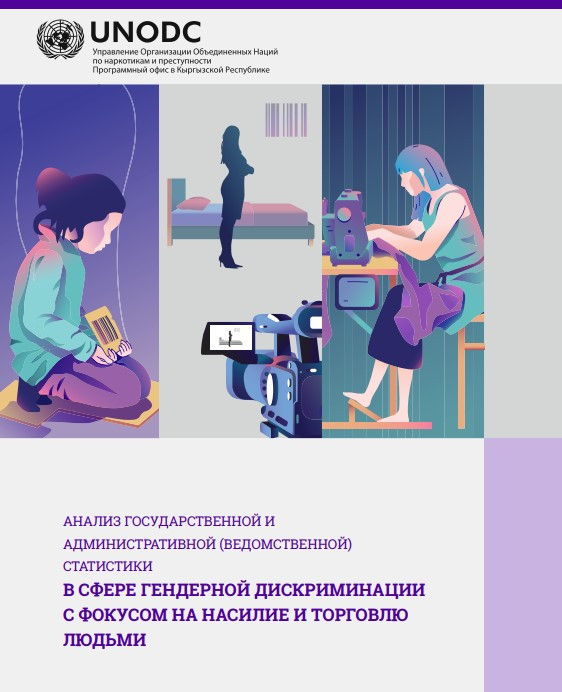 Analysis of State and Administrative (departmental) Statistics in the Field of Gender Discrimination with a Focus on Violence and Human Trafficking Año de publicación: 2018 Autor corporativo: UN. Office on Drugs and Crime (UNODC) The analytical review includes brief information on the legislative bases of statistics in the field of gender discrimination, violence, and human trafficking, as well as departmental regulations regulating the collection of statistics on this issue in state statistics bodies, the judicial system, internal affairs bodies, health authorities, prosecutors, the penitentiary service, crisis centers and courts of elders. The analysis makes it possible to understand what information flows in the field of gender discrimination, violence, and human trafficking exist in the authorized bodies state bodies, what indicators are collected in them, and how statistics are generated at the national level. For each authorized state body, the structure of the information system, the movement of information flows, and a list of indicators on gender-based crimes, family violence, and human trafficking are given. Анализ государственной и административной (ведомственной) статистики в сфере гендерной дискриминации с фокусом на насилие и торговлю людьми Año de publicación: 2018 Autor corporativo: UN. Office on Drugs and Crime (UNODC) Аналитический обзор включает краткую информацию о законодательных основах статистики в сфере гендерной дискриминации, насилия и торговли людьми, а также ведомственные нормативные акты, регулирующие сбор статистки по данному вопросу в органах госстатистики, судебной системе, органах внутренних дел, органах здравоохранения, прокуратуры, службе исполнения наказаний, кризисных центрах и судах аксакалов. Проведенный анализ дает возможность понять, какие информационные потоки в сфере гендерной дискриминации, насилия и торговли людьми существуют в уполномоченных государственных органах, какие показатели в них собираются, и как формируется статистика на национальном уровне. По каждому уполномоченному государственному органу приводится структура информационной системы, движение информационных потоков, перечень показателей по гендерно-обусловленным преступлениям, семейному насилию и торговле людьми.
 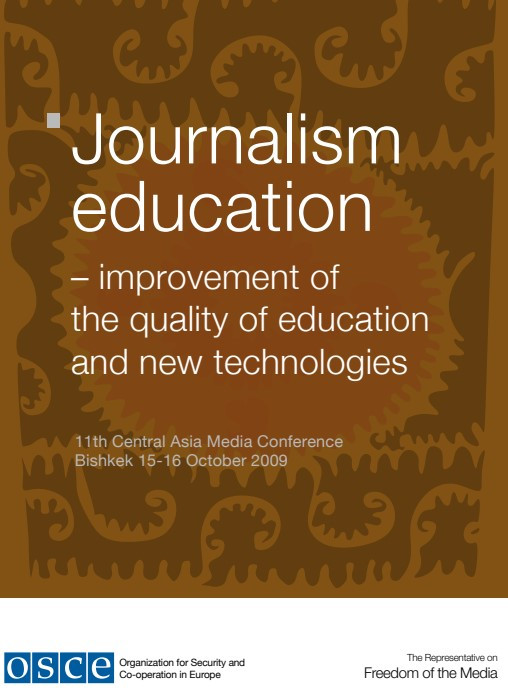 Journalism Education - Improvement of the Quality of Education and New Technologies Año de publicación: 2010 Autor corporativo: OOSCE. Office of the Representative on Freedom of the Media Publication of materials from the 11th Central Asian Media Conference. Media professionals and officials from all five Central Asian states - Kazakhstan, Kyrgyzstan, Tajikistan, Turkmenistan, and Uzbekistan - attended the conference. Representatives of academia, professors from various universities, national and international experts, and representatives of national and international organizations also attended the conference, during which the latest media developments in Central Asia were discussed. The main theme of the conference was journalism education. Журналистское образование повышение качества образования и новые технологии Año de publicación: 2010 Autor corporativo: OOSCE. Office of the Representative on Freedom of the Media Публикация материалов 11 центральноазиатской конференции СМИ. Работники СМИ и официальные лица из всех пяти центральноазиатских государств – Казахстана, Кыргызстана, Таджикистана, Туркменистана и Узбекистана – приняли участие в конференции. Представители научных кругов, преподавательского состава различных университетов, национальные и международные эксперты, представители национальных и международных организаций также участвовали в работе конференции, в ходе которой были обсуждены последние события в сфере СМИ в Центральной Азии. Основной темой конференции стало журналистское образование.