
Recursos
Exploren una amplia gama de recursos valiosos en GCED para profundizar su comprensión y promover su búsqueda, incidencia, enseñanza y aprendizaje.
2,668 resultados encontrados
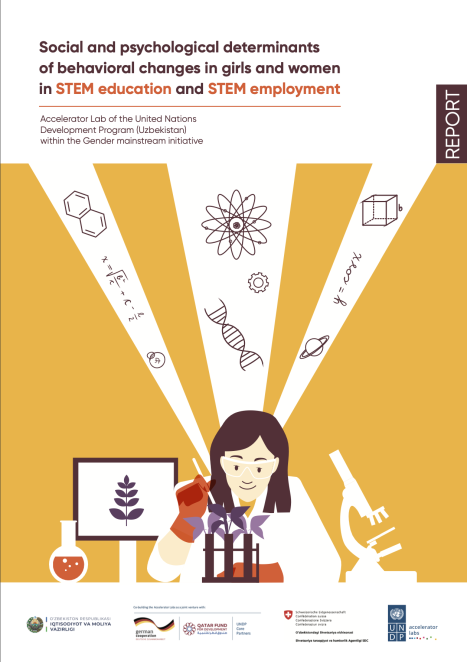 Social and Psychological Determinants of Behavioral Changes in Girls and Women in STEM Education and STEM Employment Año de publicación: 2023 Autor: Victoria Alekseeva | Marietta Karamyan The objective of the research presented in the report is to examine the social and psychological determinants of behavioral change in girls and women in STEM professions to develop recommendations for engaging them in the professional field. Социальные и психологические детерминанты поведенческих изменений у девушек и женщин в STEM-образовании и STEM-занятости Año de publicación: 2023 Autor: Victoria Alekseeva | Marietta Karamyan The objective of the research presented in the report is to examine the social and psychological determinants of behavioral change in girls and women in STEM professions to develop recommendations for engaging them in the professional field.
 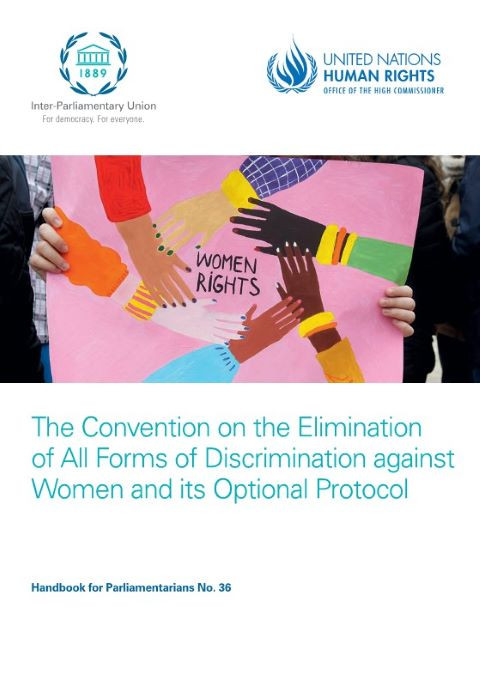 The Convention on the Elimination of All Forms of Discrimination against Women and its Optional Protocol: Handbook for Parliamentarians No. 36; Revised edition Año de publicación: 2023 Autor corporativo: Inter-Parliamentary Union (IPU) | UN. Office of the United Nations High Commissioner for Human Rights (UN. OHCHR) More than four decades after its adoption, the Convention on the Elimination of All Forms of Discrimination against Women remains an essential and ambitious guide for achieving gender equality across the board – from the family and the classroom to executive boards and political leadership roles. Despite considerable progress since the Convention came into force, no country can yet claim to have fully achieved gender equality. This revised edition of The Convention on the Elimination of All Forms of Discrimination against Women and its Optional Protocol: Handbook for Parliamentarians is a joint collaboration undertaken by the Inter-Parliamentary Union (IPU) and the Office of the United Nations High Commissioner for Human Rights (OHCHR). La Convention sur l’élimination de toutes les formes de discrimination à l’égard des femmes et son Protocole facultatif: Manuel à l'intention des parlementaires; édition révisée Año de publicación: 2023 Autor corporativo: Inter-Parliamentary Union (IPU) | UN. Office of the United Nations High Commissioner for Human Rights (UN. OHCHR) Plus de quarante ans après son adoption, la Convention sur l’élimination de toutes les formes de discrimination à l’égard des femmes reste un cadre essentiel et ambitieux de promotion de l’égalité des sexes dans tous les domaines – depuis le contexte familial et scolaire jusque dans les conseils d’administration et les sphères dirigeantes de la politique. Si des progrès considérables ont été accomplis depuis l’entrée en vigueur de la Convention, aucun pays ne peut encore prétendre avoir atteint une égalité pleine et entière entre les hommes et les femmes.Au cours des vingt dernières années, une relation très étroite s’est développée entre le Comité pour l’élimination de la discrimination à l’égard des femmes – organe conventionnel chargé de contrôler l’application de la Convention – et l’Union interparlementaire (UIP). Grâce à cette collaboration, des parlementaires du monde entier ont approfondi leur connaissance de la Convention et se sont, en nombre croissant, impliqués dans l’important exercice d’établissement du de rapports périodiques au Comité qui rend compte de la mise en œuvre de la Convention au niveau national. Nombre de parlementaires ont posé des questions au gouvernement, ont proposé ou modifié des lois, mené des opérations de sensibilisation dans leurs circonscriptions et se sont engagés auprès de l’Organisation des Nations Unies pour réduire l’écart entre les promesses de la Convention et la réalité qui est celle des femmes et des filles au quotidien.
 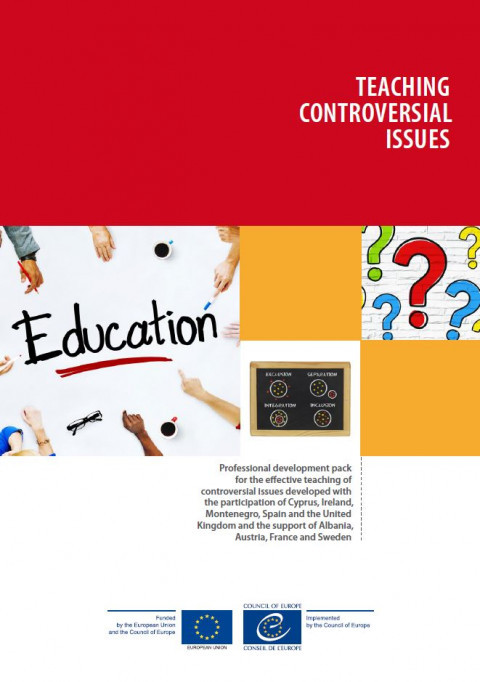 Living with Controversy: Teaching Controversial Issues through Education for Democratic Citizenship and Human Rights (EDC/HRE); Training Pack for Teachers Año de publicación: 2015 Autor corporativo: Council of Europe Learning how to engage in dialogue with people whose values are different from one’s own and to respect them is central to the democratic process and essential for the protection and strengthening of democracy and fostering a culture of human rights. Yet in Europe young people do not often have an opportunity to discuss controversial issues in school because they are seen as too challenging to teach, e.g., issues to do with extremism, gender violence, child abuse, or sexual orientation. Unable to voice their concerns, unaware of how others feel or left to rely on friends and social media for their information, young people can be frustrated or confused about some of the major issues which affect their communities and European society today. In the absence of help from school, they might have no reliable means of dealing with these issues constructively and no one to guide them. The idea for this Pack came out of a call from policy-makers and practitioners in a number of European countries for more effective training for teachers in the teaching of controversial issues.
  Anti-Semitism : a never-ending struggle ? (Vol 2) Autor corporativo: Anne Frank House | OSCE. Office for Democratic Institutions and Human Rights (ODIHR) These teaching materials were developed by ODIHR and the Anne Frank House in Amsterdam, in co-operation with experts from several OSCE participating States. Part 2 covers contemporary forms of anti-Semitism. The version available here is an English translation of the Polish version. L'antisémitisme: une lutte sans fin? (Vol 2) Autor corporativo: Anne Frank House | OSCE. Office for Democratic Institutions and Human Rights (ODIHR) Ces matériels pédagogiques ont été élaborés par le BIDDH et la Maison d'Anne Frank à Amsterdam, en coopération avec des experts de plusieurs Etats participants de l'OSCE. Partie 2 couvre les formes contemporaines de l'antisémitisme. La version disponible ici est une traduction anglaise de la version polonaise. Vivir con la controversia: Cómo enseñar temas controvertidos mediante la Educación para la ciudadanía y los derechos humanos (EDC/HRE) Módulo de formación para el profesorado Año de publicación: 2015 Autor corporativo: European Union (EU) Learning how to engage in dialogue with people whose values are different from one’s own and to respect them is central to the democratic process and essential for the protection and strengthening of democracy and fostering a culture of human rights. ■ Yet in Europe young people do not often have an opportunity to discuss controversial issues in school because they are seen as too challenging to teach, e.g., issues to do with extremism, gender violence, child abuse, or sexual orientation. Unable to voice their concerns, unaware of how others feel or left to rely on friends and social media for their information, young people can be frustrated or confused about some of the major issues which affect their communities and European society today. In the absence of help from school, they might have no reliable means of dealing with these issues constructively and no one to guide them. ■ The idea for this Pack came out of a call from policy-makers and practitioners in a number of European countries for more effective training for teachers in the teaching of controversial issues. Toolkit on the Holocaust and Human Rights Education in the EU Autor corporativo: European Union Agency for Fundamental Rights | Yad Vashem Responding to a practical need expressed by teachers and students with a view toward examining the connections between Holocaust and Human Rights Education, the Fundamental Rights Agency (FRA) and Yad Vashem have developed this Toolkit to provide first insights into Holocaust and Human Rights Education content and methodologies, which can be used for teaching about and from the Holocaust and human rights. The Toolkit is a practical guide for teachers and educators who wish to develop teaching projects, by linking Holocaust and human rights. In addition, some examples of teaching projects and learning activities of Holocaust Education and Human Rights Education are provided in the Toolkit. Boîte à outils sur l'éducation sur l'Holocauste et les droits de l'homme dans l'UE Autor corporativo: European Union Agency for Fundamental Rights | Yad Vashem Répondant à un besoin pratique exprimée par les enseignants et les étudiants en vue vers l'examen des liens entre l'Holocauste et l'éducation aux droits humains, l'Agence des droits fondamentaux (FRA) et Yad Vashem ont développé cette trousse pour fournir les premiers aperçus sur l'Holocauste et l'éducation aux droits humains contenu et méthodes, qui peuvent être utilisés pour enseigner et de l'Holocauste et les droits humains. La boîte à outils est un guide pratique pour les enseignants et les éducateurs qui souhaitent développer des projets pédagogiques, en reliant l'Holocauste et les droits humains. En outre, quelques exemples de projets d'enseignement et des activités d'apprentissage de l'éducation de l'Holocauste et l'éducation aux droits de l'homme sont fournis dans la boîte à outils.