
Recursos
Exploren una amplia gama de recursos valiosos en GCED para profundizar su comprensión y promover su búsqueda, incidencia, enseñanza y aprendizaje.
1,725 resultados encontrados
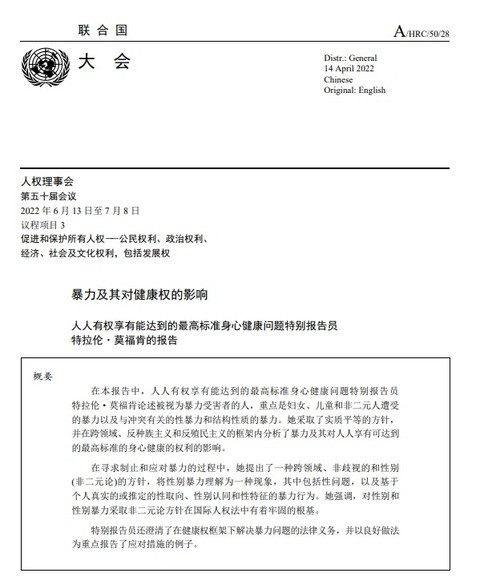 Violence and its Impact on the Right to Health - Report of the Special Rapporteur on the Right of Everyone to the Enjoyment of the Highest Attainable Standard of Physical and Mental Health Año de publicación: 2022 Autor corporativo: UN Human Rights This document is a special report of the UN Special Rapporteur on Human Rights on violence and its impact on the right to health, including the legal framework, an inclusive approach, the identification of multiple forms of violence, and reasonable responses. 暴力及其对健康权的影响 - 人人有权享有能达到的最高标准身心健康问题特别报告员的报告 Año de publicación: 2022 Autor corporativo: UN Human Rights 该文件是联合国人权事务特别报告员关于暴力问题及其对健康权影响的特别报告,包括法律框架、包容性的方针、对多种形式暴力的识别以及应对措施。
 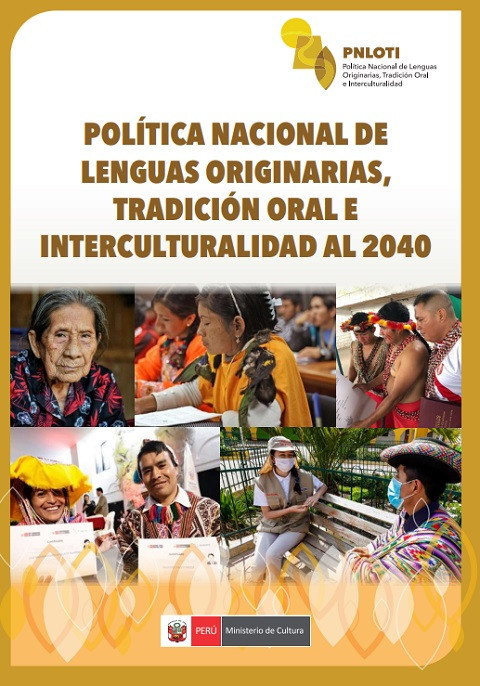 National Policy on Native Languages, Oral Tradition and Interculturality by 2040 Año de publicación: 2021 Autor corporativo: Ministry of Culture of Peru The Ministry of Culture, in coordination with the different sectors of the State, has carried out the process of updating the National Policy on Native Languages, Oral Tradition and Interculturality by 2040 (PNLOTI), which will be the main instrument of guidance and attention in subject of indigenous languages. Seeking to guarantee the participation of citizens in public decisions, the Ministry of Culture makes the PNLOTI proposal for 2040 available to them, with the aim that they can access it and learn about the 41 services declared in charge of the different sectors. In this way, the PNLOTI ensures the full exercise of the linguistic rights of the more than 4 million citizens who speak one of the 48 indigenous or native languages of the country. Política nacional de lenguas originarias, tradición oral e interculturalidad al 2040 Año de publicación: 2021 Autor corporativo: Ministry of Culture of Peru El Ministerio de Cultura, en coordinación con los diferentes sectores del Estado, han llevado a cabo el proceso de actualización de la Política Nacional de Lenguas Originarias, Tradición Oral e Interculturalidad al 2040 (PNLOTI), que será el principal instrumento de orientación y atención en materia de lenguas indígenas. Buscando garantizar la participación de la ciudadanía en las decisiones públicas, el Ministerio de Cultura pone a su disposición la propuesta de la PNLOTI al 2040, con el objetivo de que puedan acceder a él y conocer los 41 servicios declarados a cargo de los diferentes sectores. De esta manera, la PNLOTI asegura el ejercicio pleno de los derechos lingüísticos de los más de 4 millones de ciudadanos y ciudadanas hablantes de alguna de las 48 lenguas indígenas u originarias del país.
  Countering and addressing online hate speech: a guide for policy makers and practitioners Año de publicación: 2023 Autor corporativo: UN. Office on Genocide Prevention and the Responsibility to Protect Online hate speech remains a critical challenge to advancing the objectives set out in the UN Strategy and Plan of Action on Hate Speech and the pillars of the United Nations work, namely Peace and Security, Human Rights and Sustainable Development. The recommendations outlined in this policy paper, provide a framework for countering hate speech, in line with international human rights norms and standards. The recommendations are based on three years of consultations and dialogue, including with the technology and social media companies, experts, the UN Working Group on Hate Speech and civil society. Their implementation should be part of broader efforts to address hate speech globally, including its root causes and impact offline, in line with the UN Strategy and Plan of Action. The pursuit of these recommendations should also prioritize participation and engagement directly with the victims of hate speech, underpinned by the principles of non-discrimination and leaving no one behind.
  United Nations Global Principles for Information Integrity : Recommendations for Multi-stakeholder Action Año de publicación: 2024 Autor corporativo: United Nations (UN) Technological advances have revolutionized communications, connecting people on a previously unthinkable scale. They have supported communities in times of crisis, elevated marginalized voices and helped mobilize global movements for racial justice and gender equality. Yet these same advances have enabled the spread of misinformation, disinformation and hate speech at an unprecedented volume, velocity and virality, risking the integrity of the information ecosystem. New and escalating risks stemming from leaps in AI technologies have made strengthening information integrity one of the urgent tasks of our time. This clear and present global threat demands coordinated international action. The United Nations Global Principles for Information Integrity show us another future is possible. Principes mondiaux des Nations Unies pour l’intégrité de l’information: Recommandations pour une action multipartite Año de publicación: 2024 Autor corporativo: United Nations (UN) Les avancées technologiques ont révolutionné les communications, connectant les personnes à une échelle autrefois inimaginable. Elles ont soutenu les communautés en temps de crise, amplifié les voix marginalisées et contribué à la mobilisation mondiale pour la justice raciale et l’égalité des genres. Pourtant, ces mêmes avancées ont également favorisé la propagation de la désinformation, des informations fallacieuses (ou « fake news ») et des discours de haine à une vitesse, une ampleur et une viralité sans précédent, menaçant ainsi l’intégrité de l’écosystème informationnel. Les risques émergents et croissants liés aux progrès rapides de l’intelligence artificielle font du renforcement de l’intégrité de l’information l’un des défis les plus urgents de notre époque. Cette menace mondiale, claire et actuelle, exige une action internationale coordonnée. La publication Principes mondiaux des Nations Unies pour l’intégrité de l’information nous montrent qu’un autre avenir est possible.
  On Educating and Learning for Better Futures: A Journey Through Education in Times of Transformation Año de publicación: 2024 Autor: Renato Opertti The author of the book, Renato Opertti, president of the OEI Advisory Board, presents this publication divided into six chapters: On the global and the local, On Ibero-America, opportunities and pending challenges, On thinking, educating and learning, PISA findings and the resilience of educational systems, Regarding Meirieu and educators and On the new generations and the future of education in Uruguay. Sobre educar y aprender para futuros mejores: Un viaje por la educación en tiempos de transformación Año de publicación: 2024 Autor: Renato Opertti El autor del libro, Renato Opertti presidente del Consejo Asesor de la OEI, nos presenta esta publicación que divide en seis capítulos: Sobre lo global y lo local, Sobre Iberoamérica, oportunidades y desafíos pendientes, Sobre pensar, educar y aprender, Hallazgos de pisa y la resiliencia de los sistemas educativos, A propósito de Meirieu y los educadores y Sobre las nuevas generaciones y los futuros de la educación en Uruguay.
 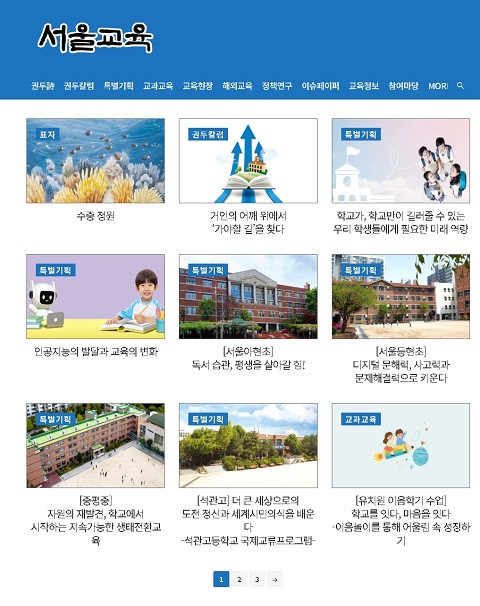 서울교육 2024년 여름호 (제66권 통권 255호) Año de publicación: 2024 Autor corporativo: 서울특별시교육청 교육연구정보원 권두칼럼: 거인의 어깨 위에서 ‘가야할 길’을 찾다 특별기획:- 학교가, 학교만이 길러줄 수 있는 우리 학생들에게 필요한 미래 역량- 인공지능의 발달과 교육의 변화- [서울아현초] 독서 습관, 평생을 살아갈 힘!- [서울등현초] 디지털 문해력, 사고력과 문제해결력으로 키운다- [중평중] 자원의 재발견, 학교에서 시작하는 지속가능한 생태전환교육- [석관고] 더 큰 세상으로의 도전 정신과 세계시민의식을 배운다: 석관고등학교 국제교류프로그램 교과교육:- [유치원 이음학기 수업] 학교를 잇다, 마음을 잇다: 이음놀이를 통해 어울림 속 성장하기- [특수학급 국제 공동 수업] 바다를 넘고 장애를 넘는 특별한 우정 프로젝트- [초등학교 생태전환교육 수업] 기후 위기? 예술로 공존!- [중학교 역지사지 공존형 토론 수업] 경쟁이 아닌 공존을 위한 토론!교과교육- [고등학교 인공지능 활용 수업] 인공지능과 함께 성장하는 수학수업- [학급운영 현장보기] 육개장 사발면반 제자들과의 시간- [체험·문화·예술활동 Ⅰ] 예술의 언어로 소통하며 공동체를 이루다: 중학교 맞춤형 예술 교육- [체험·문화·예술활동 Ⅱ] 나를 발견하게 하고, 나를 표현하게 하는 “예술교육”: 고등학교 협력종합예술활동- [학교현장 미리보기] AI 디지털교과서를 통한 미래교육 엿보기 정책연구: 학교수업 내 에듀테크 활용 정도가 중학생의 교육적 성장에 미치는 영향 분석 정책연구 교육정보:- 2024년 강화된 교육활동 보호 정책, 이것만큼은 꼭 알아두세요- 돌봄과 배움이 공존하는 서울형 늘봄학교- 수업-평가의 연계성 강화를 위한 초 · 중등학교 정보공시(교수학습 및 평가계획 관련) 개정 안내- 메타버스는 정말 끝났을까? 참여마당:- [웹툰] 알찬 여름방학 보내기- [수기] 뮤지컬 배우가 꿈이었던 교사, 학교에서 뮤지컬을 꿈꾸다- [서평] 쉬운 공공의 언어는 인권이다: 이건범 『언어는 인권이다』를 읽고- [후기] 모니터단 2024 ‘봄호’ 후기 갤러리: “어린이·청소년의 미래역량 신장을 위해 노력합니다!”