
Recursos
Exploren una amplia gama de recursos valiosos en GCED para profundizar su comprensión y promover su búsqueda, incidencia, enseñanza y aprendizaje.
1,447 resultados encontrados
 تقييم معرفة القراءة والكتابة والمهارات الحياتية لدى الشباب السوري (2021) : تقرير موجز Año de publicación: 2022 Autor corporativo: UNESCO Beirut تسببت الأزمة السورية في حدوث اضطرابات في تعليم الأطفال والشباب لأكثر من عقد. لقد أضاف جائحة COVID-19 ، مع إغلاق المدارس ذات الصلة ، عبئًا إضافيًا على الوضع الحالي ، مما أثر على نتائج التعلم في جميع أنحاء العالم. إن تقييم حالة كفاءات الشباب السوري في محو الأمية والحساب والمهارات الحياتية أمر ضروري لتخطيط وتنفيذ برامج أفضل لمساعدتهم على تعويض خسائرهم التعليمية. الهدف النهائي هو دعمهم ليكونوا قادرين على العودة إلى مسارات التعليم الرئيسية أو تزويدهم بالمهارات الأساسية للتعامل مع الاحتياجات اليومية في بيئاتهم الشخصية والمهنية.تقيس دراسة "تقييم معرفة القراءة والكتابة والمهارات الحياتية للشباب السوري" (LLASY) المستويات الحالية لمحو الأمية والحساب ، بالإضافة إلى المهارات الحياتية لشباب سوريا الذين تتراوح أعمارهم بين 15 و 24 عامًا والذين يعيشون حاليًا داخل البلاد. وتشمل العينة الشباب ، والشابات ، والذكور ، الملتحقين بمؤسسات تعليمية أو تدريبية ، ومن هم خارجها. Literacy and Life Skills Assessment of Syrian Youth (2021): Summary Report Año de publicación: 2022 Autor corporativo: UNESCO Beirut The Syrian crisis has caused disruptions to children’s and youth’s education for over a decade. The COVID-19 pandemic, with the related school closures, has added an additional burden to the existing situation, impacting learning outcomes worldwide. Assessing the status of Syrian youth’s competencies in literacy, numeracy and life skills, is essential in order to plan and implement better programmes to help them catch up on their learning losses. The ultimate goal is to support them to be able to go back into the main education streams or provide them with basic skills to cope with daily needs in their personal and professional environments.The ‘Literacy and Life Skills Assessment of Syrian Youth’ (LLASY) study measures current literacy and numeracy levels, as well as life skills of the youth of Syria of the 15 to 24 age group currently living inside the country. The sample includes youth, female and male, who are enrolled in educational or training institutions, as well as those who are out of them.
  New Facets of Educational Inequality in Countries Central Asia: From Problem Measurement to Policy Changes Año de publicación: 2021 Autor: Saule Aliyeva | Kamila Kovyazina Autor corporativo: Paperlab Research Center (Kazakhstan) This report summarizes the results of a research project to study the problem of educational inequality in the region, carried out by the Research Center PaperLab (Kazakhstan) together with partners from Kyrgyzstan, Tajikistan, and Uzbekistan. A regional approach to studying the problem of educational inequality will help assess the role and effectiveness of measures taken by governments of different countries in ensuring access to education, and to identify the strengths and weaknesses of each country in the transition to a post-pandemic environment. Promoting this expertise in the media and social networks will start a discussion about the importance of education in terms of reducing social inequality in the region and get new ideas on equalizing opportunities in access to education as one of the key public goods. Новые грани образовательного неравенства в странах Центральной Азии: От измерения проблемы к изменениям политик Año de publicación: 2021 Autor: Saule Aliyeva | Kamila Kovyazina Autor corporativo: Исследовательский центр Paperlab (Казахстан) Настоящий отчет обобщает результаты исследовательского проекта по изучению проблемы образовательного неравенства в регионе, выполненного исследовательским центром PaperLab (Казахстан) совместно с партнерами из Кыргызстана, Таджикистана, Узбекистана. Региональный подход к изучению проблемы образовательного неравенства поможет оценить роль и эффективность мер, принимаемых правительствами разных стран в обеспечении доступа к образованию, а также выявить слабые и сильные стороны каждой страны в переходе к условиям постпандемии. Продвижение этих экспертных знаний в массмедиа и социальных сетях позволит запустить дискуссию о значимости образования с точки зрения снижения социального неравенства в регионе и получить новые идеи по выравниванию возможностей при доступе к образованию как одному из ключевых общественных благ.
  Upbringing and Education of Preschool Children at Home During the Period of Self-Isolation due to COVID-19: Results of a Rapid Assessment Study in Uzbekistan Año de publicación: 2020 Autor: Dipa Shankar Autor corporativo: UNICEF Uzbekistan The study examined the knowledge of parents and guardians about the final results of child development, appropriate and desirable child care practices and behaviors, including equality and inclusiveness; attitudes to child development services and their productivity, in particular, the quality and accessibility of available preschool services, willingness to adapt appropriate child care practices and behaviors; as well as the practice of using preschool services, interacting with children, etc. Воспитание и образование детей дошкольного возраста на дому в период самоизоляции в связи с COVID-19: Результаты исследования методом быстрой оценки в Узбекистане Año de publicación: 2020 Autor: Dipa Shankar Autor corporativo: UNICEF Uzbekistan В исследовании были рассмотрены знания родителей и опекунов о конечных результатах развития ребенка, надлежащей и желательной практике и поведении по уходу за детьми, включая равенство и инклюзивность; отношение к услугам по развитию детей и их продуктивность, в частности качество и доступность имеющихся дошкольных услуг, готовность адаптировать соответствующую практику и поведение по уходу за детьми; а также практика использования дошкольных услуг, взаимодействия с детьми и т.д.
  Build Forward Better: How the Global Community Can Protect Education from the Climate Crisis Año de publicación: 2021 Autor: Anya Cowley | Mathias Slettholm Autor corporativo: Save the Children Children’s increasing exposure to extreme weather events has serious implications for children’s access to quality education. 75 million children have their education disrupted each year – of which around half are due to environmental threats such as floods and drought. This briefing paper sets out how leaders can protect children’s learning from the impacts of the climate crisis, and the role that education can play in equipping the next generation with the tools they need to protect against its worst impacts.
  Wherever We Go, Someone Does Us Harm: Violence against Refugee and Migrant Children Arriving in Europe through the Balkans Año de publicación: 2022 Autor: Anita Burgund Isakov | Dženana Husremović | Bogdan Krasić | Violeta Marković | Nikolina Milic | Tatjana Ristić | Alina Trkulja | Nevenka Žegarac Autor corporativo: Save the Children Children, including thousands of unaccompanied and separated children, comprise about one-third of all refugees and migrants arriving in Europe. Many of these children come through the Balkans, travelling through countries including Greece, Bulgaria, Serbia, and Bosnia and Herzegovina. These are seen as transit countries by refugees and migrants as they try to continue their way toward Western Europe.In this report, Save the Children and the Center for Interdisciplinary Studies at the University of Sarajevo present in-depth research into the level and types of violence that children experience while attempting to reach Western Europe via the Balkans route, the circumstances of that violence, and the policies and practices that exist to support children. They also make recommendations for governments, NGOs and other stakeholders to strengthen the protection and support available to these children.The research was conducted in Bosnia and Herzegovina and Serbia, key transit countries on the threshold of the European Union and on the way to Western Europe. It is based on in-depth interviews with 48 children aged between 13 and 19 years old. This report also draws on focus group discussions with 27 professionals in Bosnia and Herzegovina and Serbia, mostly field workers who had extensive experience working with refugee and migrant children, and an extensive literature review. The findings of this research were analyzed thematically and interpreted within several keys: using ecological systems theory, an approach based on the rights of the child, and on trauma and resilience-based knowledge.
 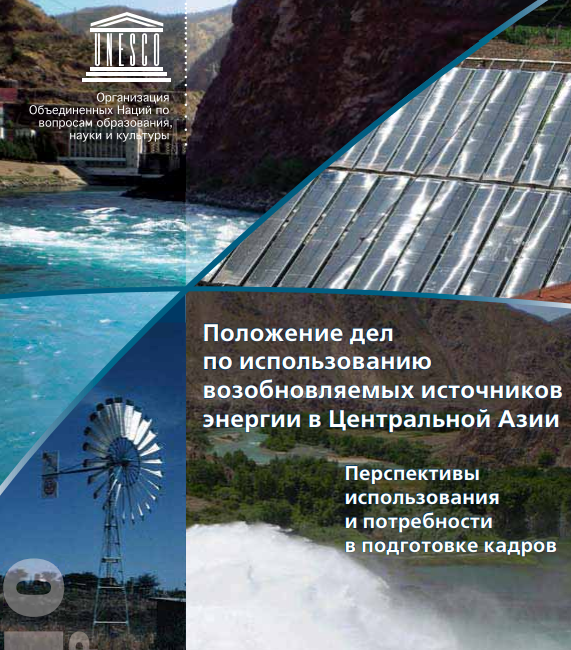 The State of Affairs on the Use of Renewable Energy Sources in Central Asia: Prospects for Use and Training Needs Año de publicación: 2010 Autor corporativo: UNESCO Almaty This review was prepared in 2009 by order of the UNESCO Cluster Office in Almaty by a group of national experts to highlight the situation on the current state of affairs and prospects for the use of renewable energy sources in the Republic of Kazakhstan, the Kyrgyz Republic, the Republic of Tajikistan and the Republic of Uzbekistan based on a questionnaire of interested parties, studying documents of international projects and other open literature sources. When preparing the review, the goal was to explore not so much the technical potential of the Central Asian countries in the field of renewable energy development, but rather to clarify the position of stakeholders in their development, and their readiness to pursue environmentally acceptable policies. Положение дел по использованию возобновляемых источников энергии в Центральной Азии: Перспективы использования и потребности в подготовке кадров Año de publicación: 2010 Autor corporativo: UNESCO Almaty Настоящий обзор был подготовлен в 2009 по заказу Кластерного бюро ЮНЕСКО в г. Алматы группой национальных экспертов для освещения ситуации по текущему состоянию дел и перспективам использования возобновляемых источников энергии в Республике Казахстан, Кыргызской Республике, Республике Таджикистан и Республике Узбекистан на основе анкетирования заинтересованных сторон, изучения документов международных проектов и других открытых литературных источников. При подготовке обзора стояла цель исследовать не столько технический потенциал стран ЦА в области развития ВИЭ, сколько прояснить позицию заинтересованных сторон в их развитии, их готовность к проведению экологически приемлемой политики.