
Recursos
Exploren una amplia gama de recursos valiosos en GCED para profundizar su comprensión y promover su búsqueda, incidencia, enseñanza y aprendizaje.
3,433 resultados encontrados
 Is every child counted? Status of data for children in the SDGs Año de publicación: 2017 Autor corporativo: United Nations Children's Fund (UNICEF) “Is every child counted”, a recent status report by UNICEF, shows that sufficient data are available for less than half of child-related SDG indicators. Many indicators, such as those on poverty and violence, are not comparable across countries, and are either too limited or of poor quality, leaving governments without the information they need to accurately address challenges facing millions of children, or to track progress towards achieving the Goals. Data are also very limited on the situation of the most disadvantaged populations within each country. Better disaggregated data on these populations is necessary. The report also identifies priorities for enhancing the collection, analysis and use of data for children.
  Is every child counted? Summary of the status of data for children in the SDGs Año de publicación: 2017 Autor corporativo: United Nations Children's Fund (UNICEF) “Is every child counted”, a recent status report by UNICEF, shows that sufficient data are available for less than half of child-related SDG indicators. Many indicators, such as those on poverty and violence, are not comparable across countries, and are either too limited or of poor quality, leaving governments without the information they need to accurately address challenges facing millions of children, or to track progress towards achieving the Goals. Data are also very limited on the situation of the most disadvantaged populations within each country. Better disaggregated data on these populations is necessary. The report also identifies priorities for enhancing the collection, analysis and use of data for children.
  A Review of Education for Sustainable Development and Global Citizenship Education in Teacher Education Año de publicación: 2017 Autor: Douglas Bourn, Frances Hunt, Phil Bamber Autor corporativo: University College London. Institute of Education This paper has been produced to inform UNESCO in its preparation for the 2017 Global Education Monitoring Report (GEM) Report. Its purpose is to examine the current preparation of teachers in Education for Sustainable Development (ESD) and Global Citizenship Education (GCED) as outlined in the Sustainable Development Goal (SDG) target 4.7.The literature for this study is based on looking not only at material that makes direct reference to ESD and GCED, but also broader themes that have a potential bearing on these areas such as a sense of global, social and environmental responsibility and a commitment to social justice.In this paper teacher education includes the initial and in-service continuing professional development (CPD) of teachers.
  Message from Ms Audrey Azoulay, Director-General of UNESCO, on the occasion of World Environment Day, 5 June 2018 Año de publicación: 2018 Autor corporativo: UNESCO. Director-General, 2017-2025 (Azoulay, A.) This message was delivered by Audrey Azoulay, Director-General of UNESCO, on the occasion of World Environment Day, on 5 June 2018. 联合国教科文组织总干事奥德蕾·阿祖莱 世界环境日致辞:“塑战速决” Año de publicación: 2018 Autor corporativo: UNESCO. Director-General, 2017-2025 (Azoulay, A.) 2018年6月5日, 联合国教科文组织总干事奥德蕾·阿祖莱世界环境日致辞
 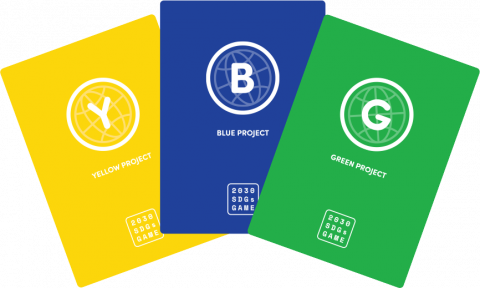 2030 SDGs GAME Año de publicación: 2016 Autor corporativo: Imacocollabo The 2030 SDGs Game is a multiplayer, in-person, card-based game that simulates taking the “real world” into the year 2030. Designed in Japan in 2016, this experience has become a powerful and impactful social phenomenon in Japan, earning extensive media coverage and reaching over 12,000 participants last year. 2030 SDGs Game events are held in corporate, governmental, educational, and community settings, and now has over 100 trained facilitators in a rapidly growing community within Japan. Now, due to a growing demand to bring the game to the rest of the world, we have created an English edition and are beginning to introduce it to a wider audience overseas. The game is designed to be played with anywhere from 5 to 50 players. (That number can be expanded to a maximum of around 200 with multiple parallel ‘worlds’ operating at the same time.) Play time is approximately 1 hour; with the necessary explanation and reflection afterward, it requires a minimum of 90 minutes, and generally works best in a 2 ½ hour time frame.
  International Environmental Politics and Critical Approach to Global Citizenship Education Año de publicación: 2017 Autor: Zheng Fuxing The research and practice of global citizenship education have thrived since 1990s, but the effectiveness of global citizenship education is limited. The research cannot avoid the problematic premise of the possibility of global citizenship education. The identity predicament of global citizen and alienation of local implementing make probability of the global citizenship education problematic. The practial predicament of the global citizenship education maninfest5s that the nation state is the key factor of policy implementation. Environmental question, which is about global common good, attracts the attention from the government of most of nations, and becomes the good case for exploring the feasibility of global citizenship education. Environmental politics explain the inequality and injustice in the globally enviromental governance which made the global citizenship education critical. The critical ecopedagogy becomes the new form of global citizenship. The practice of the global citizenship education becomes viable by hybrid activism generated by dialectical movement between local and global in the limit of nation-state. 国际环境政治与全球公民教育的批判路径 Año de publicación: 2017 Autor: Zheng Fuxing 自20世纪90年代以来,全球公民教育研究和实践蓬勃发展,然而全球公民教育实践的效果很有限。对于全球公民教育的探讨不能回避“全球公民教育如何可能”这一前提性问题。“全球公民”身份推衍困境、“在地实施”的“异化”后果让全球公民教育实施的可能性成为问题。环境问题既是一个“全球共同利益”问题,也是各国政府关心的问题,为解答“全球公民教育何以可能”提供了较好的切入点。国际环境政治解释了全球环境治理中发展中国家与发达国家的不合作与不平等状况。以全球环境问题及其治理作为教育内容,全球公民教育具有批判性。批判的生态教育学成为全球公民教育的重要实践形态。在既有的国家边界限制下,批判的生态教育学通过全球与在地的混合行动,让全球公民教育获得了一种新的可能性。
  تقرير أهداف التنمية المستدامة 2017 Año de publicación: 2017 Autor corporativo: United Nations (UN) يستعرض تقرير أهداف التنمية املستدامة لعام 2017 التقدم المحرز نحو تحقيق الأهداف السبعة عشر في السنة الثانية من تنفيذ خطة التنمية المستدامة لعام 2030 .ويستند التقرير إلى أحدث البيانات المتاحة. وهو يسلط الضوء على المكاسب والتحديات في الوقت الذي يتحرك فيه المجتمع الدولي صوب تحقيق الطموحات والمباديء التي تبناها في خطة عام 2030.
  Learning-service and Citizenship Education Año de publicación: 2011 Autor: Josep M.ª Puig Rovira | Mònica Gijón Casares | Xus Martín García | Laura Rubio Serrano Autor corporativo: Universidad de Barcelona The aim of this article is to present the methodology of service learning as an especially significant contribution to citizenship education. Service learning is an activity that combines community service and curricular learning. It is an educational setup in which a circular link is formed between participation in services created to meet a community need and the learning of knowledge and values. The project presents an initiative for education in values and citizenship based on experience, participation and critique. Service learning is at the same time an excellent instrument for making education more inclusive and for helping students develop a set of basic skills that can only be acquired through a comprehensive, contextualized activity. Through service learning, students acquire a real, committed engagement with the search for the common good; this acquisition of commitment is a key formative mechanism in achieving a complete education for citizenship. The article begins by analyzing the different elements that make up citizenship education and the pedagogical means required for their acquisition. The concepts of ‘practice’ and ‘citizenship practice’ are the basis for proposing service learning as an ideal methodology for educating participative citizens who can contribute to the common good. The rest of the article is devoted to analyzing each of the constitutive aspects of service learning. This portion of the article begins by presenting a more-precise definition of ‘service learning’ and continues with an analysis of the components of service learning: social needs, the learning of contents and competences, community service, partnerships between institutions and the required networking. The article concludes by reviewing the different levels at which service learning has an impact and identifying and organizing the various personal acquisitions and institutional achievements that this type of educational activity provides.