
Recursos
Exploren una amplia gama de recursos valiosos en GCED para profundizar su comprensión y promover su búsqueda, incidencia, enseñanza y aprendizaje.
3,225 resultados encontrados
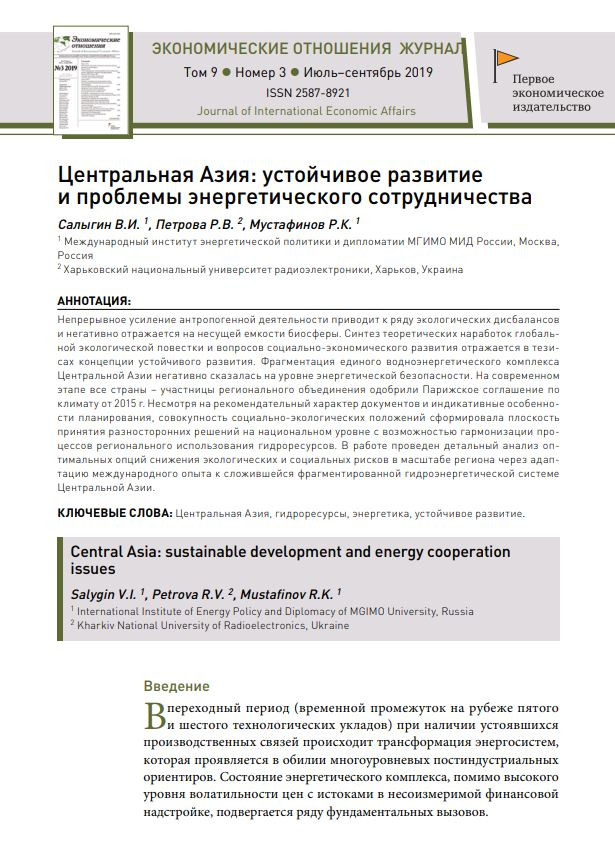 Центральная Азия: устойчивое развитие и проблемы энергетического сотрудничества Año de publicación: 2019 Autor: Salygin V.I. | Petrova R.V. | Mustafinov R.K. Непрерывное усиление антропогенной деятельности приводит к ряду экологических дисбалансов и негативно отражается на несущей емкости биосферы. Синтез теоретических наработок глобальной экологической повестки и вопросов социально-экономического развития отражается в тезисах концепции устойчивого развития. В работе проведен детальный анализ оптимальных опций снижения экологических и социальных рисков в масштабе региона через адаптацию международного опыта к сложившейся фрагментированной гидроэнергетической системе Центральной Азии.
 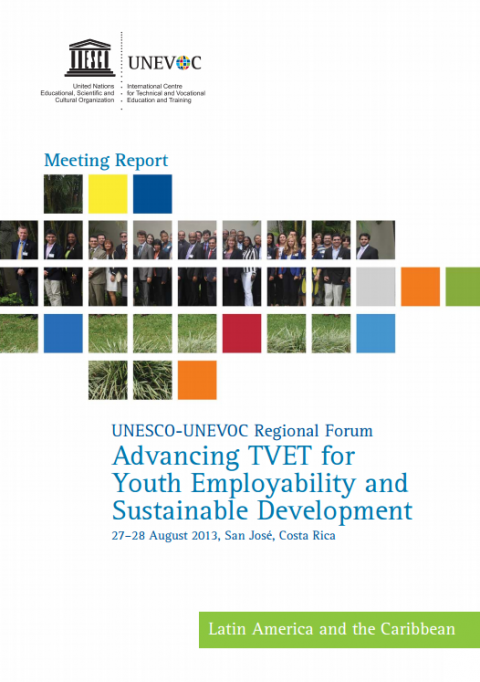 UNESCO-UNEVOC regional forum: advancing TVET for youth employability and sustainable development, Latin America and the Caribbean, 27-28 August 2013, San José, Costa Rica; meeting report Año de publicación: 2013 Autor corporativo: UNESCO International Centre for Technical and Vocational Education and Training (UNEVOC) The Regional Forum of UNEVOC centres in Latin America and the Caribbean (LAC) presented in this report was one of a series of activities aiming to strengthen global and regional harmonization for the advancement of TVET transformation through the capacities of UNEVOC’s unique global network of specialized TVET institutions and affiliated partners, following the UNESCO Third International Congress on Technical and Vocational Education and Training (TVET) that took place in China in May 2012. The Forum also provided the opportunity to present evidence on the two priority thematic areas for UNESCO-UNEVOC for 2013, Youth and Skills and Greening TVET. This was achieved through the presentation and discussion of several promising practices in these two areas. UNESCO-UNEVOC forum régional: Promouvoir l'EFTP pour l'employabilité des jeunes et le développement durable, en Amérique latine et dans les Caraïbes, 27-28 Août 2013, San José, Costa Rica; rapport de la réunion Año de publicación: 2013 Autor corporativo: UNESCO International Centre for Technical and Vocational Education and Training (UNEVOC) Le Forum régional des centres UNEVOC en Amérique latine et dans les Caraïbes (ALC), présenté dans le présent rapport fait partie d'une série d'activités visant à renforcer l'harmonisation mondiale et régionale pour la promotion de la transformation de l'EFTP à travers les capacités de réseau mondial unique de UNEVOC de l'EFTP spécialisée institutions et partenaires affiliés, suite à l'UNESCO Troisième Congrès international sur l'enseignement technique et professionnel et de la formation (EFTP) qui a eu lieu en Chine en mai 2012. le Forum a également été l'occasion de présenter des preuves sur les deux domaines thématiques prioritaires pour l'UNESCO-UNEVOC pour 2013, la jeunesse et les compétences et l'écologisation de l'EFTP. Ceci a été réalisé grâce à la présentation et à la discussion de plusieurs pratiques prometteuses dans ces deux domaines.
  Green Pack Año de publicación: 2013 Autor corporativo: Regional Environmental Center for Central and Eastern Europe Inspired by the political process “Environment for Europe”, in 2000 the Regional Environmental Center for Central and Eastern Europe (REC) launched a programme on education for sustainable development (ESD), sponsored by Toyota. This included the development and introduction of an innovative multimedia educational kit, the Green Pack, for school teachers and their students in Central and EasternEurope. Other ESD tools similar to the Green Pack have been developed and introduced in recent years to address different target groups. Currently, the main group of REC ESD tools includes:Green Pack, aimed at children aged between 11 and 15 and their teachersGreen Pack Junior, aimed at children aged between 7 and 10 and their teachersGreen Steps, aimed at citizens and families After 14 years of project implementation, REC ESD materials have been introduced in 19 countries in Europe and Asia. Since the Green Pack launch in 2001, around 40,000 teachers and over 4.5 million students have been educated, fundamentally changing the way in which the teaching of sustainability is approached. Each project has been developed in cooperation with businesses, governments, professional organisations and NGOs in order to foster community support across a broad spectrum of society. Many donors from the international, governmental, business and private communities have supported this process. URL:http://www.greenpackonline.org/english/menu.html Проект Зеленый покет Año de publicación: 2013 Autor corporativo: Regional Environmental Center for Central and Eastern Europe Регионaльный экологический центр для Центрaльной и Восточной Европы при поддержке Прогрaммы грaнтов в облaсти окружaющей среды «Тойоты» и Министерствa окружaющей среды Финляндии в 2000 году запустили программу по образованию в интересах устойчивого развития (ОУР), спонсируемой Toyota. Это включало разработку и внедрение инновационного мультимедийного образовательного набора «Зеленый пакет» для школьных учителей и их учеников в Центральной и Восточной Европе. В последние годы были разработаны и внедрены другие инструменты ОУР, аналогичные Green Pack, для охвата различных целевых групп. После 14 лет реализации проекта материалы ОЭЗ РЭЦ были внедрены в 19 странах Европы и Азии. Со времени запуска Green Pack в 2001 году было обучено около 40 000 учителей и более 4,5 миллионов студентов, что коренным образом изменило подход к обучению устойчивости. Каждый проект был разработан в сотрудничестве с предприятиями, правительствами, профессиональными организациями и НПО в целях содействия поддержке общин в широком спектре общества. Многие доноры из международных, правительственных, деловых и частных сообществ поддержали этот процесс. URL:http://education.rec.org/ru/main.php?lang=ru
 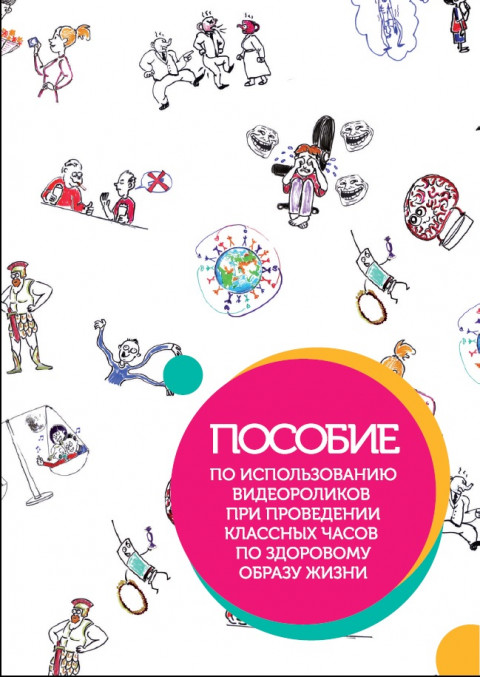 Development of classroom hour for a healthy lifestyle for students of 6-11 grades: Methodical guide for teachers Año de publicación: 2014 Autor corporativo: UNESCO Institute for Information Technologies in Education (IITE) | Joint United Nations Programme on HIV/AIDS (UNAIDS) This manual has been developed to help pedagogical workers of educational institutions (class teachers, subject teachers) to conduct class hours in a healthy lifestyle using educational videos on the following basic topics: (1) the characteristics of adolescence, (2) the concept of "gender ", “Gender” and “gender equality”, (3) prevention of the consumption of psychoactive substances, (4) decision making and resistance to peer pressure, (5) love and sexual relations, (6) reproductive health and contraception, (7) HIV prevention, (8) interpersonal relationships and conflict resolution, (9) trolling and cyberbulling. Пособие по использованию видеороликов при проведении классных часов по здоровому образу жизни для учащихся 6-11 классов. Методическое руководство для учителей Año de publicación: 2014 Autor corporativo: Институт ЮНЕСКО по информационным технологиям в образовании (ИИТО) | Объединенная программа ООН по ВИЧ/СПИДу (ЮНЭЙДС) Данное пособие разработано в помощь педагогическим работникам общеобразовательных организаций (классным руководителям, учителям-предметникам) для проведения классных часов по здоровому образу жизни с использованием образовательных видеороликов по следующим базовым темам: (1) особенности подросткового возраста, (2) понятия «пол», «гендер» и «гендерное равенство», (3) профилактика потребления психоактивных веществ, (4) принятие решения и противостояние давлению со стороны сверстников, (5) любовь и сексуальные отношения, (6) репродуктивное здоровье и контрацепция, (7) профилактика ВИЧинфекции, (8) межличностные отношения и разрешение конфликтов, (9) троллинг икибербуллинг.
 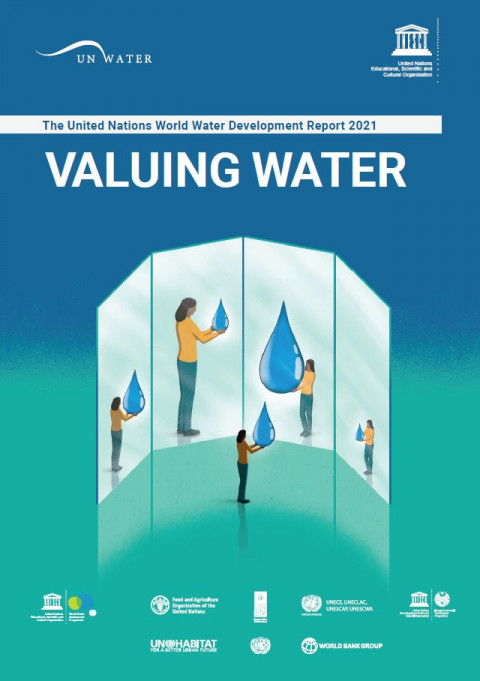 The United Nations World Water Development Report 2021: Valuing Water Año de publicación: 2021 Autor corporativo: UNESCO World Water Assessment Programme (WWAP) The 2021 edition of the United Nations World Water Development Report focuses on valuing water. There is enough water for all provided we use and manage it efficiently. But we don’t. We invest too little, and ineffectively. We use too much water, creating scarcities. Quality is suffering and so is the environment.The value we place on water varies, depending upon who is using it, and why. Value can be a guide to what our goals should be, what actions are needed, and where we should invest. Many of our problems arise because we don’t value water highly enough; all too often water is not valued at all.This report explains various approaches to valuing water for environmental considerations, water-related infrastructure, drinking water, sanitation and hygiene. It looks at valuation issues in food and agriculture, business, industry, energy and financing. And it highlights the perspectives of different value systems and cultures, and associated social and gender-based considerations.
 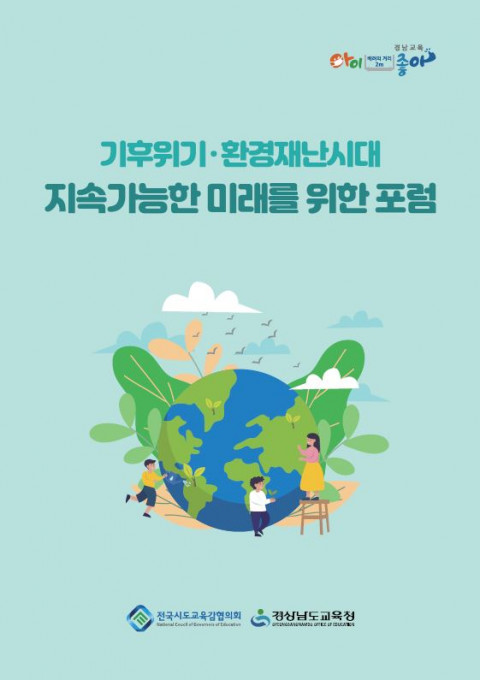 기후위기·환경재난시대 지속가능한 미래를 위한 포럼: 자료집 Año de publicación: 2020 Autor corporativo: 전국시도교육감협의회 | 경상남도교육청 2020년 9월 3일 전국시도교육감협의회와 경상남도교육청이 공동 주최한 「기후위기·환경재난시대 지속가능한 미래를 위한 포럼」의 자료집으로 기후변화에 따른 기후위기와 환경재난시대에 지속가능한 학교환경교육 활성화 기반 마련을 위해 학교교육의 대전환과 미래교육으로서의 환경교육 등에 대해 논의하였다. [출처: 전국시도교육감협의회 홈페이지 > 정보마당 > 정책자료실]
  A New Era of Social Justice: International Labour Conference, 100th Session, 2011 Año de publicación: 2011 Autor corporativo: International Labour Organization (ILO) This report specifically presents to the conference what the Director believes are the fundamental problems the ILO faces as it oversees a century of its inception in 2019. These problems are the remnants of an ineffective growth pattern that has increased inequality around the world over the past 30 years. The mission of the organization is to continue to work together to develop effective responses to these challenges - within the ILO itself, with national bodies such as governments, employers and workers, and through ILO cooperation with others.