
Recursos
Exploren una amplia gama de recursos valiosos en GCED para profundizar su comprensión y promover su búsqueda, incidencia, enseñanza y aprendizaje.
1,447 resultados encontrados
 2021 대한민국 SDG4 이행현황 보고서 Año de publicación: 2022 Autor corporativo: 유네스코한국위원회 본 자료는 2021년 한 해동안 대한민국의 SDG 4 이행 노력을 기록하고, SDG 4 모니터링과 이행촉진을 강화하는데 목적이 있다.
  Dossier pédagogique 2022: S’informer pour comprendre le monde Año de publicación: 2021 Autor corporativo: Centre pour l’éducation aux médias et à l’information (CLEMI) | Réseau Canopé Le dossier pédagogique 2022 a pour thème pour la deuxième année consécutive: «S'informer pour comprendre le monde». Un thème qui illustre la diversité des thématiques que peut embrasser l’Éducation aux médias et à l’information : des modalités de la liberté d’expression et de l’expression médiatique des élèves au décryptage des communications politiques, de la modération des réseaux sociaux à la compréhension des représentations visuelles des données chiffrées. Un focus particulier est aussi mis sur la production médiatique : lire l’info, parvenir à en comprendre son fonctionnement et ses modalités, de façon fine, est une compétence qui se développe à l’école par une pédagogie active. Il s’agit de proposer aux élèves de fabriquer eux-mêmes de l’information : en écrivant, filmant, photographiant, enregistrant des textes, des images et des sons pour mettre en forme des contenus traitant de l’actualité du monde ou de la classe.
  A Brief Overview of Civil Society in the Kyrgyz Republic Año de publicación: 2011 Autor corporativo: Asian Development Bank (ADB) With a view to strengthening ADB cooperation with civil society organizations (CSOs), the NGO and Civil Society Center periodically prepares reports on the context for CSO activities in various developing countries in Asia and the Pacific. These studies contribute to awareness of the important role that CSOs play in promoting development across the Asia-Pacific region. Краткий обзор гражданского общества в Кыргызской республике Año de publicación: 2011 Autor corporativo: Asian Development Bank (ADB) С целью укрепления сотрудничества АБР с организациями гражданского общества (ОГО), Центр НПО и гражданского общества периодически готовит отчеты о контексте деятельности ОГО в различных развивающихся странах Азиатско-Тихоокеанского региона. Эти исследования способствуют повышению осведомленности о важной роли, которую играют ОГО в содействии развитию в Азиатско-Тихоокеанском регионе.
  The EU Education Initiative in Central Asia Año de publicación: 2010 Autor: Peter Jones This report will examine: 1) the selective and limited experiences and expertise offered by the EU to its partners in Central Asia; 2) the content, processes, and relevance of the contents, processes, and the Education Initiative; 3) the balance achieved between regional and bilateral approaches; and 4) The validity of the EU's approach, taking into account the different needs Central Asian countries. Образовательная Инициатива ЕС в Центральной Азии Año de publicación: 2010 Autor: Peter Jones Данный доклад рассмотрит: 1) выборочный и ограниченный опыт и знания, предложенные Евросоюзом его партнерам в Центральной Азии; 2) содержание, процессы и значимость Образовательной Инициативы; 3) равновесие, достигнутое между региональными и двусторонними подходами и 4) обоснованность подхода ЕС с учетом различных потребностей стран Центральной Азии.
  Citizenship and Civics: Learn From These Young Senegalese Leaders Año de publicación: 2020 Autor corporativo: Vibe Radio Senegal This is a video of young Senegalese leaders presenting on Citizenship and civics. La citoyenneté et le civisme: Apprenez de ces jeunes leaders sénégalais Año de publicación: 2020 Autor corporativo: Vibe Radio Senegal C'est une vidéo de jeunes leaders sénégalais présentant sur Citoyenneté et civisme.
 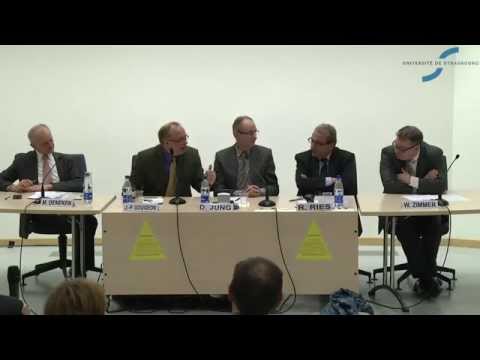 Conference-Debate: Can Citizenship Be Taught? Año de publicación: 2015 Autor corporativo: University of Strasbourg At the initiative of the Faculty of Law, Political Science and Management, this conference/debate brings together: Roland Ries, Mayor of Strasbourg; Jacques-Pierre Gougeon, rector of the Academy of Strasbourg, chancellor of universities; Michel Deneken, 1st vice-president of the University of Strasbourg; Willy Zimmer, professor of public law;Dominique Jung, editor-in-chief of Latest News from Alsace (moderator). Conférence-débat: La citoyenneté peut-elle être enseignée? Año de publicación: 2015 Autor corporativo: University of Strasbourg À l'initiative de la Faculté de droit, de sciences politiques et de gestion, cette conférence/débat réunit : Roland Ries, maire de Strasbourg ; Jacques-Pierre Gougeon, recteur de l'académie de Strasbourg, chancelier des universités ; Michel Deneken, 1er vice-président de l'Université de Strasbourg ; Willy Zimmer, professeur de droit public ; Dominique Jung, rédacteur en chef des Dernières nouvelles d’Alsace (modérateur).