
Recursos
Exploren una amplia gama de recursos valiosos en GCED para profundizar su comprensión y promover su búsqueda, incidencia, enseñanza y aprendizaje.
1,405 resultados encontrados
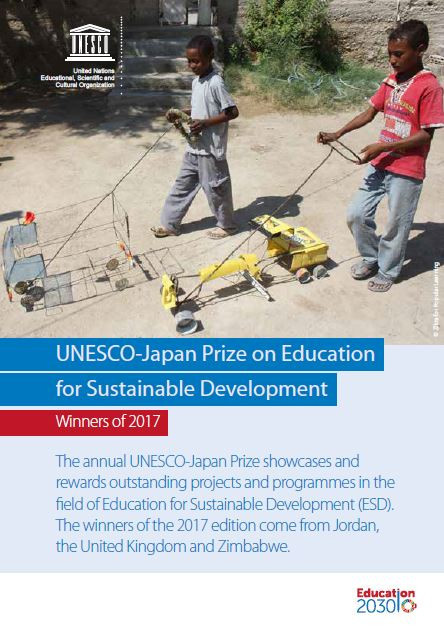 Premio UNESCO-Japon de Educacion para el Desarrollo Sostenible: Galardonados de 2017 Año de publicación: 2017 Autor corporativo: UNESCO En 2017 el Premio UNESCO-Japon llegaba a su tercera edicion. Los galardonados fueron elegidos de entre las mas de 100 candidaturas presentadas por gobiernos de Estados Miembros de la UNESCO y organizaciones no gubernamentales quecolaboran oficialmente con la Organizacion. Tras examinar las candidaturas, un jurado independiente formado por cinco especialistas internacionales en EDS recomendo los tres galardonados a la Directora General de la UNESCO.Este ano se ha concedido el premio a una escuela, una empresa y una organizacion sin animo de lucro que promueven la EDS a escala local, regional y mundial respectivamente: la escuela de primaria Sihlengeni, de la Republica de Zimbabwe; Zikra por el Aprendizaje Popular, del Reino Hachemita de Jordania; y el Proyecto Hard Rain, del Reino Unido de Gran Bretana e Irlanda del Norte. Cada una de estas entidades recibira un premio en metalico de 50,000 dolares estadounidenses.La Directora General de la UNESCO y el Ministro de Educacion del Japon haran entrega del Premio a los tres galardonados en el curso de una ceremonia que tendra lugar en la Sede de la UNESCO (Paris) el 3 de noviembre de 2017, coincidiendo con la celebracion de la 39ª reunion de la Conferencia General.
 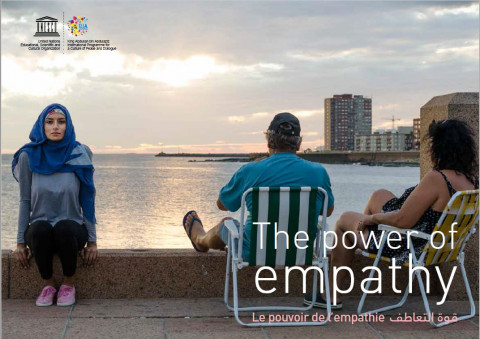 The Power of Empathy Año de publicación: 2017 Autor corporativo: 유네스코 This photobook is a tribute to the power of empathy and solidarity felt and expressed by young people. Its photographs and stories were selected from the response to the global youth contest “If I were…”, launched by UNESCO on social media in Arabic, English, French and Spanish in early 2017. UNESCO received some 837 submissions, from 117 countries, covering a wide variety of issues and experiences.Despite the gravity of the themes addressed in these beautiful pictures, hope emerges from the testaments of the young photographers which demonstrate not only a sensitivity to the situations of “others”, but, moreover, a resolve to help people recover and protect their rights and dignity.
 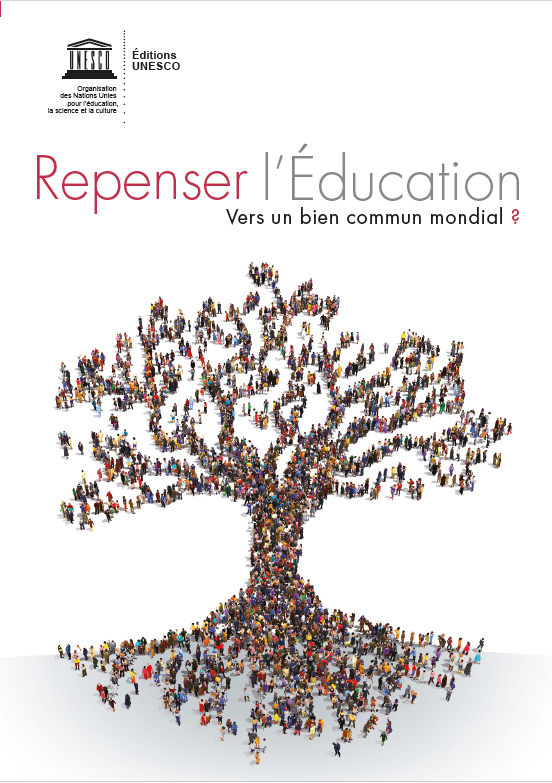 Repenser l'éducation: vers un bien commun mondial? Año de publicación: 2015 Autor corporativo: UNESCO Les changements dans le monde d'aujourd'hui sont caractérisés par de nouveaux niveaux de complexité et de contradiction. Ces changements génèrent des tensions pour lesquelles il est prévu l'éducation pour préparer les individus et les communautés en leur donnant la possibilité d'adaptation et de réponse. Cette publication contribue à repenser l'éducation et l'apprentissage dans ce contexte. Elle se fonde sur l'une des principales tâches de l'UNESCO comme un observatoire mondial de la transformation sociale dans le but de stimuler le débat sur les politiques publiques. Il est un appel au dialogue entre tous les intervenants. Il est inspiré par une vision humaniste de l'éducation et du développement, fondée sur le respect de la vie et la dignité humaine, l'égalité des droits, la justice sociale, la diversité culturelle, la solidarité internationale et la responsabilité partagée pour un avenir durable. Ce sont les fondements de notre humanité commune. Ce livre améliore la vision fournie par les deux publications de point de repère de l'UNESCO: Apprendre à être: Le monde de l'éducation aujourd'hui et demain (1972), le «Rapport Faure», et l'apprentissage: Le trésor est caché dedans (1996), le «Rapport Delors».
 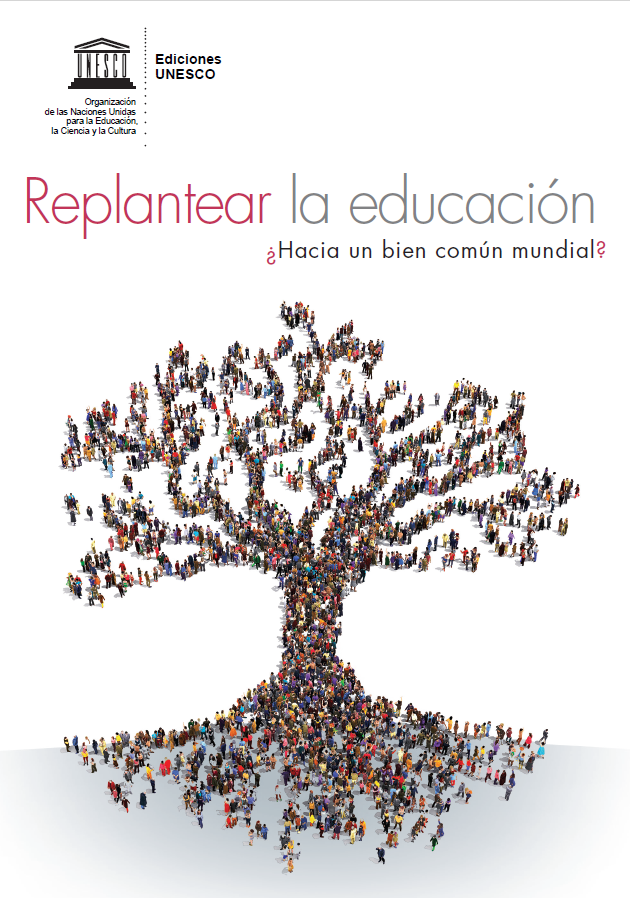 Replantear la educación: ¿Hacia un bien común mundial? Año de publicación: 2015 Autor corporativo: UNESCO Los cambios del mundo actual se caracterizan por niveles nuevos de complejidad y contradicción. Estos cambios generan tensiones para las que la educación tiene que preparar a los individuos y las comunidades, capacitándolos para adaptarse y responder. Esta publicación contribuye a replantear la educación y el aprendizaje en este contexto. Parte de una de las tareas principales que tiene encomendada la UNESCO como observatorio mundial de las transformaciones sociales y tiene como objetivo fomentar los debates públicos sobre políticas.Es una llamada al diálogo entre todos los interesados. Se inspira en una concepción humanista de la educación y el desarrollo, basada en el respeto a la vida y a la dignidad humana, la igualdad de derechos, la justicia social, la diversidad cultural, la solidaridad internacional y la responsabilidad compartida de un futuro sostenible. Éstos son los fundamentos de nuestra humanidad común. El presente libro ahonda en la visión que presentaban dos publicaciones memorables de la UNESCO: Aprender a ser: la educación del futuro (1972), el ‘Informe Faure’; y La educación encierra un tesoro (1996), el ‘Informe Delors’.
  Stopping violence in schools: a guide for teachers Año de publicación: 2014 Autor corporativo: UNESCO “Stopping Violence in Schools: A Guide for Teachers” examines various forms of violence that take place in schools, and offers practical suggestions as to what teachers can do to prevent them. Ten action areas are proposed, each with specific examples that teachers can adapt to address and prevent violence. Excerpts from relevant international normative instruments as well as a list of links to online resources for stopping violence in schools are annexed at the end of the book. En finir avec la violence à l'école: guide à l'intention des enseignants Año de publicación: 2014 Autor corporativo: UNESCO “Stopping Violence in Schools: A Guide for Teachers” examines various forms of violence that take place in schools, and offers practical suggestions as to what teachers can do to prevent them. Ten action areas are proposed, each with specific examples that teachers can adapt to address and prevent violence. Excerpts from relevant international normative instruments as well as a list of links to online resources for stopping violence in schools are annexed at the end of the book. Poner fin a la violencia en la escuela: guía para los docentes Año de publicación: 2014 Autor corporativo: UNESCO “Stopping Violence in Schools: A Guide for Teachers” examines various forms of violence that take place in schools, and offers practical suggestions as to what teachers can do to prevent them. Ten action areas are proposed, each with specific examples that teachers can adapt to address and prevent violence. Excerpts from relevant international normative instruments as well as a list of links to online resources for stopping violence in schools are annexed at the end of the book. Как остановить насилие в школе. Пособие для учителей Año de publicación: 2014 Autor corporativo: Организация Объединенных Наций по вопросам образования, науки и культуры (UNESCO) Пособие для учителей «Как остановить насилие в школе» — это вклад ЮНЕСКО в поддержку программы «Образование для всех» и объявленного ООН Международного десятилетия культуры мира и ненасилия в интересах детей планеты (2001–2011). Педагоги и учащиеся могут использовать это пособие для противостояния насилию в школе и его предотвращения. Школьное насилие чрезвычайно сложная проблема, и при ее решении необходимо учитывать самые разные факторы. Такой комплексный подход предполагает участие самих школьников; привлечение родителей, преподавателей и местных жителей; взаимосвязь политики, законодательства и практики; определение индикаторов насилия и следование принципам соблюдения прав человека с учетом их универсального характера и культурных традиций.
  A Guide for ensuring inclusion and equity in education Año de publicación: 2017 Autor corporativo: UNESCO As countries seek to strengthen their national educational systems, finding ways of including all learners and ensuring that each individual has an equal opportunity for educational progress remain major challenges. This guide is intended to support countries in embedding inclusion and equity in educational policy. The ultimate objective is to create system-wide change for overcoming barriers to quality educational access, participation, learning processes and outcomes, and to ensure that all learners are valued and engaged equally.
  Global Citizenship Education: Preparing Learners for the Challenges of the 21st Century Año de publicación: 2014 Autor corporativo: UNESCO The United Nations Secretary-General’s Global Education First Initiative (GEFI) has established education as a means to ‘foster global citizenship’ – one of its three priority areas. To support this, UNESCO organized two landmark meetings on GCE in 2013. This publication aims to define the parameters of GCE by using the collective expertise, experience and wisdom of those participants who gathered at these landmark events, and to plan for future action in line with emerging thinking and other ongoing work. The review establishes that GCE has a critical role to play in equipping learners with competencies to deal with the dynamic and interdependent world of the twenty-first century. While GCE has been applied in different ways in different contexts, regions and communities, it has a number of common elements, which include fostering in learners. In formal settings, GCE can be delivered as an integral part of an existing subject (such as civic or citizenship education, social studies, environmental studies, geography or culture), or as an independent subject area. Integrated models appear to be more common. Some less traditional, but at least as effective, pathways for GCE have included the following: the use of information and communication technologies and social media, sport competitions and the use of art and music, and youth-led initiatives employing a wide variety of approaches. Both traditional and new horizons for GCE are profiled in this review. This publication also explores a number of enabling conditions for the promotion and implementation of GCE. These include: the existence of an open environment for universal values, the implementation of transformative pedagogy and support for youth-led initiatives.The review acknowledges that there are a number of ongoing tensions with the concepts of global citizenship and global citizenship education. While these tensions vary, they all point to the fundamental question of how to promote universality (e.g. common and collective identity, interest, participation, duty), while respecting singularity (e.g. individual rights, self-improvement). Some ways forward to resolve these tensions are suggested, whilst maintaining that challenges around theoretical elements of GCE should not undermine its practice. The processes documented in this publication have strengthened partnerships, built coalitions and contributed to improving the evidence base on the theory and practice of global citizenship education. While there are tasks that remain, this foundation bodes well for improving the enabling conditions and the practices highlighted in this review. By preparing learners to fulfil their potential in an increasingly globalized world, we are promoting transformed societies that are also better equipped to deal with the twenty-first century challenges and to seize twenty-first century opportunities.