
Recursos
Exploren una amplia gama de recursos valiosos en GCED para profundizar su comprensión y promover su búsqueda, incidencia, enseñanza y aprendizaje.
882 resultados encontrados
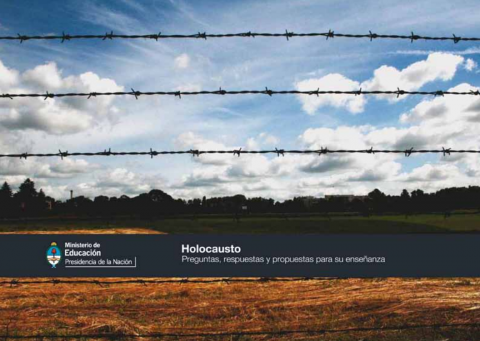 Holocauste: questions, réponses et propositions pour l'enseignement Año de publicación: 2010 Autor corporativo: Argentina. Ministerio de Educacion Cette publication, publiée par le «Education et Mémoire » département du Ministère de l'Education Nationale de l'Argentine, est un document à réfléchir, débattre et discuter de certaines des questions relatives à l'enseignement de l'Holocauste.
  Educating Students about the Holocaust: A Survey of Teaching Practices More than half a century has passed since the horrific events of the Holocaust took place, but images of the state-sponsored, systematic persecution and annihilation of European Jewry by Nazi Germany are no less shocking than they were 60 years ago. Any discussion of the Holocaust inevitably leads to questions of not only how and why this event occurred in the modern era but, more importantly, how the legacy of the Holocaust can continue to raise international awareness of human rights abuses and genocide. One way of achieving this awareness is by providing holocaust education to the nation's young people. While this objective has obtained widespread support, there has been an absence of reliable nationwide information on how the Holocaust is actually taught in U.S. schools. This article attempts to fill that gap by presenting the results of a yearlong study commissioned by the United States Holocaust Memorial Museum of teaching practices in Holocaust education in the nation's secondary public schools in 2003-04. The study assessed secondary teaching practices in middle and high schools in the field of Holocaust education, and investigated teachers' rationales for teaching about the Holocaust. (By the publisher)
  The layering of knowledge, memory, and understanding. Using Berlin’s ‘Places of Remembrance’ memorial to teach about the Holocaust Carson Phillips offers detailed and specific suggestions for teaching about the Berlin memorial described in Pnina Rosenberg’s essay (pp. 90–96), along with extended learning opportunities that feature contemporary encounters with, and the meaning of, that and two additional exhibits. “This educational unit,” he writes, “is designed to develop the critical thinking skills of students, to elucidate the complexities of the Holocaust, and to examine the range of human responses to it.” An invaluable aid for educators is the appendix with the text of decrees originally imposed between 1933 and 1945. (By the publisher) United States Holocaust Memorial museum The website of the United States Holocaust Memorial Museum has extensive in-depth historical information about the Holocaust. It provides easy access to primary source documents, including photographs and maps that deal with the Holocaust. It also has broad information on genocide and mass atrocities.
  Mémorial de la Shoah - Musée, Centre de documentation juive contemporaine The Shoah Memorial provides access to various resources on the Holocaust, mostly in French.
 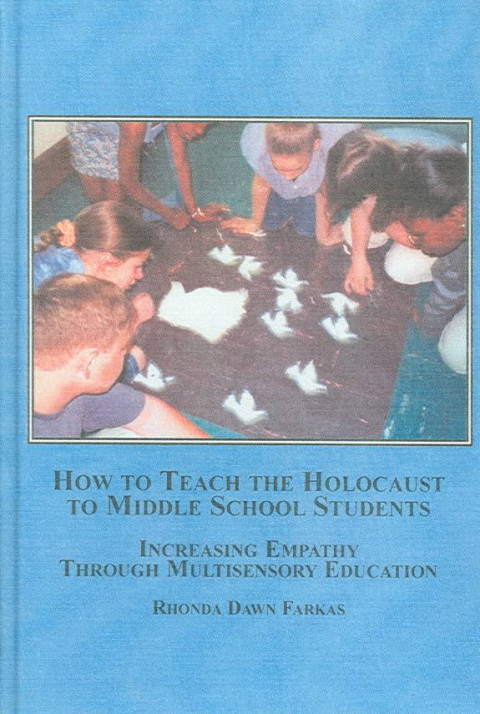 How to teach the Holocaust to Middle School Students : Increasing Empathy Through Multisensory Education This study examines the relationships among seventh-grade students' achievement scores, attitudes toward instructional approaches, empathy scales, and the transfer of skills between traditional versus multisensory education. The Learning Style Inventory (LSI) was employed to determine learning-style preferences. The data collected in this study was subjected to statistical analyses, supporting the use of a multisensory, rather than a traditional, approach for teaching lessons of the Holocaust. (By the publisher)
 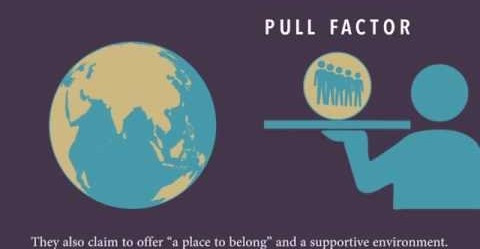 Preventing violent extremism through education Año de publicación: 2016 Autor corporativo: Tim Parry Jonathan Ball Foundation for Peace This UNESCO video illustrates the importance of preventing violent extremism through education. It is based on excerpts from “My Former Life”, produced by the Tim Parry Johnathan Ball Foundation for Peace, based on testimonies of people once engaged in promoting or perpetrating extreme violence. This video also draws attention to some of the drivers of violent extremism, to the role of education in preventing violent extremism and to educational approaches recommended by UNESCO.
 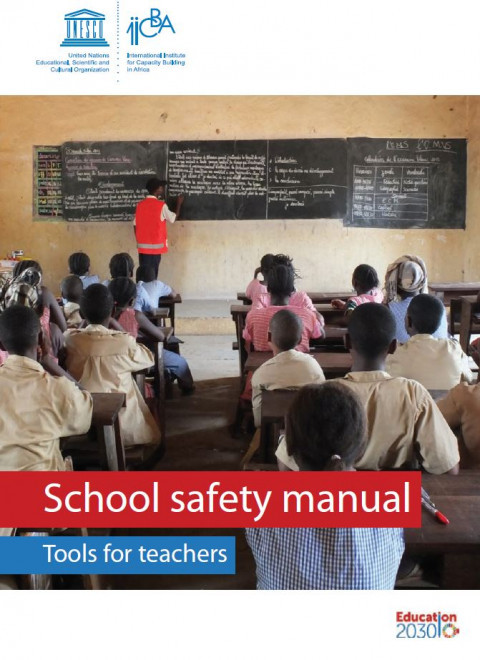 School Safety Manual: Tools for Teachers Año de publicación: 2017 Autor corporativo: UNESCO International Institute for Capacity-Building in Africa (IICBA) This manual was produced as part of the Teacher Training and Development for Peace-building in the Horn of Africa and Surrounding Countries project and aims to introduce teachers to the knowledge and skills needed for the establishment, maintenance and sustainment of basic school safety. As more children are enrolling in school in Africa, creating a safe and peaceful environment must be a top priority of teachers and educational institutions.The responsibility of schools to provide a safe environment for their students has been affirmed in the United Nations (UN) Sustainable Development Goal (SDG) four on Education.
  التصدي لمعدات السامية عن طريق التعليم مبادئ تةجيهية لواضعي السياسات Año de publicación: 2018 Autor corporativo: OSCE. Office for Democratic Institutions and Human Rights (ODIHR) A new UNESCO and OSCE co-publication takes up the challenge of educating learners to resist contemporary anti-Semitism at a time when the issue is becoming ever more crucial around the world. It suggests concrete ways to address anti-Semitism, counter prejudice and promote tolerance through education, by designing programmes based on a human rights framework, global citizenship education, inclusiveness and gender equality.It also provides policymakers with tools and guidance to ensure that education systems build the resilience of young people to anti-Semitic ideas and ideologies, violent extremism and all forms of intolerance and discrimination, through critical thinking and respect for others.
  Lessons learned from Danish and other international efforts on Countering Violent Extremism (CVE) in development contexts Año de publicación: 2015 Autor corporativo: Danish International Development Assistance (DANIDA) Cette étude examine les leçons apprises des efforts danois et des autres acteurs du développement dans la lutte contre l'extrémisme violent (CVE). Ces leçons sont utiles pour l’élaboration de politiques fondées sur des preuves et afin de favoriser une vision partagée de la programmation liée à la CVE dans des contextes de développement.