
Recursos
Exploren una amplia gama de recursos valiosos en GCED para profundizar su comprensión y promover su búsqueda, incidencia, enseñanza y aprendizaje.
3,446 resultados encontrados
 Instructional Strategies for Learning Conflict Resolution Skills in School (Mustansiriyah Journal of Humanities; Vol. 1-1, Special Issue) Año de publicación: 2023 Autor: Haider Kareem Sukar Autor corporativo: Mustansiriyah University The school is a community tool that achieves its educational goals through all behavioral habits that provide students with sound and integrated growth, as well as preparation and adaptation for the future after obtaining success and involvement in government institutions and the economy. In the civilizational scale, so the school must achieve all means of education and an educational philosophy based on foundations with educational entertainment Adolescent children may seek more freedom, power, and complete liberation later on from the authority of parents and others represented by the school, as it is the broader environment after the family that embraces the person, so we see these children doing actions such as abuse of others, violation of order and law, harshness in dealing with others, or rudeness in their behavior with them They may make mistakes and misbehave on purpose even though they know what is right and are able to act well. Therefore, the increasing manifestations of violence, disagreement and conflict in schools have led to an increase in the interest of educators of all positions in the process of learning and teaching students the concepts of human rights and the attitudes of tolerance in general and the skills of resolving differences and conflicts in constructive and positive ways and means. الاستراتيجيات التعليمية لتعلم مهارات حل النزاعات في المدرسة (مجلة المستنصرية للعلوم الإنسانية؛ Vol. 1-1، العدد الخاص) Año de publicación: 2023 Autor: Haider Kareem Sukar Autor corporativo: Mustansiriyah University تعد المدرسة إحدى أدوات المجتمع التي تحقق أهدافه التربوية من خلال جميع العادات السلوكية التي تؤمن للتلاميذ النمو السليم والمتكامل الى جانب الإعداد والتكيف للمستقبل بعد الحصول على النجاح والانخراط في مؤسسات الدولة او مزاولة النشاط الاقتصادي ويتعدى الأمر الى أكثر من ذلك في كثير من الأحيان بحيث يتشكل من خلال التعليم ابرز ملامح المجتمع وتتحدد مكانته في السلم الحضاري، لذا على المدرسة تحقيق جميع ذلك من خلال وسائل وفلسفة تربوية قائمة على أسس معرفية تقوم الجهات التربوية المختصة بتحديدها. وقد يسعى الابناء المراهقون نحو مزيد من الحرية والسلطة والتحرر الكامل فيما بعد من سلطة الوالدين والاخرين الممثلة بالمدرسة كونها البيئة الاوسع بعد الاسرة التي تحتضن الشخص، لذا نرى هؤلاء الابناء يقومون باعمال مثل الاساءة للغير وخرق النظام والقانون والغلظة في التعامل مع غيرهم او الوقاحة في تصرفهم معهم، وقد يرتكبون اخطاء ويسيئون التصرف عن عمد على الرغم من انهم يعرفون الصواب وقادرون على التصرف الحسن. لهذا فقد ادى تزايد مظاهر العنف والخلاف والنزاع في المدارس الى ازدياد اهتمام المربين على اختلاف مراكزهم لعملية تعلم وتعليم التلاميذ لمفاهيم حقوق الانسان واتجاهات التسامح بعامة ومهارات حل الخلافات والنزاعات باساليب وطرائق بناءة وايجابية.
  Improving Mechanisms to Ensure the Achievement of Gender Equality in Uzbekistan Año de publicación: 2024 Autor: Отеев Уразбай | Каражанова Роза Autor corporativo: Наука и инновации This article examines the development of gender equality in Uzbekistan, highlights progress made to date, identifies current challenges, and outlines future paths toward building a more inclusive society. Совершенствование механизмов, обеспечивающих достижение гендерного равенства в Узбекистане Año de publicación: 2024 Autor: Отеев Уразбай | Каражанова Роза Autor corporativo: Наука и инновации В этой статье исследуется развитие гендерного равенства в Узбекистане, освещается достигнутый к настоящему времени прогресс, определяются текущие проблемы и обрисовываются дальнейшие пути построения более инклюзивного общества.
  Children with Disabilities in Europe and Central Asia: A Statistical Overview of Their Well-Being Año de publicación: 2023 Autor corporativo: United Nations (UN) This regional report provides critical evidence for decision-makers across countries to use in both policy and programming. In the context of the Global Disability Inclusion Strategy and Policy, UNICEF in Europe and Central Asia will use this valuable resource to embark on the next level of engagement to give all children with disabilities the opportunity to realize their rights on an equal basis with their peers. Дети с инвалидностью в Европе и Центральной Азии: статистический обзор их благополучия Año de publicación: 2023 Autor corporativo: United Nations (UN) Данный региональный доклад содержит важные фактические данные, которые лица, принимающие решения в разных странах, могут использовать при разработке политических документов и программ. ЮНИСЕФ в Европе и Центральной Азии в контексте Глобальной стратегии и политики по вовлечению людей с инвалидностью будет использовать этот ценный ресурс, чтобы перейти на следующий уровень взаимодействия, дающий всем детям с инвалидностью перспективы реализации своих прав наравне со сверстниками.
  How Are Vocational Institutions Innovating, Evolving and Changing as a Result of COVID-19?: A Study of Practice and Perspectives in Five Countries Año de publicación: 2021 Autor corporativo: British Council As an international problem, Covid-19 requires international cooperation. The social, economic and educational recovery from the pandemic can be enhanced by knowledge transfer and exchange. This research brought together 15 technical and vocational education and training (TVET) institutions from the five countries in the British Council’s I-WORK Programme (Improving Work Opportunities - Relaying Knowledge) to explore innovation, evolution and change stemming from the pandemic. TVET practitioners and leaders from Ghana, India, Malaysia, South Africa and the UK were asked to reflect on five key questions: How are institutional policy and structures likely to change to reflect the changing situation? Is this different for private institutions? What changes are proposed to the curriculum/ occupational areas to reflect the rapidly changing demand and how are they identifying this demand? How will learners get the practical and work-based experience they need and what changes to work- based learning and apprenticeships are needed? What changes are needed to the skills and type of staff in the teaching institution? How can new delivery models and ways of working promote more inclusive practice? The research took place as institutions approached almost a year of adapting their teaching, learning and support to localised lockdowns and the restrictions of the pandemic. The national policy context may have been different in each country, but the research findings pointed to a single conclusion: that across the board, the move to digital learning and teaching had brought benefits, opportunities and challenges that might not otherwise have been realised.
 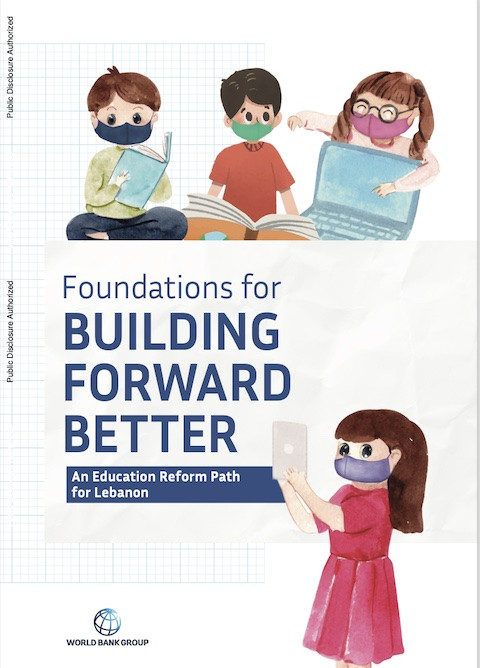 Foundations for Building Forward Better: An Education Reform Path for Lebanon Año de publicación: 2021 Autor corporativo: World Bank Human capital development is a critical determinant of economic growth, equity, and prosperity, but outcomes in this domain are worryingly low inLebanon, risking the future of generations of children. Lebanese children lag behind their peers in human capital development—measured accordingto the World Bank (2020c) Human Capital Index—suggesting that the future productivity of the labor force and the country’s trajectory for equitablegrowth is at risk (World Bank 2020b). The Human Capital Index indicates that children born in Lebanon today will reach, on average, only 52 percentof their potential productivity when they grow up. This is lower than the average estimates for the Middle East and North Africa (MENA) region(57 percent) and upper-middle-income countries (56 percent). Lebanon’s poor performance on the Human Capital Index is largely attributed to theeducation outcomes calculated for the index. If actual years of schooling, which average approximately 10.2 years in Lebanon, are adjusted for actual learning, effective years of schooling are 40 percent less—on average, only 6.3 years of actual learning (World Bank 2020b). The most recent school closures were due to the COVID-19 pandemic, with schools being closed over 75 percent of the school year between January 2020 and February 2021.1 This will likely lead to a further and significant decrease in learning: effectively, students are facing a lost year of learning (Azevedo et al. 2021).
  Education Sector Analysis: Methodological Guidelines (Vol. 3) Año de publicación: 2021 Autor corporativo: UNESCO International Institute for Educational Planning (IIEP) | United Nations Children's Fund (UNICEF) | Global Partnership for Education (GPE) | Foreign, Commonwealth & Development Office (UK) This present volume is the third in a series of education sector analysis (ESA) guidelines following two volumes published in 2014. The series provides methodologies and applied examples for diagnosing education systems and informing national education policies and plans. This volume proposes guidelines to strengthen national capacities in analyzing education systems in four areas: inclusive education system for children with disabilities, risk analysis for resilient education systems, functioning and effectiveness of the educational administration, and stakeholder mapping and problem-driven analysis (governance and political economy).
  التنوع الاثني في العراق : سوسيولوجيا التعدد في الوحدة Año de publicación: 2014 Autor: Rasoul Mutlaq Autor corporativo: Baghdad University تتناول الدراسة ظاهرة التعددية الثقافية في العراق من خلال التركيز عل ثلاثة محاور وهي المفهوم و التكوين الاثني وطرق التخلص من الاختلاف والتمييز العرقي. وتنتهي الدراسة بأن التعددية تنبذ التعصب وأن التعددية في العراق يجب أن تحترم.