
Recursos
Exploren una amplia gama de recursos valiosos en GCED para profundizar su comprensión y promover su búsqueda, incidencia, enseñanza y aprendizaje.
3,446 resultados encontrados
 Ethnic Diversity in Iraq: The Sociology of Pluralism in Unity Año de publicación: 2014 Autor: Rasoul Mutlaq Autor corporativo: Baghdad University This study deals with the phenomenon of multiculturalism in Iraq by focusing on three axes, which are the concept, ethnic composition, and ways to get rid of difference and ethnic discrimination. The study concludes that pluralism rejects intolerance and that pluralism in Iraq must be respected.
  أساليب التنشئة الاجتماعية ودورها في التفاعل الاجتماعي الديمقراطي لدى الأبناء: دراسة ميدانية على عينة من تلاميذ الشق الثاني من التعليم الأساسي بمدينة المرج Año de publicación: 2018 Autor: Nabil Musa | Adel Abdul-Karim Autor corporativo: University of Benghazi محورت الدراسة حول موضوع "أساليب التنشئة الاجتماعية ودورها في التفاعل الاجتماعي الديمقراطي لدى الأبناء" دراسة ميدانية على عينة من تلاميذ الشق الثاني من التعليم الأساسي بمدينة المرج، وانطلقت الدراسة من هدف عام تمثل في التعرف على دور أساليب التنشئة الاجتماعية في التفاعل الاجتماعي الديمقراطي لدى الأبناء، وقد طبقت الدراسة على عينة بلغ قوامها 60 طالبا وطالبة، وبما أن توزيع مفردات العينة تم باتباع إجراءات العينة العشوائية الطبقية النسبة على أربع مدارس تم اختيارها بشكل عشوائي من مجتمع الدراسة؛ إلا أن اختيار مفردات العينة من الأربع مدارس تم من خلال إجراءات العينة العشوائية المنتظمة، وقد اعتمد الباحثان على استمارة المقابلة كأداة لجمع بيانات الدراسة، وبما أن الدراسة التي نحن بصددها تعد من الدراسة الاستكشافية فإنه تم استخدام الجداول الأحادية والنسب المئوية لتحليل معطيات الدراسة، وأسفرت عن الدراسة مجموعة من النتائج أهمها ما يأتي: 1- أكدت الدراسة على وجود مجموعة من الأساليب المتبعة داخل مجتمع الدراسة لتنشئة الأبناء، إلا أن أكثرها انتشارا الأسلوب السلطوي أي الأسلوب الذي يعتمد على العقاب والتهديد في التعامل مع الأبناء، حيث بلغت نسبة 45% من إجمالي الأساليب المتبعة داخل مجتمع الدراسة. 2- أوضحت الدراسة أن 72% من إجمالي أفراد العينة لا تهتم أسرهم بمشاركتهم الفعلية في مناقشة بعض القضايا الخاصة بالأسرة، الأمر الذي قد تترتب عليه نمو نمط الشخصية الإنسحابية التي تتميز بعدم تحمل المسؤولية، وتزداد خطورة هذه النتيجة خاصة إذا عرفنا أن 78% من إجمالي أفراد العينة لا يهتم والديهم بأخذ آرائهم حتى في اقتناء احتياجاتهم الخاصة. Methods of Social Upbringing and Its Role in the Social and Democratic Interaction of Children: A Field Study on a Sample of Second-grade Students of Basic Education in Al-Marj City Año de publicación: 2018 Autor: Nabil Musa | Adel Abdul-Karim Autor corporativo: University of Benghazi The study focused on the subject of "methods of socialization and its role in the social interaction of children." A field study was conducted on a sample of students in the second part of basic education in Al-Marj city. The study was applied to a sample of 60 students. Since the distribution of the sample items was done using the random stratified random sampling procedure, the ratio was randomly selected from the study community. However, the selection of the four sample items was done through The researchers used the questionnaire as a tool to collect the study data. Since the study in question is considered an exploratory study, the single tables and percentages were used to analyze the study data.The study resulted in a number of results, the most important of which are the following: 1. The study confirmed the existence of a set of methods used within the society of the study to raise children. However, the most prevalent is the authoritarian style, which is the method that depends on the punishment and the threat in dealing with children, as it reached 45% of the total methods used within the study community. 2. The study revealed that 72% of the sample members do not care about their families' actual participation in discussing some issues related to the family. This may lead to the growth of the withdrawal personality pattern, which is characterized by irresponsibility. This is especially dangerous if we know that 78% Their parents are not interested in taking their opinions even in acquiring their own needs.
 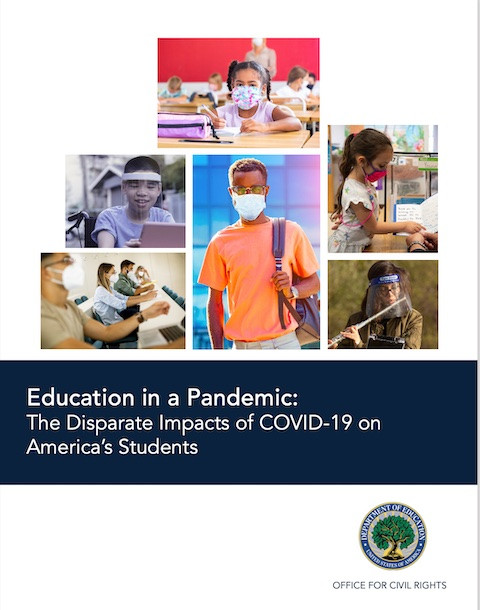 Education in a Pandemic: The Disparate Impacts of COVID-19 on America’s Students Año de publicación: 2021 Autor corporativo: USA. Department of Education. Office for Civil Rights (OCR) The U.S. Department of Education’s Office for Civil Rights published, Education in a Pandemic: The Disparate Impacts of COVID-19 on America’s Students, in response to President Biden’s Executive Order on Supporting the Reopening and Continuing Operation of Schools and Early Childhood Education Providers. The report explores how the impacts of COVID-19 are falling disproportionately on students who went into the pandemic with the fewest educational opportunities, many of whom are from marginalized and underserved communities, with early research showing disparities based on race, ethnicity, LGBTQ+ identity, and other factors.
 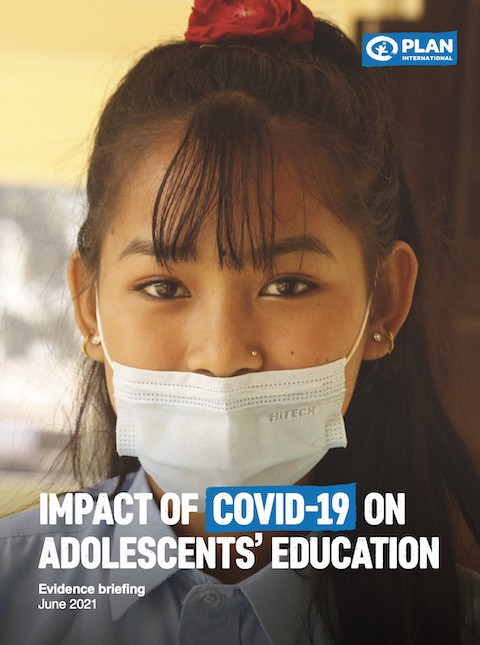 Impact of COVID-19 on Adolescents’ Education: Evidence Briefing Año de publicación: 2021 Autor: Adrienne Monteath-van Dok | Anthony Davis | Nicholas Frost Autor corporativo: Plan International UK This paper highlights the impact of COVID-19 on the education of adolescent girls and boys.
 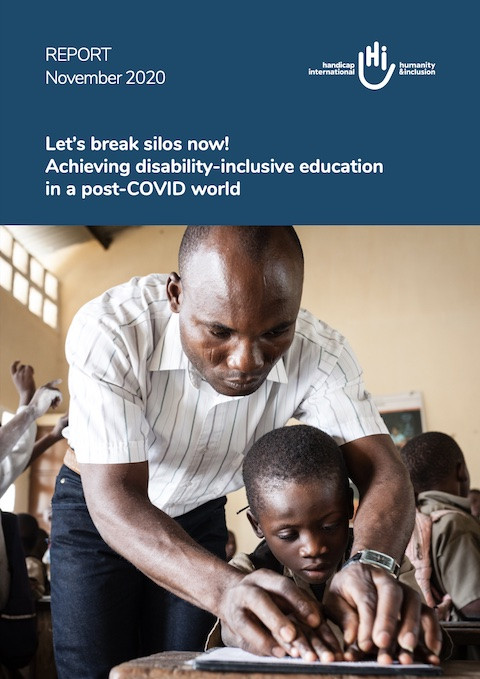 Let’s Break Silos Now!: Achieving Disability-Inclusive Education in a Post-COVID World Año de publicación: 2020 Autor: Aurélie Beaujolais | Blandine Bouniol | Francesca Piatta | Julia McGeown | Sandra Boisseau | Sandrine Bohan Jacquot | Valentina Pomatto Autor corporativo: Humanity & Inclusion This is a report on the difficulties children with disabilities face in accessing education in the world’s poorest countries. The report draws specifically on Humanity & Inclusion and its partners’ extensive global experience and learning around education and disability. More recently, this includes the impact of the COVID-19 pandemic on education for children with disabilities.
  Guinea Pig VF (S. Prijot) Año de publicación: 2015 Autor corporativo: Îles de Paix In Peru, the guinea pig is bred for its protein-rich flesh. For a long time, they grew up within the family itself, without any particular precaution in terms of hygiene and the care to be provided to them. Thanks to the intervention of Iles de Paix, a hundred women were trained in the breeding of these animals, thus making it possible to improve the quality and the quantity of the production. Through this action, many families have seen their food enriched considerably and for some, their income improved. Cochon d'Inde VF (S. Prijot) Año de publicación: 2015 Autor corporativo: Îles de Paix Au Pérou, le cochon d'Inde est élevé pour sa chair riche en protéines. Longtemps, ceux-ci grandissaient au sein même de la famille, sans aucune précaution particulière au niveau de l'hygiène et des soins à leur prodiguer. Grâce à l'intervention d'Iles de Paix, une centaine de femmes a été formée à l'élevage de ces animaux, permettant ainsi d'améliorer la qualité et la quantité de la production. À travers cette action, beaucoup de familles ont vu leur alimentation s'enrichir considérablement et pour certaines, leurs revenus s'améliorer.
  경기도 문화다양성 정책 현황 및 발전 방안 연구 Año de publicación: 2021 Autor: 안태호 | 권범철 | 김강 | 손민아 | 임영준 Autor corporativo: 협동조합 예술과 도시사회연구소 | 경기문화재단 본 연구는 경기도 문화다양성 정책의 현황을 살펴보고 새로운 방향을 제시하는 데 그 목적이 있다. 경기도의 문화다양성 현황을 알기 위해 문헌조사와 함께 설문조사를 실시하고, 경기지역의 소수자들을 대상으로 문화다양성 정책에 대한 심층인터뷰를 통해 문화다양성 정책 방향에 대해 제안한다.본 저작물은 경기문화재단에서 2020년에 작성하여 공공누리 4유형으로 개방한 '경기도 문화다양성 정책 현황 및 발전 방안 연구보고서'이며, 해당 저작물은 경기문화예술교육지원센터(https://ggarte.ggcf.kr/)에서 무료로 다운받으실 수 있습니다.
 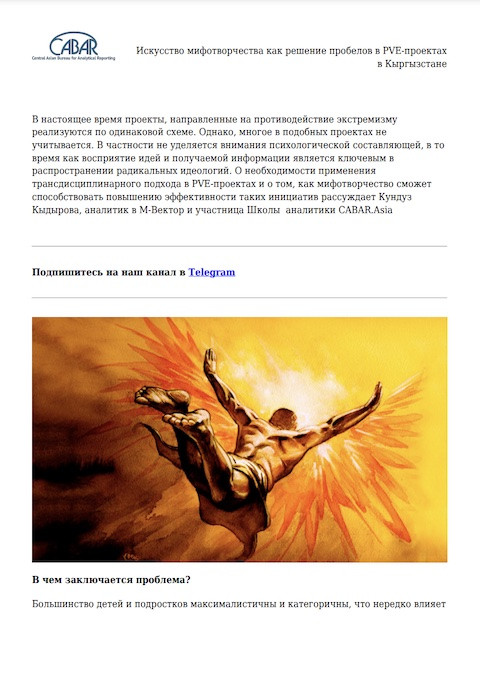 The Art of Mythmaking as a Solution to Gaps in PVE Projects in Kyrgyzstan Año de publicación: 2020 Autor: Kunduz Kydyrova Autor corporativo: Central Asian Bureau for Analytical Reporting (CABAR) | Institute for War and Peace Reporting (IWPR) Currently, projects aimed at countering extremism are being implemented according to the same scheme. However, much is not considered in such projects. In particular, no attention is paid to the psychological component, while the perception of ideas and information received is key in the spread of radical ideologies. Kunduz Kydyrova, an analyst at M-Vector and a member of the CABAR.asia School of Analytics, discusses the need to apply a transdisciplinary approach in PVE projects and how mythmaking can help increase the effectiveness of such initiatives.