
Recursos
Exploren una amplia gama de recursos valiosos en GCED para profundizar su comprensión y promover su búsqueda, incidencia, enseñanza y aprendizaje.
3,446 resultados encontrados
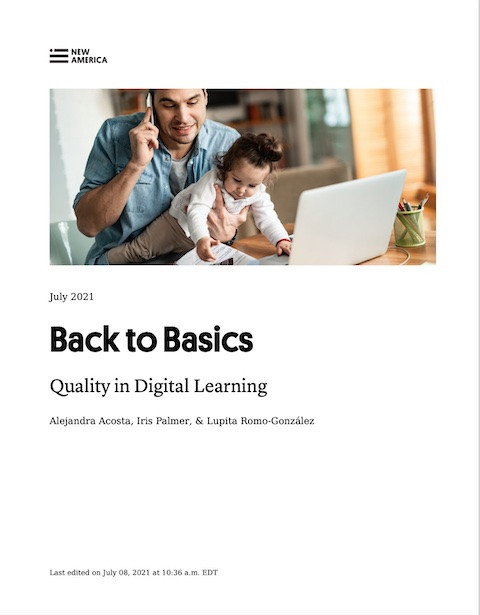 Back to Basics: Quality in Digital Learning Año de publicación: 2021 Autor: Alejandra Acosta | Iris Palmer | Lupita Romo-González Autor corporativo: New America | Bill and Melinda Gates Foundation The pandemic was, in some ways, a sneak preview of higher education’s future, one in which technology-mediated and -enabled education is ubiquitous, but with the potential for deep inequities in access to high-quality learning. This report describes some of the ways in which higher education succeeded and fell short during the remarkable 2020–21 year of distance learning. It proposes a trio of federal policy changes to build the ecosystem needed for online learning to ensure it is more equitable for students of color and low-income students, and to improve the quality for everyone (Acosta et al., 2021, p. 6).
  Advantages and Risks of Introducing the “Multilingual and Multicultural Education” Program in Kyrgyzstan Año de publicación: 2019 Autor: Kanzada Zayirbekova Autor corporativo: Central Asian Bureau for Analytical Reporting (CABAR) | Institute for War and Peace Reporting (IWPR) «Multilingual education makes it possible to simultaneously master the state and official languages, along with one of the foreign ones. It also creates social cohesion, enhances the culture of interethnic communication, and all this in total strengthens interethnic relations,» notes Kanzada Zayirbekova, a participant of the CABAR.asia School of Analytics, in her article. Преимущества и риски внедрения программы «Многоязычного и поликультурного образования» в Кыргызстане Año de publicación: 2019 Autor: Kanzada Zayirbekova Autor corporativo: Central Asian Bureau for Analytical Reporting (CABAR) | Institute for War and Peace Reporting (IWPR) «Многоязычное образование дает возможность одновременно овладеть государственным, официальным и одним из иностранным языком. Также создает сплоченность в обществе и повышение культуры межнационального общения и все это укрепляет межнациональные отношения», – отмечает участница Школы аналитики CABAR.asia Канзада Зайырбекова в своей статье.
  How to Improve the Availability of Pre-School and Primary Education in Kazakhstan? Año de publicación: 2019 Autor: Meruert Seidumanova Autor corporativo: Central Asian Bureau for Analytical Reporting (CABAR) | Institute for War and Peace Reporting (IWPR) «Equal access for all social groups to quality pre-school and primary education is the key to sustainable development, both for the individual and society as a whole», – notes Meruert Seidumanova, independent researcher from Kazakhstan, in her special article for CABAR.asia.
 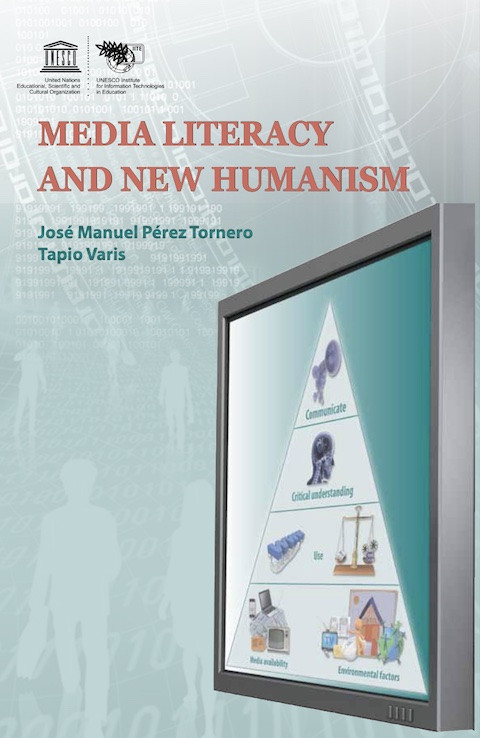 Media Literacy and New Humanism Año de publicación: 2010 Autor: José Manuel Pérez Tornero | Tapio Varis Autor corporativo: UNESCO Institute for Information Technologies in Education (IITE) The authors consider the opportunities that media literacy opens in the world of global education and communication in the context of new humanism.Being applied to education, the concept of new humanism, a new UNESCO credo, suggests the creation of a more inclusive society in which all humans have a chance to access knowledge and quality education and every word being heard in the universal dialogue. In the authors’ opinion, the new humanism in the global society must prioritize a new sense of respect for multiplicity and cultural diversity and must support media development with the goal of consolidating the new culture of peace.The book is aimed at educators, researchers, policy-makers, the media and civil society.
  포스트휴먼 시대의 기후위기 대응 교육: 사례와 실천 방안 Año de publicación: 2021 Autor: 엄수정 | 우라미 | 황순예 Autor corporativo: 경기도교육연구원 본 연구는 포스트휴먼시대의 기후위기 대응 교육의 모습을 구체화하는데 목적이 있다. 본 연구에서는 포스트휴먼 생태주의를 이론적 기틀로 삼아 기후위기 대응을 위한 학교 교육 사례를 분석하고, 이를 토대로 실천 방안을 탐색하였다.본 저작물은 경기도교육연구원에서 2021년 작성하여 공공누리 제 4유형으로 개방한 ‘포스트휴먼 시대의 기후위기 대응 교육: 사례와 실천 방안 (엄수정, 우라미, 황순예)’ 를 이용하였으며 해당 저작물은 경기도교육연구원 (www.gie.re.kr)에서 무료로 다운받으실 수 있습니다.
  Skills Development and Climate Change Action Plans: Enhancing TVET's Contribution Año de publicación: 2021 Autor corporativo: UNESCO International Centre for Technical and Vocational Education and Training (UNEVOC) Climate change is an ongoing process that, at the current pace of such activities, cannot be avoided. Tools have been proposed to deal with climate change focus on adaptation and mitigation. Strengthening national and international awareness of and commitment to reducing the impact of climate change has become the only viable option to ensure the sustainability of life on Earth.The Paris Agreement entered into force in 2016 with the aim of bringing all nations together in a common goal of combating climate change and adapting to its impacts. According to the Agreement, every party should submit a climate plan laying out its adaptation and mitigation targets. Technical and vocational education and training (TVET) has the potential to play significant roles in these plans. The smooth transition to green societies and economies relies on amongst others the knowledge, skills and competencies to promote sustainable development. Effective education and training for sustainable development pivots on governance and vision, and the ability to empower people in an inclusive manner to act in favour of sustainable development. It also relies on the ability to train, upskill, reskill and empower those that can take advantage of the job growth and job creation potential in a changing economy.This discussion paper compiles and reviews relevant information regarding the country submissions (Nationally Determined Contributions and National Communications) which lay out adaptation plans and the policies created in fifty-seven selected countries. The aim is to summarize key information that can help assess the ongoing and potential contribution of TVET to the realization of these plans. The analysis made through this discussion paper has helped to generate a set of approaches for climate change adaption, through the education and training lens. These approaches can be used to advance the discussion in strengthening the technical and vocational skills development component in country climate adaptation plans.
  Global Citizenship and Liberation History in Secondary Curricula in Southern Africa: Summary Report on the Findings of a Desk Review Año de publicación: 2021 Autor corporativo: UNESCO Harare This report presents key findings of a desk study on the extent of integration of Global Citizenship Education (GCED) and Southern Africa Liberation History (SALH) educationin the secondary schools curricula in Angola, Democratic Republic of Congo, Eswatini, Lesotho, Malawi, Mauritius, Mozambique, Namibia, South Africa, Seychelles, United Republic of Tanzania, Zambia and Zimbabwe. Citoyenneté mondiale et histoire de la libération dans les programmes des établissements secondaires en Afrique australe: Rapport de synthèse sur les résultats d'une étude documentaire Año de publicación: 2021 Autor corporativo: UNESCO Harare This report presents key findings of a desk study on the extent of integration of Global Citizenship Education (GCED) and Southern Africa Liberation History (SALH) educationin the secondary schools curricula in Angola, Democratic Republic of Congo, Eswatini, Lesotho, Malawi, Mauritius, Mozambique, Namibia, South Africa, Seychelles, United Republic of Tanzania, Zambia and Zimbabwe.
  Achieving SDG4 Through a Human Rights Based Approach to Education: World Development Report 2018 Background Paper Año de publicación: 2018 Autor: Kate Moriarty Autor corporativo: World Bank Quality education is a critical dimension for the achievement of sustainable development. The renewed political commitment set out in sustainable development goal 4 (SDG4) is an opportunity to ensure strong coherence between education policy and the right to education first articulated more than 70 years ago. This paper presents the results of a desk-based study on a human rights-based approach to education (HRBAE) in the context of SDG4. It explores the ways in which such an approach can guide policy, planning, and the delivery of education in observance with agreed international frameworks providing for the right to education. The paper argues that the human rights conventions on the right to education are not passive instruments designed to remain only at the level of discourse but, as legal obligations, require action from the state and should be central in the development of education services, including in the context of large scale displacement and crisis. This paper outlines the legally binding commitments of the right to education. It considers how these can be applied practically through a HRBA-E to address the continuing barriers to access and completion of quality education and learning.