
Recursos
Exploren una amplia gama de recursos valiosos en GCED para profundizar su comprensión y promover su búsqueda, incidencia, enseñanza y aprendizaje.
1,447 resultados encontrados
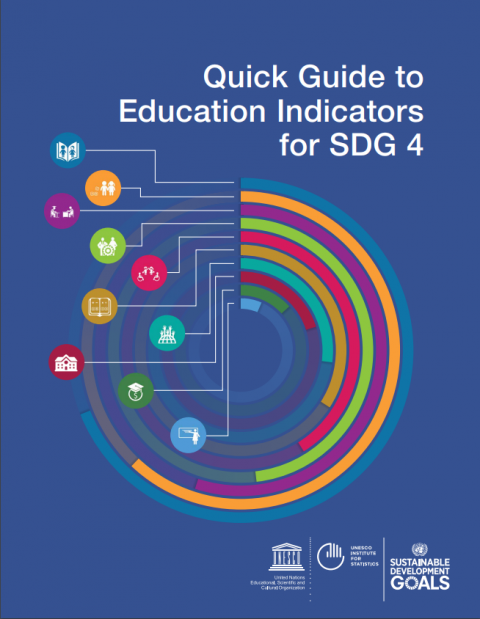 Guía abreviada de indicadores de educación para el ODS 4 Año de publicación: 2018 Autor corporativo: UNESCO Institute for Statistics (UIS) Esta guía sirve de referencia rápida sobre cómo monitorear el progreso en la consecución del Objetivo de Desarrollo Sostenible 4 (ODS 4) relativo a la educación de calidad. El texto ofrece explicaciones básicas acerca de las metas del ODS 4, sus indicadores, cómo se establecen y dónde encontrar la información necesaria para estos indicadores
  Discussion Paper for Women's Education and Political Participation Año de publicación: 2012 Autor: Subhalakshmi Nandi Autor corporativo: Asia South Pacific Association for Basic and Adult Education (ASPBAE) This paper is an outcome of the presentations and discussions from the Quality Adult Education (QAE) Benchmarking Workshop held in Jakarta in November '10, as well as a subsequent meeting of the core group for finalizing the paper (this meeting was held in New Delhi in March '11).
 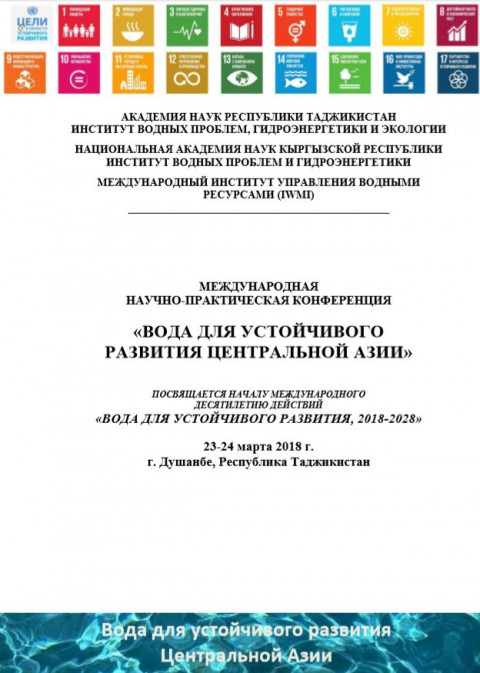 International Scientific and Practical Conference "Water for Sustainable Development of Central Asia". Conference proceedings Año de publicación: 2018 Autor corporativo: Institute of Water Problems, Hydropower and Ecology of the National Academy of Sciences of Tajikistan This collection includes materials from the International Scientific and Practical Conference "Water for the Sustainable Development of Central Asia".The collection reflects the current state of water resources of Central Asia and the prospects for sustainable development.
 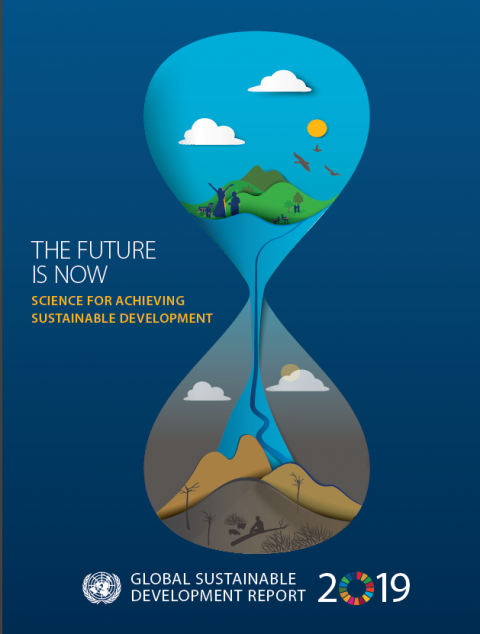 Global Sustainable Development Report 2019: The Future is Now Año de publicación: 2019 Autor corporativo: United Nations (UN) The Report, requested by all countries to evaluate progress on the 2030 Sustainable Development Agenda, is the first of its kind since the landmark Sustainable Development Goals (SDGs) were adopted four years ago. Entitled “The Future is Now: Science for Achieving Sustainable Development,” the report finds that the current development model is not sustainable, and the progress made in the last two decades is in danger of being reversed through worsening social inequalities and potentially irreversible declines in the natural environment that sustains us. The scientists concluded that a far more optimistic future is still attainable, but only by drastically changing development policies, incentives and actions.The report argues that understanding the interconnections between the individual SDGs and the concrete systems that define society today will be essential to devise policies that manage difficult trade-offs.
  Progress Report on the Implementation of the UNECE Strategy for Education for Sustainable Development Año de publicación: 2010 Autor corporativo: State Agency on Environment Protection and Forestry (Kyrgyzstan) This report aims to evaluate the implementation of the UNECE Strategy for Education for Sustainable Development in the Kyrgyz Republic as part of the United Nations Decade of Education for Sustainable Development (2005-2014). The report presents the results of efforts aimed at implementing ESD, current challenges with reference to socio-economic conditions and development prospects. This report has been prepared by the State Agency for Environmental Protection and Forestry of the Kyrgyz Republic with the participation of interested departments, international and local experts. In preparing the report, materials and reports of international organizations - the OSCE, were used,UNESCO, UNDP, etc. Доклад о ходе осуществления стратегии ЕЭК ООН для образования в интересах устойчивого развития Año de publicación: 2010 Autor corporativo: Государственное агентство охраны окружающей среды и лесного хозяйства (Кыргызстан) Данный отчет направлен на оценку результатов осуществления стратегии ЕЭК ООН для образования в интересах устойчивого развития в Кыргызской Республике в рамках проводимого Организацией Объединенных Наций Десятилетия образования в интересах устойчивого развития (2005-2014 годы). В отчете представлены результаты усилий, направленных на внедрение ОУР, текущие вызовы со ссылкой на социально-экономические условия и перспективы развития. Настоящий доклад подготовлен Государственным агентством Охраны Окружающей Среды и Лесного Хозяйства КР с участием заинтересованных ведомств, международных и местных экспертов. При подготовке отчета были использованы материалы и отчеты международных организаций – ОБСЕ, ЮНЕСКО, UNDP, и т.д.
  Overview of Central Asia on Education for Sustainable Development Año de publicación: 2006 Autor corporativo: Regional Environmental Centre for Central Asia (CAREC) This review summarizes the great work carried out by the Central Asian countries in the framework of the implementation of the UN Decade on ESD and the CAREC EE and ESD Program, and aims to achieve significant results in the implementation of the ESD Strategy for the Ministerial Conference in Belgrade in 2007. Обзор Центральной Азии о прогрессе в области образования в интересах устойчивого развития Año de publicación: 2006 Autor corporativo: Regional Environmental Centre for Central Asia (CAREC) Данный обзоре обобщает большую работу, проделанную странами Центральной Азии в рамках реализации Десятилетия ООН по ОУР и Программы ЦАРЭС в области ЭЭ и ОУР, и направлена на достижение значительных результатов в реализации Стратегии ОУР для Министерской конференции в Белграде в 2007 году.
  Accountability from a Human Rights Perspective: The Incorporation and Enforcement of the Right to Education in the Domestic Legal Order Año de publicación: 2017 Autor corporativo: ActionAid International | Right to Education Initiative (UK) The aim of this paper is to reframe States’ political commitment to education under Education 2030 as a legal commitment the vast majority of States have already made under international human rights law. By recasting the content of SDG Four as part of the right to education, the legal obligations owed to that content can be invoked. This renders various elements of SDG Four, ifthe State in question has legally committed to the right to education and incorporated the right to education in their domestic legal orders, amenable to adjudication by competent mechanisms, offering the possibility of legal accountability through legal enforcement.
  Accelerating Progress: An Empowered, Inclusive and Equal Asia and the Pacific Año de publicación: 2019 Autor corporativo: UN. Economic and Social Commission for Asia and the Pacific (UN. ESCAP) | Asian Development Bank (ADB) | United Nations Development Programme (UNDP) Accelerating progress: An empowered, inclusive and equal Asia and the Pacific responds to the theme of the 6th Asia Pacific Forum on Sustainable Development and the 2019 session of the high-level political forum on sustainable development.The report proposes a framework of four synergistic elements necessary to advance inclusion, empowerment and equality: rights and justice; norms and institutions; resources and capabilities; participation and voice. The need for action on all four fronts is illustrated by a deeper look at three pivotal challenges confronted by the region – (1) climate change and its potential to deepen inequality; (2) the urgent need to boost domestic resource mobilization; and (3) the need to strengthen social accountability and civic engagement. It draws out policy messages on how an empowerment-and-inclusion approach to policymaking can be fostered, including on addressing violence against women and girls. The report provides strong evidence that promoting empowerment and inclusion are necessary approaches to reduce inequality and accelerate progress towards a broad array of Sustainable Development Goals. It is a contribution to the ongoing national, regional and global dialogues on opportunities to empower people, ensure their inclusion and advance equality.The report is produced by the Asia-Pacific SDG partnership, comprising of the United Nations Economic and Social Commission for Asia and the Pacific (ESCAP), the Asian Development Bank, and the United Nations Development Programme.