
Recursos
Exploren una amplia gama de recursos valiosos en GCED para profundizar su comprensión y promover su búsqueda, incidencia, enseñanza y aprendizaje.
1,187 resultados encontrados
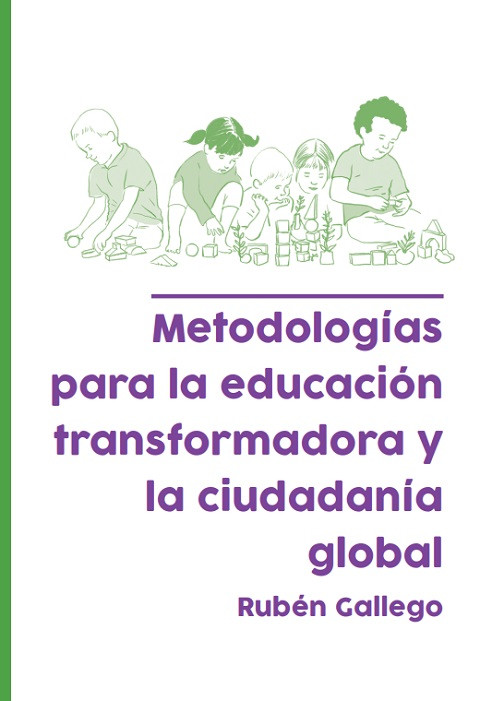 Metodologías para la educación transformadora y la ciudadanía global Año de publicación: 2018 Autor: Rubén Gallego Autor corporativo: InteRed | Agencia Vasca de Cooperación al Desarrollo | Diputación Foral de Bizkaia La Pedagogía de los cuidados hace necesaria buscar metodologías que sean coherentes con lo que busca, y por ello, diferentes de la tradicional forma enseñanza – aprendizaje. Necesitamos una metodología que haga primero vivenciar las cosas, sentirlas, para teorizarlas después; una metodología que rescate el valor pedagógico del juego, del encuentro, que apueste por el impacto terapéutico del afecto. Es necesario estar convencidos de que una sola vivencia, una experiencia, puede más que miles de palabras. Por ello, en este módulo, presentamos tres grupos de metodologías, con dos propuestas metodológicas cada una: Las metodologías lúdicas: juego cooperativo y Ludopedagogía Las metodologías artísticas: técnicas ludicoteatrales y Arteterapia. Las metodologías experienciales: Aprendizaje-Servicio con enfoque de derechos y Aprendizaje Basado en Proyectos transformadores con mirada global.
 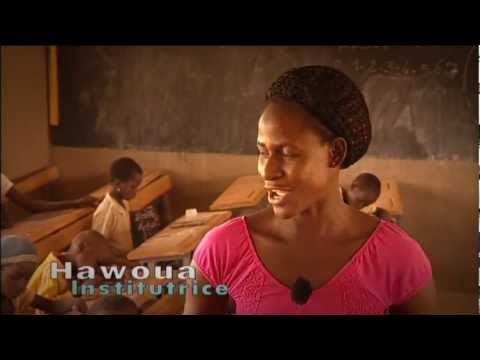 Migrations et développement Año de publicación: 2012 Autor corporativo: Îles de Paix Tous les enfants ne vont pas à l'école au Burkina Faso. Mais il existe des solutions qui permettent d'améliorer la situation : construction d'écoles, de logements de maître, théâtre forum dans les villages ou encore la construction de barrages et l'installation de forages.
 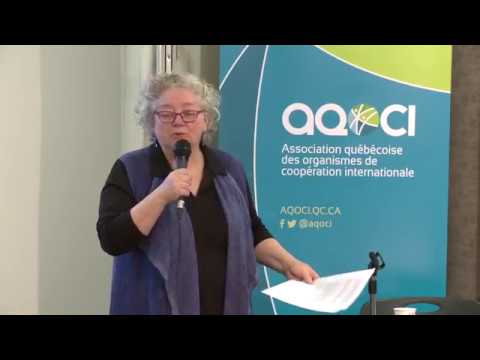 1er rendez-vous de l'éducation à la citoyenneté mondiale: Mot d'ouverture Año de publicación: 2017 Autor corporativo: Association québécoise des organismes de coopération internationale (AQOCI) La Directrice générale de l’AQOCI, Michèle Asselin, souhaite la bienvenue aux personnes participantes du 1er rendez-vous de l’AQOCI sur l’éducation à la citoyenneté mondiale. Elle a expliqué sur la valeur de l’éducation à la citoyenneté mondial et souligné comme ci-dessous :« L’ÉCM promeut des valeurs et des comportements qui encouragent le changement social et la solidarité internationale »
 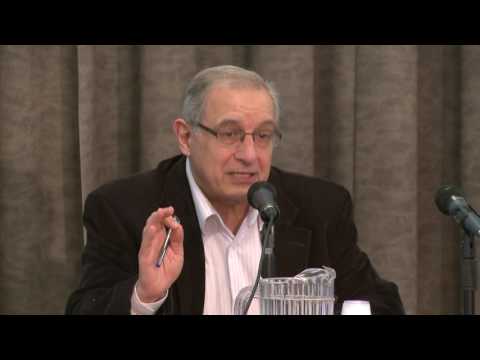 1er rendez-vous de l'éducation à la citoyenneté mondiale de l'AQOCI: Panel d'experts Año de publicación: 2017 Autor corporativo: Association québécoise des organismes de coopération internationale (AQOCI) Panel d'experts: l'ÉCM en contextes social et scolaire.Rachad Antonius, professeur de sociologie à l’UQÀM, chercheur, consultant et personne-ressource dans les milieux de la solidarité internationale, propose des éléments de réflexion sur l’éducation, sur le rôle de différents intervenants – militants, OCI, chercheurs et intellectuels - en ÉCM, sur le sens et les dimensions du concept de citoyenneté dans le contexte et face aux enjeux actuels et sur les réponses que le travail en ÉCM est appelé à apporter face à la mondialisation.La présentation de Marie-Hélène Chastenay, responsable de l’éducation interculturelle à la Direction des services d’accueil et d’éducation interculturelle du ministère de l’Éducation et de l’Enseignement supérieur (MÉES), examine l’apport de l’ÉCM à l’éducation des jeunes du Québec; l’intégration actuelle de l’ÉCM aux curriculums et à la vie scolaires; les enjeux et les défis de l’ÉCM en milieux scolaires et académiques et le rôle des organismes de coopération internationale et de la société civile dans la promotion de l’ÉCM en contextes scolaires et académiques.
 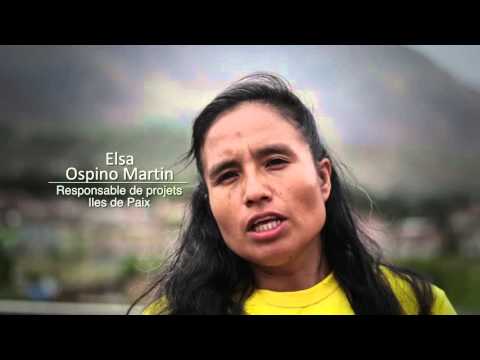 Quand les communes du Pérou prennent le relais Año de publicación: 2015 Autor corporativo: Îles de Paix L’idée de durabilité a toujours été centrale à toutes les actions d’Iles de Paix. Et pour parvenir à cette durabilité, il est primordial de travailler avec les communes. En effet, la présence des ONG n’est que temporaire alors que les communes, elles, seront toujours là. Ce reportage explique comment cela se passe au Pérou.
  Culture Diversity: Intercultural Education Guide in Secondary Classrooms Autor corporativo: Federación de la Enseñanza de UGT Extremadura Pedagogical material that accompanies the campaign carried out by the FETE-UGT so that, in all the centers of Extremadura, the fight against racism and intercultural education are a strategy to achieve equal opportunities and world citizenship education, preventing violent, racist, homophobic or intolerant behavior. It is aimed at young people between 12 and 16 years old and includes games and activities to do with young people. Diversidad de Culturas: Guía de Educación Intercultural en las Aulas de Secundaria Autor corporativo: Federación de la Enseñanza de UGT Extremadura Material pedagógico que acompaña la campaña realizada por la FETE-UGT para que, en todos los centros de Extremadura, la interculturalidad y la lucha contra el racismo sean una estrategia para conseguir la igualdad de oportunidades y la formación en la ciudadanía mundial, previniendo conductas violentas, racistas, homófobas o intolerantes. Esta dirigido a jóvenes entre 12 y 16 años e incluye juegos y actividades para realizar con los jóvenes.
  The Paths of Historical Memory Año de publicación: 2018 Autor corporativo: Centro Nacional de Memoria Histórica This book introduces the Historical Memory Toolbox and presents its contents. In addition to the prologue, the acknowledgment to teachers and students who have been part of this process and the account of the construction of the Toolbox since 2012, includes a text that collects the theoretical and conceptual foundations of the Tool Box, "Keys to navigate through historical memory" and another text with the pedagogical proposal that underlies all the materials in the Box, called "Pedagogy of historical memory: route to work in school". Los caminos de la memoria histórica Año de publicación: 2018 Autor corporativo: Centro Nacional de Memoria Histórica Es el libro que introduce a la Caja de Herramientas y presenta sus contenidos. Además del prólogo, los agradecimientos a los maestros, maestras y estudiantes que han hecho parte de este proceso y el recuento de la construcción de la Caja desde 2012, contiene un texto que recoge los fundamentos teóricos y conceptuales de la Caja de Herramientas, titulado Claves para navegar por la memoria histórica, y otro texto con la propuesta pedagógica que subyace a todos los materiales de la Caja, llamado Pedagogía de la memoria histórica: ruta para trabajar en la escuela.
  ICT융합교육 글로벌 동향: 초·중등교육 글로벌 동향 (2020년 5호 통권 128호) Año de publicación: 2020 Autor: 김민 | 이민주 | 윤환선 Autor corporativo: 한국교육학술정보원 이 자료는 코로나 19로 인한 학교 폐쇄와 재개에 대한 글로벌동향과 사례를 미주, 유럽, 아시아 등 각 지역별로 나누어 정리하고 학교 재개에 대하여 국제기구가 제시하는 프레임 워크에 대해서 설명하고 있다. 또한 코로나 19에 대응하는 교육대책으로 ICT를 활용한 온라인 교육과 원격 수업에 대한 방안과 현황을 제시한다.