
Recursos
Exploren una amplia gama de recursos valiosos en GCED para profundizar su comprensión y promover su búsqueda, incidencia, enseñanza y aprendizaje.
3,446 resultados encontrados
 The Impact of COVID-19 on Inclusive Education at the European Level: Literature Review Año de publicación: 2021 Autor corporativo: European Agency for Special Needs and Inclusive Education | European Commission The coronavirus (COVID-19) pandemic has affected learners around the world. School closures forced emergency responses from education systems, resulting in various forms of remote schooling. The crisis highlighted pre-existing inequalities in education and provided a reason for systemic change in education worldwide.This literature review aims to map evidence and identify acknowledged ways in which COVID‑19 has impacted on education in general and inclusive education in particular at European and national levels. The intention is to provide a comprehensive overview of key messages for Agency member countries. It will also inform possible future Agency work on this topic.
 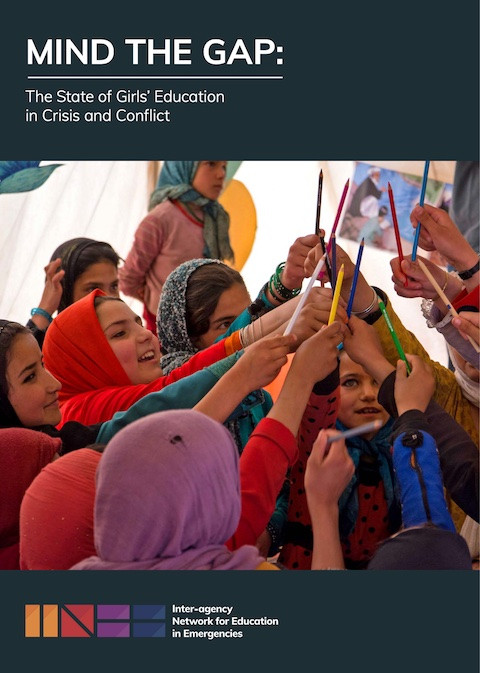 Mind the Gap: The State of Girls’ Education in Crisis and Conflict Año de publicación: 2021 Autor corporativo: Inter-agency Network for Education in Emergencies (INEE) This report summarizes progress, gaps, challenges and opportunities in improving education and training for girls and women affected by conflict and crisis. The report aims to support the Charlevoix Declaration on Quality Education’s commitment to enhance the evidence base and monitor progress toward gender-equitable education in crises. The report draws from data on 44 crisis-affected countries, from recent research, and from a set of case studies of interventions in a range of crisis-affected contexts.
  Understanding the Impact of Artificial Intelligence on Skills Development Año de publicación: 2021 Autor: Kelly Shiohira Autor corporativo: UNESCO International Centre for Technical and Vocational Education and Training (UNEVOC) The era of artificial intelligence is young in years but advanced in impact. Intermediate skill jobs as we know them are fast disappearing as their tasks are systematically automated, and individuals are increasingly likely to encounter AI technology in their everyday lives. In fact, fifty percent of organizations worldwide report using some form of AI in their operations.It is clear that AI has broad implications for the whole of humanity, and therefore on the education and training institutions that equip lifelong learners with the skills to navigate both work and society. A wide range of institutions and other stakeholders have risen to the challenge through research and innovative programmes, paving the way for a better understanding of AI’s potential – and its pitfalls.This paper synthesizes research on current trends, programmes, policies and uses of AI related to technical and vocational education and training across six continents, covering developing and developed contexts, as a resource for stakeholders invested in the future of intermediate-level workers and TVET. Lecturers, students, administrators, policymakers, programme implementers and lifelong learners are invited to examine current practices, opportunities and challenges raised by AI, and recommendations to build a future-ready education and training system.
  연극을 통한 민주 시민 교육 방법 (2019 문화예술교육 유관학회 연계 ‘작은 연구’ - 서울어젠다 예술교육 목표 3. 예술교육의 사회적 가치 확산성을 중심으로) Año de publicación: 2019 Autor: 이화식 Autor corporativo: 한국예술경영학회 | 한국문화교육학회 본 자료는 2019 문화예술교육 유관학회 연계 '작은 연구’에서 발췌한 '연극을 통한 민주 시민 교육 방법' 연구자료이다. 본 연구는 연극 활동을 통하여 민주시민의 가치를 함양하는 민주 시민교육의 모형을 제시하며, 시민교육이라는 주제의 특성을 반영하여 학습자가 실제 생활과 유사한 환경에서 민주적인 가치를 체험하고 구성하며 생활에서 적용할 수 있는 교육 방법을 모색하는 것을 목적으로 한다. 본 저작물은 한국예술경영학회, 한국문화교육학회에서 2019년 작성하여 공공누리 제4유형으로 개방한 ‘연극을 통한 민주 시민 교육 방법(이화식)'을 이용하였으며 해당 저작물은 한국문화예술교육진흥원 arte 라이브러리 홈페이지(lib.arte.or.kr)에서 무료로 다운받으실 수 있습니다.
  Inequalities in Learning in Vietnam: Teachers’ Beliefs About and Classroom Practices for Ethnic Minorities (RISE Working Paper Series; 21/061) Año de publicación: 2021 Autor: Joan DeJaeghere | Vu Dao | Bich-Hang Duong | Phuong Luong Autor corporativo: Research on Improving Systems of Education (RISE) Global and national education agendas are concerned with improving quality and equality of learning outcomes. This paper provides an analysis of the case of Vietnam, which is regarded as having high learning outcomes and less inequality in learning. But national data and international test outcomes may mask the hidden inequalities that exist between minoritized groups and majority (Kinh) students. Drawing on data from qualitative videos and interviews of secondary teachers across 10 provinces, we examine the role of teachers’ beliefs, curricular design and actions in the classroom (Gale et al., 2017). We show that teachers hold different beliefs and engage in curricular design – or the use of hegemonic curriculum and instructional practices that produce different learning outcomes for minoritized students compared to Kinh students. It suggests that policies need to focus on the social-cultural aspects of teaching in addition to the material and technical aspects.
  What’s the Evidence?: Youth Engagement and the Sustainable Development Goals Año de publicación: 2018 Autor corporativo: Asian Development Bank (ADB) | Plan International UK This study represents an encouraging body of evidence, both primary and secondary, which will inform future practice and policymaking with regard to young women and men’s contributions towards the Sustainable Development Goals (SDGs). The learnings from this study provide important insight that will support the design and implementation of youth programming. It examines five programs across three youth-focused or youth-led organisations: Plan International UK, the Asian Development Bank (ADB), and AIESEC.
  Youth Narrative and Voice: Principles for Effective Climate, Energy and Environmental Education in Alberta Año de publicación: 2020 Autor: Christopher Shaw | Amber Bennett | Susie Wang Autor corporativo: Climate Outreach | Alberta Council for Environmental Education (ACEE) This report provides educators with 10 principles for developing new energy and climate change education resources in Alberta, and example narratives and language to engage students. The findings and recommendations are drawn primarily from a series of workshops with Alberta students held during the fall of 2019. A survey of Alberta youth conducted by Leger, a literature review and interviews with Alberta teachers provided additional insights that deepened, broadened and ‘sense checked’ the workshop results.
  Educate Girls: Improving the Quality and Outcomes of Girls’ Learning Año de publicación: 2017 Autor corporativo: World Bank In India, women and girls, especially in rural areas, are particularly affected by the country’s illiteracy problem, since they face discrimination based on their sex and need for childbearing. In Rajasthan, the north- western Indian state that borders Pakistan, 9 out of 26 districts have the worst gender gap in India for girls’ education.Established in 2007, Educate Girls is holistically tackling issues at the root cause of gender inequality in India’s education system that has helped to ensure over 90% enrollment and significantly higher attendance for all girls as well as improved school infrastructure, quality of education and learning outcomes for all children.As a result of Educate Girls’ efforts to date, an army of “girls champions” has been created to combat cultural issues and support systemic change. More than 150,000 out-of-school girls have been enrolled in school and the program has benefitted around 3.8 million of beneficiaries. Continuing to address the social and cultural barriers in girls’ education can bring about real transformation, such as improvement in health, income levels, and overall livelihoods in rural populations.
  Медийно-информационная грамотность в цифровом мире: Как научить Учителей Año de publicación: 2021 Autor corporativo: UNESCO Institute for Information Technologies in Education (IITE) В сборник вошли статьи, отражающие некоторые тренды развития цифровой медиасреды, подходы к формированию медийно-информационной грамотности (МИГ), описания отдельных практик, представляющих опыт реализации обучения МИГ педагогов и учащихся различных уровней и форм образования, а также рекомендации, направленные на интеграцию МИГ в педагогическое образование и повышение квалификации учителей и преподавателей.
  Positioning ICT in Education to Achieve the Education 2030 Agenda in Asia and the Pacific: Recommendations for a Regional Strategy Año de publicación: 2018 Autor: Hyojeong So | Kyungsim Yeon | Kyungsim Yeon | Jian Xi Teng Autor corporativo: UNESCO Bangkok This regional study is an important document for Asia-Pacific Member States as it consolidates data related to the effective use of ICT in education. One highlight of this study is the five priority areas for the use of ICT towards achieving SDG4 and Education 2030 that were identified based on a synthesis of the data:ICT for transforming and expanding TVET and higher education ICT for improving teacher qualityICT for improving access to and quality of secondary education ICT for enabling inclusive and equitable learningICT for monitoring and evaluation