
Recursos
Exploren una amplia gama de recursos valiosos en GCED para profundizar su comprensión y promover su búsqueda, incidencia, enseñanza y aprendizaje.
2,781 resultados encontrados
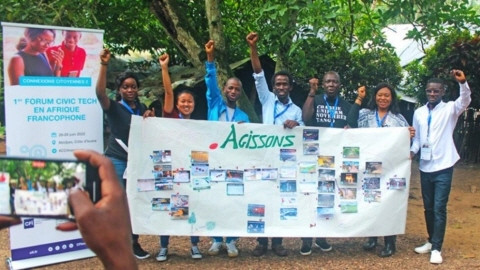 Civic Tech in Africa: When Citizen’s Connections Work for Democracy Año de publicación: 2022 Autor: Raphaëlle Constant Autor corporativo: Radio France International (RFI) The first civic tech forum in French-speaking Africa was held at the end of June in Abidjan, Côte d'Ivoire, at the initiative of CFI. For "L'atelier des médias", Raphaëlle Constant spoke to the people who are developing digital initiatives in several African countries to improve the flow of information and mobilise citizens to influence public debate. Civic tech en Afrique: Quand des connexions citoyennes œuvrent pour la démocratie Año de publicación: 2022 Autor: Raphaëlle Constant Autor corporativo: Radio France International (RFI) Le premier forum civic tech en Afrique francophone s’est tenu fin juin à Abidjan, en Côte d’Ivoire, à l'initiative de CFI. Pour L’atelier des médias, Raphaëlle Constant y a tendu son micro à celles et ceux qui développent des initiatives numériques dans plusieurs pays africains pour améliorer la circulation de l’information et déclencher des mobilisations citoyennes pour peser dans le débat public.
  Developing Digital Citizenship and Language Competences Año de publicación: 2023 Autor: Christian Ollivier | Catherine Jeanneau Autor corporativo: European Centre for Modern Languages (ECML) The profile of citizens who use languages and digital tools helps to define the objectives to pursue in language training that incorporates digital citizenship education. The Didactic Framework outlines a socio-interactional approach that enables this integration. Développer citoyenneté numérique et compétences langagières Año de publicación: 2023 Autor: Christian Ollivier | Catherine Jeanneau Autor corporativo: European Centre for Modern Languages (ECML) Le portrait des citoyens et citoyennes usagers et usagères des langues et du numérique permet de préciser les objectifs à poursuivre dans une formation en langue qui intègre l'éducation à la citoyenneté numérique. Le Cadre didactique définit une approche socio-interactionnelle permettant cette intégration.
 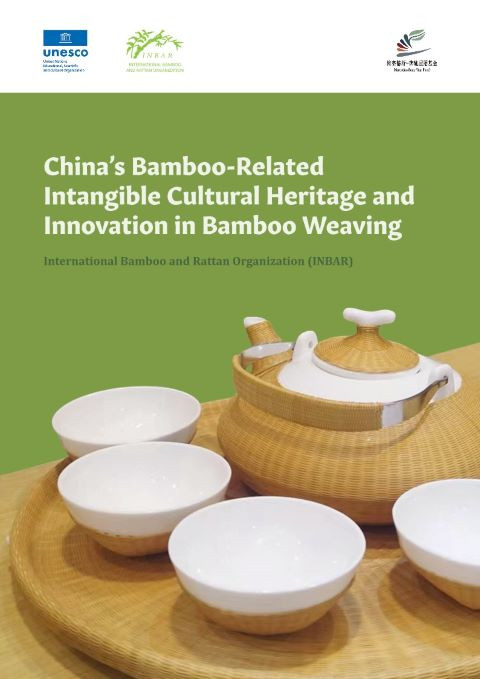 China’s Bamboo-Related Intangible Cultural Heritage and Innovation in Bamboo Weaving Año de publicación: 2024 Autor: Li Yanxia | Liu Chenge | Wang Renfei Autor corporativo: UNESCO Beijing | International Bamboo and Rattan Organization (INBAR) In the writing and editing of China’s Bamboo-Related Intangible Cultural Heritage and Innovation in Bamboo Weaving (hereinafter called the “Booklet”), we have focused on introducing Chinese bamboo weaving to allow readers to comprehend relevant knowledge about the craft, fully appreciate its charm, and inspire the passing down and innovation of bamboo-weaving techniques.The Booklet includes six chapters focusing on intangible cultural heritage, China’s national bamboo related intangible cultural heritage elements, the development of Chinese bamboo weaving, analysis of bamboo-weaving patterns, modern designs and product innovations, and a tutorial series on bamboo-woven products. The first chapter introduces the definition of global and Chineseintangible cultural heritage. The second chapter systematically outlines the history, model for classification and contemporary development status of China’s traditional bamboo crafts. The third chapter presents an in-depth analysis of the development of bamboo-weaving skills. The fourth chapter features 12 flat weaving patterns recorded by the project team in Chishui City, Guizhou Province, where “China Danxia, a World Heritage Site, is located. It provides a detailed exploration of pattern characteristics and weaving methods, accompanied by picture and video tutorials for readers to practice by hands. The fifth chapter comprehensively elaborates on the innovative design system of bamboo-woven products and showcases real-world cases through personal involvement in designing and collecting innovative bamboo-woven products from both domestic and international sources. Finally, the sixth chapter explains the production methods of common bamboo-woven products to readers through video tutorials. 中国竹类非物质文化遗产与竹编创新知识图册 Año de publicación: 2024 Autor: Li Yanxia | Liu Chenge | Wang Renfei Autor corporativo: UNESCO Beijing | International Bamboo and Rattan Organization (INBAR) 本图册内容包括非物质文化遗产、中国国家级竹类非遗项目、中国竹编发展、竹编图纹解析、竹编的现代设计与产品创新、产品编织讲解系列等 6 节内容。第一节介绍了全球和中国对非物质文化遗产的界定;第二节系统性梳理了中国传统竹类技艺的历史、分类模式以及当代发展现状;第三节着重对代表性非物质文化遗产——竹编技艺深入剖析;第四节则以编写团队在中国丹霞贵州赤水世界自然遗产的所在地,贵州省赤水市所采集到的 12 种平面编织纹样为例,介绍了其纹样特点及编织方法, 并提供图片和视频版本的详细教程,供读者动手编织时参考;第五节竹编的现代设计与产品创新由编前 言写团队与数位清华大学美术学院研究生合作完成,不仅详细介绍了当代竹编产品创新设计体系,还通过亲身参与设计和收集国内外独特的创新竹编产品来进行案例展示。第六节通过视频教程的方式,向读者讲解了制作常见竹编制品方法。
  التعليم المسؤول للتاريخ كوسيلة للمصالحة التاريخية؟ : تجربة الرابطة الأوروبية لمعلمي التاريخ: هل تصلح كدراسة حالة؟ Año de publicación: 2012 Autor: فان دير لييو-رورد، يوكي Autor corporativo: Lebanese Association for Educational Studies (LAES) يكتب العديد من الباحثين الجامعيين المختصين بنظرية التاريخ وتعليم التاريخ عن المصالحة من خلال تعلّم التاريخ وتعليمه. ولكن تكاد لا توجد معلومات أمبيريقية عن تطبيقات عملية لمقاربات من هذا النوع ولا عن مسار وضعها قيد التنفيذ. أود في هذه المساهمة ان القي نظرة عن قرب على أساليب عمل يوروكليو EUROCLIO (الرابطة الأوروبية لمعلمي التاريخ) في البلدان التي توجد داخلها توترات سياسية وعرقية ودينية مثل بلغاريا واستونيا ولاتفيا ومولدوفا ورومانيا وروسيا وأوكرانيا وتركيا وفي البلدان والمناطق التي تعرضت حديثا لصراعات عنيفة مثل البوسنة وكرواتيا وقبرص وجورجيا وجمهورية مقدونيا وصربيا. ومن ثم أود أن أطرح السؤال حول عمل يوروكليو EUROCLIO وأستطلع ما يصح ان يكون مثلا عن المصالحة من خلال تعليم التاريخ وما اذا مقاربتها تنشئ تعليما وتعلما للتاريخ يكون داعما لكيانات سياسية مستدامة. Responsible History as a Tool for Historical Reconciliation? EUROCLIO, the European Association of History Educators as a Case Study? Año de publicación: 2012 Autor: فان دير لييو-رورد، يوكي Autor corporativo: Lebanese Association for Educational Studies (LAES) Many university researchers specialized in the theory of history and in teaching history write about reconciliation using history learning and teaching. However, there are almost no empirical data on practical applications of such approaches nor on the process of implementation. In this contribution. I’d like to have a close look at the working methods of the European Association of History Educators EUROCLIO, in countries with internal political, racial and religious tensions, such as Bulgaria, Estonia, Latvia, Moldovia, Romania, Russia, Ukraine, Turkey and in the countries and regions that were recently exposed to severe conflicts such as Bosnia, Croatia, Cyprus, Georgia, Republic of Macedonia and Serbia. Then I’d want to ask the question about how EUROCLIO functions and explore what applies to be an example of reconciliation through teaching history, and whether the reconciliation approach creates a history teaching and learning that would be supportive of sustainable political entities.
 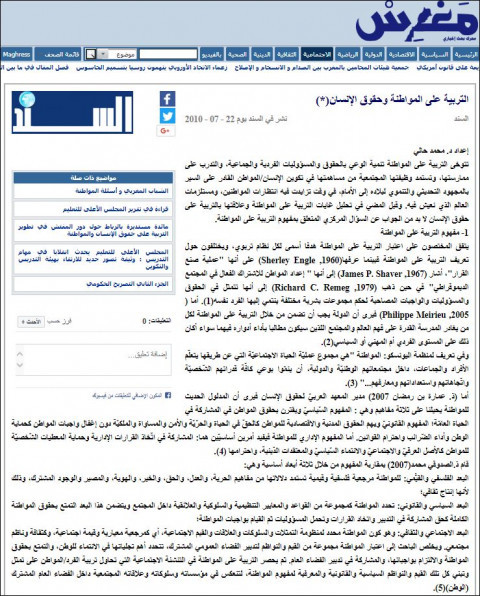 التربية على المواطنة وحقوق الإنسان Año de publicación: 2010 Autor: محمد حالي يقدم هذا المقال تعريفات لمقوّمات مفهوم التربية على المواطنة بأبعاده الثلاثة، على خلفية حالة المغرب، انطلاقاً من أن التربية على المواطنة تتوخى "تنمية الوعي بالحقوق والمسؤوليات الفردية والجماعية، والتدرب على ممارستها، وتستمد وظيفتها المجتمعية من مساهمتها في تكوين الإنسان/المواطن القادر على السير بالمجهود التحديثي والتنموي لبلاده إلى الأمام، في وقت تزايدت فيه انتظارات المواطنين، ومستلزمات العالم الذي نعيش فيه". أما الأبعاد الثلاثة فهي: 1) البعد الفلسفي والقيمي: 2) البعد السياسي والقانوني 3) البعد الاجتماعي والثقافي. إلى ذلك، فإن المقال يعالج المحاور التي تتكامل في تقديم المفهوم: 1) التربية على المواطنة بتعريفاتها المختلفة (ومنها أنها تشكل" هدفاً أسمى لكل نظام تربوي") ،؛ و2) مواصفات المواطن الصالح والقيم المعلنة في " الميثاق الوطني للتربية والتكوين" (القيم الإسلامية ووقيم الهوية الحضارية،ن وقيم المواطنة، وقيم حقوق الإنسان)؛ 3) غايات التربية على المواطنة؛ 4) أهداف التربية على المواطنة؛ 5) الكفايات المرجعية المرتبطة بالتربية على المواطنة؛ 6) وسائل وطرق تحقيق الأهداف؛ 7) علاقة التربية على المواطنة بالتربية على حقوق الإنسان. وتختم المقالة بالإشارة إلى أن التربية على المواطن وحقوق الإنسان "تتم بواسطة ثلاث قنوات أساسية، تتعاضد في ما بينها وتتكامتل أهدافها وهي: العائلة، البيئة الاجتماعية والسياسية، والمدرسة". Education on Citizenship and Human Rights Año de publicación: 2010 Autor: محمد حالي This article presents definitions for the determinants of the concept of education on citizenship, in its three principles, using Morocco as a background, considering that education on citizenship aims at “Developing awareness of the rights and responsibilities, both individual and collective, training on practicing it and that citizenship derives its social function from its contribution to the formation of the human being/citizen who is capable of carrying forward the modernizing and developmental effort of his country, at a time where the citizens’ expectations and the living requirements of today’s world are growing”.The three dimensions of the definition are: 1) the philosophic and value dimension; 2) the legal and political dimension; 3) the social and cultural dimension. In addition, the article deals with the parameters that complement each other in presenting the concept: 1) Education on citizenship with its different definitions; 2) The attributes of the Good Citizen and the declared values in the Moroccan “National Charter of Education and Training” (namely the Islamic values, values of the civil identity, identity values and human rights values); 3) the aims of education on citizenship; 4) the objectives of education on citizenship; 5) The relevant reference capacities; 6) Means and ways of implementing the objectives; 7) the relationship between education on citizenship and the education on human rights. The article concludes by pointing that education on citizenship in practiced through three main channels that synergize and integrate their objectives: the family, the social environment and the school”.