
Recursos
Exploren una amplia gama de recursos valiosos en GCED para profundizar su comprensión y promover su búsqueda, incidencia, enseñanza y aprendizaje.
1,182 resultados encontrados
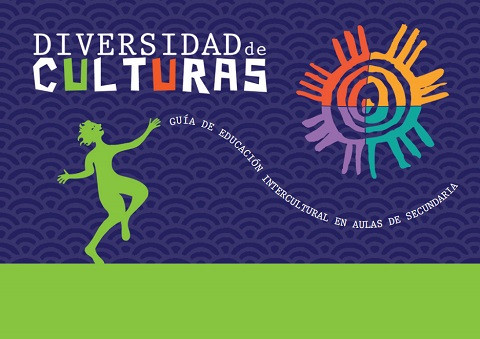 Diversidad de Culturas: Guía de Educación Intercultural en las Aulas de Secundaria Autor corporativo: Federación de la Enseñanza de UGT Extremadura Material pedagógico que acompaña la campaña realizada por la FETE-UGT para que, en todos los centros de Extremadura, la interculturalidad y la lucha contra el racismo sean una estrategia para conseguir la igualdad de oportunidades y la formación en la ciudadanía mundial, previniendo conductas violentas, racistas, homófobas o intolerantes. Esta dirigido a jóvenes entre 12 y 16 años e incluye juegos y actividades para realizar con los jóvenes.
 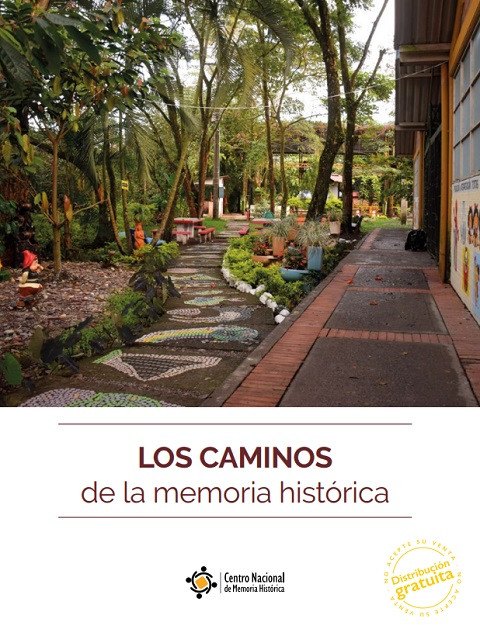 The Paths of Historical Memory Año de publicación: 2018 Autor corporativo: Centro Nacional de Memoria Histórica This book introduces the Historical Memory Toolbox and presents its contents. In addition to the prologue, the acknowledgment to teachers and students who have been part of this process and the account of the construction of the Toolbox since 2012, includes a text that collects the theoretical and conceptual foundations of the Tool Box, "Keys to navigate through historical memory" and another text with the pedagogical proposal that underlies all the materials in the Box, called "Pedagogy of historical memory: route to work in school". Los caminos de la memoria histórica Año de publicación: 2018 Autor corporativo: Centro Nacional de Memoria Histórica Es el libro que introduce a la Caja de Herramientas y presenta sus contenidos. Además del prólogo, los agradecimientos a los maestros, maestras y estudiantes que han hecho parte de este proceso y el recuento de la construcción de la Caja desde 2012, contiene un texto que recoge los fundamentos teóricos y conceptuales de la Caja de Herramientas, titulado Claves para navegar por la memoria histórica, y otro texto con la propuesta pedagógica que subyace a todos los materiales de la Caja, llamado Pedagogía de la memoria histórica: ruta para trabajar en la escuela.
  ICT융합교육 글로벌 동향: 초·중등교육 글로벌 동향 (2020년 5호 통권 128호) Año de publicación: 2020 Autor: 김민 | 이민주 | 윤환선 Autor corporativo: 한국교육학술정보원 이 자료는 코로나 19로 인한 학교 폐쇄와 재개에 대한 글로벌동향과 사례를 미주, 유럽, 아시아 등 각 지역별로 나누어 정리하고 학교 재개에 대하여 국제기구가 제시하는 프레임 워크에 대해서 설명하고 있다. 또한 코로나 19에 대응하는 교육대책으로 ICT를 활용한 온라인 교육과 원격 수업에 대한 방안과 현황을 제시한다.
  Personalized Learning within Teacher Education: A Framework and Guidelines Año de publicación: 2020 Autor corporativo: UNESCO International Bureau of Education (IBE) This paper explores the theoretical and practice elements that together inform the concept of personalised learning. These insights are then used to develop a Framework for Personalized Learning within Teacher Education. In addition, the final chapter outlines pedagogical strategies to support the development of personalised learning that were tested during the project within the participating universities.The Framework and Guidelines are intended for use by to teacher educators and their students, as well as by teachers and students in schools, to support the on‐going shift towards a personalised learning and collaborative paradigm which forefronts learner agency and autonomy and encourages learners of all ages to assume increased responsibility for their own learning and achievements.
  Advancing Innovation: UNESCO-UNEVOC in Action; Biennial Report 2018-2019 Año de publicación: 2020 Autor corporativo: UNESCO International Centre for Technical and Vocational Education and Training (UNEVOC) In a rapidly evolving world filled with societal, environmental and economic disruptions, technical and vocational education and training (TVET) systems need to develop innovative strategies to tackle emerging challenges while simultaneously seizing the opportunities that have arisen from the advent of 21st century technology.This Biennial Report gives a comprehensive overview of UNESCO-UNEVOC's activities in technical and vocational education and training over the biennium 2018-2019.
 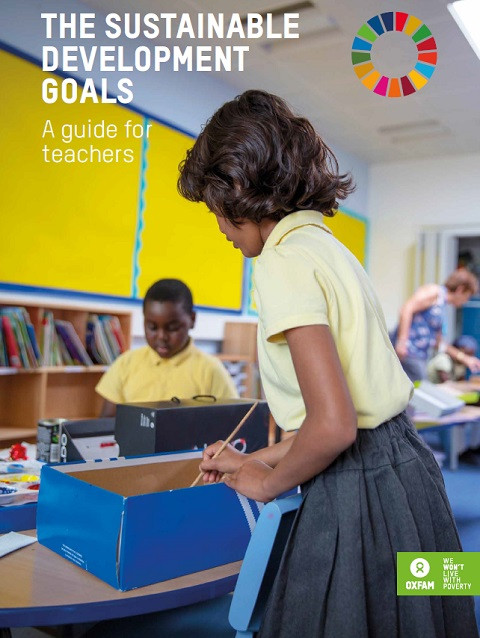 The Sustainable Development Goals: A Guide for Teachers Año de publicación: 2019 Autor corporativo: Oxfam GB This guide supports teachers and educators working with young people to deepen their understanding of education about and for the SDGs and to see how global citizenship education (GCE) approaches and methodologies can underpin good practice. The guide also explores the benefits and challenges of using the SDG framework with learners in schools.
  Education for Develpment (EdD) in a Diverse World: Comparative Study of Education for Global Citizenship (EdGC) in Paraguay and Spain Año de publicación: 2017 Autor: Ángela Alcaide Capilla | María Jesús Martínez Usarralde Autor corporativo: University of Valencia According to the summary of the author: "This article aims to collect a comparative analysis regarding Global Citizenship Education in two different contexts: Spain and Paraguay. The objective is to discover the main characteristics of this education, in meaning and practice, focusing on the diversity of views and constraints of reality, which enrich existing theory speeches, opening this field of knowledge to the experience of its application. In fact, this is the objective and the conclusion. The research justifies the value of this information in the field of study, based on interviews with experts from which relevant information that eludes the rhetorical speeches can be extracted." La Educación para el Desarrollo (EpD) en un mundo diverso: estudio comparativo de la Educación para la Ciudadanía Global (EpCG) en Paraguay y España Año de publicación: 2017 Autor: Ángela Alcaide Capilla | María Jesús Martínez Usarralde Autor corporativo: University of Valencia Según el resumen de los autores: "El presente artículo pretende acometer un análisis comparado en relación a la Educación para a la Ciudadanía Global en dos contextos diferentes: España y Paraguay. Se pretende con ello reconocer los rasgos principales de esta educación, en significado y práctica, bajo la premisa de destacar la diversidad de visiones y condicionantes de la realidad, que conceden a los discursos ya existentes en la teoría una gran riqueza, abriendo su campo de conocimiento a la experiencia que de su aplicación se extrae. En sí, este es objetivo y conclusión. Con la investigación se justifica el valor que esta información tiene para el campo de estudio, a partir de entrevistas a personas expertas de las que se extrae información relevante que escapa a la retórica."
  Intercultural Communication Human and Social Dimensions of Higher Education Año de publicación: 2016 Autor: Ingrid Steinbach Méndez Autor corporativo: Universidad Privada de Santa Cruz de la Sierra The starting point of this work is verifying the absence of and disregard for the human and social dimensions (knowing how to be and knowing how to coexist) in university education, including deficient intercultural communication manifested in discrimination ora lack of acknowledgement of the other. The problem is studied from the standpoints of the institution, the students and the faculty of the Faculty of Humanities and Communication of the Universidad Privada de Santa Cruz de la Sierra, Bolivia (FHC-UPSA). Using a qualitative quantitative methodology and a hermeneutic interpretation, voids are confirmed in the areas of "knowing how to be" and "knowing how to coexist" in the curricular designs as well as in the practices, behaviors and attitudes (habitus) of the students and faculty when faced with diversity.