
Recursos
Exploren una amplia gama de recursos valiosos en GCED para profundizar su comprensión y promover su búsqueda, incidencia, enseñanza y aprendizaje.
1,180 resultados encontrados
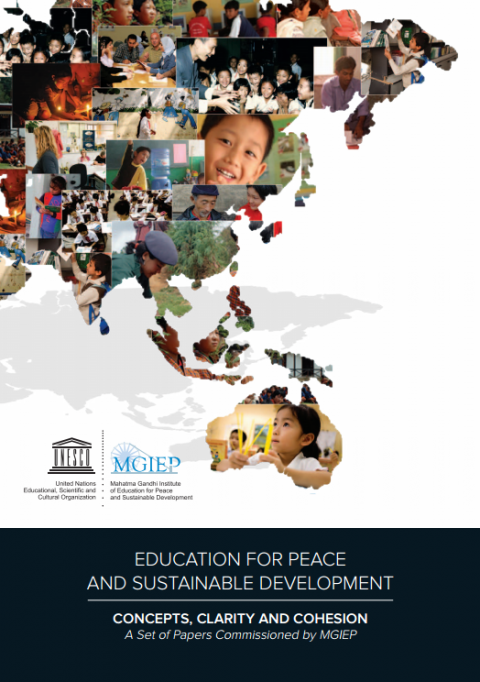 Education for peace and sustainable development: concepts, clarity and cohesion Año de publicación: 2013 Autor corporativo: Mahatma Gandhi Institute of Education for Peace and Sustainable Development (MGIEP) UNESCO MGIEP's focus lies in exploring and engaging with the strong interlinkages between peace and sustainable development and making interventions in the education systems to impart these principles. The first publication from the Institute Education for Peace and Sustainable Development: Concepts, Clarity and Cohesion explores the interlinkages and interdependencies of Education for Peace and Education for Sustainable Development. The monograph contains four concept papers which elaborate on the interlinkages between education, peace and sustainable development, define the gaps in the current approach to education for peace and sustainable development and argue for a comprehensive approach to issues of peace and sustainability to be incorporated in education systems. UNESCO MGIEP aims to develop a theoretical framework to look at the interlinkages between peace and sustainability in a holistic manner and this monograph is the first exercise towards building this discourse. L'éducation pour la paix et le développement durable: concepts, la clarté et la cohésion Año de publicación: 2013 Autor corporativo: Mahatma Gandhi Institute of Education for Peace and Sustainable Development (MGIEP) La mise au point de l'UNESCO MGIEP réside dans l'exploration et la collaboration avec les liens étroits entre la paix et le développement durable et faire des interventions dans les systèmes éducatifs pour communiquer ces principes. La première publication de «L'éducation pour la paix et le développement durable: concepts, la clarté et la cohésion de l'Institut explore les liens et les interdépendances de l'éducation pour la paix et l'éducation pour le développement durable. La monographie contient quatre documents de réflexion qui élaborent sur les liens entre l'éducation, la paix et le développement durable, définissent les lacunes dans l'approche actuelle de l'éducation pour la paix et le développement durable et plaident en faveur d'une approche globale des questions de paix et de développement durable à incorporer dans l'éducation systèmes. UNESCO MGIEP vise à développer un cadre théorique pour examiner les liens entre la paix et le développement durable d'une manière holistique et cette monographie est le premier exercice à la construction de ce discours.
  Address by Irina Bokova, Director-General of UNESCO, on the occasion of Seminar on Global Citizenship Education, UNHQ; New York, 6 March 2015 Año de publicación: 2015 Autor corporativo: UNESCO. Director-General, 2009-2017 (Bokova, I.G.) This document is an address by Irina Bokova, Director-General of UNESCO on the occasion of "Seminar on Global Citizenship Education" in New York, 6 March 2015. She highlights the importance of GCED for education in the 21st century. Guide Pratique sur l'éducation à la citoyenneté mondiale ses pratiques d'enseignement - Prendre l'étude des étudiants du Collège comme un exemple Año de publicación: 2012 Autor: Amy Shumin Chen Autor corporativo: National Taiwan Normal University. Center for Educational Research and Innovation La mondialisation a contribué une forte influence sur les mouvements sociaux, les risques et les crises et incorpore en outre des expériences de vie individuelles dans les événements mondiaux. En ce qui concerne les tendances actuelles, ce document examine la transformation des caractéristiques de la citoyenneté mondiale et analyse les dimensions de l'apprentissage de la citoyenneté mondiale. Cette étude porte sur les pratiques pédagogiques qui se réfèrent aux aspects liés à L'éducation à la citoyenneté Mondiale (ECM) et donne un exemple de premier cycle d'apprentissage. L'article examine ce qui suit: 1) Illustrant les milieux de la citoyenneté mondiale en tant que cadre d'actions individuelles dans le contexte de la mondialisation. 2) Construire les dimensions de l'apprentissage et des concepts connexes de la citoyenneté mondiale. 3) Discuter des fondements théoriques et le contenu des pratiques pédagogiques envers l'éducation à la citoyenneté mondiale. 4) Le document donne également des conclusions et des suggestions pour la recherche future. 論全球公民教育與其教學實踐-以大學生的學習為例 Año de publicación: 2012 Autor corporativo: 國立臺灣師範大學教育研究與創新中心 Globalization has contributed a strong influence on social movements, risks and crisis and further embeds individual life experiences in global events. Regarding current trends, this paper investigates the features transformation of global citizenship and analyzes the learning dimensions of global citizenship.This study focuses on pedagogical practices which refer to the related aspects in global citizenship education and gives an example of undergraduates learning.The article examines the following:1)Illustrating the backgrounds of global citizenship as a framework of individual actions in the context of globalization.2) Constructing the learning dimensions and related concepts of global citizenship.3) Discussing the theoretical foundations and contents of pedagogical practices toward global citizenship education.4) The paper also gives conclusions and suggestions for future research
 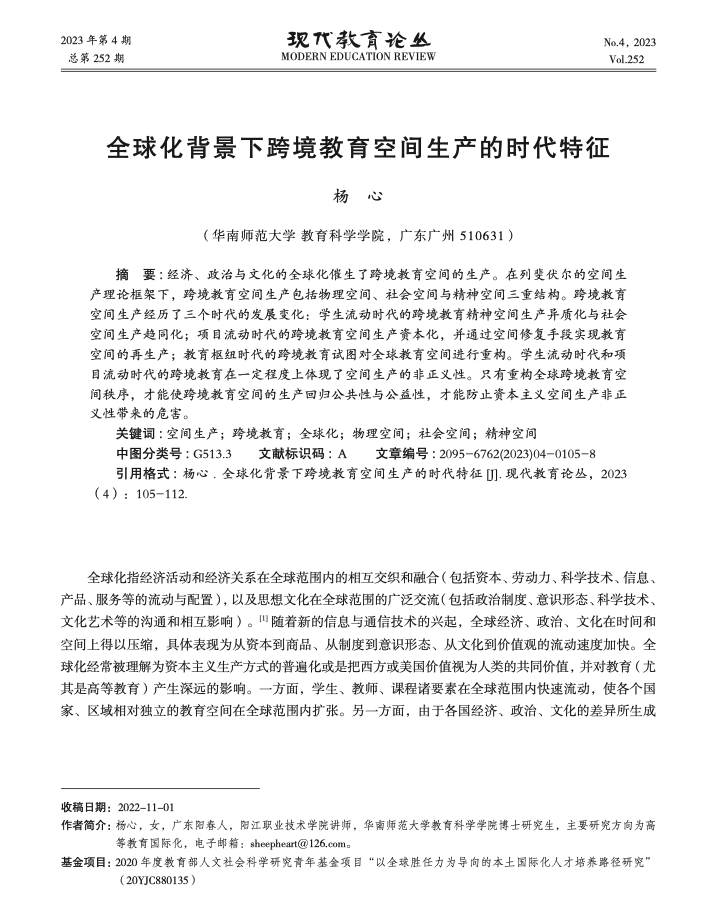 全球化背景下跨境教育空间生产的时代特征 Año de publicación: 2023 Autor: 杨心 经济、政治与文化的全球化催生了跨境教育空间的生产。在列斐伏尔的空间生产理论框架下,跨境教育空间生产包括物理空间、社会空间与精神空间三重结构。跨境教育空间生产经历了三个时代的发展变化:学生流动时代的跨境教育精神空间生产异质化与社会空间生产趋同化;项目流动时代的跨境教育空间生产资本化,并通过空间修复手段实现教育空间的再生产;教育枢纽时代的跨境教育试图对全球教育空间进行重构。学生流动时代和项目流动时代的跨境教育在一定程度上体现了空间生产的非正义性。只有重构全球跨境教育空间秩序,才能使跨境教育空间的生产回归公共性与公益性,才能防止资本主义空间生产非正义性带来的危害。
 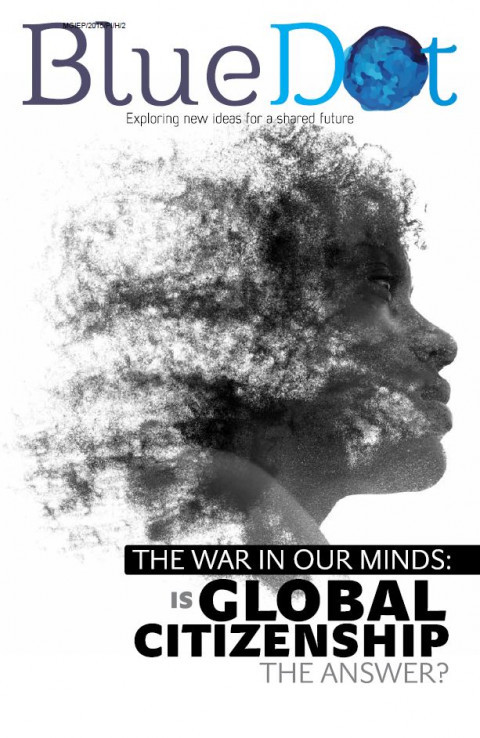 The war in our minds: is global citizenship the answer? (Blue Dot issue 1) Año de publicación: 2015 Autor corporativo: Mahatma Gandhi Institute of Education for Peace and Sustainable Development (MGIEP) Feature Global Citizenship Education: A New Educational, Pedagogical and Political Narrative in the World System? (by Carlos A. Torres) In Pursuit of a Global Civics (by Hakan Altinay) Global Citizenship: Necessary and Possible (by Paul and Anne Ehrlich) Cover Story YOUth Speak for a better today and tomorrow (by Piyali Sarkar Debnath, UNESCO MGIEP) Essays Unlocking the Civic Sense of Young Minds (by Karthik Shankar) Shared Home, Shared Hopes and Shared Actions (by Trang T. Nguyen) Redesigning the Education System for Global Citizenship (by Ayodeji Ojo) Youth Voices Who is a global citizen? News What we have been up to UNESCO MGIEP Crossword Event Calendar
  World's Largest Lesson Año de publicación: 2016 Autor corporativo: United Nations Children's Fund (UNICEF) World's Largest Lesson (WLL) is an educational campagin that students participate from all around the world.With this campaign, students can understand SDGs, think about global problems and act for finding solutions. UNICEF provides teaching materials and guides to teachers for participatting World's Largest Lesson.
  Diriger et agir pour l’équité, l’inclusion et la justice sociale : boîte à outils pour les directions d’établissement d’enseignement Año de publicación: 2020 Autor: Julie Larochelle-Audet | Marie-Odile Magnan | Emmanuelle Doré | Maryse Potvin | Lise-Anne St-Vincent | Andréanne Gélinas-Proulx | Anastasie Amboulé Abath Autor corporativo: Observatoire sur la formation à la diversité et l’équité (OFDE) L’objectif principal de ce document est d’outiller les directions d’établissement, en exercice ou en formation, pour qu’ils puissent contribuer à la mise en œuvre d’une éducation permettant à tous et toutes d’avoir des opportunités équivalentes d’accéder aux services, aux ressourceset aux biens collectifs de la société québécoise et d’y participer en toute égalité et dignité. The main objective of this document is to equip school principals and those in training with the tools they need to contribute to the implementation of an education system that gives everyone equal opportunities to access the services, resources and public goods of Quebec society and to participate in them with full equality and dignity.
  Equipping To Deal With Intolerant Speech: Racism, Antisemitism, Sexism, Discriminations Año de publicación: 2023 Autor corporativo: Citoyenneté Possible In this report, NGO Citoyenneté Possible shares 18 years' experience in the field of anti-discrimination and dialogue. It provides both hands-on experience, with testimonials and tools, and in-depth reflection, analysis and sharing of experiences, practices and visions. It's possible to dare to engage in constructive dialogue on divisive issues, provided you have the intention to do so, and above all, the skills to do so. This report offers very concrete and detailed recommendations for professionals working with young people (teachers, educators, associations, etc.).