
Recursos
Exploren una amplia gama de recursos valiosos en GCED para profundizar su comprensión y promover su búsqueda, incidencia, enseñanza y aprendizaje.
1,447 resultados encontrados
 The Remapping and Analysis of Human Rights and Peace Education in ASEAN/Southeast Asia Año de publicación: 2019 Autor corporativo: Strengthening Human Rights and Peace Research/Education in ASEAN/Southeast Asia (SHAPE-SEA) | AUN Human Rights Education Network (AUN-HRE) This book is the result of SHAPE-SEA’s Research Project on “The Remapping and Analysis of Human Rights and Peace Education in ASEAN/Southeast Asia.” It is a follow-up to the 2013 report on “The Mapping and Analysis of Human Rights and Peace Education in Southeast Asia.” It aimed at establishing a systematic updating of developments in human rights and peace education/studies in ASEAN/Southeast Asia. The study investigated courses and programmes on human rights and peace & conflict being undertaken by higher education institutions in all ASEAN member countries and Timor Leste. It had also identified new developments and/or setbacks in human rights and peace education. Researchers located existing academic institutions that have been running programmes and courses on human rights and/or peace. The analysis of existing course syllabi and curriculum in the region was also conducted. To a certain extent, materials being used by instructors were also examined.
  2019 꿈다락 토요문화학교: 드림 아트랩 4.0; Bunker 465-16 결과자료집 Año de publicación: 2020 Autor corporativo: 한국문화예술교육진흥원 이 문서는 2019 꿈다락 토요문화학교 드림 아트랩 4.0 프로그램 관련, 토탈미술관에서 진행한 Bunker465-16 프로그램 결과자료집이다.융복합 프로그램에 있어서 기술을 소비하는 관점이 아닌, 왜 그러한 기술을 사용해야 하는지에 대한 이해를 바탕으로 교육 과정을 설계하였다. 전체적인 프로그램에 예술적인 맥락을 끌여들여 미래친구, 식물친구, 소리친구를 설정, 각각의 주제와 매체(AR마커, AI, 식물키트제작, 악기제작 등)를 연결시켰고, 각 과정별 다양한 아티스트와의 협업을 만들어냈다.본 자료집에는 프로그램 개발과정에서부터 실제 운영 내용(커리큘럼 등) 이후 보완 필요사항 등에 대한 관찰일지가 자세히 기록되어 있다.
  문화다양성 기반 문화예술 교육프로그램 분석 및 방향에 관한 연구: 국립현대미술관 사례를 중심으로 Año de publicación: 2019 Autor: 황지영 | 홍해지 Autor corporativo: 한국예술경영학회 | 한국문화교육학회 본 자료는 2019 문화예술교육 유관학회 연계 '작은 연구’에서 발췌한 '문화다양성 기반 문화예술 교육프로그램 분석 및 방향에 관한 연구:국립현대미술관 사례를 중심으로' 연구자료이다.본 연구는 서울어젠다를 기반으로 한 문화예술교육의 사회적 가치 확산의 흐름을 파악하고 앞으로의 방향성을 제시하는 것을 목적으로, 문화다양성의 개념과 방향에 대한 논의가 확장됨에 따라 이를 반영한 문화다양성 관점의 문화예술교육프로그램의 운영 실태를 파악하고 앞으로의 방향성을 모색하고자 한다.
  Global Citizenship and Youth Participation in Europe Año de publicación: 2016 Autor: Douglas Bourn Autor corporativo: Oxfam | Oxfam Italia | UCL Institute of Education | CARDET | Pah Global Citizenship has been recognized as an important component of education by UNESCO through the Sustainable Development Goals launched in 2015 and the recent Global Education Congress in Croatia.While there has been considerable activity across Europe in encouraging youth engagement in democratic institutions, this report suggests that insufficient attention has been given to the linkages young people make between their outlook on the world, their personal and social identity and the ways they use tools such as social networking to engage in societies.The report also suggests to teachers that they need to address and respond to the interests of young people in issues such as refugees and migration, climate change and global terrorism by equipping them with the knowledge and skills to effectively engage in these debates.
  Youth Participation for Active Global Citizenship: Future Youth School Forums Project Report Año de publicación: 2018 Autor: Anna Jarkiewicz | Joanna Leek Autor corporativo: Oxfam GB | University of S odz (Poland) The Future Youth School Forums (FYS-Forums) project took place in Cyprus, Italy, Poland, Lithuania and the UK from 2015 to 2018 and was funded by EU Erasmus+. Its aim was to show how creating a group of engaged young global participants requires the engagement of teachers in activities to promote global citizenship – and to provide teachers and young people with the tools to promote effective and inclusive youth leadership across formal and informal education through global citizenship forums.This report on the project looks at the role of teachers and partnerships with students in raising critical awareness of global citizenship.
 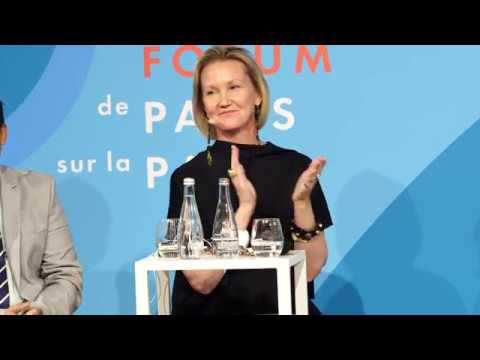 How Can Pluralism Strengthen Peace?: Global Centre for Pluralism at the 2019 Paris Peace Forum Año de publicación: 2019 Autor: Meredith P. Mcghie | Aung K. Moe | Bojana Dujkovic Autor corporativo: Global Pluralism Award Many of the most intractable challenges we face today − from entrenched poverty to conflict-driven migration − stem from the exclusion and resentment of groups defined as “the other”.Group-based grievances arising from inequality, exclusion and feelings of injustice increase the risk of instability and conflict. Pluralism is the choice to see diversity contribute to the common good. Making this choice is essential to building more secure, peaceful and resilient societies.Meredith Preston McGhie, the Secretary General of the Global Centre for Pluralism, was joined by two winners of the 2019 Global Pluralism Award to discuss how history education and community-based reconciliation can help strengthen pluralism, sustain peace and prevent conflict in diverse societies. Comment le pluralisme peut-il renforcer la paix?: Centre mondial du pluralisme au Forum de la paix de Paris 2019 Año de publicación: 2019 Autor: Meredith P. Mcghie | Aung K. Moe | Bojana Dujkovic Autor corporativo: Global Pluralism Award Plusieurs des épineux défis auxquels nous faisons face aujourd’hui – de l’appauvrissement endémique à la migration causée par des conflits – découlent de l’exclusion de groupes définis comme « l’autre » et du ressentiment à leur égard.Les griefs collectifs résultant de l’inégalité, de l’exclusion et de sentiments d’injustice augmentent le risque d’instabilité et de conflit. Le pluralisme est une option pour que la diversité contribue au bien commun. Il est essentiel de faire ce choix pour bâtir des sociétés plus sécuritaires, pacifiques et résilientes.Meredith Preston McGhie, secrétaire générale du Centre mondial du pluralisme, était accompagnée de deux lauréats du Prix mondial du pluralisme 2019 pour aborder la manière dont l’enseignement de l’histoire et la réconciliation à l’échelle communautaire peuvent aider à renforcer le pluralisme, entretenir la paix et prévenir l’éclatement de conflits dans les sociétés diversifiées.
  Pour mettre en lien des jeunes du monde au coeur de la transition Año de publicación: 2017 Autor: Maryse Clary | Jacqueline Charron Autor corporativo: Alliance pour une Éducation à la Citoyenneté Planétaire (AECP) | Les Amis de Circée Ce groupe d’initiative, en tant qu’experts dans le domaine de l’éducation, anime le réseau, conduit le projet de recherche et se veut porte-parole auprès des instances éducatives. Il est intervenu lors du sommet « Climate Chance » à Nantes en septembre 2016 et suite à la COP 21, intervient à Marrakech lors de la journée éducation du 14 novembre 2016. Il a le soutien des autres membres fondateurs, des signataires de la charte et des partenaires que sont le World Environmental Education Congress (WEEC), le réseau Climates et l’Alliance pour les sociétés responsables et durables. Les équipes de 12 pays sont membres actifs du réseau, comme acteurs de terrain. Elles mettent les jeunes au cœur du système éducatif, sont à leur écoute, travaillent en partenariat réel sur des projets concrets en prise directe avec leur territoire. Ensemble, les experts, et les équipes montrent que les résultats de tous ces projets au Nord comme au Sud visent un changement des systèmes éducatifs pour répondre aux défis du développement durable et du changement climatique.Cette publication relate les données d’expériences innovantes, en propose une capitalisation et une analyse afin de permettre des échanges entre équipes en vue d’une amélioration des pratiques. Ce réseau, fort de sa diversité culturelle, du nombre de jeunes impliqués et de son engagement dans les valeurs de citoyenneté planétaire, souhaite jouer un rôle de lobbying auprès des autorités éducatives pour faire évoluer positivement les systèmes éducatifs.
  Un projet européen d’éducation à la citoyenneté et à la solidarité internationale Año de publicación: 2020 Autor: Elżbieta Swidrowska | Michał Tragarz Autor corporativo: Le Partenariat | Global Issues, Global Subjects (GIGS) | Union européenne Cette brochure nous permet de prendre conscience de l’importance d’une démarche citoyenne ayant pour but de favoriser une solidarité entre les territoires, les générations, les groupes sociaux et d’agir pour la construction d’un monde solidaire.
  Creativity, Resilience and Global Citizenship: Activity Toolkit Año de publicación: 2015 Autor corporativo: CIT Crawford College of Art and Design | Youth Work Ireland This publication is a step by step guide to a range of activities exploring the themes of Creativity, Resilience & Global Citizenship through a wide range of workshops, sharing creative methods and tools. It has been co-developed by the Fast Forward training programme which brought together young people and youth workers from Ireland, Hungary, Italy and UK in Cork, Ireland in January 2015. It was developed with thirty young people: youth workers, artists and educators who are passionate about supporting young people to grow as global citizens. It is useful to provide a context for anyone engaging others in the creative activities presented in this toolkit.