
Recursos
Exploren una amplia gama de recursos valiosos en GCED para profundizar su comprensión y promover su búsqueda, incidencia, enseñanza y aprendizaje.
3,451 resultados encontrados
 Democracy and the Accommodation of Diversity: Advancing Pluralism Through Power Sharing, Self-Governance and Limited Government Año de publicación: 2018 Autor: Rotimi Suberu Autor corporativo: Global Centre for Pluralism (Canada) Democracy is, paradoxically, both essential and precarious in diverse and divided societies with deep cultural or ethnic (i.e., linguistic, regional, religious, racial, and other attributes of identity) divides. group). There are examples of relatively non-violent management of ethnic diversity in undemocratic systems, including the Ottoman Empire's millet system to accommodate non-Muslim communities; the British colonial system of indirect administration; and the informal ethnic balancing practices of many African dictatorships. However, the majority of ethnicity scholars agree that undemocratic regimes are often unsuccessful - and ultimately, unsustainable - managers of ethnic diversity, and that there are "no viable alternatives. democracy ”as a pluralist, peaceful, just and sustainable system of governance of such diversity. This is because basic democratic practices, including credible multiparty elections and effective protections for civil rights and freedoms, are essential for the proper articulation, representation and accommodation of competing ethnic interests. La démocratie et l’accommodement de la diversité : Faire progresser le pluralisme par le partage du pouvoir, l’autogouvernance et le gouvernement limité Año de publicación: 2018 Autor: Rotimi Suberu Autor corporativo: Global Centre for Pluralism (Canada) La démocratie est, paradoxalement, à la fois essentielle et précaire dans les sociétés diversifiées et divisées ayant de profondes fractures culturelles ou ethniques (c.-à-d., linguistiques, régionales, religieuses, raciales, et autres attributs de l’identité de groupe). Il existe des exemples de gestion relativement non violente de la diversité ethnique dans des systèmes non démocratiques, y compris le système des millets de l’Empire ottoman pour accommoder les communautés non musulmanes; le système colonial britannique d’administration indirecte; et les pratiques informelles d’équilibrage ethnique de nombreuses dictatures africaines1. Toutefois, la majorité des spécialistes de l’ethnicité conviennent que les régimes non démocratiques sont souvent des gestionnaires infructueux – et en fin de compte, insoutenables – de la diversité ethnique, et qu’il n’y a « aucune option de rechange viable à la démocratie » en tant que système de gouvernance pluraliste, pacifique, juste et durable d’une telle diversité2. Cela s’explique par le fait que les pratiques démocratiques fondamentales, y compris des élections multipartites crédibles et des protections efficaces pour les droits et libertés civiles, sont indispensables pour l’articulation, la représentation et l’accommodement adéquats d’intérêts ethniques divergents.
  Beyond Academic Learning: First Results from the Survey of Social and Emotional Skills Año de publicación: 2021 Autor: Marta Encinas-Martin | Eva Feron | Francesco Avvisati | Marco Paccagnella | Javier Suárez-Alvarez | Michelle Cherian Autor corporativo: Organisation for Economic Co-operation and Development (OECD) Over the last few years, social and emotional skills have been rising on the education policy agenda and in the public debate. Policy makers and education practitioners are seeking ways to complement the focus on academic learning, with attention to social and emotional skill development. Social and emotional skills are a subset of an individual’s abilities, attributes and characteristics important for individual success and social functioning. Together, they encompass a comprehensive set of skills essential for students to be able to succeed at school, at work and fully participate in society as active citizens.The benefits of developing children’s social‐emotional skills go beyond cognitive development and academic outcomes; they are also important drivers of mental health and labour market prospects. The ability of citizens to adapt, be resourceful, respect and work well with others, and to take personal and collective responsibility is increasingly becoming the hallmark of a well‐functioning society. The OECD’s Survey of Social and Emotional Skills (SSES) is one of the first international efforts to collect data from students, parents and teachers on the social and emotional skills of students at ages 10 and 15. This report presents the first results from this survey. It describes students’ social and emotional skills and how they relate to individual, family, and school characteristics. It also examines broader policy and socio‐economic contexts related to these skills, and sheds light on ways to help education leaders and policy makers monitor and foster students’ social and emotional skills.
  The Future of Global Citizenship Education After COVID Año de publicación: 2020 Autor corporativo: Spur Change This is a video from the Spur Change webinar titled "The Future of Global Citizenship Education After Covid" "which took place on October 22, 2020. L'avenir de l'éducation à la citoyenneté mondiale après COVID Año de publicación: 2020 Autor corporativo: Spur Change Ceci est une vidéo du webinaire Activer le changement intitulé "L'Avenir de l'éducation à la citoyenneté mondiale apres Covid" qui a eu lieu le 22 octobre 2020.
 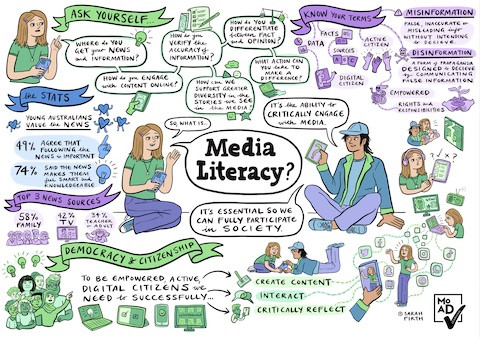 Media Literacy Autor: Sarah Firth Autor corporativo: Museum of Australian Democracy at Old Parliament House This infographic helps hook students into reflecting and considering a range of questions and information about media literacy.
 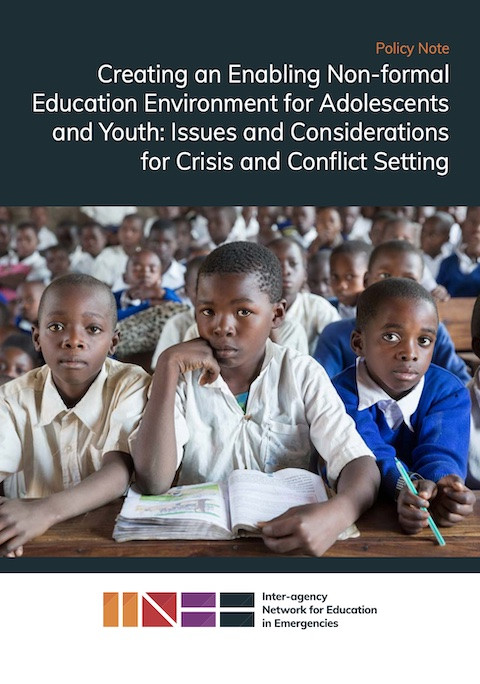 خلق بيئة تعليمية غير رسمية ترتكز على تمكين المراهقين والشباب: قضايا واعتبارات في سياقات الأزمات والصراع Año de publicación: 2021 Autor corporativo: Inter-agency Network for Education in Emergencies (INEE) تقدم مذكرة السياسة هذه توصيات لكيفية تعزيز بيئة السياسات العامة التي يتم فيها تنفيذ التعليم غير الرسمي. تسلط الضوء على الاعتبارات الرئيسية بالنسبة لهؤلاء الذين يخططون ويصممون وينفذون برامج غير رسمية تسعى إلى مواجهة التحديات الأساسية في مجالي التعليم والمهارات الإنمائية التي يواجهها المراهقون والشباب خارج المدارس، ولا سيما المتأثرون بالنزاعات أو الأزمات أو التهجير القسري. Creating an Enabling Non-formal Education Environment for Adolescents and Youth: Issues and Considerations for Crisis and Conflict Setting Año de publicación: 2021 Autor corporativo: Inter-agency Network for Education in Emergencies (INEE) This policy brief offers recommendations to strengthen the policy environment within which non-formal education is delivered and highlights key considerations for those planning, designing and implementing non-formal programmes that seek to meet the core education and skill development challenges faced by out-of-school adolescents and youth, particularly those affected by conflict, crisis, or forced displacement. Creación de un entorno de Educación No Formal favorable para adolescentes y jóvenes: Cuestiones y consideraciones para situaciones de crisis y conflictos Año de publicación: 2021 Autor corporativo: Inter-agency Network for Education in Emergencies (INEE) Esta nota de política ofrece recomendaciones sobre cómo fortalecer el entorno de políticas en el que se imparte la ENF. Destaca las consideraciones clave para quienes planifican, diseñan e implementan programas no formales que buscan satisfacer los desafíos básicos de educación y desarrollo de habilidades que enfrentan los adolescentes y jóvenes no escolarizados, en particular los afectados por conflictos, crisis o desplazamiento forzado. Créer un environnement favorable à l’enseignement informel pour les adolescents et les jeunes: Considérations et problèmes liés aux contextes de crise et de conflit Año de publicación: 2021 Autor corporativo: Inter-agency Network for Education in Emergencies (INEE) La présente note de politique propose des recommandations sur la manière de renforcer le cadre d’action publique dans lequel l’ENF est dispensée. Elle met en lumière des considérations clés à prendre en compte par ceux et celles qui planifient, conçoivent et mettent en œuvre des programmes non formels visant à relever les principaux défis auxquels sont confrontés les adolescents et les jeunes non scolarisés en matière d’éducation et de développement de compétences, en particulier ceux et celles qui sont touchés par un conflit, une crise ou un déplacement forcé.