
Recursos
Exploren una amplia gama de recursos valiosos en GCED para profundizar su comprensión y promover su búsqueda, incidencia, enseñanza y aprendizaje.
1,447 resultados encontrados
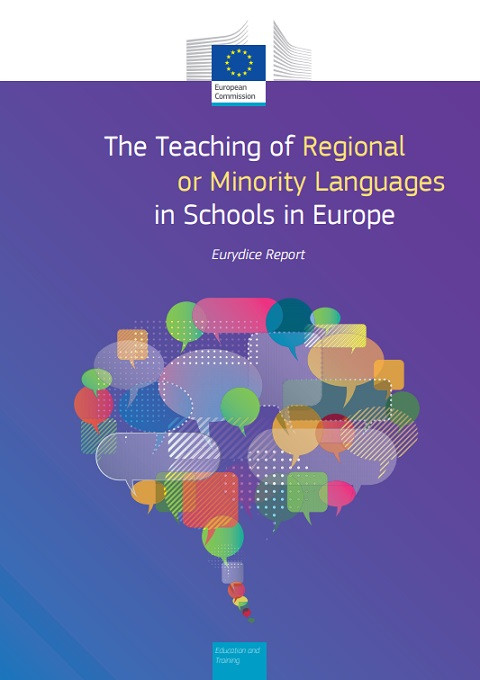 L’enseignement des à l’école en Europe langues régionales ou minoritaires: Rapport Eurydice Año de publicación: 2019 Autor corporativo: European Commission Ce rapport d’Eurydice offre un bref aperçu des efforts politiques déployés dans toute l’Europe pour soutenir l’enseignement des langues régionales ou minoritaires à l’école. Il présente tout d’abord les références aux langues régionales ou minoritaires figurant dans les documents officiels émanant des plus hautes autorités responsables de l’éducation. Sont ensuite illustrées certaines des stratégies et mesures liées à l’enseignement de langues régionales ou minoritaires qui sont déployées dans les différents systèmes éducatifs européens. Enfin, le rapport donne un aperçu de certains projets et initiatives financés par l’Union européenne afin de soutenir l’enseignement des langues régionales ou minoritaires à l’école en Europe.
  Citoyenneté mondiale: Citoyens du monde au 21e siècle Año de publicación: 2016 Autor corporativo: Conseil Arts Canada Des participants de la Conférence nationale des écoles UNESCO se sont exprimés sur la définition de la citoyenneté mondiale et sur les qualités d'un citoyen du monde. L’événement avait lieu dans le cadre de la 56e Assemblée générale annuelle de la Commission canadienne pour l’UNESCO et avait pour but de promouvoir le rôle de chef de file de l'UNESCO dans l'Agenda 2030 pour l'éducation. Cette vidéo a été produite au Musée canadien pour les droits de la personne, à Winnipeg, au Manitoba.
  1er rendez-vous de l'éducation à la citoyenneté mondiale: Mot d'ouverture Año de publicación: 2017 Autor corporativo: Association québécoise des organismes de coopération internationale (AQOCI) La Directrice générale de l’AQOCI, Michèle Asselin, souhaite la bienvenue aux personnes participantes du 1er rendez-vous de l’AQOCI sur l’éducation à la citoyenneté mondiale. Elle a expliqué sur la valeur de l’éducation à la citoyenneté mondial et souligné comme ci-dessous :« L’ÉCM promeut des valeurs et des comportements qui encouragent le changement social et la solidarité internationale »
  1er rendez-vous de l'éducation à la citoyenneté mondiale de l'AQOCI: Panel d'experts Año de publicación: 2017 Autor corporativo: Association québécoise des organismes de coopération internationale (AQOCI) Panel d'experts: l'ÉCM en contextes social et scolaire.Rachad Antonius, professeur de sociologie à l’UQÀM, chercheur, consultant et personne-ressource dans les milieux de la solidarité internationale, propose des éléments de réflexion sur l’éducation, sur le rôle de différents intervenants – militants, OCI, chercheurs et intellectuels - en ÉCM, sur le sens et les dimensions du concept de citoyenneté dans le contexte et face aux enjeux actuels et sur les réponses que le travail en ÉCM est appelé à apporter face à la mondialisation.La présentation de Marie-Hélène Chastenay, responsable de l’éducation interculturelle à la Direction des services d’accueil et d’éducation interculturelle du ministère de l’Éducation et de l’Enseignement supérieur (MÉES), examine l’apport de l’ÉCM à l’éducation des jeunes du Québec; l’intégration actuelle de l’ÉCM aux curriculums et à la vie scolaires; les enjeux et les défis de l’ÉCM en milieux scolaires et académiques et le rôle des organismes de coopération internationale et de la société civile dans la promotion de l’ÉCM en contextes scolaires et académiques.
 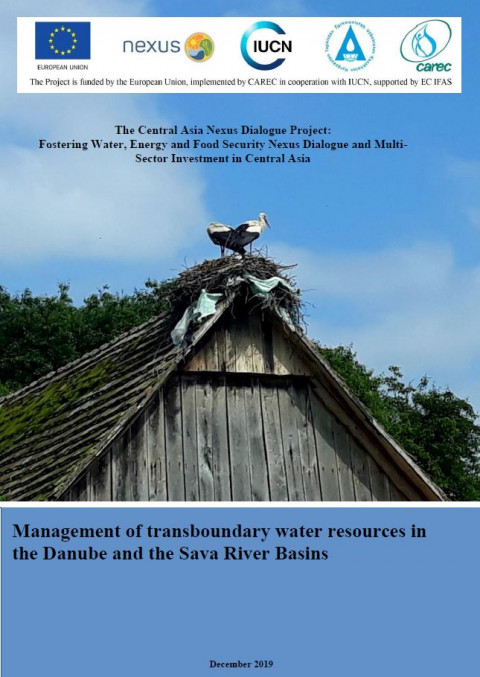 Management of Transboundary Water Resources in the Danube and the Sava River Basins Año de publicación: 2019 Autor: Aksulu Kushanova Autor corporativo: Regional Environmental Centre for Central Asia (CAREC) This analytical work “Management of transboundary water resources in the Danube and Sava River Basins” conveys knowledge and information on the management of the transboundary water resources by acknowledging the importance of the WEF Nexus in the Danube and Sava River Basins. Firsthand information was received during face-to-face meetings with the ICPDR and the ISRBC and the summarized work at hand shares the European experience with a wider audience.The analytical work narrates the institutional and legislative frameworks within the sectoral characteristics on the management of two River Basins: the Danube River Basin, which is the largest and the most international one in Europe, and the Sava River Basin, which serves as the greatest tributary to the Danube River. The study reviews the operations of the ICPDR and the ISRBC and technical tools applied at the basin level, which include accident emergency warning systems, monitoring networks, flood forecasting and more. Управление трансграничными водными ресурсами в бассейнах рек Дунай и Сава Año de publicación: 2019 Autor: Aksulu Kushanova Autor corporativo: Regional Environmental Centre for Central Asia (CAREC) Настоящая аналитическая записка «Управление трансграничными водными ресурсами в бассейнах рек Дунай и Сава» передает знания и информацию по вопросам управления ТВР, которые еще раз подчеркивают важную роль взаимосвязи (нексуса) «вода-энергия-продовольствие» (ВЭП), в данном случае на примере трансграничных рек Дунай и Сава. Информация из первых рук была получена в ходе рабочих встреч с представителями МКОРД и МКБРС и впоследствии обобщены для ознакомления с европейским опытом более широкой аудитории.В настоящей аналитической работе описываются институциональные и нормативно-правовые принципы построения и характеристики систем управления двумя речными бассейнами, а именно, бассейном р. Дунай – крупнейшим в Европе с наибольшим количеством прибрежных государств, и бассейном р. Сава – самого крупного притока Дуная. В документе анализируется деятельность МКОРД и МКБРС и технический инструментарий, применяемый ими на бассейновом уровне, включая системы предупреждения о чрезвычайных ситуациях, мониторинговые сети, системы прогнозирования наводнений и др.
 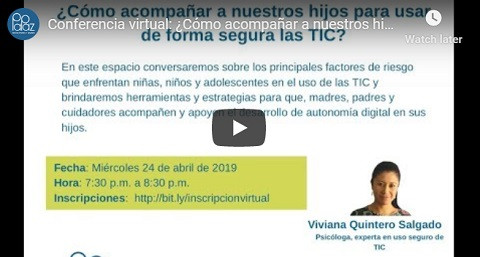 Virtual Conference: How to Accompany Our Children to Use ICT Safely? Año de publicación: 2019 Autor: Viviana Quintero Autor corporativo: Red Papaz This conference discusses the main risk factors faced by girls, boys and adolescents in the use of ICTs and provides tools and strategies so that, from home, mothers, fathers and caregivers accompany and support the development of digital autonomy in their children. Conferencia virtual: ¿Cómo acompañar a nuestros hijos para usar de forma segura las TIC? Año de publicación: 2019 Autor: Viviana Quintero Autor corporativo: Red Papaz En esta conferencia se discuten los principales factores de riesgo que enfrentan niñas, niños y adolescentes en el uso de las TIC y se brindan herramientas y estrategias para que, desde casa, madres, padres y cuidadores acompañen y apoyen el desarrollo de autonomía digital en sus hijos.
  Adult Learning and Gender: EAEA Background Paper Año de publicación: 2020 Autor: Agatha Devlin Autor corporativo: European Association for the Education of Adults (EAEA) Gender sensitivity in adult learning and education (ALE) is about more than trying to improve targeted outreach programmes for men and women who seem to be slipping through the gaps. By providing gender sensitive education opportunities, people are not only more likely to engage but also more likely to get the most out of their experiences. This background paper explores the problems that gender sensitive adult education could attempt to solve, good practices and examples to help make current structures more gender sensitive, and the wider benefits of gender sensitivity in ALE.This background paper takes various subtopics or examples of gender sensitivity in adult education and analyses them as individual areas, making its content easier to navigate according to the reader’s interests or concerns.
  UNESCO-UNEVOC Study on the Trends Shaping the Future of TVET Teaching (Trends Mapping Studies) Año de publicación: 2020 Autor: Gita Subrahmanyam Autor corporativo: UNESCO International Centre for Technical and Vocational Education and Training (UNEVOC) This report presents the results of the trends mapping study on the future of technical and vocational education and training (TVET) teaching, conducted by UNESCO-UNEVOC. The study aimed to engage the international TVET community to: (i) improve the understanding of the implications of global disruptions; (ii) gather knowledge, insights, experiences; and (iii) highlight promising practices in preparing TVET teaching staff to deliver the skills needed in the 21st century and beyond. Coordinated by UNESCO-UNEVOC, trends mapping studies aim to further the international community's understandings on contemporary key issues concerning TVET. The studies review existing literature and policies, and engage TVET stakeholders from around the world through surveys and virtual conferences.