
Recursos
Exploren una amplia gama de recursos valiosos en GCED para profundizar su comprensión y promover su búsqueda, incidencia, enseñanza y aprendizaje.
2,162 resultados encontrados
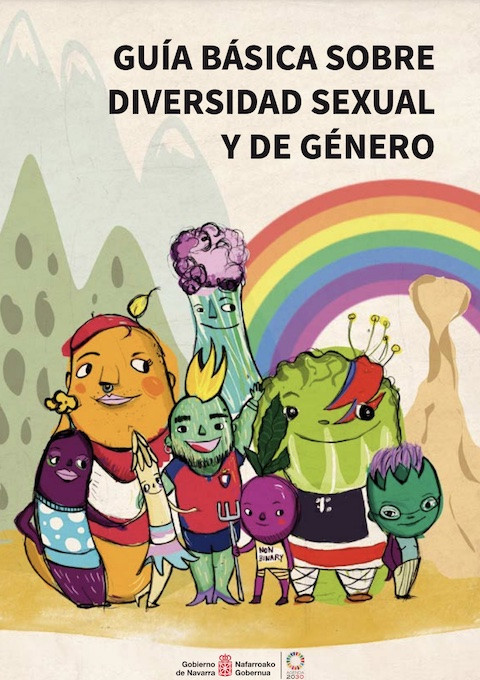 Basic Guide on Sexual and Gender Diversity Año de publicación: 2020 Autor: Miriam Solá García Autor corporativo: Navarra Institute for Equality This guide is a tool to learn about affective, sexual and gender diversity and reflect on why all of us have a key role in social change to achieve equality and recognition of LGTBI+ people. Respect for affective, sexual and gender diversity is an element of value and social wealth in whose promotion and experience all citizens are involved. Guía básica sobre diversidad sexual y de género Año de publicación: 2020 Autor: Miriam Solá García Autor corporativo: Navarra Institute for Equality Esta guía es una herramienta para conocer la diversidad afectiva, sexual y de género y reflexionar sobre por qué todas las personas tenemos un papel clave en el cambio social para lograr la igualdad y reconocimiento de las personas LGTBI+. El respeto por la diversidad afectiva, sexual y de género es un elemento de valor y de riqueza social en cuya promoción y vivencia está implicada toda la ciudadanía
  Reaching Out to All Learners: A Resource Pack for Supporting Inclusion and Equity in Education Año de publicación: 2021 Autor corporativo: UNESCO International Bureau of Education (IBE) The Reaching Out to All Learners resource materials tackle the practicalities of addressing these challenges in schools and other education centres, including early years and further education provision. More specifically, the materials focus on three strategic questions:How can schools be developed in order to respond positively to student diversity?How can classroom practices be developed that will ensure that lessons are inclusive?How can practitioners engage families, partner schools and the wider community in their efforts to become inclusive and equitable? Llegando a todos los estudiantes: Una caja de recursos de la UNESCO-OIE para apoyar la inclusión y la equidad en la educación Año de publicación: 2021 Autor corporativo: UNESCO International Bureau of Education (IBE) El material de recursos LLEGANDO A TODOS LOS ESTUDIANTES aborda los aspectos prácticos de la solución a estos problemas. En concreto, estos recursos se centran en tres cuestiones estratégicas:¿Cómo pueden crecer las escuelas para responder positivamente a la diversidad de los estudiantes?¿Cómo pueden desarrollarse prácticas docentes en el aula que garanticen que las lecciones sean inclusivas?¿Cómo pueden las escuelas involucrar a las familias, a las escuelas asociadas y a la comunidad en general en sus esfuerzos por ser inclusivas y equitativas? Atteindre tous les apprenants: Outils pour soutenir l’inclusion et l’équité dans l’éducation Año de publicación: 2021 Autor corporativo: UNESCO International Bureau of Education (IBE) Les supports de référence du dossier ouvert Atteindre tous les apprenants abordent les aspects pratiques de la résolution de ces problèmes dans les écoles et autres centres d’éducation, et notamment dans l’enseignement préscolaire et supérieur. Ces supports se concentrent plus précisément sur trois questions stratégiques :Comment développer les écoles afin de s’adapter positivement à la diversité des élèves ?Comment développer des pratiques de classe qui garantissent que les cours sont inclusifs ?De quelle manière les écoles peuvent-elles impliquer les familles, les écoles partenaires et la communauté au sens large dans leurs efforts pour devenir inclusives et équitables ?
  Education for All Coalition: Toolkit Año de publicación: 2022 Autor corporativo: Education for All Coalition (EFAC) Education for All Coalition (EFAC), Inc. is a global organization that is dedicated to creating education opportunities and finding solutions that empower displaced and disadvantaged children in emergency situations, refugee camps and settlements around the world. We focus on advocacy, capacity building, climate education, and social-emotional learning to enhance the overall well-being of children. We promote the physical, social, and cognitive development of all children. Fostering healthy life habits and environmental sustainability are integral parts of our programs to improve conditions for all children so they can become thriving global citizens with global competencies and unlimited potentialThe goal of the “Where Friendship Blooms” resource guide is to foster a fun-filled program for early learners up to age 8 that will result in evidence-based positive outcomes. The package includes: Lesson plans Coping strategies Activities and play Breathing exercises Classroom Growth Chart Tool Classroom Climate Scale Tool Student Goal Setting Chart Measurement & Evaluation
  Youth Guide on Education for Peacebuilding and the Prevention of Violence Año de publicación: 2022 Autor corporativo: UNESCO International Institute for Capacity-Building in Africa (IICBA) This publication is a training guide for the youth in both formal or non-formal education. It is a resource to work with children and young people in various settings, including schools, non-formal educational program, community activities and other settings. The goal of the training guide is therefore the youth to become a facilitator with the disposition, knowledge, skills and commitment to support other youth in developing their full potential as peace-builders. It provides a foundation of conflict analysis, peacebuilding and describes a learner centered approach to peace education and community engagement. Guide jeunesse sur l’éducation pour la consolidation de la paix et de la prévention de la violence Año de publicación: 2022 Autor corporativo: UNESCO International Institute for Capacity-Building in Africa (IICBA) Cette publication est un guide de formation pour les jeunes de l’éducation formelle ou non formelle. Il s’agit d’une ressource pour travailler avec les enfants et les jeunes dans différents contextes, notamment dans les écoles, les programmes d’éducation non formelle, les activités communautaires et autres. L’objectif de ce guide de formation est donc de permettre aux jeunes de devenir des animateurs dotés de la disposition, des connaissances, des compétences et de l’engagement nécessaires pour aider d’autres jeunes à développer pleinement leur potentiel de bâtisseurs de paix. Il fournit les bases de l’analyse des conflits et de la construction de la paix et décrit une approache de l’éducation à la paix et de l’engagement communautaire centrée sur l’apprenant.
  Guide to Educational Resources on Climate Change Año de publicación: 2020 Autor: Rosario Toril Moreno | Teresa Antolín García | Carmen García Valcárcel | Gema Herranz Aparicio | Isabel Matesanz Miguel y Antonio Moreno Rodríguez Autor corporativo: Spain. Ministry for Economic Transition and the Demographic Challenge This educational resource guide on climate change is organized according to the educational stages: infant, primary and secondary, a section for environmental educators has also been incorporated. Various resources have been included within each stage: books, magazines, games, websites, apps, videos, etc. When the resource is digital, the download link is provided and the rest can be found at the RECIDA centers and requested on loan, or purchased at bookstores or the corresponding publishers. In general, the documents that are included in the guide are published from 2015 to the present, although some of earlier dates have been maintained, considering that they have not lost their relevance and are of sufficient quality. Guía de recursos educativos sobre cambio climatico Año de publicación: 2020 Autor: Rosario Toril Moreno | Teresa Antolín García | Carmen García Valcárcel | Gema Herranz Aparicio | Isabel Matesanz Miguel y Antonio Moreno Rodríguez Autor corporativo: Spain. Ministry for Economic Transition and the Demographic Challenge Esta guía de recursos educativos sobre cambio climático está organizada según las etapas educativas: infantil, primaria y secundaria, también se ha incorporado un apartado para los/las educadoras ambientales. Dentro de cada etapa se ha incluido recursos variados: libros, revistas, juegos, webs, apps, vídeos, etc. Cuando el recurso es digital, se facilita el enlace de descarga y los demás se pueden encontrar en los centros RECIDA y solicitarlos en préstamo, o bien adquirirlos en librerías o en las editoriales correspondientes. En general, los documentos que se incluyen en la guía están publicados desde 2015 hasta la actualidad, aunque se han mantenido algunos de fecha anterior por considerar que no han perdido actualidad y tienen suficiente calidad.