
Recursos
Exploren una amplia gama de recursos valiosos en GCED para profundizar su comprensión y promover su búsqueda, incidencia, enseñanza y aprendizaje.
2,668 resultados encontrados
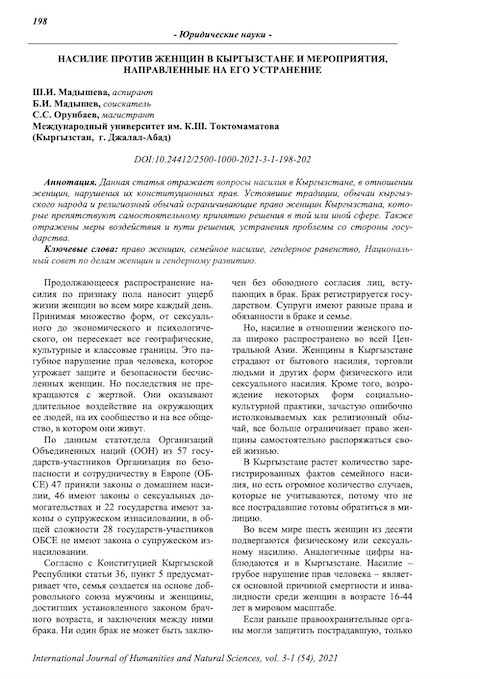 Violence Against Women in Kyrgyzstan and Activities Aimed at Its Elimination (International Journal of Humanities and Natural Sciences; vol. 3-1, no. 54) Año de publicación: 2021 Autor: Sh.I. Madisheva | B.I. Madyshev | S.S. Orunbaev This article reflects the issues of violence in Kyrgyzstan against women, violation of their constitutional rights. Persistent traditions, customs of the Kyrgyz people and religious custom that restrict the rights of women in Kyrgyzstan, which hinder independent decision-making in a particular area. Also reflects the measures of influence and ways of solving, eliminating the problem from the state. Насилие против женщин в Кыргызстане и мероприятия, направленные на его устранение (Международный журнал гуманитарных и естественных наук; vol. 3-1, no. 54) Año de publicación: 2021 Autor: Sh.I. Madisheva | B.I. Madyshev | S.S. Orunbaev Данная статья отражает вопросы насилия в Кыргызстане, в отношении женщин, нарушения их конституционных прав. Устоявшие традиции, обычаи кыргызского народа и религиозный обычай ограничивающие право женщин Кыргызстана, которые препятствуют самостоятельному принятию решения в той или иной сфере. Также отражены меры воздействия и пути решения, устранения проблемы со стороны государства.
  Women's Access to Justice in Kazakhstan: Identifying Barriers and Needs for Change Año de publicación: 2013 Autor corporativo: International Commission of Jurists This report noted a number of problematic aspects of women's access to justice in Kazakhstan that were raised by participants, as well as how the government should address these problems in light of the requirements of Kazakhstan's international obligations. Доступ женщин к правосудию в Казахстане: Определение препятствий и потребности в Переменахх Año de publicación: 2013 Autor corporativo: International Commission of Jurists В докладе отмечен ряд проблематичных аспектов доступа женщин к правосудию в Казахстане, на которые указывали участники, а также рассмотрен вопрос том, каким образом правительству необходимо разрешить обозначенные проблемы в свете требований международных обязательств Казахстана.
  Domestic Violence in Tajikistan: It’s Time to Restore Justice Año de publicación: 2017 Autor corporativo: International Partnership for Human Rights (IPHR) On International Women's Day, Public Foundation Notabene (Tajikistan), International Partnership for Human Rights (IPHR, Belgium) and Helsinki Foundation for Human Rights (HFHR, Poland) publish a joint report that examines why many victims of domestic violence still remain without effective protection and support four years after the adoption of new legislation to prevent domestic violence in Tajikistan. Домашнее насилие в Таджикистане: Время восстановить справедливость Año de publicación: 2017 Autor corporativo: International Partnership for Human Rights (IPHR) В Международный Женский День Общественный фонд «Нотабене» (Таджикистан), Международное партнерство по правам человека (МППЧ, Бельгия) и Хельсинкский фонд по правам человека (ХФПЧ, Польша), опубликовывают совместный доклад, в котором рассматриваются причины, по которым многие жертвы домашнего насилия до сих пор остаются без эффективной защиты и поддержки спустя четыре года после принятия нового законодательства о предупреждении домашнего насилия в Таджикистане.
 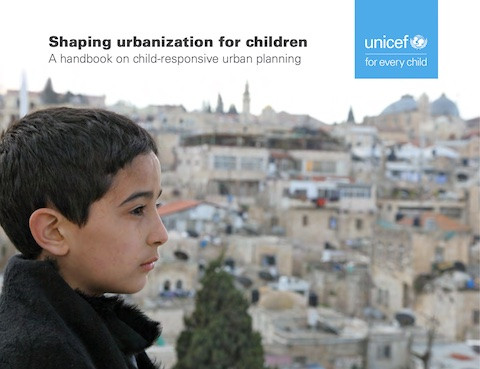 Shaping Urbanization for Children: A Handbook on Child-Responsive Urban Planning Año de publicación: 2018 Autor: Jens Aerts Autor corporativo: United Nations Children's Fund (UNICEF) This handbook provides detailed instruction for children-responsive urban planning. 儿童友好型城市规划手册: 为孩子营造美好城市 Año de publicación: 2018 Autor: Jens Aerts Autor corporativo: United Nations Children's Fund (UNICEF) 本手册为规划儿童友好型城市提供了详尽的指导。
  خطتنا المشتركة : تقرير الأمين العام Año de publicación: 2021 Autor corporativo: United Nations (UN) يستشرف تقرير "خطتنا المشتركة" السنوات الخمس والعشرين المقبلة ويمثل رؤية الأمين العام بشأن مستقبل التعاون العالمي وتعزيز تعددية الأطراف على أسس تقوم على الشمول والتواصل والفعالية. وقد قدم الأمين العام تقريره إلى الجمعية العامة في شهر أيلول/سبتمبر وذلك قبل نهاية دورتها الخامسة والسبعين. Our Common Agenda: Report of the Secretary-General Año de publicación: 2021 Autor corporativo: United Nations (UN) “Our Common Agenda” report looks ahead to the next 25 years and represents the Secretary-General’s vision on the future of global cooperation and reinvigorating inclusive, networked, and effective multilateralism. The Secretary-General presented his report to the General Assembly in September 2021 before the end of the 75th session of the General Assembly.