
Recursos
Exploren una amplia gama de recursos valiosos en GCED para profundizar su comprensión y promover su búsqueda, incidencia, enseñanza y aprendizaje.
875 resultados encontrados
 Con buen modo se saca el cimarrón del monte III Año de publicación: 2014 Autor: María del Carmen Ararat Córdoba | Alexandra Riveros Rueda | Andrés Eduardo González | Arturo Grueso Bonilla | Ángela Patricia Valencia Salas Autor corporativo: Bogotá. Secretaría de Educación del Distrito (SED) These materials contribute with a variety of content and select activities to approach teachers to the study of the Afro-Colombian culture, helping to include this knowledge into their curricular plans. The first material is a book written by the teacher Maria del Carmen Ararat Córdoba, which studies Afro-Colombian identities in Colombia. The second one is called ethno science, a pedagogical perspective of the Afro-Colombian studies for the teaching process of natural sciences, which talks about a science that recognizes that each group of people that has inhabited our world has made a meaningful explanation to what is going on in their surroundings. The third one is called African Ethno mathematics, which seeks to recover the relation between mathematical knowledge and reality, making visible the human groups that made it possible and finding new pedagogical perspectives to make the experience of teaching mathematics as inclusive, intercultural and participative process. Etnoscience Año de publicación: 2014 Autor: María del Carmen Ararat Córdoba | Alexandra Riveros Rueda | Andrés Eduardo González | Arturo Grueso Bonilla | Ángela Patricia Valencia Salas Autor corporativo: Bogotá. Secretaría de Educación del Distrito (SED) These materials contribute with contents and select activities to help teachers impart knowledge on the study of the Afro-Colombian culture, helping to include this knowledge into their curricular plans. The first material is a book written by the teacher Maria del Carmen Ararat Córdoba, which studies Afro-Colombian identities in Colombia. The second one is called ethno science, a pedagogical perspective of the Afro-Colombian studies for the teaching process of natural science, in which raises a science that recognizes that each group of people that have inhabited our world have made a meaningful explanation of their surroundings. The third one is called African Ethno mathematics, which seeks to recover the relation between mathematical knowledge and reality, making visible the human groups that made it possible and finding new pedagogical perspectives to make the experience of teaching mathematics as inclusive, intercultural and participative process. Ethnoscience Año de publicación: 2014 Autor: María del Carmen Ararat Córdoba | Alexandra Riveros Rueda | Andrés Eduardo González | Arturo Grueso Bonilla | Ángela Patricia Valencia Salas Autor corporativo: Bogotá. Secretaría de Educación del Distrito (SED) Ces matériaux contribuent avec le contenu et choisir des activités pour approcher les enseignants à l'étude de la culture afro-colombienne, en aidant à inclure ces connaissances dans leurs plans curriculaires. Le premier matériau est un livre écrit par le professeur Maria del Carmen Ararat Córdoba, qui étudie les identités afro-colombiennes en Colombie. La seconde est appelée la science ethno, une perspective pédagogique des études afro-colombiennes pour le processus d'enseignement des sciences naturelles, en ce qui soulève une science qui reconnaît que chaque groupe de personnes qui a habité notre monde a fait une explication significative de leur environnement. Le troisième est appelé mathématiques africaine Ethno, qui cherche à récupérer la relation entre la connaissance mathématique et la réalité, ce qui rend visible les groupes humains qui ont permis et de trouver de nouvelles perspectives pédagogiques pour faire l'expérience de l'enseignement des mathématiques comme processus inclusif, interculturel et participative. Etnociencia Año de publicación: 2014 Autor: María del Carmen Ararat Córdoba | Alexandra Riveros Rueda | Andrés Eduardo González | Arturo Grueso Bonilla | Ángela Patricia Valencia Salas Autor corporativo: Bogotá. Secretaría de Educación del Distrito (SED) These materials contribute with contents and select activities to help teachers impart knowledge on the study of the Afro-Colombian culture, helping to include this knowledge into their curricular plans. The first material is a book written by the teacher Maria del Carmen Ararat Córdoba, which studies Afro-Colombian identities in Colombia. The second one is called ethno science, a pedagogical perspective of the Afro-Colombian studies for the teaching process of natural science, in which raises a science that recognizes that each group of people that have inhabited our world have made a meaningful explanation of their surroundings. The third one is called African Ethno mathematics, which seeks to recover the relation between mathematical knowledge and reality, making visible the human groups that made it possible and finding new pedagogical perspectives to make the experience of teaching mathematics as inclusive, intercultural and participative process. African etnomathematics Año de publicación: 2014 Autor: María del Carmen Ararat Córdoba | Alexandra Riveros Rueda | Andrés Eduardo González | Arturo Grueso Bonilla | Ángela Patricia Valencia Salas Autor corporativo: Bogotá. Secretaría de Educación del Distrito (SED) These materials contribute with contents and select activities help teachers get comfortable with the study of the Afro-Colombian culture, helping to include this knowledge into their curricular plans. The first material is a book written by the teacher Maria del Carmen Ararat Córdoba, which studies Afro-Colombian identities in Colombia. The second one is called ethno science, a pedagogical perspective of the Afro-Colombian studies for the teaching process of natural science, in which raises a science that recognizes that each group of people that has habited our world has made a meaningful explanation of their surroundings. The third one is called African Ethno mathematics, which seeks to recover the relation between mathematical knowledge and reality, making visible the human groups that made it possible and finding new pedagogical perspectives to make the experience of teaching mathematics as inclusive, intercultural and participative process. Etnomatemátic un Africain Año de publicación: 2014 Autor: María del Carmen Ararat Córdoba | Alexandra Riveros Rueda | Andrés Eduardo González | Arturo Grueso Bonilla | Ángela Patricia Valencia Salas Autor corporativo: Bogotá. Secretaría de Educación del Distrito (SED) Ces matériaux contribuent avec le contenu et choisir des activités pour approcher les enseignants à l'étude de la culture afro-colombienne, en aidant à inclure ces connaissances dans leurs plans curriculaires. Le premier matériau est un livre écrit par le professeur Maria del Carmen Ararat Córdoba, qui étudie les identités afro-colombiennes en Colombie. La seconde est appelée la science ethno, une perspective pédagogique des études afro-colombiennes pour le processus d'enseignement des sciences naturelles, en ce qui soulève une science qui reconnaît que chaque groupe de personnes qui a habité notre monde a fait une explication significative de leur environnement . Le troisième est appelé mathématiques africaine Ethno, qui cherche à récupérer la relation entre la connaissance mathématique et la réalité, ce qui rend visible les groupes humains qui ont permis et de trouver de nouvelles perspectives pédagogiques pour faire l'expérience de l'enseignement des mathématiques comme processus inclusif, interculturel et participative. Etnomatemática africana Año de publicación: 2014 Autor: María del Carmen Ararat Córdoba | Alexandra Riveros Rueda | Andrés Eduardo González | Arturo Grueso Bonilla | Ángela Patricia Valencia Salas Autor corporativo: Bogotá. Secretaría de Educación del Distrito (SED) These materials contribute with contents and select activities help teachers get comfortable with the study of the Afro-Colombian culture, helping to include this knowledge into their curricular plans. The first material is a book written by the teacher Maria del Carmen Ararat Córdoba, which studies Afro-Colombian identities in Colombia. The second one is called ethno science, a pedagogical perspective of the Afro-Colombian studies for the teaching process of natural science, in which raises a science that recognizes that each group of people that has habited our world has made a meaningful explanation of their surroundings. The third one is called African Ethno mathematics, which seeks to recover the relation between mathematical knowledge and reality, making visible the human groups that made it possible and finding new pedagogical perspectives to make the experience of teaching mathematics as inclusive, intercultural and participative process.
 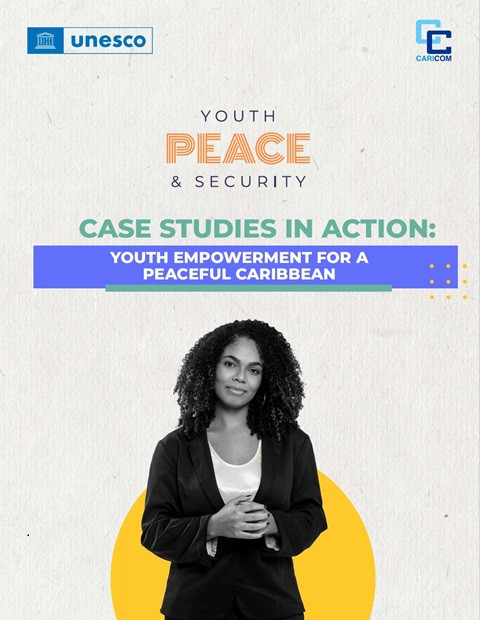 Case Studies in Action: Youth Empowerment for a Peaceful Caribbean Año de publicación: 2024 Autor: Gizem Kilinç Autor corporativo: UNESCO Kingston This compilation, titled “Case Studies in Action: Youth Empowerment for a Peaceful Caribbean” presents fourteen concise case studies highlighting (sub-)regional, national, and local initiatives that contribute to the operationalisation of the Youth, Peace, and Security (YPS) agenda. It features a combination of initiatives led by government, regional organisations, the United Nations, youth organisations, civil society, and multi-stakeholder groups across the Dutch and English-speaking Caribbean. The primary objective of this overview is to enrich the knowledge base on meaningful youth engagement in peace and security issues within the region, shedding light on successful approaches, obstacles encountered, and lessons learned. Organised into five sections aligned with the pillars of the YPS agenda—prevention, protection, disengagement and reintegration, partnership, and participation—the case studies are accompanied by an introduction and a summary of recommendations.
 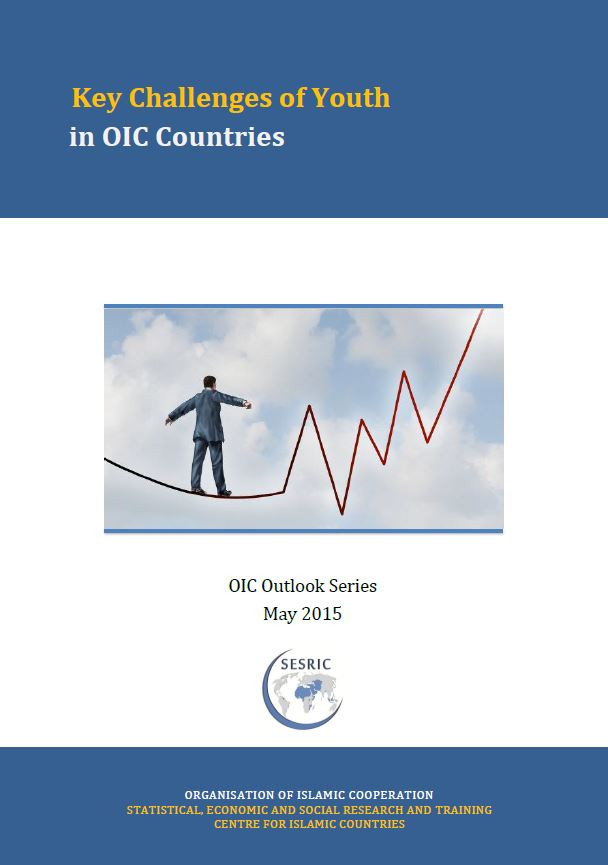 Key Challenges of Youth in OIC Countries Año de publicación: 2015 Autor corporativo: Organization of Islamic Cooperation (OIC) | Statistical, Economic and Social Research and Training Centre for Islamic Countries (SESRIC) The report contains four main sections, with the exception of the introductory and concluding sections. The first section briefly reviews some of the main educational outcomes in OIC countries. Literacy and participation rates in tertiary schools and international student mobility are the main indicators reviewed in this section. The second section highlights some important labor market indicators related to the young population in order to identify the main challenges and obstacles in the OIC countries. The third section deals with some social problems of young people. The fourth section deals with mental health issues. The last section is devoted to recommendations. التحديات الرئيسية للشباب في دول منظمة التعاون اإلسالمي Año de publicación: 2015 Autor corporativo: Organization of Islamic Cooperation (OIC) | Statistical, Economic and Social Research and Training Centre for Islamic Countries (SESRIC) ويحتوي التقرير على أربعة أقسام رئيسية، باستثناء الأقسام التمهيدية والختامية. يستعرض القسم الأول بإيجاز بعض النتائج التعليمية الرئيسية في دول المنظمة. وتشكل معدلات الإلمام بالقراءة والكتابة والمشاركة في مدارس التعليم العالي والحراك الطلابي الدولي المؤشرات الرئيسية المستعرضة في هذا القسم. يبرز القسم الثاني بعض المؤشرات الهامة لسوق العمل المتعلقة بالسكان الشباب بهدف التعرف على التحديات والعقبات الرئيسية في دول المنظمة. ويتناول القسم الثالث بعض المشاكل الاجتماعية للشباب. أما القسم الرابع فيتناول قضايا الصحة النفسية. والقسم الأخير مخصص للتوصيات.