
Recursos
Exploren una amplia gama de recursos valiosos en GCED para profundizar su comprensión y promover su búsqueda, incidencia, enseñanza y aprendizaje.
730 resultados encontrados
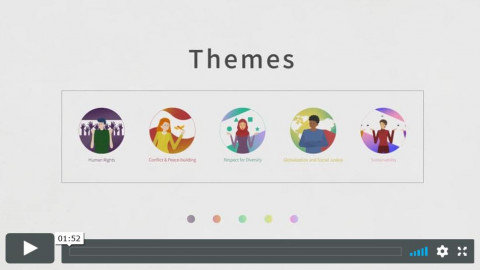 [Video] Thematic Areas and Learning Domains of GCED Año de publicación: 2018 Autor corporativo: APCEIU Here we introduce a fast, fun, and friendly way of learning GCED.The series of bite-sized animation will take you on a journey to GCED in minutes!
  [Video] What is Global Citizenship Education? Año de publicación: 2019 Autor corporativo: APCEIU Here we introduce a fast, fun, and friendly way of learning GCED.The series of bite-sized animation will take you on a journey to GCED in minutes! [Vidéo] Qu'est-ce que l'Éducation à la Citoyenneté Mondiale? Año de publicación: 2019 Autor corporativo: Centre Asie-Pacifique d'éducation pour la compréhension internationale (APCEIU) Regardez la vidéo pour apprendre sur l'éducation à la citoyenneté mondiale et contruisons ensemble un monde plus pacifique et plus juste!
 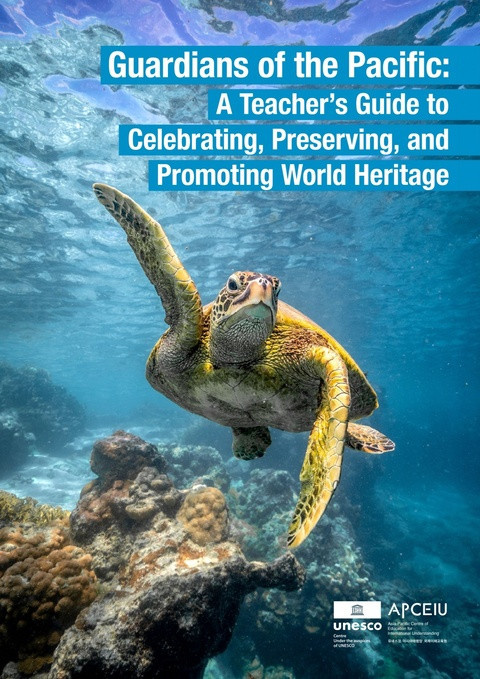 Guardians of the Pacific: A Teacher’s Guide to Celebrating, Preserving, and Promoting World Heritage Año de publicación: 2024 Autor: Karena Menzie-Ballantyne | Nanise J. Young Okotai | Adi Meretui Tuvou Ratunabuabua Autor corporativo: APCEIU Guardians of the Pacific: A Teacher’s Guide to Celebrating, Preserving, and Promoting World Heritage is an APCEIU initiative dedicated to advancing Global Citizenship Education (GCED) worldwide. Anchored in the principles of the Sustainable Development Goals (SDGs) and UNESCO World Heritage, the guide places a special emphasis on the rich and diverse heritage of the Pacific region. This Guide reflects GCED’s integrative approach, which encompasses three interconnected dimensions of learning: cognitive, socio-emotional, and behavioral. It encourages critical thinking about heritage and sustainability, fosters empathy by deepening understanding of the Pacific's unique cultural and natural environments, and inspires meaningful actions to protect and preserve local heritage. Tailored for educators working with students in upper primary (grades 4–6) and lower secondary (grades 7–9), the Guide provides step-by-step instructions and practical resources for incorporating Pacific World Heritage into classroom lessons and extracurricular activities. It is a valuable tool for nurturing awareness, appreciation, and stewardship of the Pacific region’s irreplaceable heritage in schools worldwide. <Table of Contents>ForewordHow to Use This GuideSection 1. Learning Framework Rationale Section 2. What Makes a Place Special?Section 3. The 2030 Agenda, Five Pillars and SDGsSection 4. Protecting People: Levuka Historical Port Town (Cultural Site)Section 5. Preserving the Planet: Phoenix Islands Protected Area (Natural Site)Section 6. Ensuring Prosperity: Rock Islands Southern Lagoon (Mixed Site)Section 7. Promoting Peace: Bikini Atoll Nuclear Test Site (Cultural Site)Section 8. Partnerships to Protect the Environment: East Rennell (Natural Site)Section 9. Taking Action to Promote and Protect a Special PlaceReferences WorksheetsPhoto Cards
 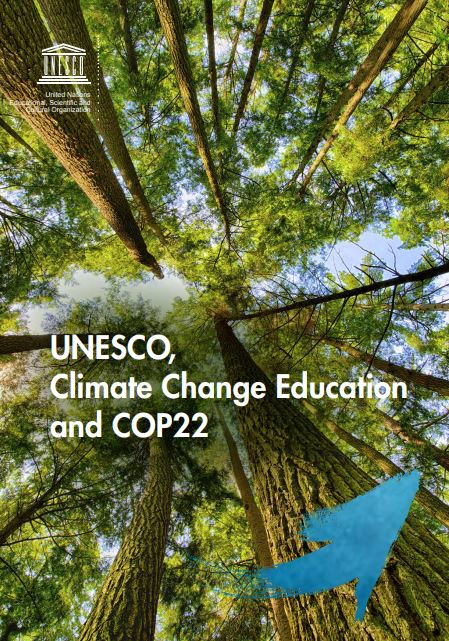 UNESCO, Climate Change Education and COP22 Año de publicación: 2016 Autor corporativo: UNESCO Education is a key vector to prepare societies for global changes. It plays a critical role in achieving sustainable development goals and putting into practice a global agreement on climate change. Education plays a paramount role in raising awareness and promoting behavioural change for climate change mitigation and adaption. It helps increase the climate change mitigation and adaptation capacity of communities by enabling individuals to make informed decisions. L'UNESCO, l'éducation au changement climatique et la COP22 Año de publicación: 2016 Autor corporativo: UNESCO L’éducation est un vecteur clé pour préparer les sociétés à faire face aux changements globaux. Elle joue un rôle essentiel dans la réalisation des objectifs de développement durable et de mettre en pratique un accord mondial sur le changement climatique.L’éducation joue un rôle primordial dans la promotion de la sensibilisation et le changement de comportement concernant l’atténuation et l’adaptation en matière de changement climatique.Elle aide à accroitre l’atténuation du changement climatique et la capacité d’adaptation des collectivités en permettant aux individus de prendre des décisions informées.
 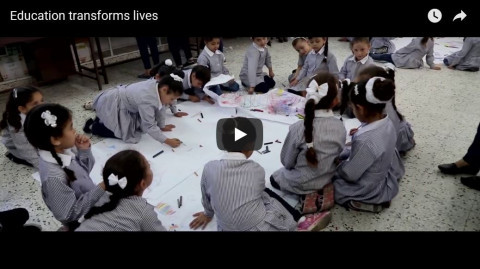 [Video] Education Transforms Lives Año de publicación: 2017 Autor corporativo: UNESCO Education transforms lives every day and in every corner of society. This video explores the power of education and UNESCO’s role in leading and coordinating the Education 2030 Agenda, which is part of a global movement to eradicate poverty through 17 Sustainable Development Goals by 2030.Education is the right of every woman, man and child. Together, we are shaping the global citizens of tomorrow, empowered on the path of education to build a more sustainable future.UNESCO's campaign "Education transforms lives" supports the effort to build peace in the minds of men and women. [Видео] Образование меняет жизни Año de publicación: 2017 Autor corporativo: Организация Объединенных Наций по вопросам образования, науки и культуры (UNESCO) Образование преображает жизнь людей каждый день во всех слоях общества. Ролик повествует о важности образования и роли ЮНЕСКО в ведении и координации Повестки дня «Образование-2030», которая является частью глобального движения для искоренения бедности посредством достижения 17 Целей устойчивого развития до 2030 года.Каждая женщина, каждый мужчина и каждый ребенок имеют право на образование. Вместе мы создаем мировых сограждан завтрашнего дня и даем им силу образования для построения более устойчивого будущего.Кампания ЮНЕСКО "Образование преображает жизнь людей" направлена на то, чтобы нести мир в сознание мужчин и женщин.
  [Video] UNESCO - Futures of Education: Learning to Become Año de publicación: 2019 Autor corporativo: UNESCO UNESCO’s Futures of Education initiative aims to rethink how knowledge and learning can shape the future of humanity and the planet. Looking to 2050 and beyond, the initiative seeks to reimagine how education and knowledge can contribute to the global common good. The initiative is catalyzing a global debate on how knowledge, education and learning need to be reimagined in a world of increasing complexity, uncertainty, and precarity. This initiative mobilizes the many rich ways of being and knowing in order to leverage humanity’s collective intelligence. It relies on a broad, open consultative process that involves youth, educators, civil society, governments, business and other stakeholders. The work is being guided by a high-level International Commission of thought-leaders from diverse fields and different regions of the world. In late 2021, the commission will publish a global report designed to share a forward looking vision on how education and learning can enable us to become what we want to become.
 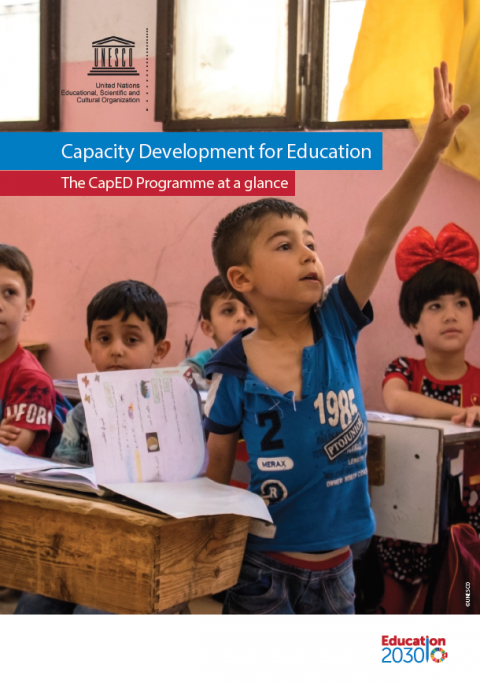 Capacity Develoment for Education: the CapED Programme at a glance Año de publicación: 2019 Autor corporativo: UNESCO Education has the power to transform lives and is at the heart of UNESCO’s mission to build peace, eradicate poverty and drive sustainable development. Right now, 750 million adults – two-thirds women – still lack basic literacy skills. Around 264 million children and youth are out of school and the international community must have almost 69 million new teachers to reach the 2030 education goals. These challenges can be tackled effectively through education reforms. However, these can only take place when countries have the capacities to put this change into action. As well as trained staff, countries need efficient organizational processes, functioning institutions and the tools and resources to design, implement and manage tailored education policies and plans. This is where the CapED Programme steps in. By mobilizing UNESCO’s global network, the Programme provides selected countries with a cohesive package of support. It works alongside stakeholders to reinforce national capacities to undertake evidence-based education reforms that fit into their national priorities and respond to SDG4 commitments, in order to offer quality education opportunities to all.